Introduction to the Five Most Common Single-Origin Coffee Beans in Coffee Shops - What Are the Most Classic Single-Origin Coffee Beans?
As the coffee market has grown, more and more people have come to love coffee, and single origin coffee has become better known along with the spread of pour-over. Many beginners just starting with pour-over find themselves lost among the wide variety of single origin beans, unsure how to choose. At FrontStreet Coffee, when baristas recommend single origin beans, they simply sort them into five types: more pronounced floral and fruit aromas; more noticeable fermentation; more balanced flavors; distinctive wine-like character; and higher body. FrontStreet's baristas classify beans by the characteristic flavors of different growing regions, then ask guests about their taste preferences before recommending. So what exactly are regional flavor profiles? Where do the beans with these characteristics come from? Don't worry — FrontStreet Coffee will explain how beginners can choose single origin beans that suit their taste.

What Are Regional Flavor Profiles?
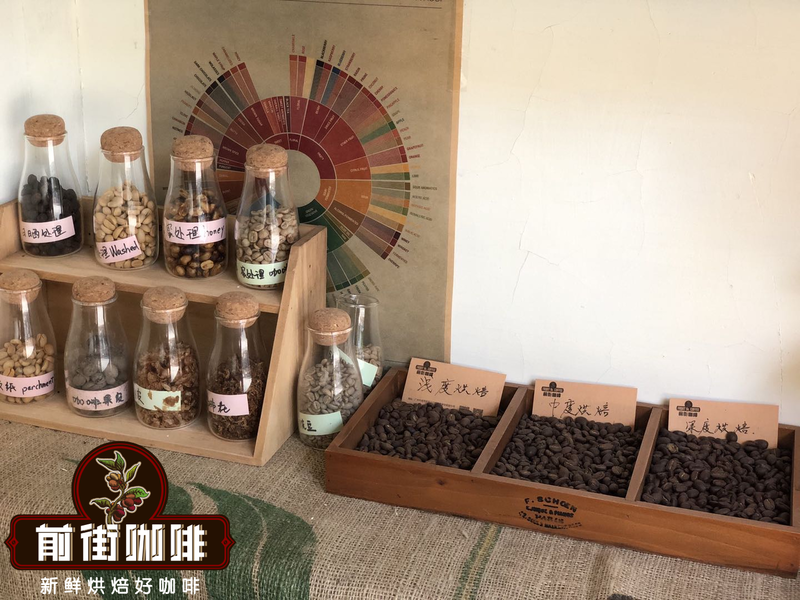
As an agricultural product, coffee is influenced by many factors, including altitude, climate, soil, cultivation technique, and green bean processing. Coffee is also a general term covering numerous varieties. The single origin beans used most often day to day belong to the Arabica species, which is further divided into specific varieties such as Typica and Bourbon. These factors shape flavor from the very source, which is what FrontStreet Coffee calls regional flavor profiles.
For More Pronounced Floral and Fruit Aromas, FrontStreet Coffee Recommends FrontStreet's Ethiopian Yirgacheffe Red Cherry Coffee
The most famous growing region is undoubtedly Yirgacheffe. FrontStreet's Yirgacheffe, with its citrus flavors and light floral notes, has become the gateway bean for many newcomers to single origin coffee. Interestingly, Yirgacheffe has a coffee variety called "Kurume," which refers to varieties that formed over a long period through the region's climate, soil, and other environmental conditions. It fully represents the regional flavor profile of Yirgacheffe. The Yirgacheffe region mostly uses the washed method to highlight the bright acidity of FrontStreet's Yirgacheffe. In recent years, beans from the region have increasingly used the natural method as well. FrontStreet Coffee believes natural-processed beans can show more sweetness and the fruity acidity of ripe berries.

FrontStreet Coffee · Ethiopia Red Cherry Natural
Region: Ethiopia, Yirgacheffe
Variety: Ethiopian Native Varieties
Altitude: 1,800-2,200 m
Processing: Natural Process
Brewing Flavors: Lemon, licorice, citrus, berries, and sweet orange, with overall high sweetness, caramel and cream in the aftertaste, and a black tea-like finish.
This FrontStreet Yirgacheffe Red Cherry Natural is made from Ethiopian native varieties. Most Ethiopian coffee varieties are named this way, mainly because there are simply too many to identify individually. Ethiopia is like a natural gene bank for coffee — on one hand, the sheer number of varieties makes classification difficult; on the other, the Ethiopian government, for protection reasons, is unwilling or unable to disclose detailed variety information. FrontStreet Coffee has noticed, though, that in this year's Cup of Excellence competition held in Ethiopia, Ethiopian beans have begun to use different variety names, all designated by numbers.

The Red Cherry Project
This "Red Cherry" actually refers to the local Red Cherry Project, jointly initiated by the Dutch trader Trabocca and local farmers, aimed at improving the quality of coffee from small farms and raising farmers' incomes. It requires harvesting fully ripe cherries — not only picking fully red, mature fruit but also harvesting entirely by hand. That, however, is only the most basic requirement; there are also corresponding requirements for processing.

The Red Cherry Project also reinforces the idea that farms should devote more attention to cultivation and selection. These well-regarded coffees command relatively higher prices. The main implementing regions include Yirgacheffe, Sidamo, Bench Maji, Lekempti, Kembata, Ilubabor, Harar, and Limu — all with unique flavors that fully showcase the character of Ethiopian coffee. In fact, most specialty coffee operations today follow the Red Cherry Project model, but the unique term "Red Cherry Coffee" remains exclusive to Ethiopia. Red Cherry coffee products are stamped with Trabocca on their gunny sacks.
The Natural Processing Method
The natural method, also known as the dry method, involves hand-harvesting high-sugar coffee cherries and placing them on raised beds or open ground to sun-dry. During drying, they need to be stirred periodically to avoid uneven drying or over-fermentation. After 2-4 weeks of complete drying, until the moisture reaches 12%, a hulling machine removes the pulp and skin.
For More Noticeable Fermentation, FrontStreet Coffee Recommends FrontStreet's Costa Rica Honey-Processed Coffee
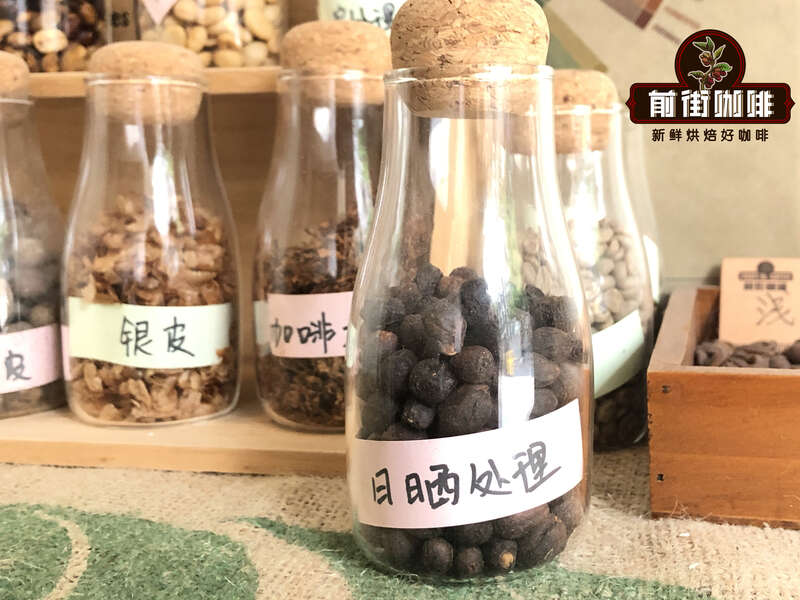
Coffee from Costa Rica's famous Tarrazú region has a smooth mouthfeel, high acidity, and hard, full-bodied beans with rich aroma. Costa Rica originally used the washed method for most of its coffee, but in recent years an alternative called "Miel" — Honey Process — has emerged. This method improves on the Brazilian pulped natural process to enhance sweetness, and the key is preserving as much mucilage on the beans as possible. After the skin is removed, the sticky beans are placed on raised beds to sun-dry for about one to two weeks. During that period they must be turned every hour to ensure even drying, letting the beans fully absorb the sugars from the mucilage. FrontStreet believes honey-processed beans have superior flavors, with balanced acidity and sweetness. Like the natural process, because it involves sun exposure, the bean's inherent aroma is amplified, producing a rich, full-bodied flavor. The downside is that this method carries high processing risk and is prone to mold and spoilage.

FrontStreet Coffee · Costa Rica Mirasu Strawberry Candy Geisha Blend
Region: Costa Rica, Tarrazú
Estate: Mirasu Estate
Altitude: 1,700 m
Processing: Raisin Honey Process
Varieties: Geisha, ET47, SL28, MACIO
Brewing Flavors: Fresh jasmine fragrance, raisin fermentation aroma, soft fruit acidity, and an almond aftertaste, with noticeable sweetness.
Raisin Honey Process
FrontStreet's Costa Rica Mirasu Geisha Blend uses the raisin honey process, which preserves 100% of the mucilage with zero water treatment. This makes the honey method harder, requiring strict time control. On the day of harvest, the cherries are poured into large water tanks — mature, full fruits sink to the bottom, while underdeveloped or overripe fruits float to the surface. These floaters must be removed. The selected cherries are placed on raised beds to dry for at least three days, then the cherry skin is removed while preserving the mucilage before further drying. At this stage, climate factors are crucial to the success of honey processing. During drying, the cherries must be constantly turned for even drying, but the turning frequency must be controlled to allow slow drying for proper fermentation without over-fermenting. FrontStreet believes this sweet raisin honey process gives the coffee a white-wine-like mouthfeel and balanced acidity, with rich fermentation aromas.

For More Balanced Flavors, Try FrontStreet's Brazil Queen Estate Yellow Bourbon Coffee
Coffees from the various American producing countries each have outstanding characteristics. First is Brazil, the world's largest producer, whose flavors are highly recognizable. Brazil mostly grows Bourbon varieties, widely cultivated on highland plains. Large-scale mechanized management ensures consistency in flavor and quality. FrontStreet believes its Brazilian coffee has low acidity, high body, and often chocolate and nut flavors.
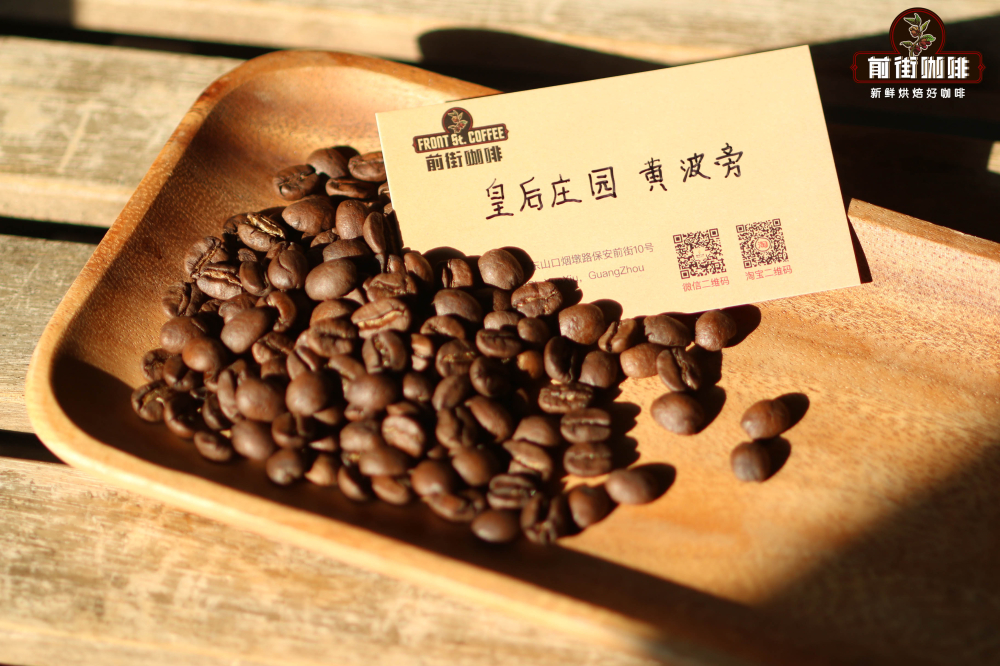
FrontStreet Coffee · Brazil Queen Estate
Region: Mogiana
Variety: Yellow Bourbon
Altitude: 1,400-1,900 m
Processing: Pulped Natural Process
Brewing Flavors: Rich nuts and dark chocolate, fermented fruit, with noticeable sweetness and a subtle lemon aroma — an overall rounded sensation.
Pulped Natural Processing
Pulped natural processing removes the skin and pulp of the cherries while controlling how much the mucilage-covered beans ferment. Traditional natural processing dries the fruit with the skin and pulp intact, making the mucilage's fermentation level impossible to monitor. The pulped natural method is a hybrid of natural and washed, but without the tank fermentation and clean-water rinsing of the washed method; instead, the beans go straight out to dry in the sun. Although the methods may look similar, without the fermentation step the flavors are completely different. During pulped natural processing, ripe pulp is easily removed while unripe green cherry skins are difficult to process, allowing a second screening to filter out unripe fruit and unify cherry maturity. Compared with natural processing, FrontStreet believes this selection and processing approach improves cleanliness and maturity, resulting in more consistent flavor.

For Wine-Like Character, Try FrontStreet's Honduras Sherry Barrel-Fermented Coffee
Honduras produces two very high-quality coffees that coffee lovers hold in high regard. One is "High Grown," grown at 1,000-1,500 meters, and the other is "Strictly High Grown," grown at 1,500-2,000 meters and representing Honduras' highest grade. Most Honduran coffee is exported to the United States and Germany. When FrontStreet compared beans from these Central American countries, it found they all share a common flavor trait: floral and fruit aromas with soft, juice-like tones. Although Honduran flavors may resemble those of neighboring countries, its character can be detected as exotic spice in the aroma, followed by nutty and chocolate-rich body notes in the finish, with an overall balanced, layered presentation. Before barrel fermentation emerged, Honduran beans mostly used the washed method. Barrel fermentation draws on winemaking techniques: during fermentation, the barrels let small amounts of air pass through their walls and into the coffee, creating moderate oxidation. The right oxygen intake also accelerates fermentation.
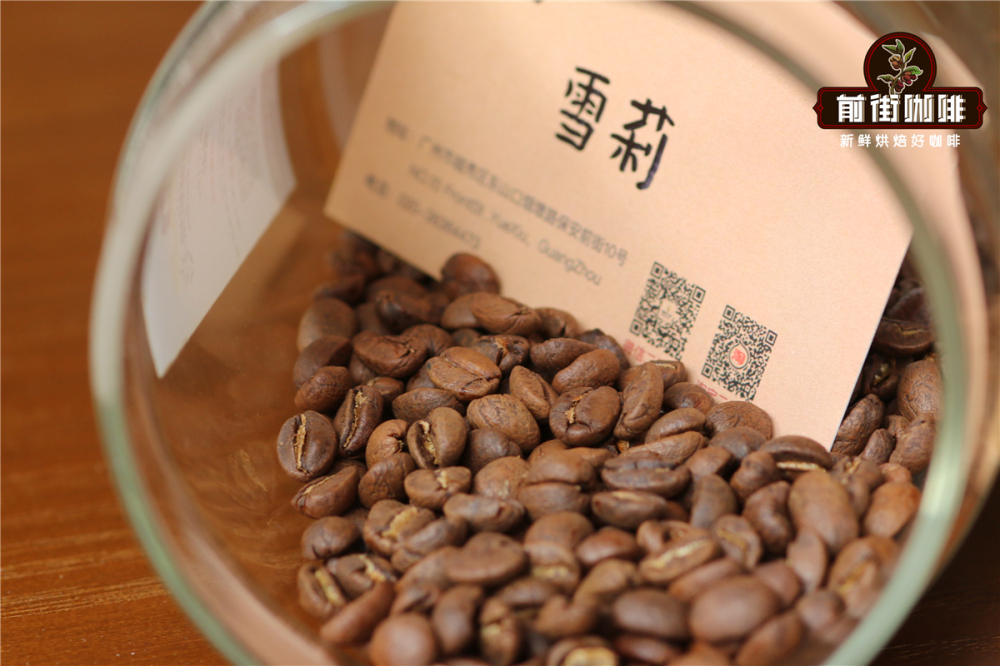
FrontStreet Coffee · Honduras Moca Estate Sherry
Region: Marcala
Estate: Moca Estate
Altitude: 1,500-1,700 m
Varieties: Caturra, Catuai, Pacas
Processing: Fine Washed + Whiskey Sherry Barrel Fermentation
Fine Washed + Whiskey Sherry Barrel Fermentation
FrontStreet's Honduras Sherry uses fine washed processing combined with whiskey sherry barrels. Freshly harvested cherries first undergo fine washed processing, then are placed in barrels that have matured sherry or rum for low-temperature fermentation of 30-40 days (at roughly 15-20°C), followed by shade drying.

For Higher Body, Try FrontStreet's PWN Gold Mandheling from Indonesia
Asian beans are most commonly represented by Indonesia. When people mention Indonesian beans, the first that comes to mind is the bitter, rich, aromatic Mandheling. Indonesia's island monsoon climate, combined with fertile volcanic soil, is ideal for coffee. Due to historical reasons, though, leaf rust swept through Indonesian Typica, leading the country to introduce disease-resistant varieties such as Robusta, Timor, and Catimor. Among these, the best-flavored is undoubtedly Sumatran Typica. Because of the local humidity and rain, Indonesia uses the wet-hulled method. And since the largest market for Indonesian Mandheling is Japan (Japanese drinkers love its thick, bitter richness), that has also shaped the region's herbal, dark cocoa, nutty, spicy, earthy, and full-bodied profile.
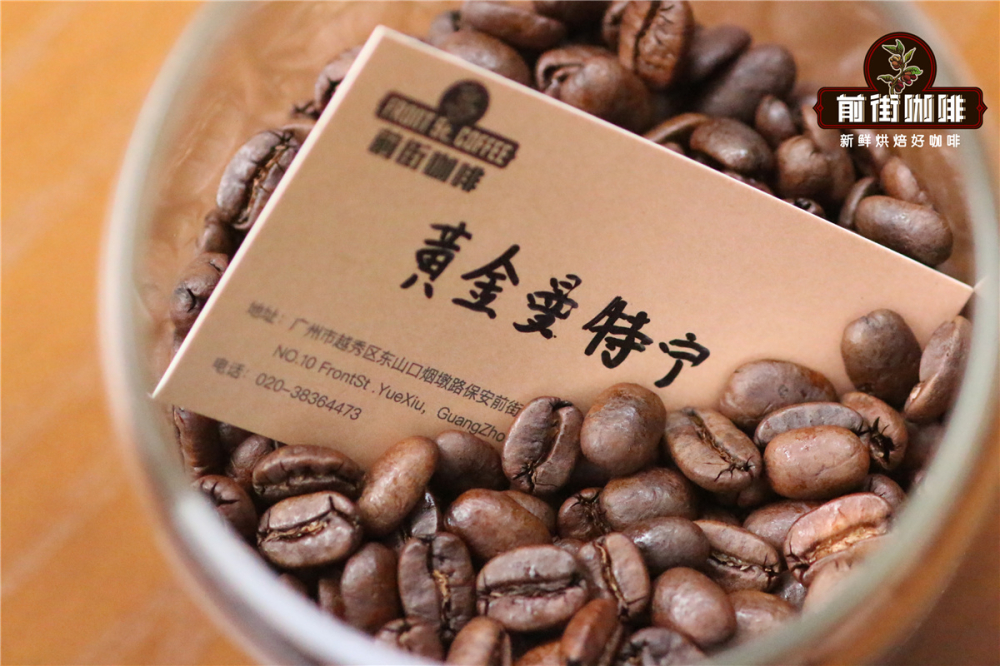
FrontStreet Coffee · Indonesia PWN Gold Mandheling
Region: Sumatra, Indonesia
Altitude: 1,100-1,600 m
Variety: Ateng
Processing: Wet-Hulled Process
Brewing Flavors: Multi-layered and changing, thick yet clean, highly balanced, with rich nut and caramel aroma, chocolate notes, and a persistent finish.
FrontStreet's Gold Mandheling comes from the renowned Pwani Coffee Company in Indonesia, abbreviated PWN. A Japanese company registered the trademark "Gold Top Mandheling," also known as premium Gold Mandheling. In terms of flavor there is actually little difference between the two — the difference comes down to branding and marketing, so which is superior is largely a matter of public opinion. PWN was the first company to export Gold Mandheling to Japan.

The Wet-Hulled Processing Method
Because the local weather is mostly rainy with constant typhoons, it's impossible to achieve the good conditions required for natural processing, and the local economy isn't strong enough to afford the relatively expensive washed method. For these reasons, the region developed its own distinctive wet-hulled method (Giling Basah). Wet-hulling means hulling the parchment after 2-3 days of drying within the regular washed process, when the moisture content is still 20-24%.
The extremely fast pace of wet-hulling also leads to higher defect rates in Mandheling. FrontStreet's Gold Mandheling effectively avoids that shortcoming. Its specification is 19 screen or larger, with fewer than 3 defective beans in a 300 g green bean sample, placing it at the highest G1 grade. The color is dark green, and the shape is uniform flat beans.

FrontStreet Coffee Brewing Experience
FrontStreet uses V60 drippers for FrontStreet's Natural Red Cherry, FrontStreet's Honduras Sherry, and FrontStreet's Costa Rica Mirasu Strawberry Candy Geisha Blend.
Grind Size: BG6m (80% pass-through on a #20 sieve)
Water Temperature: 90-91°C
Water-to-Coffee Ratio: 1:15

FrontStreet Coffee uses segmented extraction, also known as three-stage brewing: use 30 g of water for a 30-second bloom, then pour in a small circular motion to 125 g and pause. When the water level drops to just expose the coffee bed, continue pouring to 225 g and stop. When the water level drops again to just expose the coffee bed, remove the dripper. (Timing starts from the bloom.) Extraction time is 1'55"-2'00".
FrontStreet Coffee uses Kono drippers for FrontStreet's Brazil Queen Estate and FrontStreet's PWN Gold Mandheling.
Grind Size: BG6w (75% pass-through on a #20 sieve)
Water Temperature: 88-89°C
Water-to-Coffee Ratio: 1:15

FrontStreet Coffee uses segmented extraction, also known as three-stage brewing: use 30 g of water for a 30-second bloom, then pour in a small circular motion to 125 g and pause. When the water level drops to just expose the coffee bed, continue pouring to 225 g and stop. When the water level drops again to just expose the coffee bed, remove the dripper. (Timing starts from the bloom.) Extraction time is 2'05"-2'15".
On grind size, FrontStreet determines it by sieving, based on the pour-over grind recommendations of the Specialty Coffee Association (SCA), which FrontStreet then validates through practice. If you don't have a sieve at home, FrontStreet Coffee suggests judging by flow rate — if the water flows too fast, the grind is too coarse; if it flows too slowly, the grind is too fine.
FrontStreet Coffee Recommendation
If your taste runs to bright, floral, fruit-forward cups, the V60 is the vessel to reach for. FrontStreet's Kenya Small Tomato is a water-washed Kenyan from the Thika region, grown at 1,550-1,750 meters with the classic SL28 and SL34 varieties and plump, round beans. It is processed with Kenya's 72-hour double-washed method and lightly roasted, so the dry aroma shows concentrated dried tomato and florals, the cup opens with clear cherry tomato and smoked plum, and the mid-palate brings snow pear and black plum over a clean, sweet finish of yellow sugar and green tea.
For a more tropical expression, FrontStreet's Ethiopia Huakui is a star of the recent specialty market, with intensely aromatic strawberry, passionfruit, jackfruit, and even lychee, plus a low bitterness and a smooth, juicy body that has led many drinkers to call it "the coffee that doesn't taste like coffee."
And if you want the legendary side of things, FrontStreet's Panama Emerald Estate Red Label Geisha is as good as it gets: an extremely elegant jasmine fragrance with citrus, bergamot, and black tea, a clean, transparent body, a long finish, and rich layering.
Important Notice :
FrontStreet Coffee is a long-established specialty coffee roaster in Guangzhou China, selling freshly roasted beans from its own farm in Yunnan as well as dozens of carefully selected single-origin beans from around the world for both pour-over and espresso. The products deliver consistently excellent quality and great value, with shipping within 24 hours. Guangzhou's FrontStreet Coffee shop is recommended by many coffee lovers, and the beans are now available online at the Tmall 。
FrontStreet Coffee has moved to a new address:
FrontStreet Coffee Address: 315,Donghua East Road,GuangZhou
Tel:020 38364473
 Scan and follow the En Gafei WeChat official account. Please indicate that the reprint comes from "En Gafei".