How to Differentiate Single-Origin Coffee Beans _ Single-Origin Coffee Bean Naming Rules _ How Many Beans for a Single Cup of Coffee
Reading a Bag of Coffee: Origin, Roast, and Grade
Walk into a specialty coffee shop or open a specialty roaster's website and the wall of names can be overwhelming. Why do single-origin coffees carry such long names? Why are beans sorted into single-origin, dark roast, and espresso categories? What do all these labels actually mean? This guide unpacks coffee bean naming step by step.
Origin: Single-Origin vs. Blend
Coffee sold on the market generally falls into two broad camps.
Single-Origin Coffee
Coffee Blends
"Single-origin coffee" means beans from one country or one producing region—think of it as a solo performance. If a bag is labelled with a coffee-growing country, it is usually single-origin (mainland Europe does not grow coffee; a label reading "Italy" or "Vienna" is not an origin). Ethiopia Yirgacheffe, Sumatra Lake Tawar, and Guatemala Antigua are all examples: coffees produced in a specific country, region, or estate. Because each place has its own climate, soil, and environment, the coffee grown there develops distinctive character. Drinking single-origin coffee is how you come to know the flavor of a particular place.
"Coffee blends" are beans from several single-origin coffees combined together—a concerto rather than a solo. Blending can be simple (the classic "Mocha-Java," or Mandheling plus Brazilian) or a genuinely complex craft. Done well, it lets beans of different character work together into something more harmonious. Espresso-based drinks—espresso, latte, cappuccino—are usually built on blends.
Roast Level: Dark Roast, Southern Italian, Northern Italian, Vienna, French
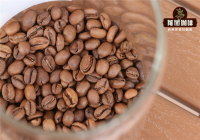
Alongside origin, roast level is the other common label. Green coffee must be roasted to release its aroma, and roast level is closely tied to flavor. If you see "Italian," "Vienna," or "Southern Italian" on a bag, do not read them as place names—they almost never are. Traditionally, "Italian" and "Vienna" describe a degree of roast (or a blending style), not coffee grown in Italy or Vienna. "Northern Italian" means a medium-light roast: light brown beans with no surface oil. "Southern Italian" means a dark roast—oily, glossy, deep brown. "Italian roast" is generally a fairly dark roast. "French roast" is extremely dark, near-black, faintly carbonized, with no acidity. "Vienna" usually denotes a blend of beans at different roast levels.
The darker the roast, the higher the roasting temperature. The medium-light "Northern Italian" roast keeps brighter, more complex flavors—fruit-like acidity with very little or no bitterness. The deep, high-temperature "Southern Italian" roast is richer and smoother, with a caramel-sweet finish. "French roast" is comparatively one-dimensional, faintly carbonized, and completely without acidity.
Grades, Micro-Regions, and Estate Names
Coffee-growing countries do not share one grading system, so labels may show terms such as "SHB," "AA+," "Supremo," "Extra-Fancy," or "Peaberry." These are grade names. Commercial roasted bags sometimes show a single-origin grade, though usually not.
The best Central and South American coffees are graded by growing altitude, with beans grown above 4,500 feet marked "SHB (Strictly Hard Bean)." "AA+" is the highest grade of Kenyan coffee, reserved for batches with especially fine flavor and very few defects; "AA" is the largest bean size, "AB" is smaller, and "PB" is peaberry. Colombia also grades by bean size and defect rate, where "Supremo" indicates the largest beans. Note that bean size has no bearing on flavor—but higher growing altitude usually does.
After the country name comes the micro-region. Take Ethiopia Yirgacheffe: Ethiopia is the country, which makes this a single-origin coffee; Yirgacheffe is a small, high-altitude micro-region inside Ethiopia's Sidamo area. Different micro-regions mean different flavor. Ethiopia Harrar, grown in the south near Somalia, brings wine-like aroma, blueberry or grape notes, and a thick body, while Yirgacheffe tastes crisp and bright, with citrus or lemon-peel aroma and a lighter body.
Some beans carry yet another name after the micro-region—the specific estate or washing station. A long label such as Guatemala Antigua SHB - Finca Los Volcanes 02 Crop tells you the following.
Country: Guatemala—a well-known coffee origin in Central America.
Region: Antigua—Guatemala's famous volcanic coffee region.
Grade: Strictly Hard Bean (SHB)—grown above 4,500 feet.
Estate: Finca Los Volcanes—"finca" is Spanish for estate.
Harvest Year: 2018 (02 Crop)—shown for the roaster's reference, which is why commercial roasted bags usually omit the year.
On commercial roasted beans, such detail is generally left off to spare consumers confusion. Different micro-regions and different harvest years can taste dramatically different, so professional roasters cup each region's new-crop green coffee every year and adjust their roasting and blending to keep the cup consistent from bag to bag.
FrontStreet Coffee Recommendation
If you want to put all of this naming to the test, start where most people do: Ethiopia. FrontStreet's washed Yirgacheffe is the classic doorway into specialty coffee—white jasmine on the nose, bright citrus and lemon acidity, and a clean, tea-like finish. It is friendly enough for a first pour-over yet distinctive enough to show you exactly why origin matters. Yirgacheffe itself is a town in southern Ethiopia's Sidamo region, sitting at roughly 1,700-2,100 meters, with the coffee trees planted above 1,800 meters.
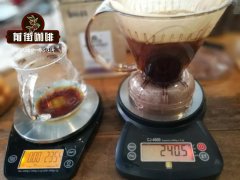
From there you can branch out: FrontStreet's washed Gutinguting cooperative coffee, grown in the Woka area southeast of Yirgacheffe, keeps that crisp citrus-and-jasmine profile with extra clarity; and FrontStreet's natural Red Cherry Yirgacheffe—dried whole with the fruit still on the bean—layers on tropical fruit, berry-juice sweetness, and a creamy, honeyed smoothness. For pour-over, FrontStreet suggests a V60, 90-91°C water, 15 g of coffee at a 1:15 ratio, ground to roughly fine-sugar size, blooming with 30 g of water for 30 seconds before finishing the pour in about two minutes.
Important Notice :
FrontStreet Coffee is a long-established specialty coffee roaster in Guangzhou China, selling freshly roasted beans from its own farm in Yunnan as well as dozens of carefully selected single-origin beans from around the world for both pour-over and espresso. The products deliver consistently excellent quality and great value, with shipping within 24 hours. Guangzhou's FrontStreet Coffee shop is recommended by many coffee lovers, and the beans are now available online at the Tmall 。
FrontStreet Coffee has moved to a new address:
FrontStreet Coffee Address: 315,Donghua East Road,GuangZhou
Tel:020 38364473
 Scan and follow the En Gafei WeChat official account. Please indicate that the reprint comes from "En Gafei".