FrontStreet Coffee Barista Examination: Understanding FrontStreet Coffee's Random Assessment Tests
Introduction
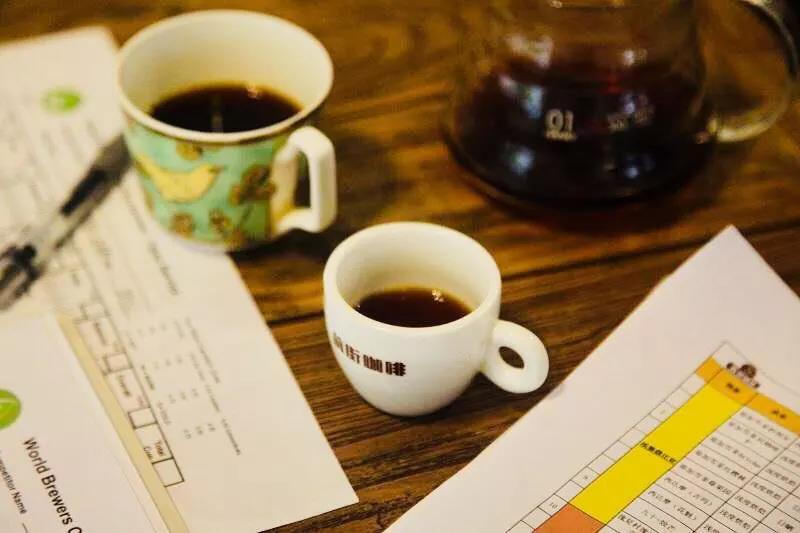
Some of you may have noticed that FrontStreet Coffee puts its baristas through periodic "spot checks and exams." Why hold them? Beyond testing how well we know our beans, the deeper purpose is to present every guest with a genuinely good cup — and with the taste and story behind it. How do these exams work? They are certainly more involved than brewing one pour-over. What exactly happens? Let me first introduce the scoring record sheet we use:
The scoring sheet from the World Brewers Cup Championship (WBrC)
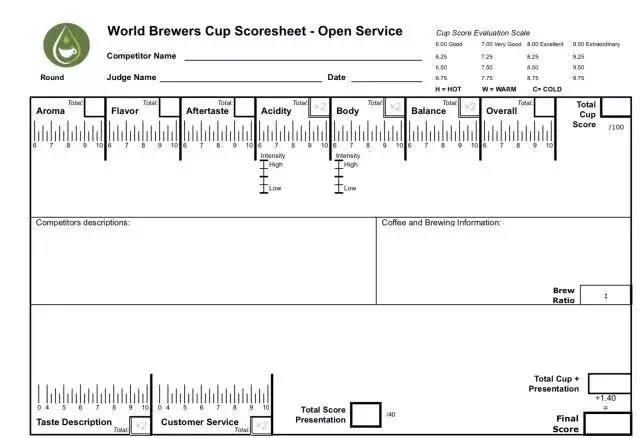
1. Wet Aroma
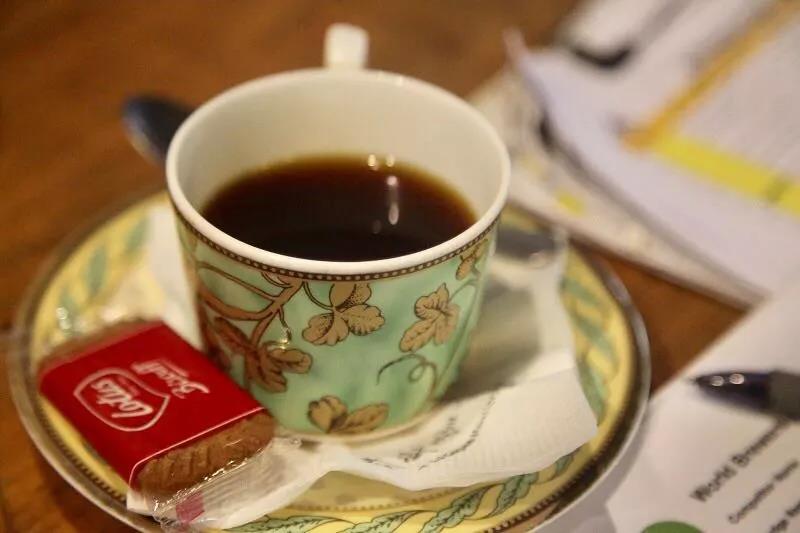
In essence, the character of a coffee's wet aroma reflects its region of origin. But the intensity of wet aroma usually tracks freshness — the interval between roast date and brew date — and is also influenced by how well the packaging keeps out moisture and oxygen. Wet aroma means the fragrance of the brewed liquid. As a rule it is far less pronounced to the nose than dry aroma, and we evaluate it while the coffee is still hot, using the volatilization of the liquid to lift those aromatics.
2. Flavor
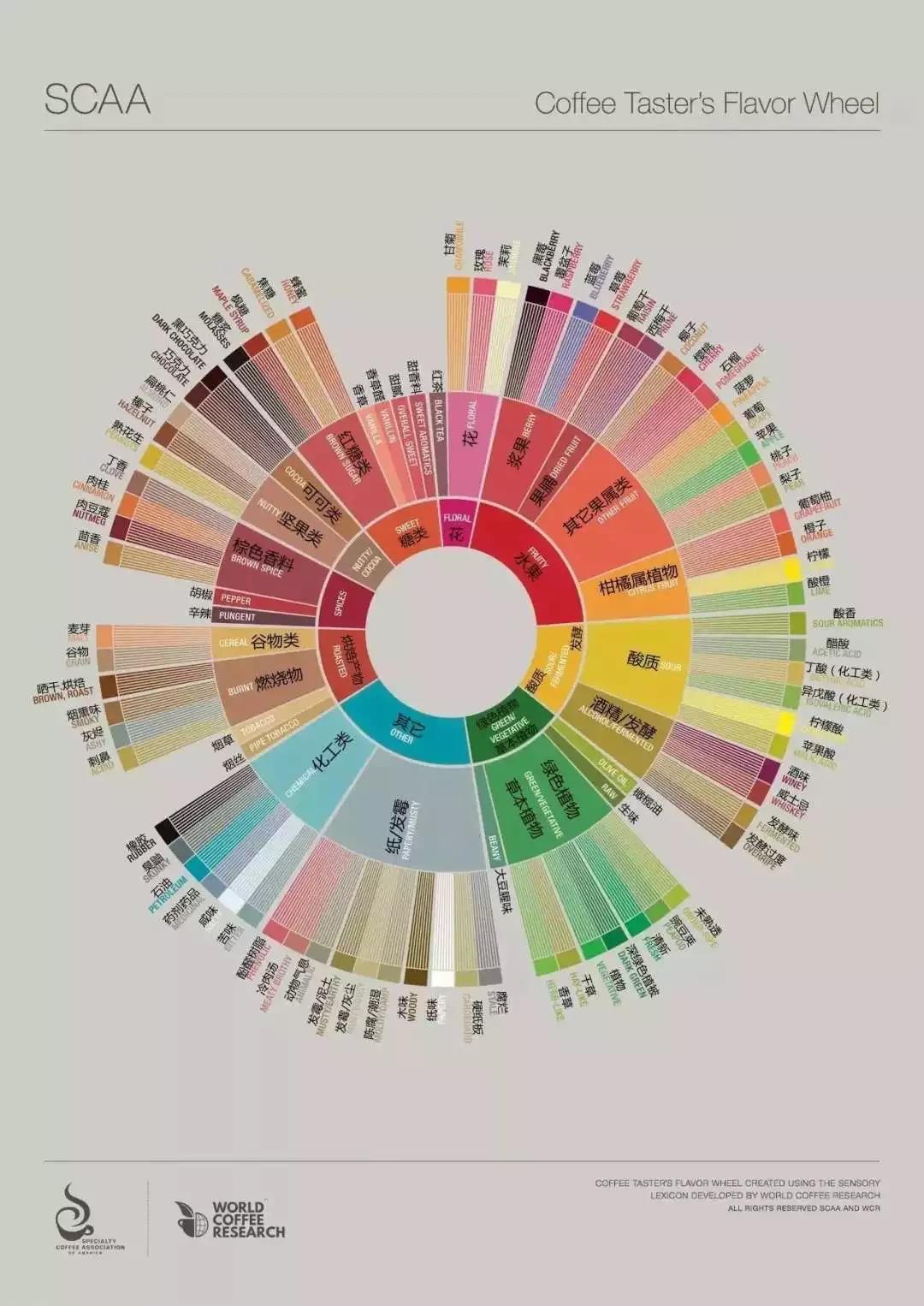
Flavor is the heart of the coffee — the "middle phase" of the sensory experience, covering tastes and aromas alike, including the fragrances perceived in the nasal cavity and on the palate, sitting between the first impressions of wet aroma and acidity and the final aftertaste. Flavor integrates every taste-bud perception and retronasal olfactory impression. This score must account for the intensity, texture, and complexity of taste and wet aroma, and it calls for vigorous slurping to engage every taste bud. If you are stuck for words, the flavor wheel is your friend:
How do you identify the flavor of a single-origin bean and match it to an aroma bottle?
3. Aftertaste
Aftertaste is defined as how long the positive flavor characteristics — taste and aroma — persist at the back of the tongue after the coffee is swallowed or spat out. After slurping, whatever tastes, aromas, or textures linger in the mouth counts; good flavors linger longer. Sweetness, for example, remains clearly in the mouth and can even keep unfolding after the coffee is gone.
An aftertaste that is short or carries negative traits drags down the experience and earns a lower score; one that enhances the cup earns a high one. Long, pleasant finish, high marks — no aftertaste or a fleeting one, low marks.
4. Acidity
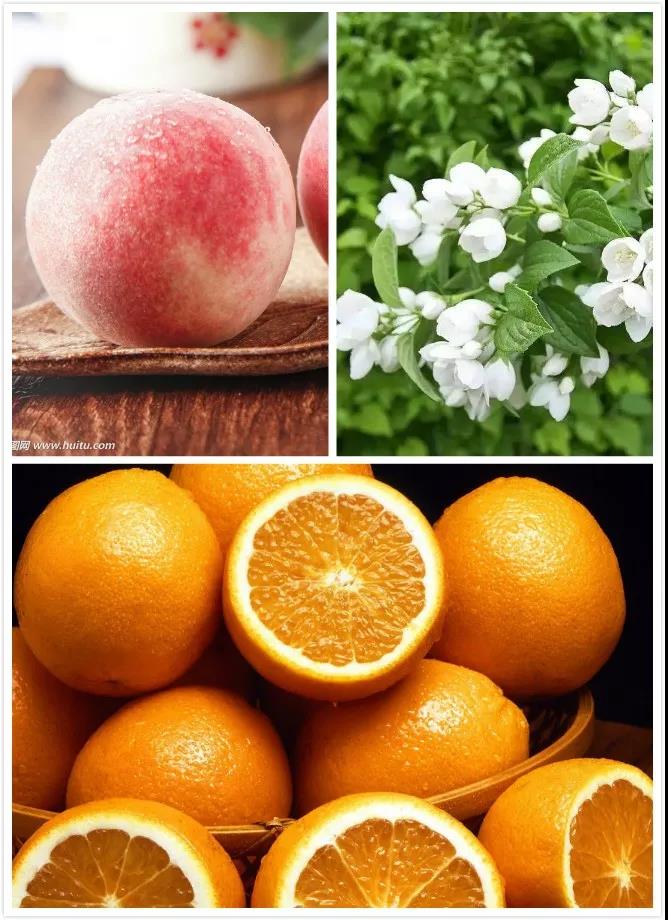
When acidity carries positive flavor characteristics, we call it "brightness." Good acidity is never vinegary; even at its most vivid you can pick out citrus, berries, sweet lemon, the melon-like sweetness of certain acids, or the crisp bite of a freshly ripened apple. When acidity turns negative, we call it "sourness": bad acids taste like unripe fruit or vinegar, while overripe or spoiled fruit brings fermentation notes and rotten-fruit defects.
At its best, acidity gives a coffee sweetness, a lively texture, and fresh fruit character, and it is usually sensed and measured from the very first sip. But acidity that is too strong or too prominent can feel uncomfortable — and excessive acidity may actually obscure the very flavors the coffee is meant to show.
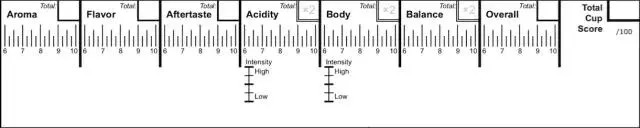
The mark on the horizontal scoring scale must reflect the quality of the acidity as the judge perceives it, judged against the flavors expected from the coffee's terroir or other context such as roast level and brewing intent.
In our exams, baristas are required to connect what they know of the coffee — origin, variety, processing method — and weave it into their presentation. Whether the acidity is high or low in intensity, if its quality is good it will be rewarded in both the score and the overall impression.
5. Body
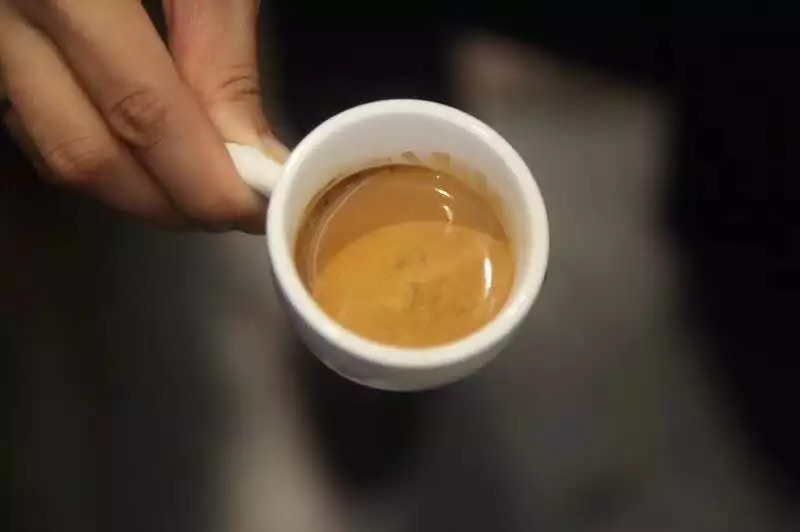
How to understand body? A viscous espresso is one expression of it. And beyond that syrupy texture, juiciness can sometimes impart a high-body sensation too — think of soup, juice, or fine tea. Body is not a distinct taste the palate detects; it is a feeling, a sense of weight.
Its quality rests on the mouthfeel of the beverage — especially the sensation between the tongue and the roof of the mouth. A coffee with "heavy" or "light" body can both score highly on texture, because what matters is the quality of the tactile impression, not the weight itself. A relatively light-bodied coffee with a pleasant mouthfeel can earn as high a body score as a heavy one — the intensities are simply different.
6. Balance
Balance asks whether all the elements of the cup are in harmony. It integrates flavor, aftertaste, acidity, and body into complementary or contrasting sensations. If the coffee lacks certain aromatic or taste qualities, or if any single trait overpowers the rest, the balance score falls. Does the brightness of the acidity still resolve to sweetness? Is the texture viscous without being astringent? How well the coffee's flavors cooperate decides this score.
7. Overall Impression
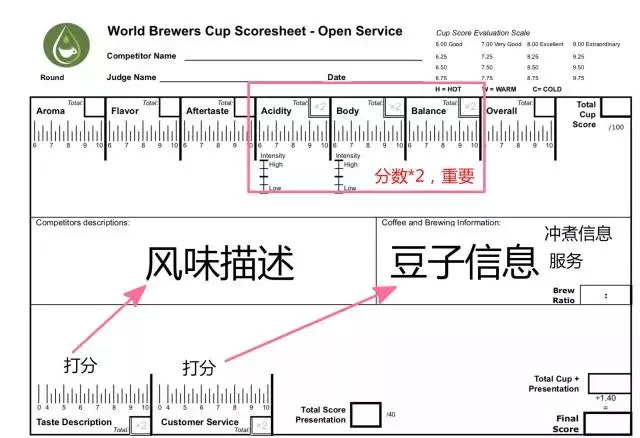
The Overall Impression score captures the judge's most complete feeling about the brewed beverage. A coffee that performs well on many levels but isn't "quite there" still scores lower here. To earn a high mark, a barista must fully express the coffee's unique terroir in the flavor and meet the expectations that character sets. The clearest example: if a judge's preferred traits are not fully captured in the individual items, the overall impression score may be raised to reflect them. This is the category that allows personal judgment.
As the coffee cools, judges score each item at three different temperatures:
(1) "Hot" is defined as approximately 70°C
(2) "Warm" is defined as approximately 40°C
(3) "Cold" is defined as between 25°C and 30°C
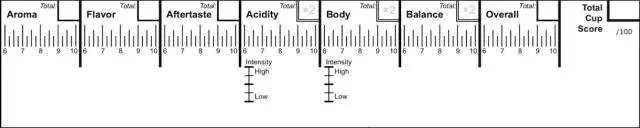
Record the beverage's score on the scale, marking a line on the intensity scale and circling it to indicate the quality level. If the level changes as the cup cools — certain characteristics gaining or fading — draw another line at the new level and an arrow showing the direction of the change.
Scoring stops when the beverage reaches 25°C. After weighing every sensory characteristic, the judge assigns the overall impression score.
Judges must clearly mark the "Hot," "Warm," and "Cold" stage scores on the horizontal scale — using the letters H, W, and C, or circles and arrows to show how quality evolves over time.
Judges also record detailed sensory notes on the sheet, both as scoring reference and to help the barista understand the evaluation. Notes must describe the beverage itself from a sensory or customer perspective, not critique brewing technique: "sharp acidity" or "burlap bag taste" is fair comment; "brew took too long" or "under-extracted" is not.
Scoring Scale
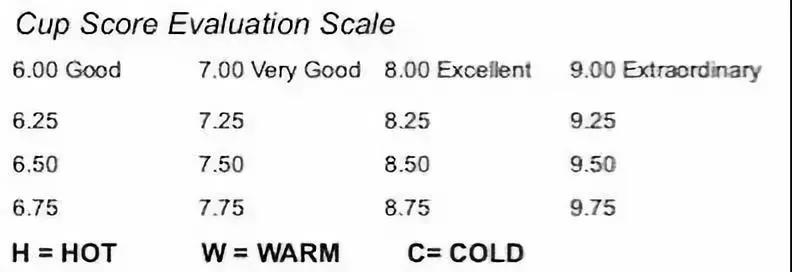
Limited to the following ranges:
Judges must score using this scale: Good, Very Good, Excellent, and Outstanding. No score below 6.00 may be given — anything below "Good" is recorded as 6.00.
Each item uses a horizontal scale (left to right) to measure the perceived relative quality, with the assessment grounded in the judge's experiential understanding of quality.
Some items also carry a vertical scale. The vertical scale (top to bottom) records the intensity of the sensory impression — as a note and reference only; it does not enter the score.
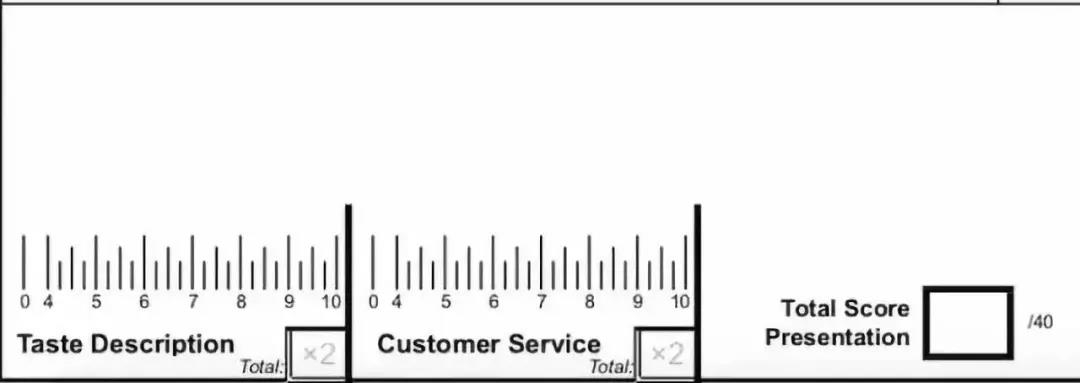
When evaluation is complete, the scores are entered in the "Total" column of each table, and the scorekeeper tallies the accumulated total for every item.
So much for the paperwork — what does the actual exam look like, and how do you introduce a coffee? Take Elida Natural Typica as an example and build a presentation script:
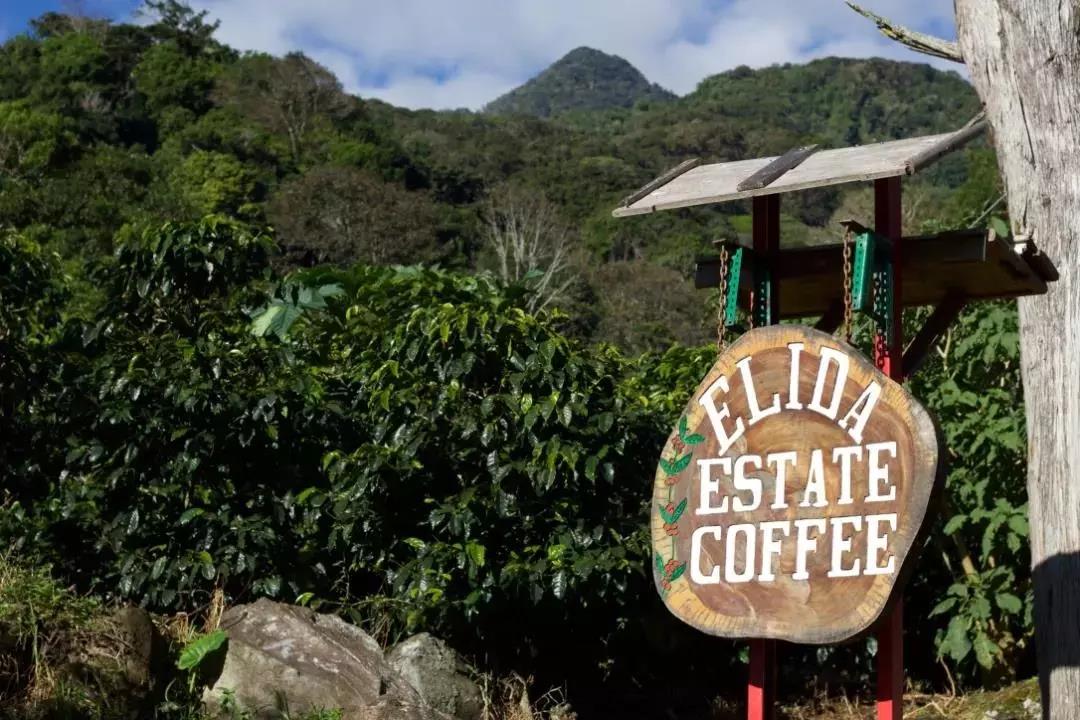
Today I'm brewing a remarkable bean, Elida Natural Typica. As the name suggests, it comes from Elida Estate in the Boquete region of Panama — a town in Chiriquí Province near the Panama–Costa Rica border, close by the famous Barú Volcano. The east-to-west terrain lets cold air currents moving through the central mountains converge at elevations of 1,670 to 1,850 meters, creating a patchwork of microclimates across Boquete. Temperature and rainfall suit plant growth beautifully, and the coffee trees here thrive.
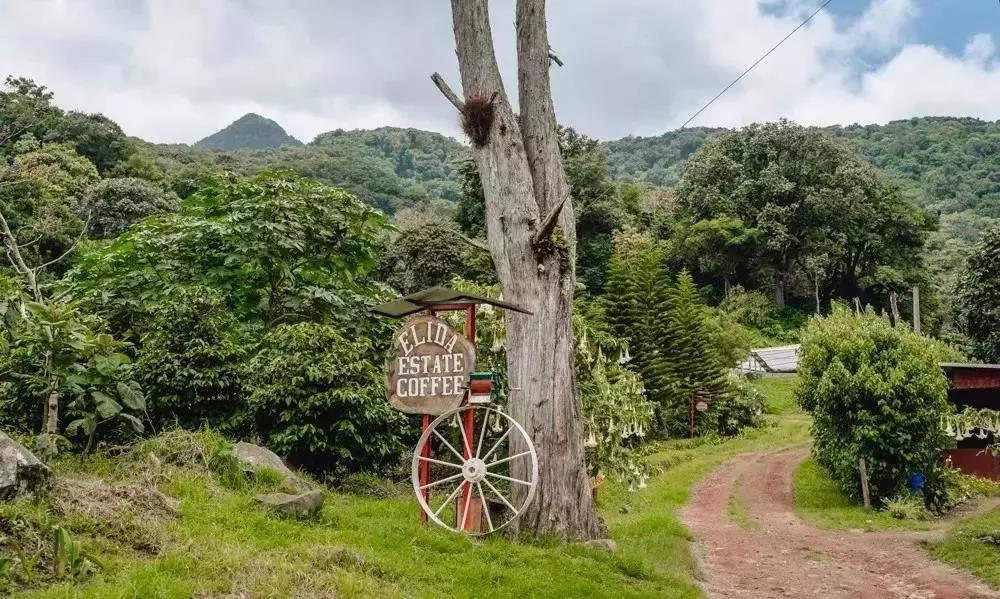
Only 30 hectares of the estate are planted with coffee; the rest remains primary forest. At this altitude, low temperatures delay cherry maturation by about a full month beyond the norm. The fertile volcanic soil feeds the trees abundantly, and together with the superb microclimate the volcano brings, it lets Elida Estate consistently post excellent results in cupping competitions.
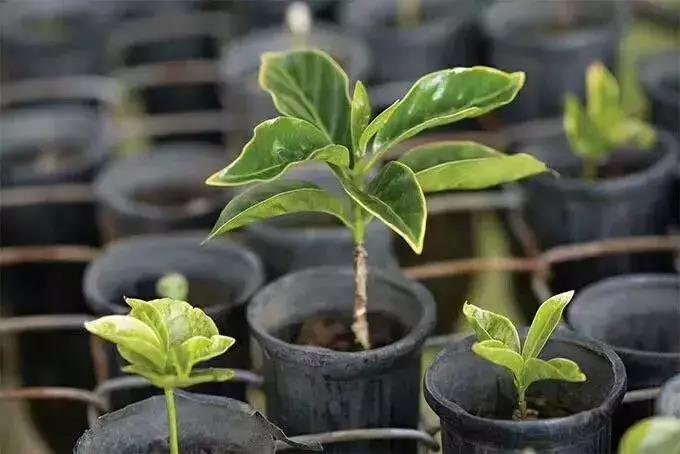
Elida Estate grows three main varieties: Catuai, Typica, and Geisha. The mill sits halfway up the mountainside, so picked cherries can be delivered for processing immediately, keeping their quality intact. The estate now belongs to descendants of the Lamastus family. This particular bean is Typica, one of the oldest Arabica varieties known — Arabica originated in Ethiopia, where the species still grows wild in the highland rainforests.
Typica has elongated beans, tall plants, oval cherries, and slightly drooping branches; its slender arms spread at a 50-70 degree angle. Yields per tree are very low — but cupping scores are very high.
Estate owner Mr. Wilford spares no effort on harvesting and processing. To hit the highest standard, only the ripest cherries may be picked by hand — high maturity means more sugar in the mucilage, the foundation of quality flavors. The coffee is meticulously natural-processed on raised beds under shade netting, turned at irregular intervals. After drying it undergoes a "purification" stricter than industry practice: more than 5 months of low-temperature resting to strip out any greenness, letting the flavors develop to their fullest and most balanced.
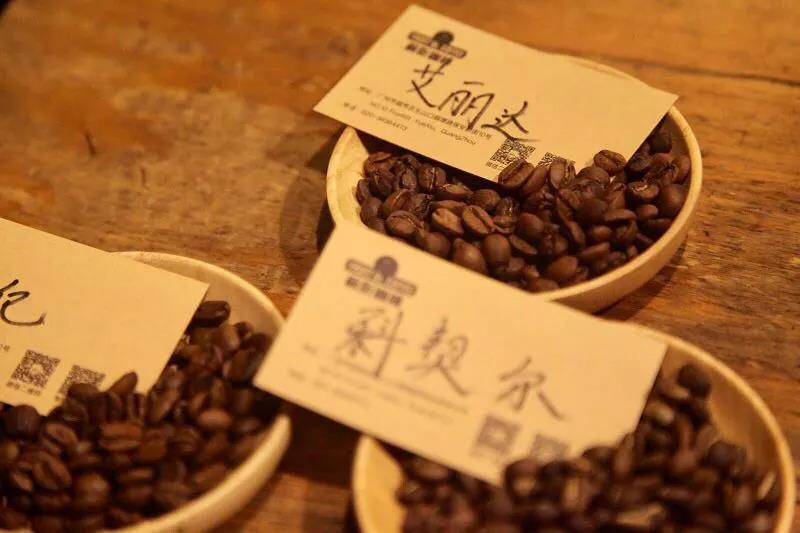
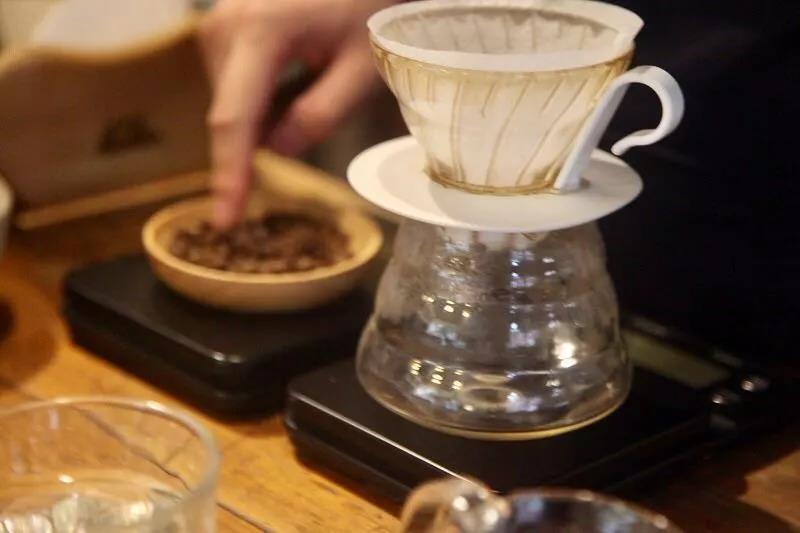
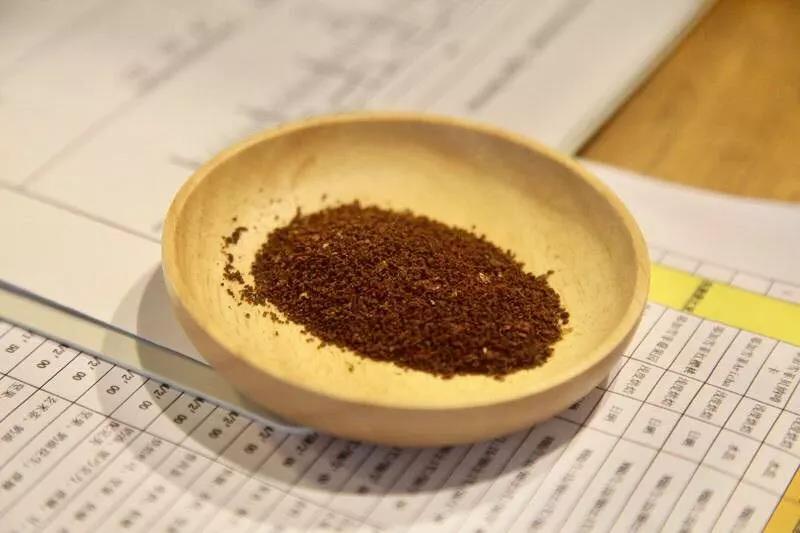
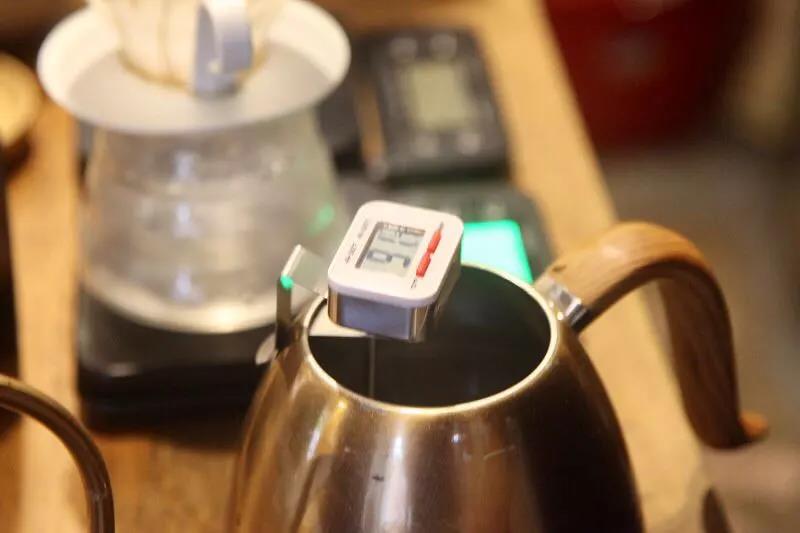
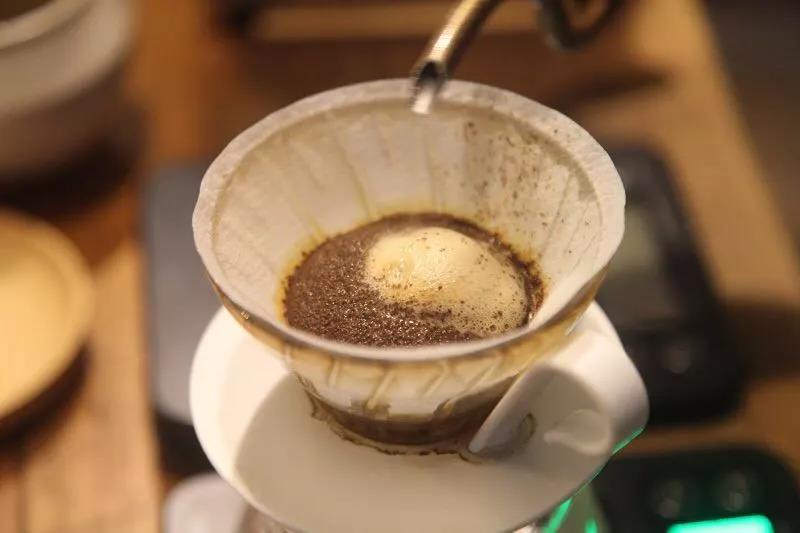
This bean is roasted medium-light to preserve its caramel and delicate floral notes. Today I'm using 90°C water, a medium grind (BG 5R, passing a 60% American sieve), a 1:15 coffee-to-water ratio, and a three-stage V60 pour. I chose the V60 because it layers flavors quickly: first a bloom of 25g of water for 30 seconds; then a first pour to 120g, small flow spiraling from the center outward, a touch faster on the outer rings; and when the bed has drained to 1/3-1/2 of its height, a second pour to 225g with a slightly faster flow. I stop the drawdown at 2:05.
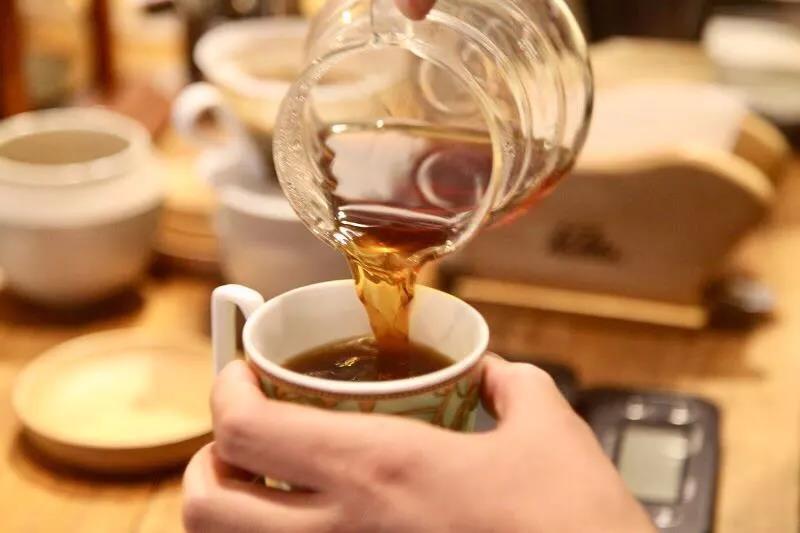
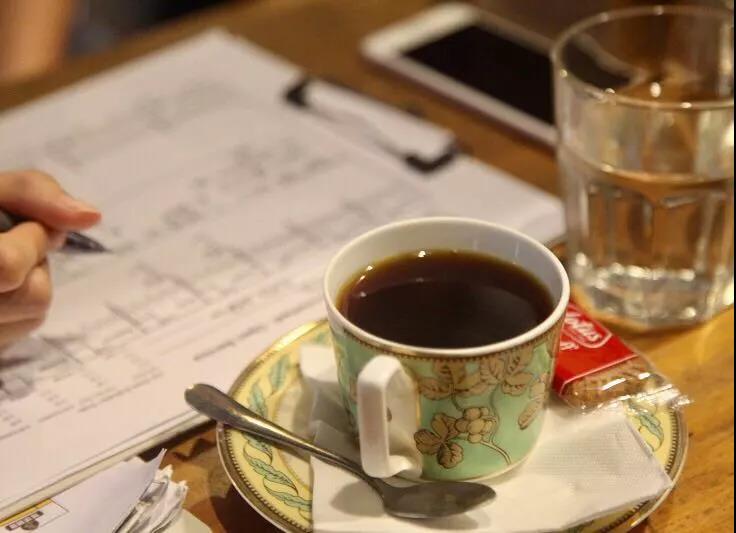
This cup of Elida Natural opens with jasmine and orange acidity, carries cantaloupe, cane sugar, and jackfruit sweetness through the middle, and closes on grapefruit and green tea. Overall cleanliness is superb, with a silky entry. I hope you'll enjoy it!
That is our daily exam routine — from a bean's growing story to cupping, brewing, and tasting. We baristas put in the work so that every guest tastes the difference.
FrontStreet Coffee Recommendation
Want to taste what a well-judged medium roast can do? FrontStreet Coffee's Brazil Fazenda Rainha is the answer for anyone who dislikes sourness and bitterness alike: a Yellow Bourbon from Brazil, the world's largest coffee producer, roasted medium to reveal cream peanut, chocolate, toasted bread, and sugarcane sweetness. It extracts beautifully as a pour-over and is equally at home in a moka pot or espresso machine.
For a benchmark in harmony, FrontStreet's Jamaica Blue Mountain No. 1 — the so-called "emperor of coffee" — is also roasted medium, the only way to fuse its acidity, bitterness, sweetness, and body into one elegant, aromatic cup: chocolate, roasted nuts, cream, and caramel from the very first sip, a balance no other coffee can match.
Important Notice :
FrontStreet Coffee is a long-established specialty coffee roaster in Guangzhou China, selling freshly roasted beans from its own farm in Yunnan as well as dozens of carefully selected single-origin beans from around the world for both pour-over and espresso. The products deliver consistently excellent quality and great value, with shipping within 24 hours. Guangzhou's FrontStreet Coffee shop is recommended by many coffee lovers, and the beans are now available online at the Tmall 。
FrontStreet Coffee has moved to a new address:
FrontStreet Coffee Address: 315,Donghua East Road,GuangZhou
Tel:020 38364473
 Scan and follow the En Gafei WeChat official account. Please indicate that the reprint comes from "En Gafei".