Do Thai Coffee Beans Have Male and Female Varieties? A Brief History of Thai Coffee and Current Production and Sales Status
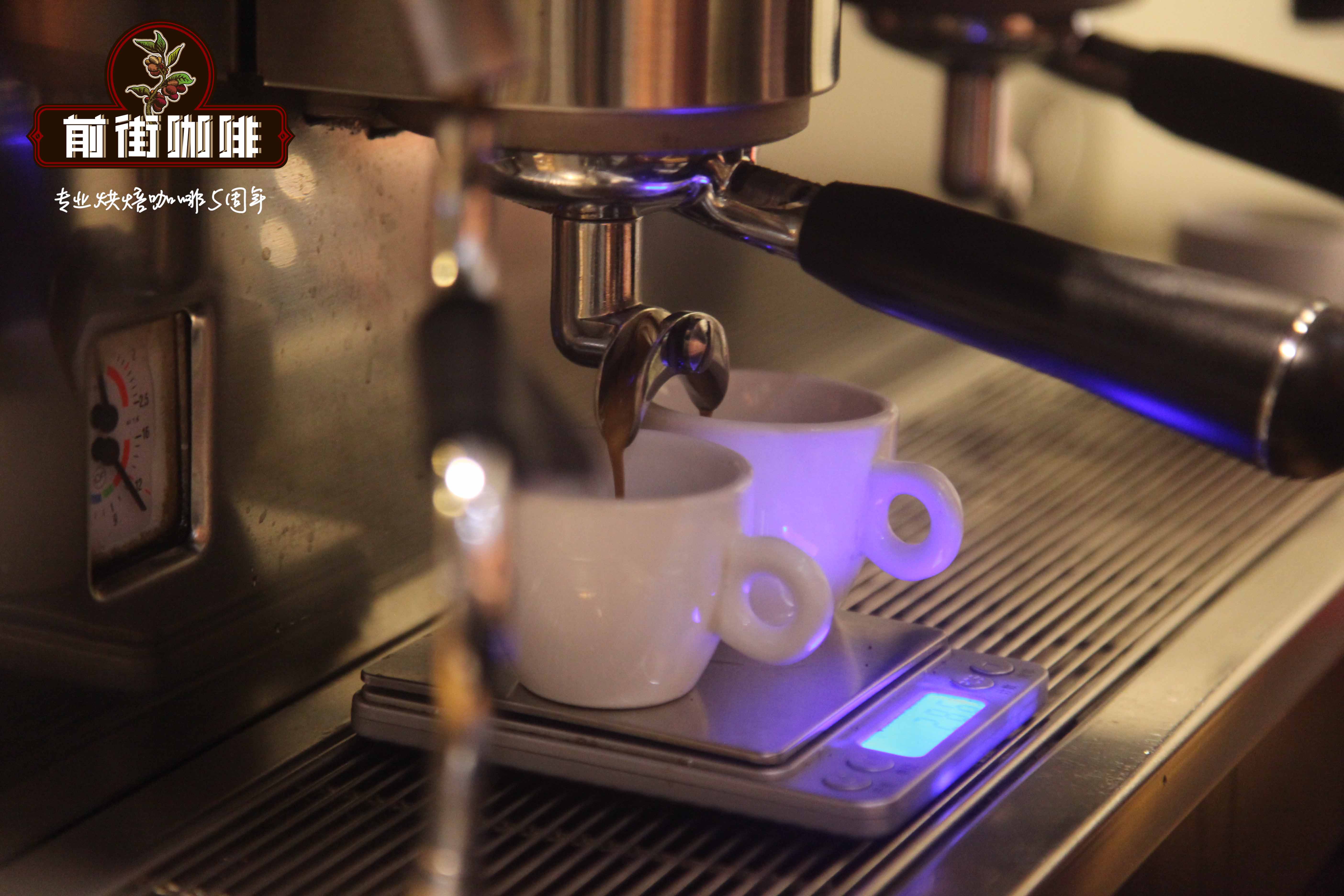
Coffee beans have no male or female distinction. Several years ago a misconception began spreading at various tourist destinations in Southeast Asia. When someone traced it back to the source, they found it came from tour guides in Bali, who referred to round beans as male beans and flat beans as female beans and used the idea to trick tourists into buying relatively cheap coffee beans at high prices.
As a globally popular beverage, coffee is increasingly favored by Thai consumers. For farmers in both the southern and northern regions, coffee is also an important economic crop that plays a significant role in promoting local economic development.
A Brief History of Thai Coffee
According to records, the history of coffee cultivation in Thailand can be traced back to the Ayutthaya period, but it truly became popular in Thai society during the reign of King Rama III (around 1824 AD). In 1960, the total coffee cultivation area nationwide was only 19,000 rai (1 rai = 1,600 square meters), with annual production of 750 tons. Imported coffee products that year, however, reached as high as 6,000 tons. The government therefore began promoting a plan to cultivate Robusta coffee beans in southern Thailand, which succeeded.
Thailand officially began exporting coffee in 1976, shipping about 850 tons of Robusta coffee. In 1980, world coffee market prices rose, driving Thai coffee production and exports up year after year, once setting records of 500,000 rai of cultivation area, 95,000 tons of production and 60,000 tons of exports. Later, declining world coffee prices and market oversupply caused sales to stagnate, and Thai coffee farmers suffered significant losses. The government advised farmers to reduce coffee cultivation areas and switch to other crops, resulting in substantial reductions in both area and production. In the end, Thailand went from a coffee-exporting country to a coffee-importing country.
Current Status of Thai Coffee Production and Sales
Thailand's main coffee cultivation areas are currently distributed across the southern provinces of Chumphon, Ranong, Surat Thani and Krabi, as well as the northern province of Chiang Rai. The south grows Robusta coffee beans, while the north's altitude and rainfall suit Arabica coffee beans.
According to preliminary statistics from the Thai Agricultural Economics Office, in 2012 the national coffee bean harvest area was 306,984 rai, a decrease of approximately 4.93% from the previous year; annual production was estimated at 41,560 tons, a 1.97% reduction from the same period the previous year; and average yield per rai was 135 kilograms, a 3.05% year-on-year increase. The areas with the largest reductions were Chumphon, Ranong and Surat Thani provinces.
The reduction in coffee cultivation area and production was mainly due to farmers in southern Thailand cutting down coffee trees at the beginning of the year to switch to rubber and palm trees. On one hand, the rubber and palm trees intercropped with the coffee trees had entered their mature growth period; on the other, farmers were tempted by rising rubber prices and lacked confidence in coffee market prospects and prices.
Based on continuously growing domestic coffee consumption, demand for coffee beans from domestic processing plants in Thailand has increased year after year over the past few years. The Department of Internal Trade predicted that demand would reach 67,620 tons in 2012, a 9.99% increase from the previous year. Experts believe domestic coffee consumption demand will continue to trend upward.
From January to May 2012, Thailand exported a total of approximately 1,971.16 tons of coffee beans, valued at 165.35 million baht, exceeding the same period in 2011 by 177% and 67% respectively. Exports of finished coffee amounted to 2,847.68 tons, totaling 463.41 million baht, representing year-on-year decreases of 23% and 10% respectively. By comparison, Thailand's imported coffee bean volume and value were 2,568.69 tons and 230.67 million baht, both showing slight year-on-year decreases of 6%; imported finished coffee amounted to 2,758.01 tons, valued at 817.02 million baht, increases of 54% and 66% respectively compared with the same period in 2011 (see Table 1).
The Agricultural Economics Office estimates that in 2013 Thailand's coffee bean harvest area will be approximately 279,060 rai, with total production of about 40,070 tons, both expected to decline further. Average yield per rai, however, will continue to rise to 144 kilograms. Notably, while Robusta cultivation areas in the south may decrease, Arabica cultivation areas in the north are expected to grow.
The Thai Coffee Market
According to surveys, although Thai coffee consumption is gradually increasing, consumption levels remain relatively low. The average person drinks only 130-150 cups of coffee per year - less than one cup a day - and fewer than 2 million Thais have a regular coffee-drinking habit, a low proportion relative to Thailand's total population of 60 million. This indicates that the Thai coffee market still has enormous growth potential.
Current Thai coffee market demand is approximately 60,000-70,000 tons and is growing steadily (see Table 2); however, domestic production is only just over 40,000 tons, leaving a gap that must be filled through imports.
As is well known, Brazil is the world's largest coffee producer and exporter. Among ASEAN countries, Vietnam and Indonesia are also the world's second- and fourth-largest coffee-producing nations (see Table 3). Vietnam is estimated to have exported about 1.2 million tons of coffee beans in 2012, valued at 3 billion US dollars, with ASEAN being one of Vietnam's important target markets.
Competition Facing the Thai Coffee Industry in the AEC Era
As early as several years ago, when the ASEAN Free Trade Agreement (AFTA) took effect, Thailand's import tariffs on finished coffee had already been reduced to 0%. Coffee beans were placed on the sensitive products list, with import tariffs reduced to 5% in 2010 and finally to zero by 2015, which coincides with the official establishment of the ASEAN Economic Community (AEC).
Coffee beans produced in Vietnam and Laos are currently flooding into Thailand in large quantities, especially after the establishment of the ASEAN Free Trade Area and the tariff reductions. The imported coffee beans are mostly Arabica varieties, whose quality is higher than Thailand's main Robusta varieties. Compared with Vietnamese coffee, Thai products' biggest advantage lies in product quality. Vietnamese coffee, however, not only far exceeds Thailand in production volume and has lower production costs, but also grades its products by quality, with some products holding considerable quality advantages. Many experts and industry insiders are therefore relatively pessimistic about the future of Thailand's coffee industry after the AEC's establishment, believing it will struggle to compete with imported products from countries like Vietnam and Laos.
Preparing for the AEC Era
How to Cope with Coffee Market Competition in the AEC Era
Some experts and scholars suggest that, in terms of production, efforts should be made to improve efficiency and achieve low costs, high output, excellent quality and balanced production. Relevant government departments should cooperate fully to solve irrigation problems, conduct research on soil quality and weather conditions nationwide, and identify areas suitable for coffee cultivation. The cultivation capabilities of coffee farmers should also be assessed, with training, assistance and technical support provided to those lacking sufficient knowledge, experience or technical ability.
The government should encourage coffee farmers to reduce the use of chemical fertilizers and pesticides while increasing the use of organic fertilizers, which can lower the risk of product contamination and help improve quality. Intercropping coffee with other agricultural products such as rubber, and having farmers in the same region jointly purchase seeds, fertilizers and other raw materials, can also help reduce costs. Relevant scientific research departments should improve Thai coffee varieties as well, which can help raise both yield and quality.
The Thai Department of Agricultural Technology found that Robusta cultivation areas in southern Thailand have relatively low yields because some aging coffee trees aged 10-20 years have not been replaced. To increase production, it recommends that farmers cut down and replant these trees. Through its subordinate units, the Department has established model coffee cultivation fields in major production bases so local farmers can take part in research and the promotion of scientific cultivation techniques, learning effective methods through practice. Through a series of targeted measures, the Department of Agricultural Technology believes it can effectively increase production, reduce costs and prepare Thailand's coffee industry for more intense competition before the AEC era arrives.
Private coffee industry operators are also seeking solutions, and some have begun to change their investment direction by investing in coffee bean cultivation in Laos, with operations gradually expanding in scale.
In terms of marketing, the government should follow the example of Thai rice standards, establishing standards for Thai coffee in terms of color, aroma and taste and promoting them widely. It should support Thai coffee operators in building their own brands and help raise the visibility of domestic Thai brands, enhancing the competitiveness of Thai coffee in both domestic and international markets.
In conclusion, if Thai coffee wants to overcome its disadvantages and compete with neighboring rivals, farmers must quickly reduce production costs, improve production techniques and increase yield per rai. On the other hand, they must focus on quality and product standards, launching high-quality, high-grade products that meet international standards while retaining Thai character. With 2015 and the AEC era approaching, the situation is urgent, and the relevant reforms and preparations must be carried out as soon as possible.
FrontStreet Coffee Recommendation
Thailand's story is a reminder of how much difference a single variety - Arabica or Robusta - can make to a cup, and FrontStreet Coffee's single origin range is built around exactly that kind of varietal and regional distinction. The FrontStreet Huakui is a natural-process Ethiopian whose local heirloom trees are never separated by variety, so the beans vary in size; it carries delicate florals but leads with fruit - creamy strawberry, mango, jackfruit, citrus and blueberry - and its rich berry fragrance won first place in the TOH green bean competition in its year. The FrontStreet Yirgacheffe Gudina, by contrast, is the washed representative of Ethiopia: clean, translucent lemon and citrus, with jasmine florals.
If your taste runs to balance rather than fruit, the FrontStreet Jamaica Blue Mountain No.1 is the classic Typica expression, with a mellow, gentle profile and a fullness of aroma and purity that few origins can match. And for something softer and sweeter, the FrontStreet Brazil Queen Estate Yellow Bourbon and the FrontStreet Colombia Sidra - a medium-light roasted variety with a passion fruit, grape and candied-fruit character - round out a range that lets you taste the world's Arabica diversity from one roaster.
Important Notice :
FrontStreet Coffee is a long-established specialty coffee roaster in Guangzhou China, selling freshly roasted beans from its own farm in Yunnan as well as dozens of carefully selected single-origin beans from around the world for both pour-over and espresso. The products deliver consistently excellent quality and great value, with shipping within 24 hours. Guangzhou's FrontStreet Coffee shop is recommended by many coffee lovers, and the beans are now available online at the Tmall 。
FrontStreet Coffee has moved to a new address:
FrontStreet Coffee Address: 315,Donghua East Road,GuangZhou
Tel:020 38364473
 Scan and follow the En Gafei WeChat official account. Please indicate that the reprint comes from "En Gafei".