Authentic Blue Mountain Coffee Bean Prices - How Much is Genuine Jamaica Blue Mountain Coffee - Blue Mountain Coffee Brand Price List
The Premium Value of Jamaica Blue Mountain Coffee
Before Geisha was discovered, Jamaica Blue Mountain coffee represented the pinnacle of premium coffee. Inherently rare, Blue Mountain was driven by its enormous reputation to prices above one hundred yuan per cup — an astronomical sum for the working class of the day. So why does FrontStreet Coffee's Jamaica Blue Mountain command such a high price? To answer that, FrontStreet Coffee has to start by explaining what authentic Blue Mountain coffee actually is.
What Is Authentic Jamaica Blue Mountain Coffee
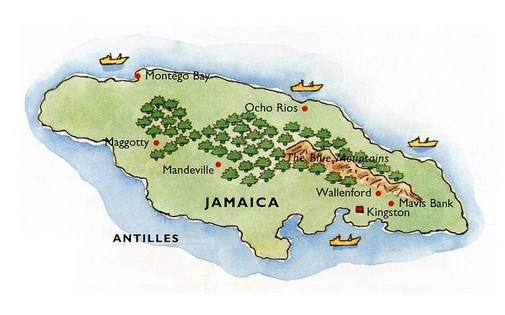
The Blue Mountain range, where Blue Mountain coffee is produced, has treacherous terrain with steep slopes. It is the highest-elevation area in the Caribbean Sea, with a tropical rainforest climate. In the rainy season, annual precipitation reaches 1,800–2,000 millimetres. The steep, sloped mountainside provides excellent drainage, allowing the local vegetation to receive adequate irrigation, and coffee trees are typically intercropped with banana and avocado. The Blue Mountain region has beautiful scenery, high-quality air and fertile volcanic soil that promotes full flavour development in the coffee fruit. The high Blue Mountains are often shrouded in cloud and mist, giving the coffee trees natural shade.
To distinguish Blue Mountain from ordinary Jamaican coffee, the Jamaican government established a special grading system. Only Typica-variety beans certified by the Coffee Industry Board of Jamaica (CIB), grown at elevations between 910 and 1,700 metres in the Blue Mountain range, may be called Jamaica Blue Mountain coffee. The certified growing area covers only 6,000 hectares, just one-third of the entire Blue Mountain region. Only about 15% of all coffee produced in Jamaica can carry the prestigious Blue Mountain name. The higher the altitude, the more challenging the harvest and the higher the labour and management costs. Each harvest season, local women familiar with the terrain are arranged to climb the mountains and pick coffee fruit at optimal ripeness, ensuring bean quality.
Processing Methods for Quality Enhancement
To achieve more stable flavour and quality, estates producing Blue Mountain coffee use washed processing, removing defective beans through several stages to enhance the clarity of the aroma. The FrontStreet Coffee Blue Mountain on our bean list is washed and comes from Clifton Estate. Clifton Estate places freshly harvested cherries into water tanks for flotation, removing pulp and skin before fermentation. Overnight fermentation produces abundant acidic substances that help separate the mucilage layer from the surface. The parchment beans are then dried in sunlight until moisture content meets the standard, after which they are packaged and stored in warehouses before being sent for quality inspection. The washing process allows FrontStreet's Blue Mountain beans to show cleaner, more transparent flavours and more stable quality.
Quality Grading System
After drying, Blue Mountain green beans must be graded against multiple criteria, including size, colour, moisture content and cup quality after roasting. Jamaica Blue Mountain coffee is classified into different grades: No.1, No.2, No.3 and Peaberry. No.1 is the highest grade — what we commonly call Blue Mountain Number One. The green beans must meet a 17–18 screen size, with a defect rate below 3%, uniform particle size, full-bodied beans and a cup showing balanced richness, aroma, sweetness and acidity. Achieving such top-tier Blue Mountain takes more labour, with manual selection and removal of inferior beans, which is why premium Blue Mountain is so precious.
Grade / Screen Size (defect rate ≤3%): No.1: 17–18; No.2: 16; No.3: 15; PB (Peaberry): 10
Characteristics of Authentic Blue Mountain Number One Coffee
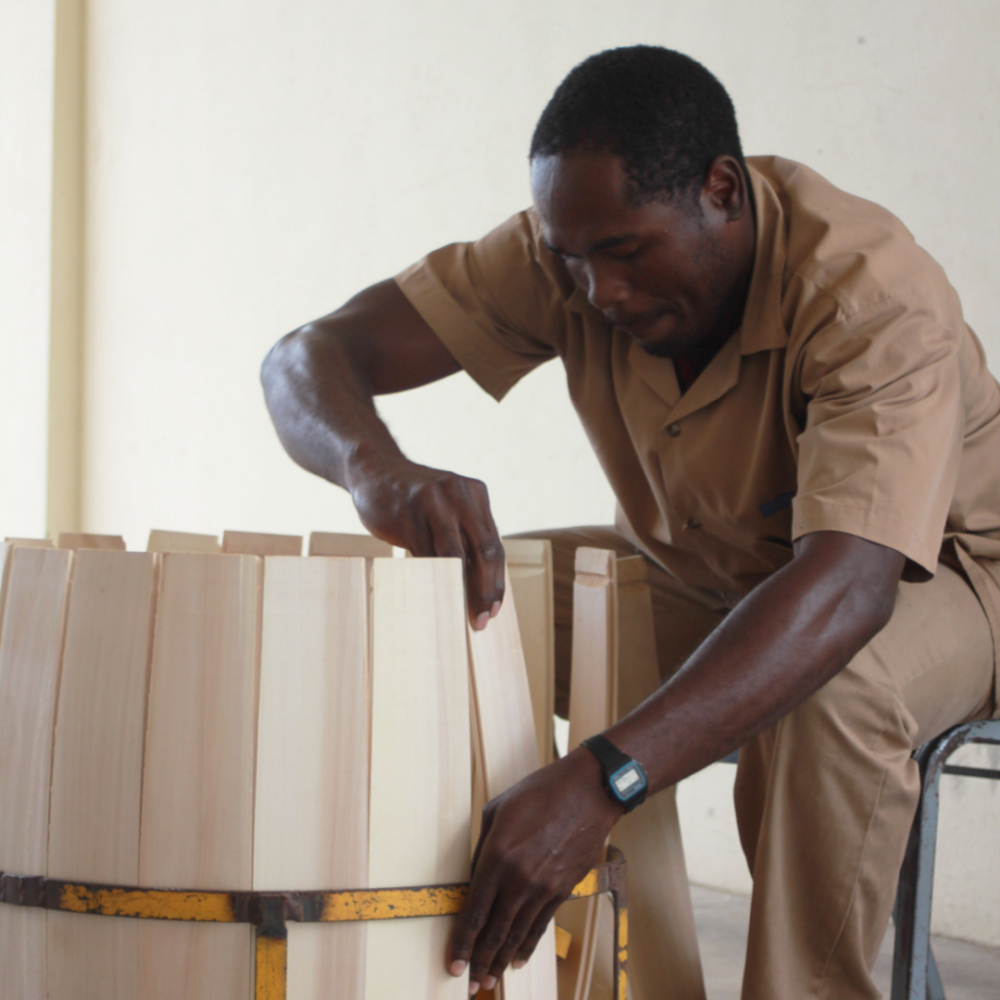
Blue Mountain coffee's use of wooden barrels for green beans makes it distinctive from the moment of purchase. Compared with the coarse burlap bags common in other growing regions, oak barrels do better at absorbing and releasing internal and external humidity while preventing the coffee aroma from escaping, helping maintain more stable moisture content and more consistent roasting. Jamaican coffee barrels come in three specifications: 70 kg, 30 kg and 15 kg.
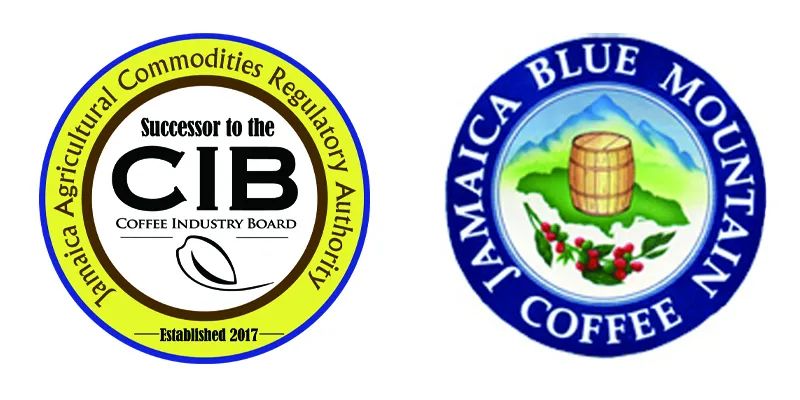
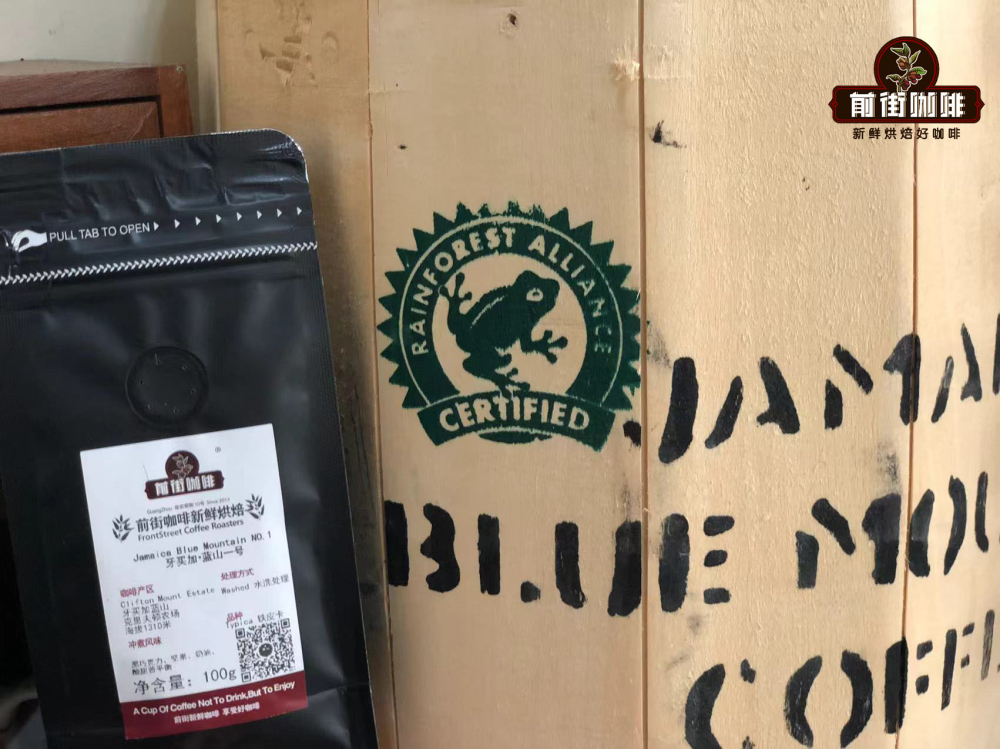
FrontStreet Coffee examines a barrel to verify Blue Mountain-related information. The top features CIB certification logos printed on the lid, with the registered exporter and official importer shipping marks printed on each batch's barrel. For example, ours comes from Clifton Estate, along with the tropical rainforest tree-frog logo on the barrel body. In addition, FrontStreet Coffee's Blue Mountain Number One carries the quality certification issued by the Jamaica Coffee Board, the authorised sales certificate issued by the Blue Mountain coffee producers, and a Jamaica Blue Mountain certificate of origin.
When FrontStreet Coffee received the Blue Mountain Number One green beans, they were uniform, full-bodied and evenly sized, with an overall translucent blue-green colour. After roasting, cup testing revealed a dry aroma of nuts, melon and chocolate. After hot water was added, aromas of oolong tea, caramel, honey and dark chocolate emerged. Tasting revealed rich dark chocolate, roasted hazelnut, cream and brown sugar, with a clean, clear character, rich mouthfeel and persistent aroma.
Pricing and Availability
Such premium Blue Mountain Number One beans are listed by FrontStreet Coffee at 158 yuan per 100-gram package. If you would like to taste hand-poured black coffee directly, you can visit FrontStreet Coffee's Dongshankou store to order; hand-poured FrontStreet Coffee Blue Mountain Number One costs 60 yuan per cup.
How to Brew a Perfect FrontStreet Coffee Blue Mountain Number One
FrontStreet Coffee believes a delicious cup depends on an excellent variety, exquisite processing, an appropriate roast level, bean freshness and the right extraction parameters. Top-tier Blue Mountain Number One beans have already been carefully selected from exceptional lots, leaving only the brewing to be done. FrontStreet Coffee recommends choosing freshly roasted beans. If beans have been stored for more than a month and a half, their aroma may have dissipated, making full flavour expression difficult. Beans shipped by FrontStreet Coffee are all freshly roasted within 5 days, generally ensuring they arrive within the optimal tasting window.
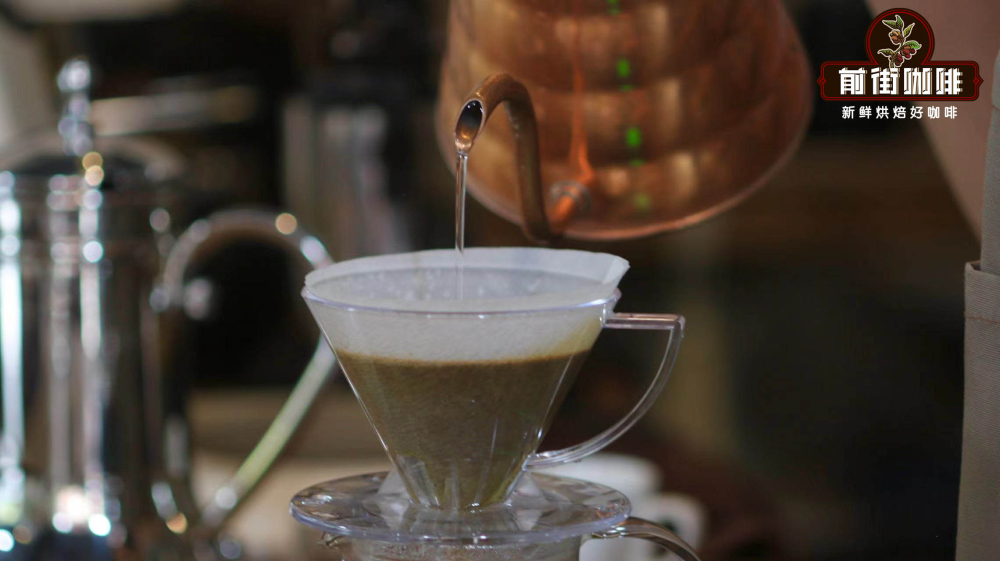
FrontStreet Coffee's Jamaica Blue Mountain is roasted to a relatively dark degree, and the bean texture is loose and highly absorbent, making it prone to over-extraction. Therefore a slightly coarser grind (75% pass-through rate on a #20 standard sieve) and a lower water temperature (88°C) are used for extraction. FrontStreet Coffee also wants a richer mouthfeel, so a filter cup with a slower flow rate is chosen, such as a KONO filter cup.
FrontStreet Coffee Jamaica Blue Mountain Hand-Pour Method
15 g of coffee grounds, a 1:15 coffee-to-water ratio, three-stage extraction.
Pour the ground coffee into a preheated filter cup. For the first stage, inject 30 g of water for the bloom and start timing, pouring in small circular motions from the centre. After 30 seconds, begin the second pour to reach 125 g, trying to lift the coffee bed while keeping a steady flow throughout. When the liquid level drops to half, continue with the final pour to a total of 225 g. Wait until all the coffee liquid has finished dripping before removing the filter cup, with a total time of around two minutes. Shake the coffee in the server to even it out, and you can begin enjoying the aromatic FrontStreet Coffee Blue Mountain.
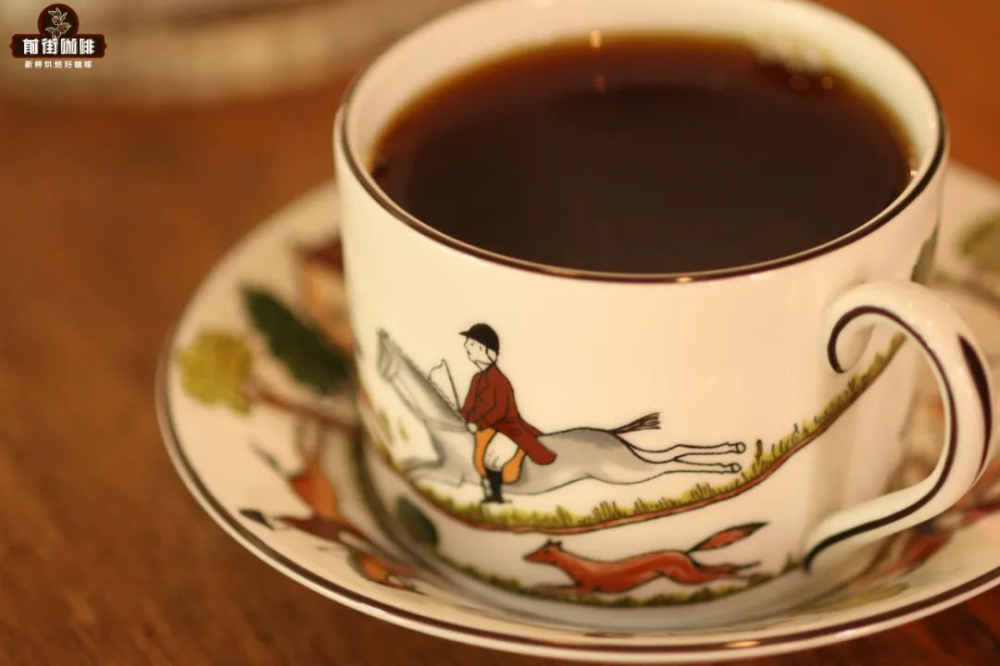
During the brewing of FrontStreet Coffee Blue Mountain, you can smell rich roasted nuts and caramel. On tasting, you experience dark chocolate and nutty sweetness, with the various flavours intertwining and blending into a rich mouthfeel and a bright aftertaste.
FrontStreet Coffee Recommendation
If this article has convinced you to try the real thing, FrontStreet Jamaica Blue Mountain No.1 is the estate-certified top grade: Typica grown in the Blue Mountain range, washed, and shipped in the original oak barrels, each carrying a batch number and full certification. It is roasted to a medium-dark level so the classic balance — sweetness, mild acidity, gentle bitterness and aroma — comes through without any one note dominating.
The cup is beautifully clean and layered: cream, caramel, chocolate, nuts, honey and a light fruit accent, soft and rounded on entry, sweet through the middle, with a long, clean finish. Because the balance is so complete, many coffee professionals call it the specialty coffee that is easiest for almost anyone to love.
In the kitchen, Blue Mountain No.1 is unusually flexible. For pour-over, use a 1:15 to 1:16 ratio, 85–88°C water and a medium-coarse grind to highlight the cream, caramel and nut flavours while keeping its soft, bright acidity. For a heavier cup, a moka pot works just as well: grind slightly finer than for pour-over, start with hot water in the base, heat over medium-low, and take it off the heat just before the flow finishes. Either way, it stays wonderfully balanced — and it shines just as brightly in a latte or flat white.
Important Notice :
FrontStreet Coffee is a long-established specialty coffee roaster in Guangzhou China, selling freshly roasted beans from its own farm in Yunnan as well as dozens of carefully selected single-origin beans from around the world for both pour-over and espresso. The products deliver consistently excellent quality and great value, with shipping within 24 hours. Guangzhou's FrontStreet Coffee shop is recommended by many coffee lovers, and the beans are now available online at the Tmall 。
FrontStreet Coffee has moved to a new address:
FrontStreet Coffee Address: 315,Donghua East Road,GuangZhou
Tel:020 38364473
 Scan and follow the En Gafei WeChat official account. Please indicate that the reprint comes from "En Gafei".