What is the Flavor Profile of Guatemalan Coffee? What are the Characteristics of Guatemalan Coffee? Guatemala
An Introduction to Central American Coffee
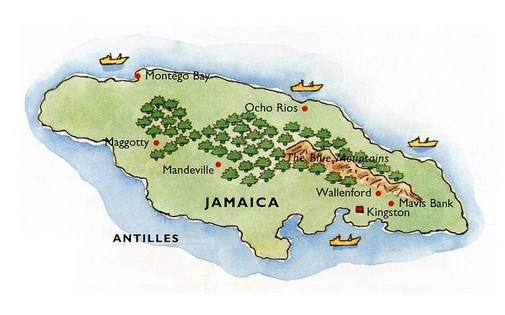
Central and South America are widely considered the world's finest coffee-growing regions. Their coffees are prized for a mild, bright and elegant fruity acidity, and it is hard to find a blend anywhere that does not include Latin American beans. The producing countries across this part of the world include Jamaica, Brazil, Colombia, Guatemala, Mexico, Costa Rica, Panama and more.
Guatemala's Unusual Growing Conditions
Guatemalan coffee grows in the high-altitude cloud belt, where the wide swing between daytime and nighttime temperatures keeps the fruit from ripening too quickly. Fast growth makes beans softer and less flavorful, so this slow, steady development matters a great deal. Combined with rich volcanic soil, it gives Guatemala what many consider the most ideal growing conditions in all of Central America. While other Central American countries tend toward cleaner, fresher-tasting beans, Guatemala's coffee is far more varied in style because of its range of altitudes. The capital region of Antigua and the northwestern Huehuetenango highlands are the two areas that shape most people's picture of Guatemalan coffee: Antigua is prized for its fuller body and subtle smoky notes, while Huehuetenango is known for a delicate citrus acidity.
Guatemala's Coffee Market
Guatemala's coffee export trade is run by private companies, while the National Coffee Association (Asociación Nacional del Café) oversees the rest of the industry. Today, some of the country's very best coffee is shipped to Japan.
Most smallholder producers are of Mayan descent and prefer to be called locals. Many of them now benefit from a US-funded initiative, known locally simply as "The Project," which encourages the creation of small, high-quality coffee farms.
Guatemala's Coffee Regions
Acatenango Valley
Reaching 2,000 meters (6,500 feet), this region is defined by dense shade and a distinctive ecology, and the nearby Fuego volcano's frequent eruptions keep enriching its coarse, sandy soil with minerals. Temperate sea breezes from the Pacific and clearly defined seasons allow coffee here to be reliably sun-dried and processed using traditional family methods refined over many years.
Characteristics: pronounced acidity, intense and pleasing dry and wet aromas, good body, and a clear, long aftertaste.
Rainforest Cobán
This region has a perennially cloudy, rainy and cool climate. Most Rainforest Cobán coffee grows on the noticeably undulating, mist-covered mountains here, deeply influenced by Atlantic-basin limestone and clay. Cobán really has only two seasons: the rainy season and the very rainy season.
Characteristics: distinct fresh-fruit flavors, balanced body and a pleasant aroma.
Antigua
Antigua is defined by rich volcanic soil, low humidity, abundant sunshine and cool nights. The valley is framed by three volcanoes: Agua, Fuego and Acatenango. Ash from their eruptions supplies the soil with minerals, while volcanic pumice holds moisture and offsets Antigua's low rainfall. Dense shade also protects the trees from the occasional frost.
Characteristics: a rich wet aroma, excellent balance, high sweetness and an elegant, ethereal mouthfeel.
Huehuetenango Highlands
Among Guatemala's three major non-volcanic coffee regions, Huehuetenango is the driest and the highest in altitude. Dry, hot winds blowing in from Mexico's Tehuantepec plateau shield the coffee from frost, which allows cultivation all the way up to 2,000 meters (6,500 feet). Because the area is so remote, every farmer must process their own coffee; fortunately, countless streams run through the region, so small processing facilities can be set up almost anywhere.
Characteristics: a balanced, pleasant mouthfeel, high body and a wine-like aftertaste.
Fraijanes Plateau
Fraijanes has volcanic soil, high altitude, plentiful rainfall and variable humidity. Ash from Pacaya, Guatemala's most active volcano, supplies the soil with important minerals. The dry season brings plenty of sunshine, and although morning cloud and dew are heavy, they burn off quickly. As a result, 100% of the coffee here is fully sun-dried.
Characteristics: bright, consistent acidity, a full aroma and a delicate body.
New Oriente
New Oriente is the youngest of Guatemala's major coffee regions. In ancient times it was a volcanic area, so its soil is made up of mineral-rich metamorphic rock. Before coffee arrived, New Oriente was Guatemala's poorest region. Since the 1950s, farmers in the mountains have relied on this naturally nutrient-rich land to grow coffee, gradually bringing the area to life. Today it is a rising star of Guatemalan coffee.
Characteristics: a balanced mouthfeel, full body and chocolate notes.
Traditional Atitlán
Atitlán is one of Guatemala's five major volcanic coffee regions and has the richest organic matter in its soil of the five. 90% of Traditional Atitlán coffee grows on the steep volcanic slopes along the shore of Lake Atitlán, and the daily breezes that stir the lake are a key factor in shaping the region's microclimate. Over time, growers here have built up outstanding cultivation and processing skills.
Lake Atitlán was formed by volcanic activity more than 80,000 years ago: a vast lake roughly 1,000 feet deep and covering 140 square miles. At dawn it lies wrapped in mist, then reveals its beautiful blue form as the sun climbs. The day-to-night temperature swing and the afternoon winds known as Xocomil create a unique microclimate around the lake.
Characteristics: a refreshing aroma, bright acidity and full body.
San Marcos Volcano
San Marcos has the hottest climate of Guatemala's eight coffee regions, with rainfall reaching as high as 200 inches (5,000 mm). The rainy season starts earlier than elsewhere, so the coffee trees flower earlier too. As in other remote parts of Guatemala, Volcanic San Marcos coffee is grown and processed by smallholders themselves. Because rain is so frequent during the wet season, most of the coffee is first pre-dried in the sun and then finished in Guardiola dryers.
Characteristics: subtle floral notes in both aroma and flavor, noticeable acidity and good body.
FrontStreet Coffee's Guatemalan Brewing Recommendation
V60 / 90°C / 1:15 ratio / 2 minutes brewing time
Guatemalan coffee brings excellent fruity acidity and a smooth mouthfeel, and the subtle smoky note in the finish is what makes it so distinctive.
FrontStreet Coffee Recommendation
If Guatemala's balanced, gently bright profile is what you enjoy, FrontStreet Coffee's Brazilian single origins are a natural next step. FrontStreet Brazil Cerrado Red Bourbon is a classic Brazil single origin from the well-known Cerrado growing region; roasted to a medium level, it shows creamy peanut, toast, caramel and hazelnut aromas with a round, mellow body, very little acidity and a faint bittersweet note. It works equally well as a pour-over, in a moka pot, as an espresso SOE, in a siphon or in a French press.
For something with a touch more fruit, try FrontStreet Brazil Queen's Estate Yellow Bourbon from Mogiana, near South Minas. The fertile red volcanic soil there lets the cherries take in abundant nutrients, and this rare Yellow Bourbon brings a cleaner fruit character, with the sugarcane sweetness, fruit and chocolate notes you will not find in other regions. Both are excellent starting points if you are new to Latin American coffee.
Important Notice :
FrontStreet Coffee is a long-established specialty coffee roaster in Guangzhou China, selling freshly roasted beans from its own farm in Yunnan as well as dozens of carefully selected single-origin beans from around the world for both pour-over and espresso. The products deliver consistently excellent quality and great value, with shipping within 24 hours. Guangzhou's FrontStreet Coffee shop is recommended by many coffee lovers, and the beans are now available online at the Tmall 。
FrontStreet Coffee has moved to a new address:
FrontStreet Coffee Address: 315,Donghua East Road,GuangZhou
Tel:020 38364473
 Scan and follow the En Gafei WeChat official account. Please indicate that the reprint comes from "En Gafei".