Guatemala Coffee: What Are the Characteristics of Guatemalan Coffee Beans?
For professional coffee knowledge exchange and more coffee bean information, follow Coffee Workshop.
The Legend of Coffee's Discovery
Around the sixth century AD, an Arab goatherd named Kaldi was secretly watching his goats graze when he noticed that after eating red berries from a wild shrub on the hillside, they became unusually excited. Curious, Kaldi picked the berries himself, tasted them, and found himself full of energy and in a very pleasant mood. He then took the fruits to a nearby monastery and told the monks about their magical effects. The monks, however, believed this was the work of the devil and threw the red fruits into the fire, which immediately gave off an intoxicating, unusual aroma. While the abbot slept, one young rebellious monk gathered the cooled beans, ground them into powder, and poured them into a container of hot water. The world's first cup of coffee was thus born.
Latin American Coffee Excellence
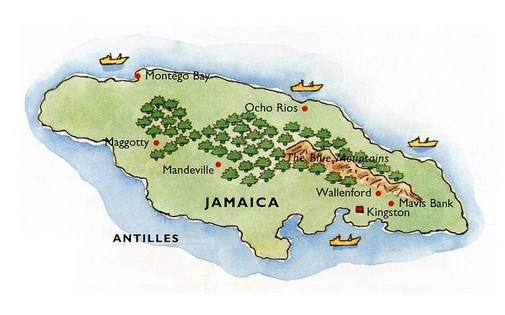
Central and South America are renowned as the finest coffee-producing regions, with coffee known for its mild, bright, and elegantly fruity acidity. Almost all coffee blend recipes include Latin American coffee beans. Producing countries in this region include Jamaica, Brazil, Colombia, Guatemala, Mexico, Costa Rica, Panama, and more.
Guatemala's Coffee Heritage
Guatemalan coffee originates from cultivation introduced during Spanish colonial rule, with early planting by monks in the gardens of Antigua Santiago de los Caballeros. Guatemala's coffee industry began developing in the 1850s, with early small coffee plantations scattered across southwestern areas such as Amatitlan and Antigua. At that time, a lack of planting knowledge and technology made coffee production growth slow, and many coffee farmers had to rely on loans to run their plantations. Later, with capital injections from foreign companies, those companies gradually bought out the plantations and took over Guatemala's coffee production.
Because coffee production is labor-intensive, labor shortages became the main obstacle to increasing Guatemala's coffee output. In 1887, Guatemala's coffee production exceeded 22,000 metric tons, and by 1891 it had surpassed 24,000 metric tons. By 1902, several important global coffee plantations had been established in Guatemala.
Guatemala's Coffee Growing Regions
The slopes of the Sierra Madre volcanoes provide ideal conditions for growing premium coffee beans, with coffee thriving at high altitudes. This coffee has a complex flavor profile with spicy notes. The region's strictly hard bean (SHB) coffee is exceptionally rare and excellent — full-bodied beans, a delicious taste, and balanced acidity.
Antigua is also a famous coffee-producing region. Antigua's coffee comes from Hacienda Carmona, where the finest coffee is El Pulcal, which not only has excellent quality but is also more full-bodied, richer in taste, and has a stronger tobacco flavor than other Guatemalan coffees. Roughly every 30 years, the Antigua area suffers volcanic eruptions, which provides more nitrogen to the already fertile land. Abundant rainfall and sunshine make this place even better suited to coffee cultivation.
Other coffee-producing regions include San Marcos, Oriente & Coban, Palcya, Mataquescuintla, and La Uman in Zacapa. The establishment of the Specialty Coffee Association means the Guatemalan government has begun to focus on high-quality coffee, and the efforts made toward this goal will soon show results.
The main regions in Guatemala that produce premium coffee are Lake Atitlan and Huehuetenango.
Brewing Recommendations
FrontStreet Coffee's Guatemala brewing parameter recommendations:
V60/90°C/1:15 ratio/time: two minutes
Guatemalan coffee has excellent fruity acidity, a smooth mouthfeel, and a slight smoky note in the finish that makes it particularly special.
FrontStreet Coffee Recommendation
Guatemala's balance and gentle acidity sit comfortably alongside FrontStreet's Brazilian lineup. The Brazil Cerrado Red Bourbon is a classic single origin — pulped-natural and medium roasted, with creamy peanut, toast, caramel, and hazelnut aromas, a round body, low acidity, and a light bitterness; it suits pour-over, moka pot, espresso SOE, siphon, and French press.
FrontStreet's Brazil Queen Estate comes from Mogiana near South Minas, where fertile red volcanic soil feeds the cherries. Its uncommon Yellow Bourbon — a natural mutation of Red Bourbon with cleaner fruit — shows a sugarcane sweetness found in few other regions, alongside fruit and chocolate.
Brazilian beans also anchor FrontStreet's espresso range: the Classic Blend, the nut-forward Premium Blend, the balanced Black Cocoa Blend, and the shop-focused Commercial Blend all include Brazil for chocolate and cream aroma and a stable, balanced extraction.
Important Notice :
FrontStreet Coffee is a long-established specialty coffee roaster in Guangzhou China, selling freshly roasted beans from its own farm in Yunnan as well as dozens of carefully selected single-origin beans from around the world for both pour-over and espresso. The products deliver consistently excellent quality and great value, with shipping within 24 hours. Guangzhou's FrontStreet Coffee shop is recommended by many coffee lovers, and the beans are now available online at the Tmall 。
FrontStreet Coffee has moved to a new address:
FrontStreet Coffee Address: 315,Donghua East Road,GuangZhou
Tel:020 38364473
 Scan and follow the En Gafei WeChat official account. Please indicate that the reprint comes from "En Gafei".