Guatemala Coffee Bean Flavor and Taste Characteristics: Antigua Flor de Cafe Bean Pour-Over Grind Size and Water Temperature
Professional Coffee Knowledge Exchange
For more coffee bean information, follow Coffee Workshop (WeChat public account: cafe_style).
Guatemala sits in Central America, with a tropical rainforest climate, highland jungles, high humidity, and warm weather. For FrontStreet Coffee's part, the people of Guatemala have long known how to grow and drink coffee. They drink it daily, which has given rise to a rich coffee culture. So today FrontStreet Coffee will introduce Guatemalan coffee.
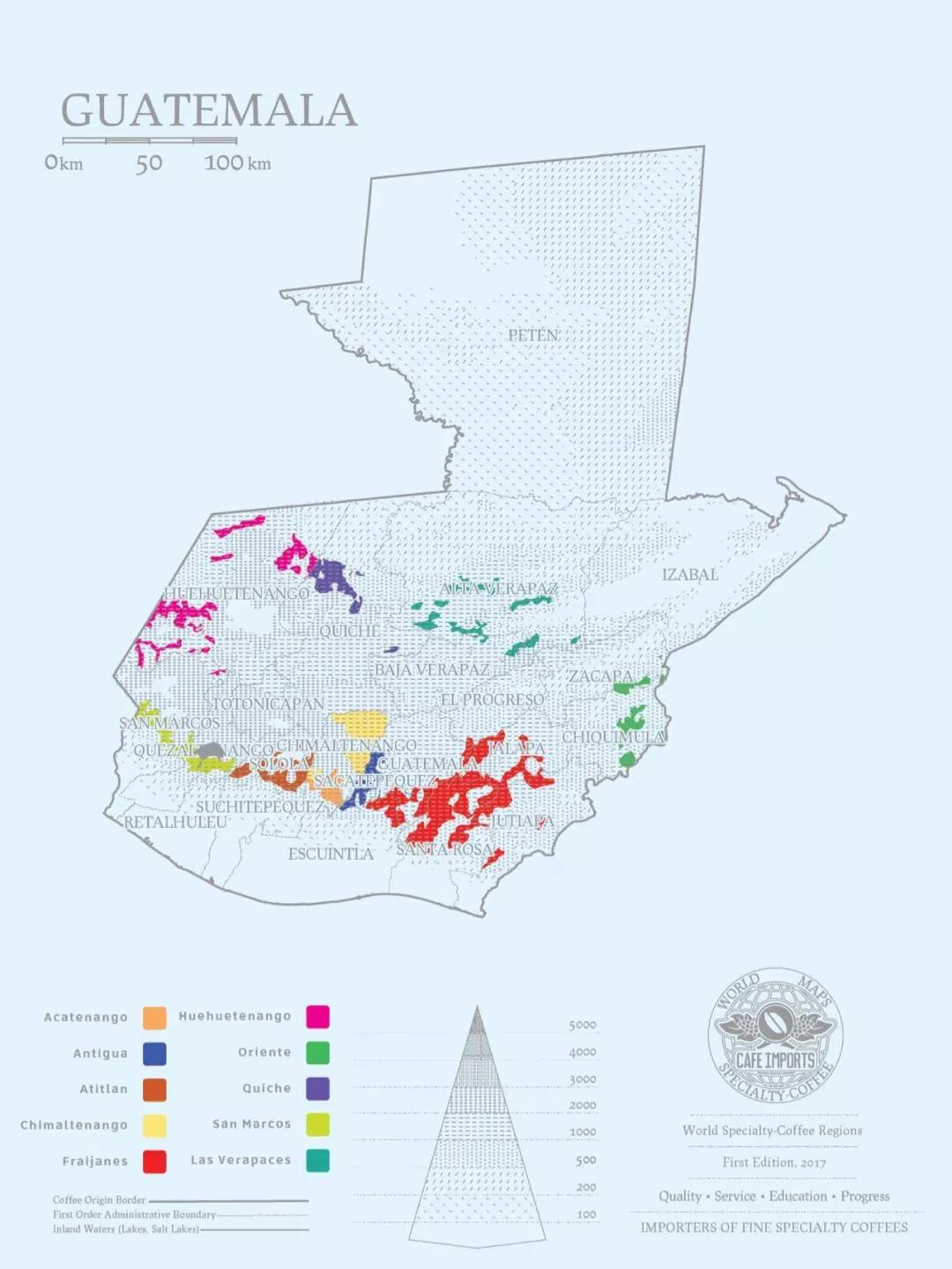
FrontStreet Coffee makes a point of understanding every coffee bean by first learning about its terrain, climate, and processing methods. Guatemala lies in Central America with numerous nearby volcanoes, which makes its soil very fertile and rich in minerals. Every coin has two sides, though: because those volcanoes have long been unstable, they remain a potential risk for the country. Yet it is exactly this climate type that created the unique flavor of Guatemalan coffee beans.
Guatemala's Eight Coffee Regions
Guatemala has eight coffee-producing regions, divided into five volcanic regions and three non-volcanic ones. The five volcanic regions are Antigua, Acatenango, Atitlan, Volcanic San Marcos, and Fraijanes. The three non-volcanic regions are Huehuetenango, Coban, and New Oriente.
FrontStreet Coffee will now walk you through each of Guatemala's eight coffee regions.
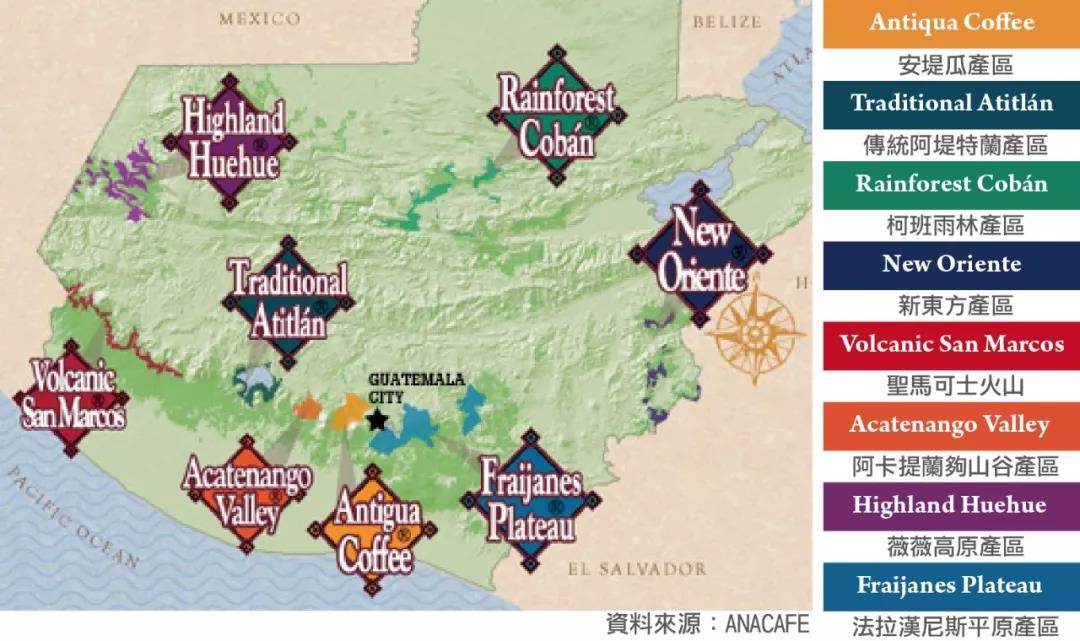
Guatemala's most famous regions are Antigua and Huehuetenango, and Antigua is the more renowned of the two. Beans from Antigua command the highest prices among the eight regions, but Huehuetenango is no slouch, with coffee quality that keeps improving. Among FrontStreet Coffee's seven staple coffee series, there is one bean representing Guatemala, and it comes from the Huehuetenango region. FrontStreet Coffee believes Guatemalan coffee beans combine excellent layering with saturation, so it has also introduced the Flor de Café from Antigua.
Antigua Region
Antigua is located in the central highlands of Guatemala, with a subtropical monsoon climate, abundant rainfall, and fertile volcanic ash soil. The beans produced here carry very typical Guatemalan flavors - bright fruit acidity with eye-catching fruit aromas. That is what earned Antigua its place in Guatemalan coffee.
Acatenango Region
Through comparative cupping of beans from Guatemala's regions, FrontStreet Coffee found that Acatenango beans also have excellent flavor. In FrontStreet Coffee's view, Acatenango's profile resembles Antigua's but is slightly lacking in fruit acidity, with a full body and a charming aroma. This may be closely tied to its terrain: Acatenango is Guatemala's highest-altitude coffee-producing region, near volcanoes, with fertile soil and large day-night temperature differences, making its coffee relatively sweeter than coffee from other regions.
Lake Atitlan Region
Lake Atitlan is Guatemala's largest region, set at high altitude around a volcanic lake, with the most organic matter in the soil. Cool breezes arrive from the lake every day, creating a unique microclimate with a style and character all its own - perfect for coffee tree growth.
Fraijanes Region
The Fraijanes region surrounds the area near Guatemala's capital, with high altitude, sufficient rainfall, and significant humidity variations. Volcanic ash from Pacaya, Guatemala's most active volcano, supplies important minerals to the soil but occasionally affects personal safety and infrastructure. This region has excellent sun-drying conditions, with plenty of sunshine during the coffee drying period.
Volcanic San Marcos Region
Volcanic San Marcos is the warmest of the eight coffee regions and receives the most rainfall. The rainy season arrives very early, so flowering also occurs very early. The region also uses washed processing, then dries the coffee in yards and finishes with low-temperature drying.
Non-Volcanic Regions
Among Guatemala's three major non-volcanic regions, FrontStreet Coffee's staple coffee series includes the Huehuetenango region. The name comes from the Nahuatl language and means "land of the ancients." Coffee from this region is primarily washed processed, with aromatic, clear fruit notes and a refreshing flavor.
Guatemala also has a region with an untouched natural environment and a unique climate - the Coban region. It lies near the heart of Maya culture, which is also the source of the largest tropical rainforest in Central America's Guatemala.
The youngest of Guatemala's eight coffee-producing regions is New Oriente. It was once Guatemala's poorest region, where coffee farmers relied on New Oriente's natural environment and fertile land to grow coffee, gradually emerging from poverty.
Coffee Varieties in Guatemala
Guatemalan coffee varieties are mainly Bourbon, Typica, Caturra, Catuai, and small amounts of Yellow Bourbon, as well as Geisha, Pacamara, and the newly cultivated Maracaturra variety - quite diverse. FrontStreet Coffee believes readers who follow its WeChat articles are already very familiar with varieties like Bourbon and Typica, but may be unfamiliar with Pacamara. Here FrontStreet Coffee briefly introduces this novel variety.
Pacamara is a hybrid of Pacas and Maragogype discovered in El Salvador in 1950. The plants are smaller, allowing for more intensive planting and higher yields. It suits cultivation above 1,200 meters and in areas with annual rainfall below 2,500 millimeters. FrontStreet Coffee's Flor de Café variety is Bourbon and Caturra.
Guatemala's Coffee Grading System
Guatemala has its own coffee bean grading system based on altitude. The method is actually not complicated. As altitude increases, temperature continuously decreases, so coffee produced at high altitude is generally higher in quality than coffee produced at low altitude. In a high-altitude environment, coffee grows very slowly, which benefits the accumulation of coffee substances. The higher the altitude, the higher the density of the beans, and the higher the grade of the green coffee. That is why Guatemala uses altitude for quality grading.
Through cupping and comparison of several Guatemalan coffees, FrontStreet Coffee found that the Flor de Café from Antigua best represents Guatemala's regional flavor. Below is the basic information for the two coffees from FrontStreet Coffee.
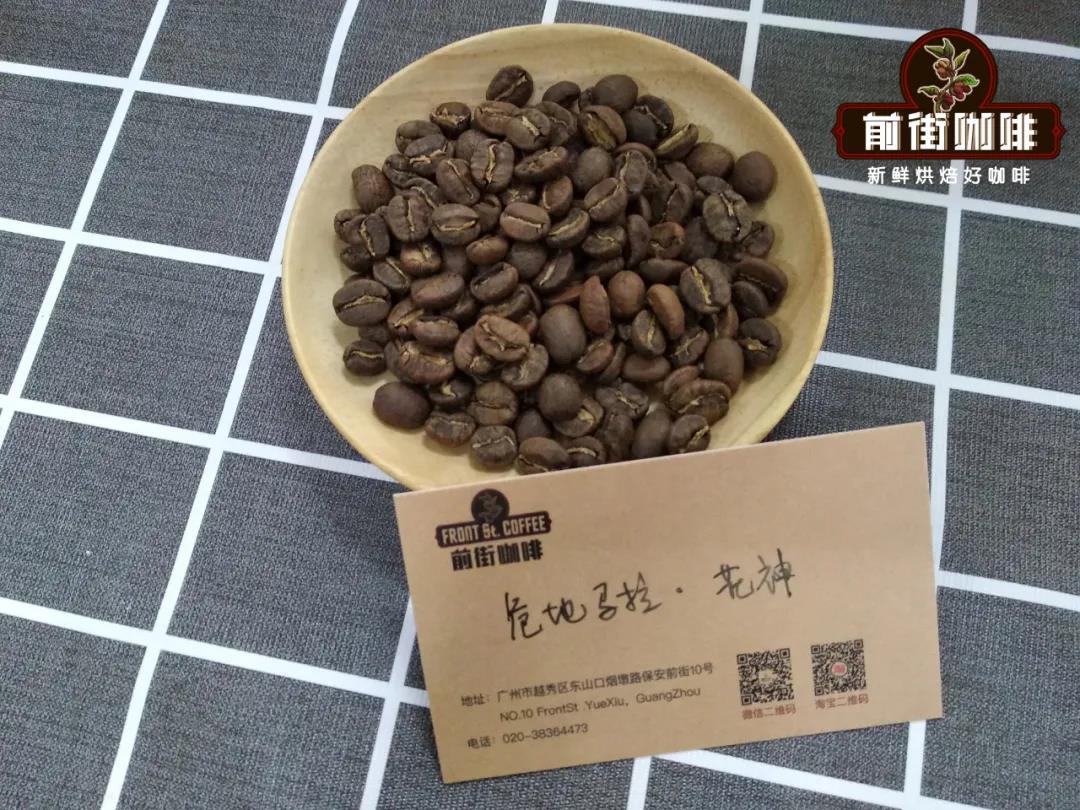
1. FrontStreet Coffee · Guatemala Flor de Café Coffee Beans
Region: Antigua region
Trader: La Minita
Altitude: 1200-1600m
Variety: Bourbon, Caturra
Processing Method: Washed processing
Grade: SHB
Flavor: Berry acidity, smoky notes, citrus, mild chocolate, rich layering, smooth texture.
2. FrontStreet Coffee · Guatemala Huehuetenango Coffee Beans
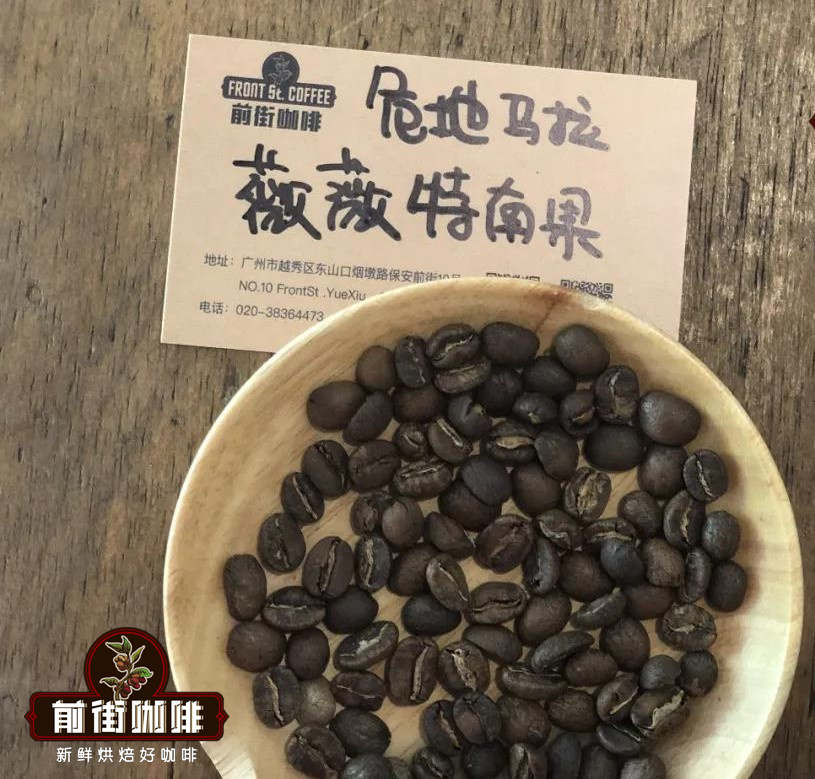
Region: Huehuetenango
Altitude: 1500-2000m
Variety: Bourbon, Caturra, Catuai
Processing Method: Washed processing
Flavor: Entry with citrus and berry acidity, nutty aromas in the middle, tea-like finish.
For more specialty coffee beans, add FrontStreet Coffee on private WeChat: kaixinguoguo0925
FrontStreet Coffee Recommendation
Guatemalan coffee is mostly drunk as pour-over, and a V60 is the natural tool: the Hario V60 was redesigned in 2004 and launched a year later, and its 60-degree cone and single large aperture let the brewer control the flow and, in turn, the flavor. Its fast extraction suits floral, fruit-forward coffees especially well, which is why FrontStreet Coffee recommends the Gedingding Cooperative for a citrus-and-white-flower Yirgacheffe profile, or the Sun-Dried Huakui for a tropical fruit character with strawberry, passionfruit, and jackfruit aromas and very low bitterness.
Both work alongside a coffee like the Antigua Flor de Café, whose berry acidity and mild chocolate benefit from the V60's clarity. FrontStreet Coffee favors the resin version of the Hario V60: resin resists heat loss well and, in standard industrial production, holds the tightest tolerances of any material.
Important Notice :
FrontStreet Coffee is a long-established specialty coffee roaster in Guangzhou China, selling freshly roasted beans from its own farm in Yunnan as well as dozens of carefully selected single-origin beans from around the world for both pour-over and espresso. The products deliver consistently excellent quality and great value, with shipping within 24 hours. Guangzhou's FrontStreet Coffee shop is recommended by many coffee lovers, and the beans are now available online at the Tmall 。
FrontStreet Coffee has moved to a new address:
FrontStreet Coffee Address: 315,Donghua East Road,GuangZhou
Tel:020 38364473
 Scan and follow the En Gafei WeChat official account. Please indicate that the reprint comes from "En Gafei".