Recommended Bagged Coffee Bean Brands_Vacuum Packaging Doesn't Guarantee Freshness_Bagged Coffee Bean Prices
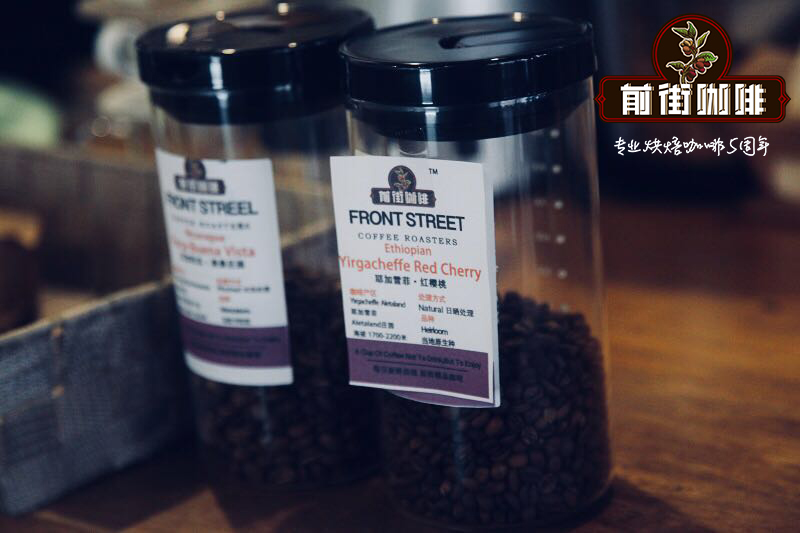
Storing Bagged Coffee Beans
Bagged coffee beans need to be kept somewhere that isolates oxygen and is dry, dark, and free of odors.
Vacuum Packaging Doesn't Mean Freshness
You might think: "How hard can isolating air be? Just vacuum-pack the beans. Or use a sealed canister — no oxygen gets in." Vacuum packaging or a fully sealed package might work well for other ingredients, but neither is actually suitable for fresh coffee beans.
As noted above, coffee beans release large amounts of carbon dioxide continuously after roasting. If beans in a vacuum pack were truly fresh, the bag would burst. So the standard practice is to let roasted beans sit until they stop off-gassing, then vacuum-seal them. No risk of bursting — but the beans are no longer at their freshest. Vacuum-packing ground coffee is acceptable, though ground coffee is, by definition, no longer coffee at its freshest.
Sealed packaging has the same flaw. Sealing only keeps outside air from coming in; the air already inside the package cannot escape. That air is 21% oxygen, which means you have simply trapped the oxygen and the beans together — hardly ideal preservation.
The Best Device for Preserving Coffee: The One-Way Degassing Valve
Front and side schematic diagram of the one-way degassing valve
Here is the correct answer. The best freshness-preserving device on the market today is the one-way degassing valve, invented in 1980 by Fres-co Company of Pennsylvania, USA.
Why does it work? A little high-school physics helps. Lighter gases move faster, so in a space with only one exit — gas can leave but not enter — lighter gases tend to escape while heavier ones stay behind. That is Graham's Law.
Imagine a bag of fresh beans with some residual air inside. Air is 21% oxygen and 78% nitrogen, and carbon dioxide is heavier than both. As the beans produce CO2, it pushes the oxygen and nitrogen out. With a one-way valve, gas exits but never enters, so the oxygen in the bag steadily decreases — exactly what we want.
Degassing Means Releasing Carbon Dioxide
Less Oxygen Means Better Coffee
Oxygen is the culprit behind staling, and it is the first principle to weigh when evaluating any coffee storage product. Some people poke a small hole in the bag — better than full sealing, yes, but the escape of gas is slow and limited, and a hole is a two-way channel that lets outside oxygen back in. Reducing the air in the package helps, but only a one-way degassing valve genuinely lowers the oxygen content inside a bean bag.
One more thing: a valve bag only works if it is properly sealed; otherwise oxygen still gets in. Before sealing, gently squeeze out as much air as you can — less residual air means less oxygen in contact with the beans.
Coffee Bean Storage Q&A
Of course, one-way valves are only the beginning. Here are some questions you might have, so every cup can taste as fresh as possible.
What if I Buy Too Many Coffee Beans?
The optimal tasting window for coffee beans is generally about two weeks. If you buy more than you can drink in that time, the best option is the freezer. Use resealable freezer bags with as little air inside as possible, and portion the beans so each package holds no more than two weeks' worth. Take a package out an hour before brewing and let it return to room temperature before opening — this minimizes condensation on the beans, and moisture seriously damages flavor. Never return beans taken from the freezer to the freezer; the thawing and refreezing cycle will ruin the taste.
Under good storage conditions, beans stay fresh in the freezer for two weeks and can be kept up to two months — though that is not recommended.
Can Coffee Beans Be Stored in the Refrigerator?
No — only the freezer preserves freshness. The refrigerator isn't cold enough, and beans naturally absorb odors, so your coffee can end up tasting like the rest of your fridge. No storage container blocks odors completely, so even ground coffee should not go in the refrigerator.
Storing Ground Coffee
The best way to "store" ground coffee is to brew it immediately — its standard shelf life is about an hour. Only freshly ground, freshly brewed coffee delivers its best flavor.
If you truly have no alternative, keep the grounds in an airtight container (porcelain is best), keep them bone dry, and use them within two weeks.
What Are the General Principles for Coffee Bean Storage?
Buy high-quality fresh beans, seal them in dark valve bags, and store them somewhere dry and cool, away from sunlight and steam. Coffee peaks in flavor 48 hours after roasting and stays freshest for about two weeks at room temperature.
Why Are There So Many Rules? It Sounds Complicated.
It is simple, really: good coffee deserves the attention. Coffee is an everyday drink, yet it holds a surprising depth of knowledge — that is what makes it fascinating. Taste it with care, and enjoy coffee at its most complete and pure.
FrontStreet Coffee Recommendation
All of this matters only if the beans in the bag were roasted fresh to begin with. FrontStreet Coffee's Brazil Fazenda Rainha is a dependable choice: a Yellow Bourbon roasted to a medium degree, showing cream peanut, chocolate, toasted bread, and sugarcane sweetness, with a smooth, gently sweet cup that suits pour-over, moka pot, and espresso alike.
For another versatile valve-bag option, FrontStreet's 2013 Yunnan sun-dried Typica carries the classic character of Chinese specialty coffee: nuts, red sugar, black tea, and dried apricot in a soft, balanced profile that works for pour-over, cold brew, or a drip machine, at a very friendly price.
Important Notice :
FrontStreet Coffee is a long-established specialty coffee roaster in Guangzhou China, selling freshly roasted beans from its own farm in Yunnan as well as dozens of carefully selected single-origin beans from around the world for both pour-over and espresso. The products deliver consistently excellent quality and great value, with shipping within 24 hours. Guangzhou's FrontStreet Coffee shop is recommended by many coffee lovers, and the beans are now available online at the Tmall 。
FrontStreet Coffee has moved to a new address:
FrontStreet Coffee Address: 315,Donghua East Road,GuangZhou
Tel:020 38364473
 Scan and follow the En Gafei WeChat official account. Please indicate that the reprint comes from "En Gafei".