How to Drink French Missionary Coffee? What is French Missionary Coffee? French Missionary Bourbon
Kenya: The Cradle of Humanity and Coffee Heritage
Kenya is one of the cradles of humanity, with human skull fossils dating back approximately 2.5 million years discovered within its borders. From 1890 until independence in 1963, Kenya was under British colonial rule for nearly seventy years.
Located in eastern Africa, Kenya borders Ethiopia, known as the "birthplace of coffee." Despite fertile soil, the country's first coffee cultivation came in 1893 with the introduction of Bourbon from Brazil, also called French Mission in honor of the French missionaries who brought it. Like a story of "left turn, right turn," coffee didn't move south into the interior but instead crossed the Red Sea northward. After hundreds of years of spreading, settling in various parts of the world, and mutating, it eventually made its way back to its homeland: the Great Rift Valley.
As a British colony, it was natural that the profits from coffee exports favored the colonial power. Until 1954, Kenyans owned only 5,000 acres of farmland, with most of the remaining land controlled by the British and sent for auction in London. Although the colony appeared to be exploited, without the British Scott Laboratories, Kenyan coffee would not have achieved its current success. Its representative varieties, SL-28 and SL-34, were two of the forty coffee varieties cultivated by that laboratory. Today's popular Kenyan varieties also include Ruiru 11, with high disease resistance but a slightly inferior flavor, as well as Batian, K7, and Kent, which has high drought resistance.
French Mission: Kenya's Original Bourbon
In 1892, French missionaries brought Bourbon coffee to Kenya for cultivation. These original variety coffees are therefore known as French Mission Varietal. During cultivation, scientific improvements were avoided, preserving the most original flavor of Bourbon.
In the early 20th century, French and British missionaries and researchers selectively cultivated coffee trees in Kenya, successfully developing two direct descendants of Bourbon: SL28 and SL34. Over the past century, Kenyan coffee has long adapted to Kenya's high-phosphate soil, nurturing the unique acidic essence of Kenyan coffee beans, with flavors distinct from Bourbon varieties in other Central and South American countries.
Unlike the SL28 and SL34 varieties that now dominate much of Kenya, French Mission represents the original Bourbon coffee variety before scientific improvement. Introduced to Kenya by a French delegation in the late 19th century from the then-Bourbon Island, now Reunion, it retains the traditional flavor characteristics of Bourbon. Its appearance and flavor also bear some similarity to neighboring Rwanda's Bourbon, which is planted almost entirely with traditional native varieties across the country.
FrontStreet Coffee's Kenya Hani Estate is the French Mission Bourbon variety from the Siguna Estate.
French Mission: Siguna Estate
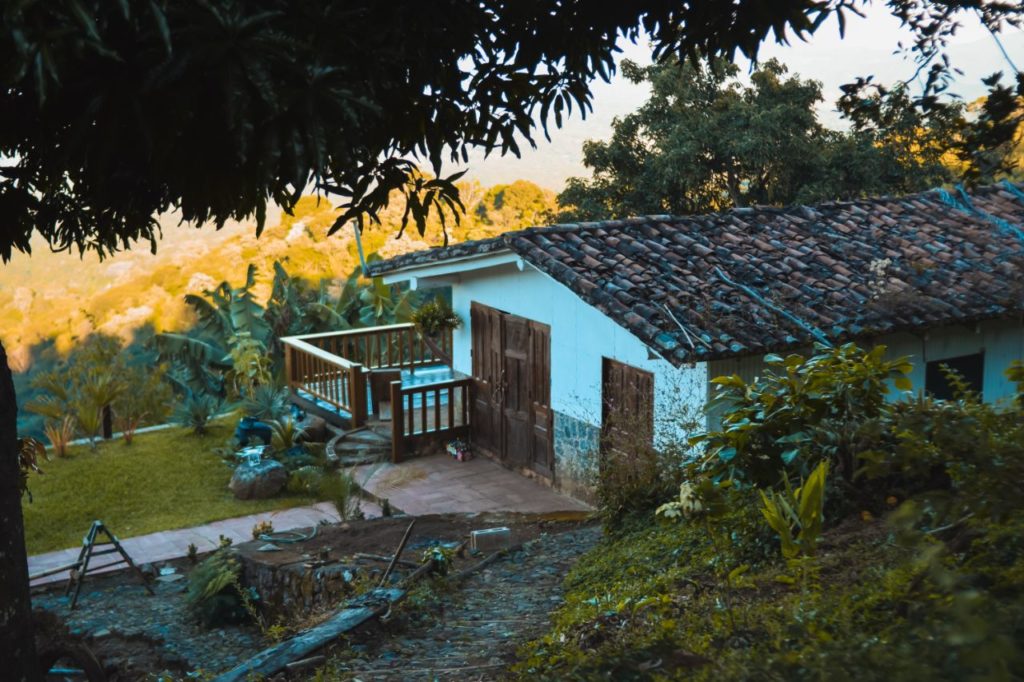
Named after the river that flows through the estate, "French Mission: Siguna Estate" features deep red, fertile volcanic soil. The Harries family has been cultivating coffee for nearly a century. Their extensive growing experience, combined with local terroir that is ideal for coffee, has consistently yielded excellent flavor profiles.
Alongside sustainable coffee business operations, the estate owner emphasizes giving back to the local community, donating over 50 acres of land to the Thika Municipal Council and the Wabeni Technical Research Institute. This commitment focuses on teaching practical livelihood skills to children from impoverished families and improving the living conditions of local people.
Kenya's Coffee Auction System
Every Tuesday during the harvest months, the Coffee Exchange in Nairobi holds auctions. Approximately 50 government-approved exporters in the country classify and grade coffee lots, send samples to potential foreign buyers for cupping evaluation, and accept bids later. Some foreign companies also commission approved marketing agents for direct trade. All steps are clear and transparent, regulated by the Coffee Board of Kenya, ensuring that after costs are deducted the remaining funds go entirely to farmers.
FrontStreet Coffee's Recommended Brewing Parameters:
V60 / 90°C / 1:15 ratio / 2 minutes brewing time
This coffee offers excellent body, with a dense, rich, and vibrant acidity. It features flavors of caramel, red grapefruit, lemon, lime, and brown sugar.
FrontStreet Coffee Recommendation
French Mission is the original Bourbon variety, and if its clean, bright-sour character appeals to you, FrontStreet Coffee's Bourbon-family beans are an excellent place to explore the lineage. The FrontStreet Brazil Cerrado Red Bourbon is a classic Brazilian single origin, given a medium roast that brings out cream, peanut, toasted bread, caramel, and hazelnut with a rounded, low-acid body and only a gentle bitterness. For a sweeter, fruitier expression of the same family, the FrontStreet Brazil Queen's Estate Yellow Bourbon is grown in Mogiana on fertile red volcanic soil and shows a rare yellow Bourbon profile with sugarcane sweetness, fruit, and chocolate. Like the French Mission coffees of Kenya, these Bourbon beans show how much a single variety can change across terroir.
Important Notice :
FrontStreet Coffee is a long-established specialty coffee roaster in Guangzhou China, selling freshly roasted beans from its own farm in Yunnan as well as dozens of carefully selected single-origin beans from around the world for both pour-over and espresso. The products deliver consistently excellent quality and great value, with shipping within 24 hours. Guangzhou's FrontStreet Coffee shop is recommended by many coffee lovers, and the beans are now available online at the Tmall 。
FrontStreet Coffee has moved to a new address:
FrontStreet Coffee Address: 315,Donghua East Road,GuangZhou
Tel:020 38364473
 Scan and follow the En Gafei WeChat official account. Please indicate that the reprint comes from "En Gafei".