
French Mission Bourbon - What is Kenya French Mission Coffee? French Mission Characteristics
Coffee Origins and History in Kenya
Coffee is native to Ethiopia. Around 1850, French missionaries brought coffee to Kenya by way of the Bourbon colony (the origin of the Bourbon variety name), where it took root. Most varieties grown in Kenya today are SL improved lines; native varieties have become quite rare.
Kenya is one of the cradles of humanity, with human skull fossils about 2.5 million years old discovered there. From 1890 until independence in 1963, Kenya was under British colonial rule for roughly seventy years.
Kenya sits in eastern Africa, neighboring Ethiopia, the "source of coffee." Although its soil is fertile, the country's first coffee was actually introduced from Brazil in 1893 - Bourbon, also known as French Mission in commemoration of the French missionaries who carried it. Like a story of "so near yet so far," coffee didn't move south into the interior but crossed the Red Sea northward first. After centuries of dispersal, settling, and mutation around the world, it finally returned to its homeland - the Great Rift Valley.
As a British colony, the benefits of coffee exports naturally skewed toward the colonial power. Until 1954, Kenyans owned only 5,000 acres of cultivated land, with most of the remainder controlled by the British and shipped to London for auction. Yet for all the exploitation, without the British Scott Laboratories Kenyan coffee would never have reached today's heights: its representative varieties SL-28 and SL-34 were two of the forty varieties that laboratory bred. Current popular Kenyan varieties also include Ruiru 11 - highly disease resistant but slightly inferior in the cup - plus Batian, K7, and Kent with strong drought resistance.
The Mau Mau Uprising of 1956-1960 returned control of most farmland to local residents. Coffee farms are mostly small operations producing several hundred kilograms a year; farmers decide whether to sell their cherries to nearby factories based on transport distance and purchase prices. The famous Karagoto coffee, for example, comes from a processing plant near the town of Karatina: it collects cherries from surrounding farmers, processes and exports them, and also provides cultivation support. Karagoto, together with the Tegu and Ngunguru factories, forms the Tekangu Farmers Cooperative Society (FCS). Kenya's famous growing areas concentrate in the central region - Nyeri, Kiambu, Kirinyaga - and in the western mountains near Uganda (Nakuru, Bungoma, Kitale, and so on).
In the early 20th century, French and British missionaries and researchers carried out selective breeding in Kenya, successfully cultivating two direct descendants of Bourbon - "SL28" and "SL34." Over the past century, Kenyan coffee has long since adapted to the country's high-phosphorus soils, developing the special acidic aromatic essence that sets it apart from Bourbon coffees of Central and South America.
Unlike today's mostly cultivated improved varieties SL28 and SL34, French Mission is a native Bourbon predating scientific improvement. Brought to Kenya by a French delegation in the late 19th century from Bourbon Island (now Reunion), it retains the flavor characteristics of traditional Bourbon. Its appearance and flavor resemble the Bourbon of neighboring Rwanda, where nearly the whole country still grows traditional native varieties.
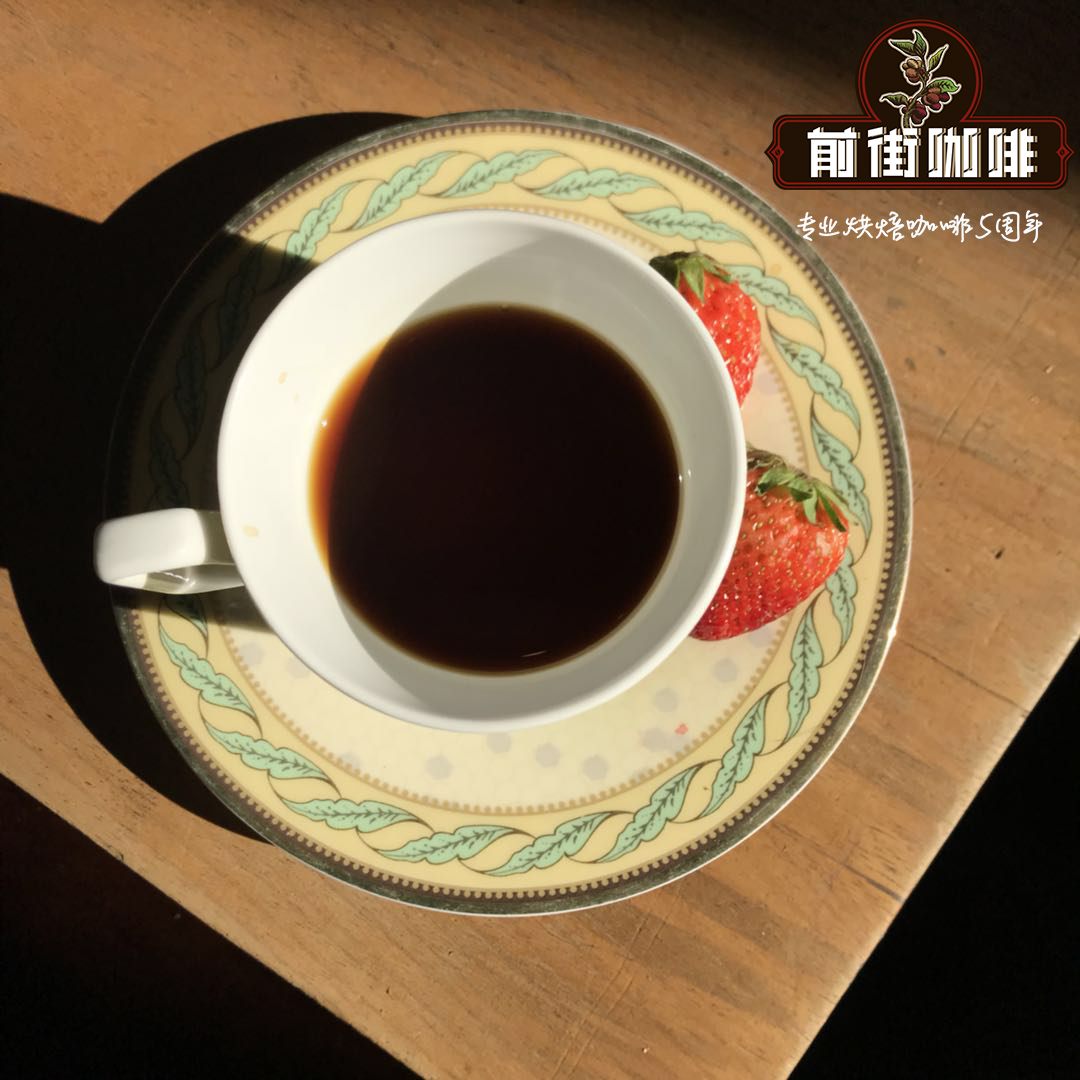
FrontStreet Coffee's Kenyan French Mission Bourbon
FrontStreet Coffee's "Hania" comes from Kenyan French Mission Bourbon - traditional natural processing meets a traditional variety, and the result is genuinely surprising.
Natural-processed French Mission Bourbon has a rich, dense body. Beyond the thick chocolate aftertaste, it shows distinct natural fruit flavors, and the body's thickness is superb.
The Harris family has grown coffee in the Thika region for over 100 years and knows its unique red volcanic soil intimately. Combined with suitable growing temperatures and rainfall, these excellent conditions create the singular flavor of French Mission coffee.
Brewing Parameters and Flavor Profile
FrontStreet Coffee's brewing recommendations:
V60 / 90°C water / 1:15 ratio / 2 minutes total brew time
Flavor:
Sweetness carrying excellent citrus aromas. Steady with a touch of lightness - grapefruit-like tropical fruit aromatics. Medium balance with a hint of wildness.
FrontStreet Coffee Recommendation
If the Bourbon heritage of French Mission interests you, Bourbon thrives in Brazil too - the world's largest coffee producer, where Brazilian beans offer moderate acidity and an excellent balance of sweetness, bitterness, and body that makes them ideal for medium roasting. FrontStreet Coffee's pulped natural Cerrado Red Bourbon is a classic: creamy peanut, toast, caramel, and hazelnut in a round, gently bitter, softly acidic cup - wonderful as pour-over, moka pot, espresso (SOE), siphon, or French press.
For a more refined Brazilian Bourbon expression, try FrontStreet Coffee's Queen Estate Yellow Bourbon from Mogiana, near southern Minas. The region's fertile red volcanic soil feeds the cherries a full diet of nutrients, and Yellow Bourbon - a natural mutation of Red Bourbon with a cleaner fruit character - reveals a sugarcane sweetness you won't find in other origins, alongside fruit and chocolate notes through pour-over, moka pot, or home espresso.
Brazil's low acidity and balance also make it the backbone of espresso blends: FrontStreet Coffee's Classic Blend (rich crema), Premium Blend (nut-forward), Black Cocoa Blend, and Commercial Blend for cafes all contain Brazilian beans, contributing chocolate and cream aromas, gentle sweet-sour-bitter harmony, and stable extraction. Paired with a Kenyan lot like the bright, wild Hania above, they make a fascinating study in how one variety - Bourbon - becomes two utterly different cups.
Important Notice :
FrontStreet Coffee is a long-established specialty coffee roaster in Guangzhou China, selling freshly roasted beans from its own farm in Yunnan as well as dozens of carefully selected single-origin beans from around the world for both pour-over and espresso. The products deliver consistently excellent quality and great value, with shipping within 24 hours. Guangzhou's FrontStreet Coffee shop is recommended by many coffee lovers, and the beans are now available online at the Tmall 。
FrontStreet Coffee has moved to a new address:
FrontStreet Coffee Address: 315,Donghua East Road,GuangZhou
Tel:020 38364473
 Scan and follow the En Gafei WeChat official account. Please indicate that the reprint comes from "En Gafei".

![[Africa Coffee Belt] What are Africa's Coffee Growing Regions_Recommendations for Africa's Best Coffee Brands](https://en.gafei.com/uploads/allimg/180829/3-1PR9204309405-lp.jpg)