How to Brew Ethiopia Yirgacheffe Danchimeng Coffee Beans_Pour-Over Danchimeng Coffee Bean Recommendations
What Exactly Is Yirgacheffe?
Almost every coffee enthusiast has heard of Yirgacheffe and has probably tasted it at some point. But people who have never explored estate-level beans often carry a few misconceptions. Because the area is so small, some friends assume Yirgacheffe is a brand, a single variety, or a tiny region. That is not quite right. Yirgacheffe is actually the name of a town and district, and any coffee grown in this area that carries its signature citrus character is sold as Yirgacheffe coffee.
Look through online resources and you will find that Yirgacheffe sits at roughly 1,880 to 1,919 meters above sea level. It is a town in Ethiopia's Gedeo region and serves as the capital of the Yirgacheffe district.
Under Ethiopia's ECX trading system, however, not only coffee grown in Yirgacheffe town may be labeled as such. The officially recognized Yirgacheffe-producing areas also include Kochere, Gelena Abaya, and Wanago.
Choosing Quality Beans
With so many countries and regions producing coffee, the sheer number of beans on the market can feel overwhelming. How do you choose? Recognizing estates is the easiest route. Another approach, the one I take, is to befriend someone who really knows how to roast. A friend recommended the Dan Chomeng coffee from Level Up, a subsidiary brand of NINETY PLUS. As someone who occasionally indulges an artistic streak, I was drawn in the moment I heard the dreamy name "Dan Chomeng" and ordered a bag on the spot. I sent it to my Ironman friend to hand-sort the defects, roast it, and cup it before handing it back to me. He told me that although these are affordable beans chasing that one perfect sip, only a rigorous sorting process can guarantee both health and quality. Roasting takes half an hour, he said, but sorting the beans takes a full hour. Some roasters find it hard to reach that level of care amid a busy schedule, and those with deep pockets may invest millions in a sorting machine. Otherwise, once beans are roasted dark and ground to powder, most people cannot tell whether the defects were removed. That is why I avoid buying from average shops and instead ask a good friend to roast for me. Thirty years of friendship is not something you can fake.
Yirgacheffe Dan Chomeng Coffee
Coffee originates in Ethiopia, where two-thirds of the land is the Ethiopian plateau at altitudes of 2,500 to 3,000 meters. It has the highest terrain in Africa and is known as the "Roof of Africa." Imagine beans grown on those high plateaus, absorbing the essence of the highlands while carrying the character of both desert and mountain terrain, beans full of sunshine. Wouldn't that suggest the drier regions of Africa? My contrarian, pseudo-artistic instinct says that when you drink Ethiopian beans, you should mainly choose natural-processed ones. Yet whenever Ethiopian coffee is mentioned, it is usually Yirgacheffe, and oddly enough, most Yirgacheffe beans I had tried before were washed.
That changed when my Ironman friend roasted a Yirgacheffe for me for free and recommended this natural-processed bean.
The longer you drink coffee, the more you gravitate toward estate beans, mainly to ensure better quality. In recent years I have started drinking more estate-level coffees. With this Dan Chomeng, the moment the bag was opened it released a captivating bean aroma. Scooping beans into my manual grinder with a spoon, the firm beans gave off all sorts of delicate fragrances as they were ground. I have never been especially sensitive to aroma. I only know that ground coffee smells wonderful, and honestly I cannot identify which fruit, flower, or grass notes are present. I have never used a thermometer for brewing temperature either. I simply let my electric gooseneck kettle boil, wait for the safety switch to cut off, give it a few minutes, and then brew straight from the gooseneck spout.
My Brewing Philosophy
I have never been the type to obsess over every single step of a pour-over. But pour-over is something I always come back to. I know I will never reach the perfect realm of brewing, and plenty of experts have critiqued my technique and urged me to improve. I admit my pour-over does not taste as good as an expert's, but does every test have to score 100? After all, we are just casually drinking a cup of coffee, not running a chemistry experiment. Is it really necessary to make it so exhausting? Honestly, I am just lazy. I have all the tools, measuring devices, and cups I need. All I want are quality roasted beans that let my less-than-90-point technique produce a cup I personally find delicious.
The Dan Chomeng was brewed at approximately 94°C, roughly the temperature I used, and poured into a cup. Sipping it gently, the natural mellow sweetness of a natural-processed bean came through softly. In recent years I have found myself preferring the gentleness and restrained aroma of natural-processed beans. This sip of Dan Chomeng entered with abundant aroma and a slight acidity. Compared with washed coffee, the acidity felt a little deeper, but from hot to cold the aromatic layers slowly unfolded and developed. I always drink while reading or working. The mellow fragrance of a natural coffee, with its smooth, moist mouthfeel, leaves a lasting finish and a sweet return. On the often-busy afternoons it helps me stay alert and keep going. On a holiday afternoon I shared the Dan Chomeng with my wife, and she told me that next month we should ask Ironman to roast us another batch.
A 90+ Coffee Bean Recommendation
Another 90+ coffee bean roasted by FrontStreet Coffee, Zhu Mang, offers complete assurance in both brand and quality. More importantly, it delivers extremely high value. A half-pound (227-gram) package costs only about 90 yuan. At 15 grams per pour-over cup, one package makes 15 cups, putting each single-origin cup at only about 6 yuan. Compared with coffee shops that often charge dozens of yuan per cup, that is exceptional value.
FrontStreet Coffee: a roastery in Guangzhou with a small shop but a diverse range of beans, where you can find both famous and lesser-known lots. They also provide online shop services at https://shop104210103.taobao.com
FrontStreet Coffee Recommendation
If you want to taste the classic character of Yirgacheffe, start with FrontStreet Coffee's washed Yirgacheffe. It is known for white jasmine, bright citrus and lemon acidity, and a tea-like body, and its friendly price has made it the first specialty bean for many newcomers.
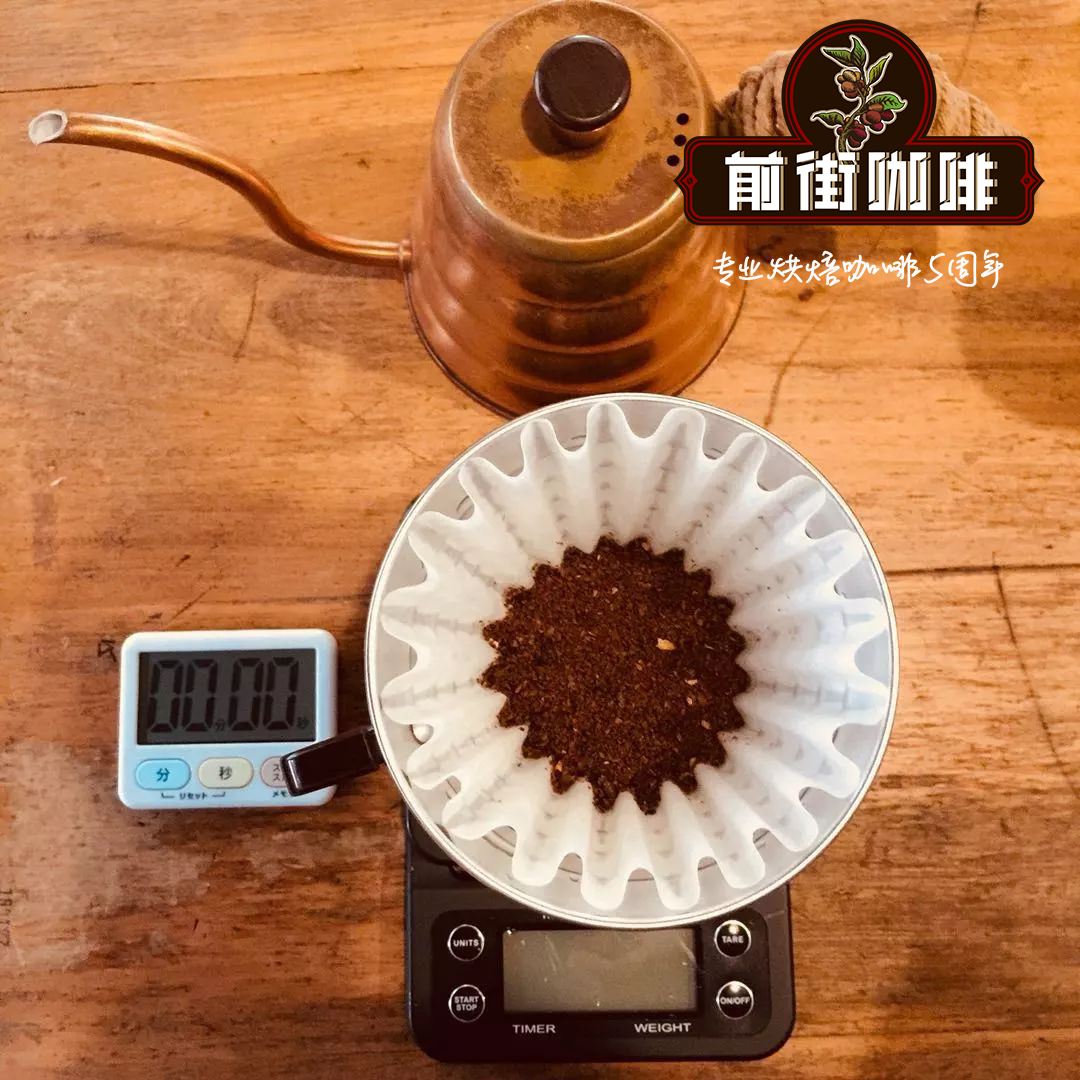
For a natural-processed contrast, try FrontStreet Coffee's natural Red Cherry, made from fully ripe cherries dried on raised beds, with a citrus-like acidity, berry juiciness, honeyed sweetness, and a creamy smoothness. At home, brew either bean with a V60 at 90-91°C, 15 grams of coffee to 1:15 water, ground to fine-sugar size (EK43s setting 10, about 80% passing a No. 20 sieve).
Important Notice :
FrontStreet Coffee is a long-established specialty coffee roaster in Guangzhou China, selling freshly roasted beans from its own farm in Yunnan as well as dozens of carefully selected single-origin beans from around the world for both pour-over and espresso. The products deliver consistently excellent quality and great value, with shipping within 24 hours. Guangzhou's FrontStreet Coffee shop is recommended by many coffee lovers, and the beans are now available online at the Tmall 。
FrontStreet Coffee has moved to a new address:
FrontStreet Coffee Address: 315,Donghua East Road,GuangZhou
Tel:020 38364473
 Scan and follow the En Gafei WeChat official account. Please indicate that the reprint comes from "En Gafei".