What Variety is Gesha Village Gesha Coffee Bean? What is the Price of Gesha Village Red Label Grade Coffee?

When people think of Geisha coffee, the first thing that often comes to mind is the intense white florals, the enticing juiciness and the honeyed sweetness of Panamanian Geisha. Anyone who knows the variety's history will tell you that today's default Geisha was discovered in the Geisha forest of Ethiopia in the 1930s, passed through several hands, and reached the Tropical Agricultural Research and Higher Education Center (CATIE) in Costa Rica in the 1950s and 60s as a sample, where it was numbered T2722. It was distributed to Panama for cultivation in the 1970s, and in 2004 it won the Best of Panama (BOP) competition and broke the green-coffee auction price, making its name.
Modern scientific instruments have concluded that the genetic relationship between Panamanian and Ethiopian Geisha is not strong, but that is no reason to give up tasting and comparing the two — experiencing both matters a great deal.

As a top-tier estate that has put Ethiopia back on the map of world-class coffee, Geisha Village has always been a specialty coffee FrontStreet Coffee cannot pass up. Its standing is beyond question, and the estate owner's passion and dedication have consistently guaranteed quality. Geisha Village grows the Geisha variety — the origin of the top Panamanian Geishas — and excellent growing conditions and post-harvest work make its coffee highly priced yet still sought after. Both the natural and the washed process show elegant floral and fruit aromas with a smooth, rounded mouthfeel. FrontStreet Coffee looks for beans with distinctive character and a compelling background story, and what Geisha Village produces fits the bill. Today we are sharing the Red Label, which offers excellent value.
Geisha Village
In 2007, documentary director Adam Overton and his photographer wife Rachel Samuel were filming a documentary about Ethiopian coffee for the Ethiopian government when they came across the Gera coffee forest in the Bench-Maji region. In the process they not only rediscovered this remarkable corner of Ethiopia but also formed the idea of starting their own coffee estate and brand.

In 2009 they had the good fortune to meet the renowned La Mula estate owner and BOP judge Willem Boot. His ideas opened a possibility for the Overtons: return to Ethiopia and find Geisha's birthplace. They eventually reached Bench-Maji, in southwestern Ethiopia near South Sudan, where many places are called Gesha Village and where original Geisha was most likely to be found. When they arrived in 2011, there was nothing on the land.
Adam followed Willem Boot in "exploring" the forests around the estate and found several wild tree species in a jungle magically wrapped in dense forest. What surprised them most was wild Geisha. They later learned that this was the Gori Geisha forest, the place where Geisha was first discovered. They collected seeds from native Geisha trees, screened them, and planted them at Geisha Village. They decided to establish the estate here and named it Geisha Village Coffee Estate — a 475-hectare coffee farm about 12 miles from the Gori Gesha forest.
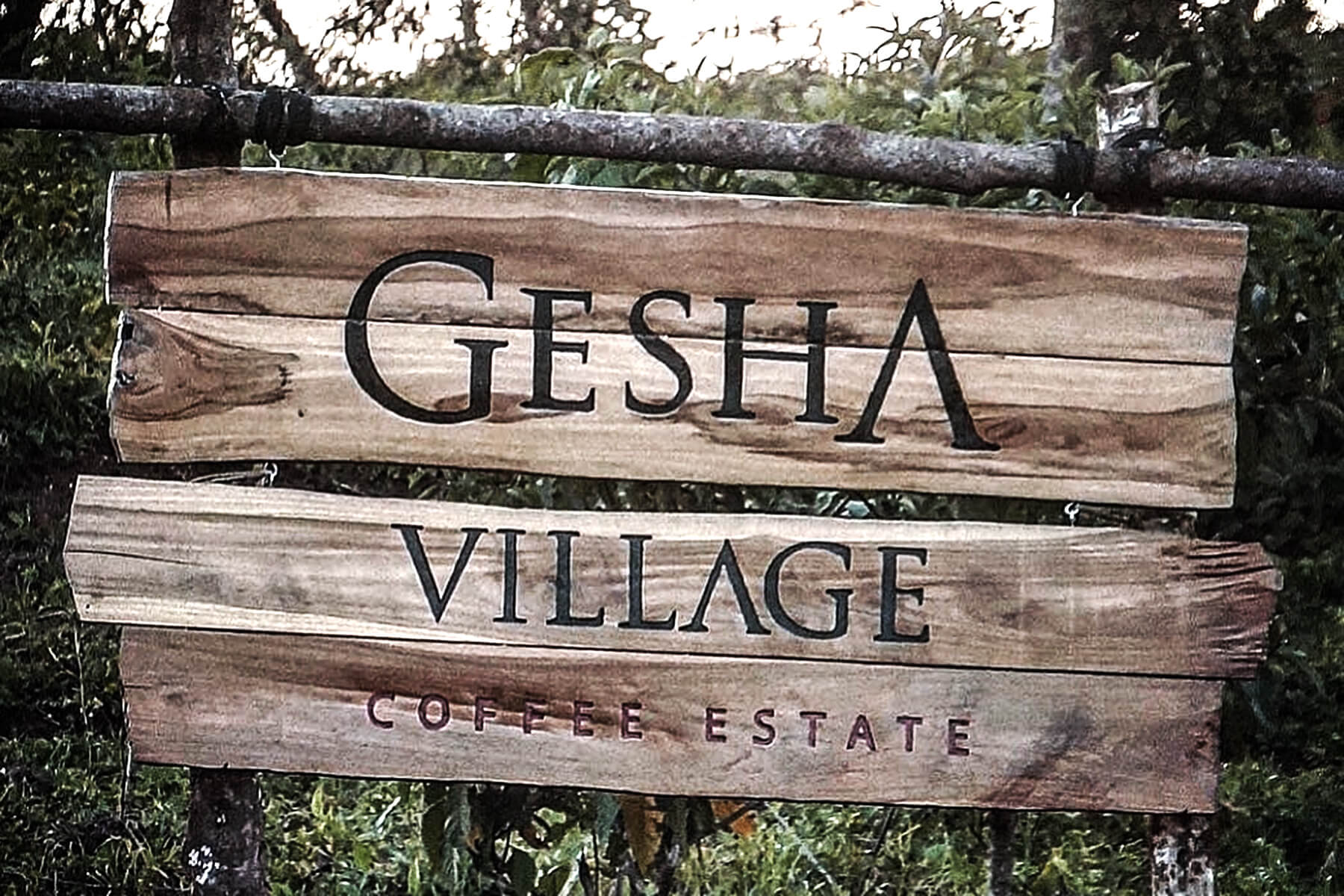
Geisha Village Coffee Estate is entirely different from the vast majority of Ethiopian farms: not a smallholding but a large 500-hectare farm with its own washing station and laboratory. Located in the southwest near the Sudanese border, its most distinctive feature is that the whole farm grows only Geisha varieties, rather than the usual Ethiopian native varieties whose cultivar identity is uncertain. Geisha Village divides the farm into 8 blocks, with 3 main Geisha varieties, all grown from Geisha seeds collected in the nearby forests.

Construction of the farm began in October 2011, with the first harvest in 2015. Following an enthusiastic response from all sides, and with the help of the Panamanian coffee estate owner Willem Boot, they offered 21 micro-lots at their first international auction on May 31, 2017 — 19 of them of 120 kilograms each, plus a few smaller lots. Bidders from Europe, North America, Asia and Australia responded with unexpected enthusiasm, and the winning bid reached $85 USD per pound, breaking every previous African coffee auction price.
Geisha Village Red Label Geisha

Geisha Village grades its coffee as Auction, Gold Label, Red Label, Green Label and CHAKA. The Red Label consists of batches with complete traceability, requiring scores above 88 points on the SCA evaluation system and carrying the typical flavour of Ethiopian Geisha Village. Through cupping, FrontStreet Coffee found that Geisha Village Red Label shows the classic Geisha traits of complex fruit, honey and florals, with the bright acidity typical of African coffee added on top, though overall intensity and complexity are slightly weaker than the Gold Label batches. At FrontStreet Coffee stores you can taste Geisha at this level for just 30 yuan, which makes it an extremely cost-effective single-origin batch.
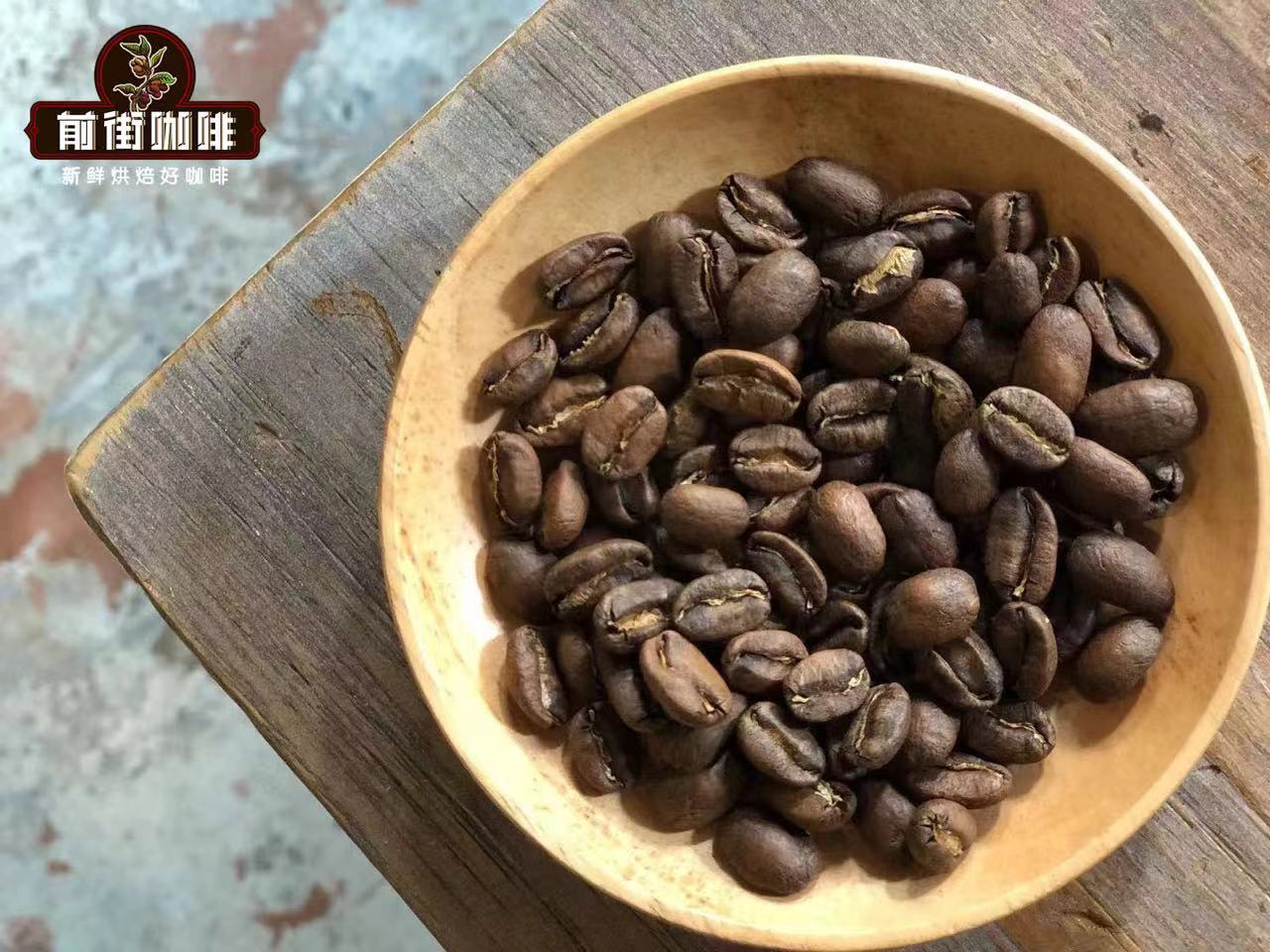
FrontStreet Coffee: Geisha Village Estate Red Label Coffee Beans
Region: Ethiopia Bench Maji
Estate: Geisha Village Estate
Altitude: 1909-2069 meters
Variety: Gori Geisha
Processing Method: Natural Processing
FrontStreet Coffee's Geisha Village Red Label Geisha uses the natural process. After harvesting, the cherries are first floated to remove impurities, then dried in thin layers under plastic sheeting on African raised beds. During drying they are screened again to remove insect-damaged beans and green-coloured coffee beans. Total drying time is 18-30 days.

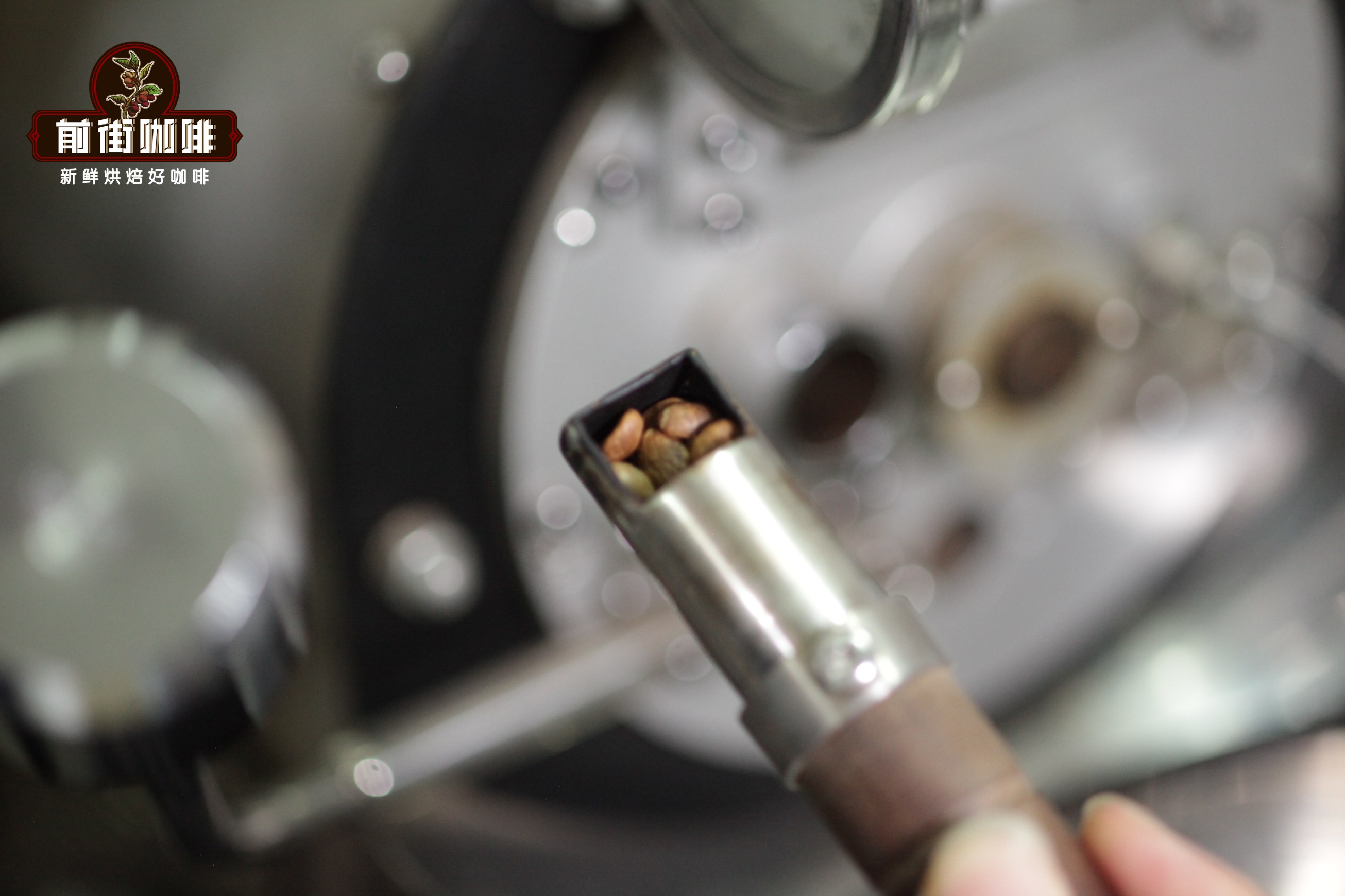
To bring out its fruit, FrontStreet Coffee roasts this Geisha Village Red Label at a medium-light level. Using a Yangjia 800N roaster (300g batch size), the procedure is as follows:
Charge with the drum at 160°C, air damper at 3 and heat at 130. The turning point comes at 1'40". When the drum reaches 140°C, open the damper to 4 and raise heat to 150. When the drum reaches 148.1°C the bean surface turns yellow and the grassy aroma disappears entirely, marking the dehydration phase. At 166°C reduce heat to 120, damper unchanged. At 176°C reduce heat to 90, damper unchanged. At 8'03" ugly wrinkles and black spots appear on the beans and the toast aroma clearly turns to coffee aroma — the prelude to first crack, so listen carefully for the sound. At 8'25" first crack begins; set the damper to 5, adjusting heat carefully so that cracking does not stop. Develop for 1'45" after first crack and drop at 197.5°C.
For brewing this Geisha, FrontStreet Coffee's baristas use a higher water temperature, a finer grind and a faster-flowing dripper, poured in three stages.
Dripper: Hario V60
Water Temperature: 91°C
Dose: 15 grams
Ratio: 1:15
Grind Size: Chinese standard #20 sieve, 80% pass-through
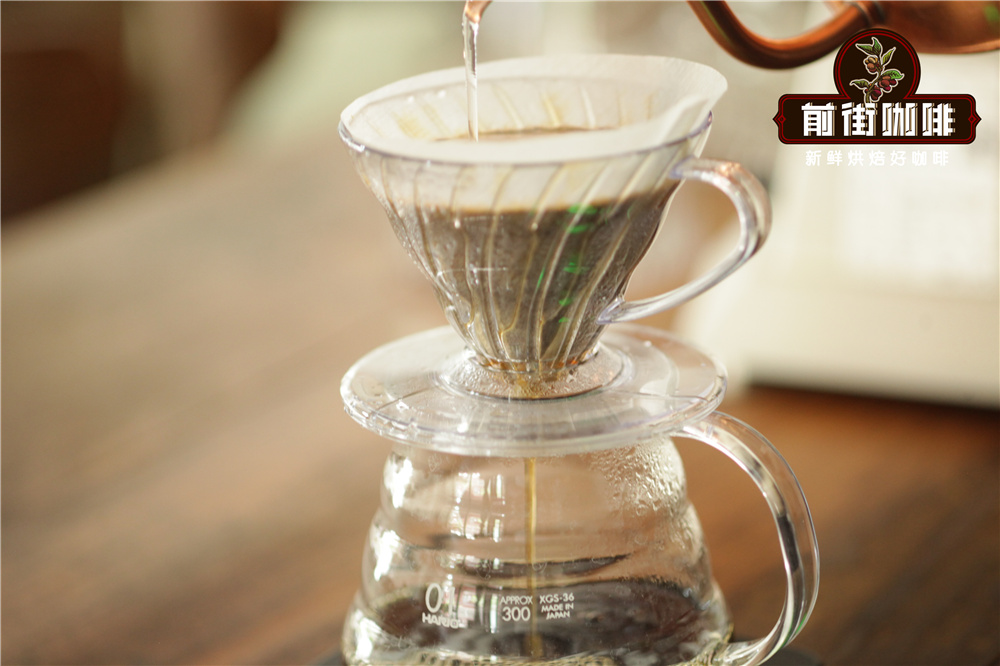
Bloom with 30g of water for 30 seconds. With a small water flow, pour to 125g for the first pour, then continue to 225g when the water level is about to expose the coffee bed. Remove the dripper when the bed is about to show again. (Timing starts from the bloom.) Extraction time: 2 minutes.

Once brewed, FrontStreet Coffee's Geisha Village Geisha offers coconut, liquorice, cream, chocolate, toffee, citrus, almond and strawberry, with a fermented aroma. The overall flavour is well balanced, the mouthfeel rich and the nutty notes prominent.
FrontStreet Coffee Recommendation
Understanding Geisha's grades is the surest way to buy well. At Panama's Hacienda La Esmeralda the line splits into Red Label (Esmeralda Special), grown at 1,600–1,800 metres, where every batch must cup above 90 points, carries its own number and comes from a single plot, and Green Label (Private Collection), which blends several plots to express the estate's high-altitude signature and sells for much less — which is what makes FrontStreet's Green Label such good value. For a gentler introduction, FrontStreet usually recommends its entry-level Boquete Geisha from Panama, which delivers the classic Panamanian orange-blossom honey, oolong-tea finish and fine fruit acidity in clear layers at a friendly price.
Gesha Village, in Ethiopia, takes a more elaborate approach. Three Geisha varieties are grown — Gori Gesha, Gesha 1931 and Illubabor Forest — and sorted into Gold (RARITIES), Red (GROWERS RESERVE), Green (SINGLE-TERROIR) and Chaka batches. The Gold Label is Gesha 1931, about 10% of the village's output and its finest coffee outside the auction, frequently chosen by competition baristas; the Red Label is Gori Gesha, roughly 15% of production, scoring 88 or above on the SCA 100-point scale as a single-terroir series with full traceability. FrontStreet also sources a Genlana Geisha from a processing station founded in 2014 at the Kochere–Genlana Abaya border and run by Israel Degefa, where fully ripe hand-picked cherries are dried on raised beds for 14–20 days; roasted medium-light, it shows bright citrus, an elegant ginger-flower aroma and ripe-fruit sweetness with a delicate, silky finish. Geisha is a medium-light, floral-and-fruity coffee with hard, dense beans that sink easily and clog the dripper, so FrontStreet suggests a fine-sugar grind (78% through a China-standard No. 20 sieve) and 91°C water.
Important Notice :
FrontStreet Coffee is a long-established specialty coffee roaster in Guangzhou China, selling freshly roasted beans from its own farm in Yunnan as well as dozens of carefully selected single-origin beans from around the world for both pour-over and espresso. The products deliver consistently excellent quality and great value, with shipping within 24 hours. Guangzhou's FrontStreet Coffee shop is recommended by many coffee lovers, and the beans are now available online at the Tmall 。
FrontStreet Coffee has moved to a new address:
FrontStreet Coffee Address: 315,Donghua East Road,GuangZhou
Tel:020 38364473
 Scan and follow the En Gafei WeChat official account. Please indicate that the reprint comes from "En Gafei".