Does Robusta Belong to Specialty Coffee - Are Robusta Coffee Beans Good Tasting
For professional coffee knowledge exchange and more information on coffee beans, read on.
What Do You Actually Think About Robusta?
High caffeine, high chlorogenic acid, and a terrible taste? Medicinal notes, rubber, bitterness, leather, and other unpleasant sensations...
Robusta comes from a mutant of the Congolese species, Coffea canephora, and accounts for roughly 25% to 35% of global production. Its main growing areas are spread across Vietnam, Africa, Indonesia, India, Uganda, and beyond.
A few years ago, the Coffee Quality Institute (CQI) began building a graded cupping certification system for Robusta quality, the R Grader certificate. Since then, Robusta has had its own quality standards and dedicated cupping forms.
Even though I have always championed specialty coffee, I have never turned my back on Robusta. Italy, Australia, Europe, the United States, and many other markets, along with plenty of well-known roasters and cafes, still use Robusta in their blends, whether to sharpen flavor or to cut costs.
So I keep wondering why these celebrated specialty coffee shops still reach for beans of such low quality. Is it about cost, or is it about flavor?
On cost, unless you use more than 50% or even 100% Robusta, adding roughly 15% to 20% to a blend will not save you much money. If you are roasting several tons a year, of course, that is a different story.
On flavor, Robusta can add body and complexity while reining in acidity. Low-quality Robusta, though, drags in a whole crowd of negative flavors along with those benefits.
But why? Why do those roasters insist on adding Robusta at all?
What If?
What if Robusta could taste genuinely good?
As it happens, a green bean merchant friend of mine, Zoe, brought me a Robusta that placed second worldwide in the R Grader competition. My curiosity was piqued immediately. I asked about the price, and it was three to four times that of regular Robusta, but I decided to import it anyway. Through the dehydration and drying phase of the roast there was none of that unpleasant medicinal, leathery smell, just a faint grassy aroma. The drop point came at approximately just before the second crack.
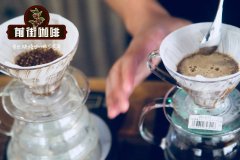
For cupping I used the pour-over method, with 18 grams of coffee to 300 grams of water. I do not especially love the freshly ground powder because of its Quaker oat flavor. At first I thought I had expected too much, but when I began tasting, from the very first sip the fruit acidity was far lower than the first-level acidity in the sweet-sour-salty profile of Q certification. A second taste surprised me with the cleanliness of the mouthfeel. The sweetness was obvious, with notes of nuts, cashews, cream, and a faint chocolate aroma. Without acidity, however, the flavor still felt a little monotonous.
Conclusion
For me, this article is not about promoting Robusta. It is about how, in the world of coffee, very little is absolute. Plenty of undiscovered territory is still waiting for us to explore.
"Only without limitations can there be no limits."
FrontStreet Coffee is a roastery in Guangzhou with a small shop but a remarkably varied lineup of beans, carrying both famous and lesser-known origins, and it also offers online store services.
FrontStreet Coffee Recommendation
Indonesia's best growing regions cluster on three islands, Java, Sumatra, and Sulawesi, and each has given rise to its own style. FrontStreet's Mandheling hails from Sumatra, where moderate acidity meets a deep, heavy aroma; the Java beans grown on the island of Java are Arabica; and Sulawesi coffee is prized for plump, aromatic beans, even though about 90% of that island's output is Robusta.
For anyone who wants to understand what wet-hulling does to a cup, FrontStreet's Indonesian wet-hulled Mandheling is the natural starting point. Mandheling refers to Arabica from Sumatra, processed mainly by the local wet-hulled method: because the parchment is stripped away while the beans are still half dry and half wet, the green coffee lies fully exposed to the air and takes on a characteristic grassy, herbal, and spiced character. FrontStreet's Mandheling comes from the Lintong area around Lake Toba, and to deliver the classic profile it is given a medium-dark roast, low in acidity and full in body, with caramel, dark chocolate, and toasted bread and a long, sweet finish. It suits drinkers who like their coffee strong.
At the top of the range sits FrontStreet PWN Golden Mandheling. PWN buys only high-grade Mandheling green coffee, and Golden Mandheling is its signature product. The company screens by density, size, shape, and color, then follows machine sorting with hand sorting to remove defects, leaving beans that are uniform, large, and translucent and that shed much of Mandheling's earthy, grassy edge. A fresh roast of FrontStreet PWN Golden Mandheling shows sandalwood, herbs, spice, roasted hazelnut, caramel, and dark chocolate, with a clean, sweet, richly layered cup. For those who want that Mandheling character in espresso, FrontStreet's classic blend pairs it with Brazil alongside a small addition of Robusta, roasted dark so the dark chocolate, nut, and caramel notes come through, and it pours a rich crema that holds up in a latte or a layered Dirty.
Important Notice :
FrontStreet Coffee is a long-established specialty coffee roaster in Guangzhou China, selling freshly roasted beans from its own farm in Yunnan as well as dozens of carefully selected single-origin beans from around the world for both pour-over and espresso. The products deliver consistently excellent quality and great value, with shipping within 24 hours. Guangzhou's FrontStreet Coffee shop is recommended by many coffee lovers, and the beans are now available online at the Tmall 。
FrontStreet Coffee has moved to a new address:
FrontStreet Coffee Address: 315,Donghua East Road,GuangZhou
Tel:020 38364473
 Scan and follow the En Gafei WeChat official account. Please indicate that the reprint comes from "En Gafei".