The Difference Between Arabica and Robusta Beans_ Visual Comparison of Coffee Bean Varieties_ Understanding Coffee Bean Characteristics
Why We Insist on 100% Arabica Beans: Are Robusta Beans Really Bad?
When it comes to the Robusta coffee variety, it is indeed a lower-priced bean.
In terms of complexity and aroma, it still differs significantly from Arabica.
Many coffee shops use Robusta beans to build richness and cut costs, and many espresso blends follow that approach; blended properly, it can indeed produce a good taste profile.
It is undeniable, though, that Robusta's high caffeine content causes many people to experience heart palpitations, rapid breathing, and other problems when they drink coffee.
For the love of coffee and our friends, I must emphasize it again: "Tu Bizzi never uses Robusta beans."
The evidence bears this out: many friends who once experienced heart palpitations when drinking coffee found they had no such problems when drinking ours. This is not just my personal experience but the actual experience of many people.
We do not need bean blends to add richness, because we have better solutions. Our specialty blend and basic blend coffee beans, for example, use no Robusta.
FrontStreet Coffee uses 100% Arabica beans for blending to reach a perfect balance of richness, aroma, and even complexity.
Although the process is challenging, we still create more perfect espresso blends without Robusta, and we can do it even better. We also look after the health of every customer.
This is both "a commitment" and a mark of professionalism. If you love coffee, the next time you buy espresso blend beans, ask whether the shop blends with Robusta or insists on 100% Arabica the way we do.
How to Distinguish Between Arabica and Robusta Coffee Beans:
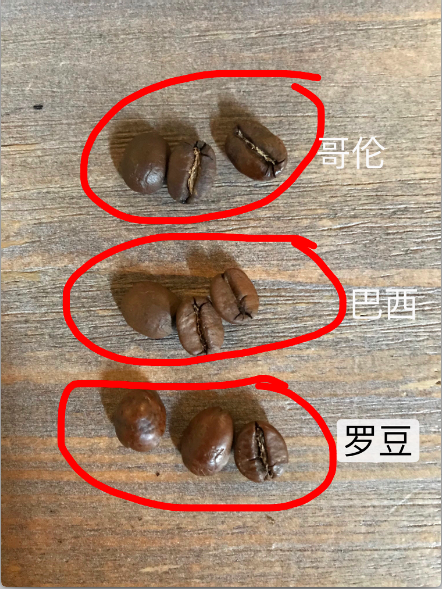
◎ Arabica coffee beans are long-oval and flat, with an S-shaped center crease.
◎ Robusta coffee beans are oval, spherical, or nearly spherical, with a straight center crease.
Here is also a definition of Robusta:
High in caffeine content and rather bitter. Generally less acid and less aromatic than Arabica coffee. Often slightly woody.
Robusta coffee beans have high caffeine content and taste quite bitter. Typically, they are less acidic and carry less coffee aroma than Arabica, and they often have a slight woody aroma.
What Are Arabica Beans?
Arabica and Robusta beans are the most common coffee varieties on the market.
About Robusta Beans
They are typically used in commercial coffee beans because their cost is lower than Arabica, so some espresso coffees mix in Robusta to save money.
Today I also want to share the differences between Robusta and Arabica coffee beans from Coffee Chemistry:
1. Different Basic Growing Environments for the Two Bean Types:
Arabica beans grow at altitudes of 600-2200 meters, with rainfall of 1200-2200 millimeters and temperatures between 15-24°C.
Robusta beans grow at altitudes of 0-800 meters, with rainfall of 2200-3000 millimeters and temperatures between 18-36°C.
On average, Arabica yield per hectare is lower than Robusta's, which also makes Arabica more expensive to grow.
2. Bean Shape: Arabica beans are more oval-shaped, while Robusta beans are more round-shaped.
3. Caffeine and Chlorogenic Acid Content:
Robusta beans have a caffeine content of 2.2%, higher than Arabica's 1.2%, and they also contain more chlorogenic acid.
This also reduces the impact of pests and diseases.
Chlorogenic acid is affected by the degree of roasting and can produce bitter, sour, and astringent tastes to varying degrees.
You can easily find information online that chlorogenic acid has some effects on physical health, such as antioxidant properties and helping to burn fat...
Interested readers can find plenty of material in international literature or on health websites.
4. Oil and Sugar Content:
Arabica beans contain up to 60% oil content, and their sugar concentration is twice that of Robusta beans.
These sugars play an important role during roasting, creating key aromatic compounds and contributing to the coffee's body.
5. Pollination Differences:
Arabica beans are self-pollinating plants, so gene mutations are rare during fertilization. That, I think, is what makes the quality of the Arabica variety itself more stable.
6. Number of Chromosomes:
At this point some people may wonder what chromosomes have to do with anything. I simply think it is useful to analyze the fundamental differences between Arabica and Robusta beans from a chemical perspective. Back to the topic...
Arabica beans have 44 chromosomes, while Robusta beans have 22 chromosomes. They are inherently different, just like human populations: each has its own characteristics and each has its own market XD.
FrontStreet Coffee: A roastery in Guangzhou with a small shop but diverse bean varieties, where you can find various famous and lesser-known beans, while also providing online store services. https://shop104210103.taobao.com
FrontStreet Coffee Recommendation
If you want espresso blends built entirely from Arabica, FrontStreet Coffee has a few clear options. The FrontStreet Dark Cocoa Blend uses 100% Arabica beans to deliver ample crema and a full, mellow body at a very approachable price, which makes it a sensible choice for a small shop or a home setup. The FrontStreet Specialty Blend pairs Brazilian Cerrado with Colombian Huila coffee for the classic espresso flavor people remember, with nut, chocolate, and caramel notes and a gentle, well-judged acidity.
For a single-origin espresso, or SOE, that puts varietal flavor first, start with the FrontStreet Natural Huakui SOE. It comes from Hambella in Guji, Ethiopia, where the coffee is grown at 2,300 meters, giving the cherries a long, slow ripening period, and is processed naturally before a medium roast. As a filter it reads as cream and strawberry; pulled as espresso in a Huakui Americano or latte, it shows cream, cocoa, berry, light florals, and black tea. If you prefer sweetness over acidity, the FrontStreet Costa Rica Blackberry SOE is a honey-processed single origin roasted medium; it is bright and clean as an Americano and, with milk, brings out cranberry cookie, raisin, and nut notes. For a low-acid, gentle profile, the FrontStreet Brazil Queen Estate SOE is a yellow Bourbon given a medium-dark roast that shows butter cookie, macadamia, and toasted bread when pulled on an espresso machine.
Important Notice :
FrontStreet Coffee is a long-established specialty coffee roaster in Guangzhou China, selling freshly roasted beans from its own farm in Yunnan as well as dozens of carefully selected single-origin beans from around the world for both pour-over and espresso. The products deliver consistently excellent quality and great value, with shipping within 24 hours. Guangzhou's FrontStreet Coffee shop is recommended by many coffee lovers, and the beans are now available online at the Tmall 。
FrontStreet Coffee has moved to a new address:
FrontStreet Coffee Address: 315,Donghua East Road,GuangZhou
Tel:020 38364473
 Scan and follow the En Gafei WeChat official account. Please indicate that the reprint comes from "En Gafei".