Which is Better: Robusta or Arabica? _ Robusta Coffee Bean Origins _ Are Robusta Prices Low?
Why is Robusta Coffee Notoriously Bad?
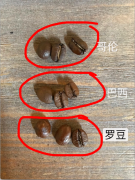
Robusta beans are round and, at first glance, look like soybeans — hence the old nickname "coarse beans." The plants shrug off pests and disease, produce heavily, and sell cheap. Specialty coffee has long looked down on Robusta because it rarely offers charming, delicate flavors. And because the trade treats it as a bargain commodity, it is often grown and processed with brutal carelessness, which fills the cup with defects: earthy, muddy tastes, sometimes notes of burnt tires or melting plastic.
Ten years ago I sampled several cheap Vietnamese Robustas. A few were unforgettable in the worst way — burnt barley tea laced with tire, trailed by nine other defect flavors. I spat them out involuntarily and never wanted another sip.
Why Discuss Robusta If It's So Bad?
Good question. As I said, everything has two sides. Great beans take you to heaven; bad ones break your heart — Arabica is no exception, and neither is Robusta. In fact, under the recent specialty wave, carefully processed premium Robustas have appeared around the world, and the benchmark is India's "Kaapi Royale" grade.
The Emergence of Premium Robusta
"Kaapi Royale" means "top grade." Today, at least four private estates in India — a number that keeps growing — produce it to the same standards and routines used for premium Arabica, including refined full-washed processing and the pulp-natural semi-washed method that has become fashionable in recent years. The arrival of Kaapi Royale is already changing how the world sees Robusta.
Most people who taste it are struck by the pairing of thickness and cleanliness. Because the cultivation and processing are so disciplined, its flavor is largely clean, without the disturbing off-flavors of bargain-grade Robusta. What Robusta lacks is Arabica's ethereal aromatics; in their place it gives a thicker, more stable mouthfeel and firm walnut, peanut, hazelnut, and wheat notes — closer to eating peanut butter or hazelnut spread than to drinking a floral pour-over.
Recognition in the Specialty Coffee Industry
Kaapi Royale production is still small, but it has begun to earn attention from elite specialty professionals worldwide. David C. Schomer, the espresso authority behind Seattle's famed Espresso Vivace, started adding 14% Indian Kaapi Royale to his espresso blend ten years ago. Paradise Roasters, perennially at the top of Coffee Review's scores, led the North American specialty market with a 100% Robusta Indian CxR single-origin espresso in 2009, scoring 90 and 91 points from Coffee Review in 2009 and 2010 respectively. Robusta, clearly, is not what it used to be.
Italy's Love for Robusta
Which country loves Robusta most? Undisputed first place: Italy, the homeland of espresso. Narrow it down further and the heaviest use is in the south — Palermo, Naples, Sicily. In southern Italy, everyday coffee routinely carries a large share of Robusta: 30% to 60% is common, and some blends run to 80% or even a full 100%.
Browse an Italian green-coffee wholesaler's list and you will find a dozen — sometimes more than twenty — Robusta lots from producing countries worldwide, laid out for local roasters. Nothing like this exists in the United States, Canada, Northern Europe, or Japan; it strikes most of the coffee world as incredible.
Why Italians Mix Robusta with Arabica
The usual explanation for Italy's Robusta habit is crema: Robusta boosts the crema on an espresso. That is half true. There is a second, rarely mentioned reason.
Southern Italy was historically poor, and people could only afford cheap coffee — so Robusta entered the blend, at first, purely to cut costs. But after years of roasting and blending with it, and thanks to the Italian instinct for good cooking, people realized Robusta has qualities Arabica lacks. Once a craftsman — a roaster, like a chef — truly masters them, the "dishes" he produces take on a captivating charm.
For the record: Arabica carries 44 pairs of chromosomes against Robusta's 22, with caffeine contents of roughly 1.5% and 2.8% respectively. They cannot be cross-bred — different species entirely, which is why their cups differ so completely.
Quality vs. Quantity
In the end, the comparison comes down to quality versus quantity. Arabica represents quality; Robusta represents quantity. When you care about flavor, what you pay decides which coffee deserves you.
FrontStreet Coffee Recommendation
If you want to taste how far sweetness and balance can go without any Robusta in the bag, FrontStreet Coffee's Brazil Fazenda Rainha SOE is a Yellow Bourbon mutated from Bourbon stock in São Paulo — naturally sweet and clean, and after natural processing and roasting it even carries a tropical-fruit note.
And if you'd rather keep a little of that classic thick-crema Italian character, the FrontStreet Classic Blend quietly includes a small proportion of Robusta alongside soft Brazilian and wild Mandheling beans, extracting a dense, fine crema with layered butter and roasted-chestnut aromatics — the traditional style, done properly.
Important Notice :
FrontStreet Coffee is a long-established specialty coffee roaster in Guangzhou China, selling freshly roasted beans from its own farm in Yunnan as well as dozens of carefully selected single-origin beans from around the world for both pour-over and espresso. The products deliver consistently excellent quality and great value, with shipping within 24 hours. Guangzhou's FrontStreet Coffee shop is recommended by many coffee lovers, and the beans are now available online at the Tmall 。
FrontStreet Coffee has moved to a new address:
FrontStreet Coffee Address: 315,Donghua East Road,GuangZhou
Tel:020 38364473
 Scan and follow the En Gafei WeChat official account. Please indicate that the reprint comes from "En Gafei".