How to Use Robusta Coffee Beans_Robusta Coffee Bean Characteristics_Robusta Price Per Jin
Arabica vs. Robusta
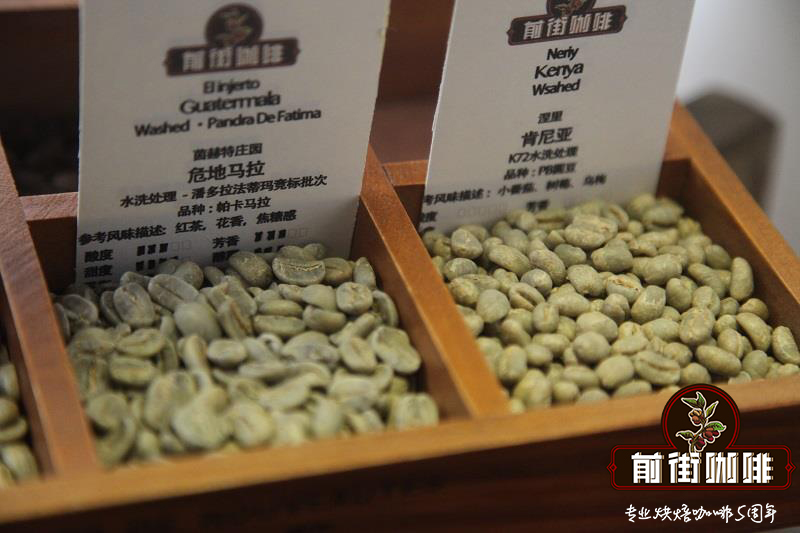
Arabica beans are smaller, with a long oval front. The central crack is narrow and curved in an S-shape, and the back of the bean forms a relatively complete arc. Robusta beans are larger, with a rounder front and a straight central crack. (The Arabica beans in the picture below are Maragogype elephant beans, a higher grade and correspondingly larger in size.)
Growing Characteristics and Uses
In cultivation, Robusta coffee trees tolerate heat and cold, resist drought and humidity, and stand up strongly to disease and pests, with a broad adaptability - they grow very well on flat ground. Unfortunately, the beans they produce lack aroma, carry strong bitterness from their high caffeine content, and have insufficient acidity. As a result, they are mostly used for instant coffee, canned coffee, and brewable three-in-one mixes. In Italy, many coffee shops add a measured proportion of Robusta to their espresso to build up "mouthfeel" - intensity, boldness, and the like.
The Commercial Importance of Robusta
As a vital variety in the coffee world, Robusta plays an indispensable role in commerce. Although Q-Graders are the well-known name in coffee circles, the backbone of the coffee industry's commercial empire rests just as much on Robusta - and on R-Graders.
When we discuss Arabica, we weigh grade, taste, quality, and growing region. In the world of Robusta, there are in fact just as many details that shape the final result.
Key Differences and Characteristics
Compared with Arabica, Robusta beans contain more than twice the caffeine and are generally considered lower in quality. The value of high-quality Robusta, however, lies in blending espresso beans - where it matters a great deal to the quality of the shot.
Robusta is easier to grow than Arabica, resists disease better, and thrives at lower altitudes with greater adaptability to weather. Robusta production far exceeds Arabica's, and its maturation cycle is shorter.
Growing Regions
Robusta generally grows in the Eastern Hemisphere, mainly in Africa, Indonesia, and Vietnam. Arabica also grows in Africa and Papua New Guinea, but is now cultivated primarily in Latin America. Among the world's major producing countries, Colombia grows only Arabica. The vast majority of Vietnam's coffee is Robusta. Brazil and India grow both varieties.
Quality Classification and Grading
Robusta beans are in fact divided into many categories and cannot be lumped together or judged by price alone. Among the major producing countries, Robusta is grown in Vietnam, Brazil, Indonesia, India, and elsewhere. As with Arabica, each country's Robusta carries its own grade classifications, which give a rough read on the quality standard of the green beans.
FrontStreet Coffee
FrontStreet Coffee is a roastery in Guangzhou with a small shop but a diverse selection of beans, carrying both famous and lesser-known varieties.
FrontStreet Coffee Recommendation
Blending is where Robusta earns its keep, and FrontStreet Coffee's espresso range shows the idea in practice. The Classic Blend - the first choice for espresso and moka pot alike - stands out for its superb crema: even a beginner on a non-professional home machine can pull a dense, fine layer. Following a traditional Mamba-style recipe, it uses a small addition of Robusta to build that crema and delivers a thick, mellow cup that veterans and newcomers can both accept, working equally well at home or in a shop. FrontStreet Coffee's Commercial Blend offers the same classic commercial role at a lower price, optimized to protect both flavor and cost across a range of business settings.
If you prefer to lean on nutty, chocolatey sweetness rather than crema alone, FrontStreet's Specialty Blend and Dark Cocoa Blend are the natural picks, since both lean heavily on Brazilian beans for a comfortable bittersweet edge and a creamy peanut aroma with an exceptionally smooth entry. The Specialty Blend brings in Colombia's nutty, chocolate, and caramel notes with a moderate acidity, while the Dark Cocoa Blend pairs Brazilian nuttiness with the ripe-plum tang of Yunnan small-holder beans, releasing a cream-chocolate aroma when ground and balancing well in lattes, Americanos, and flavored drinks.
For drinkers who want a traditional Italian-style Americano or latte, the Classic Blend and Commercial Blend both start from an old-school espresso recipe with a touch of Robusta, so extraction yields butter, nuts, spice, dark chocolate, and toast - a wild, substantial body with a rich golden crema that makes latte art easy.
Important Notice :
FrontStreet Coffee is a long-established specialty coffee roaster in Guangzhou China, selling freshly roasted beans from its own farm in Yunnan as well as dozens of carefully selected single-origin beans from around the world for both pour-over and espresso. The products deliver consistently excellent quality and great value, with shipping within 24 hours. Guangzhou's FrontStreet Coffee shop is recommended by many coffee lovers, and the beans are now available online at the Tmall 。
FrontStreet Coffee has moved to a new address:
FrontStreet Coffee Address: 315,Donghua East Road,GuangZhou
Tel:020 38364473
 Scan and follow the En Gafei WeChat official account. Please indicate that the reprint comes from "En Gafei".