Pour-Over Coffee Fundamentals_How to Brew Pour-Over Coffee Beans_How to Achieve Optimal Extraction for Pour-Over Coffee Beans
Professional coffee knowledge exchange. For more information on coffee beans, read on.
Pour-over Coffee: A Matter of Personal Preference
Pour-over coffee is a method with a great deal of freedom built in. Once you have the fundamentals down and your water flow is reasonably steady, what remains is mostly a matter of personal preference.
Put another way, every brewing method has its own strengths. So keep a curious mindset, watch how other people handle their brewing, or occasionally shake up your own habits on purpose. You might stumble onto something you did not expect.
Understanding Extraction Rate and Aromatic Molecules
First, a brief look at the idea of extraction rate and of aromatic molecules in pour-over coffee.
According to page 139 of Specialty Coffee Science, the aromatic molecules in coffee beans fall into three broad categories: simply put, high, medium, and low.
Low molecular weight compounds are the easiest to extract, and they are mostly acids and aromatics of various kinds. Think citrus, berries, blueberries, strawberries, and so on.
Medium molecular weight compounds sit in the middle for extraction difficulty, and they are mainly about sweetness: caramel, cream, chocolate, toffee, and other sweet, fragrant elements.
High molecular weight compounds tend to be tobacco, tar, resin, sulfur, and those burnt, bitter flavors.
Back to a basic question: people usually prefer the medium and low molecular weight compounds and rarely enjoy the high molecular weight flavors.
So we should aim to extract the medium and low molecular weight compounds while avoiding the high molecular weight ones. Simple, right?
But here is the catch: how do we actually do that? If the extraction rate is too low, the cup easily turns watery, meaning the coffee flavor has not been pulled out enough and the result is thin and weak, as if you had used too much... water.
If you want to go that route, just throw whole beans into water without grinding them and drink it straight.
So over-extraction, which drags out high molecular weight compounds, is a problem, and under-extraction is just as much of one.
So how to hit the right extraction is the question we need to answer.
Variables in the Closed System of Pour-over Coffee
From here we can start to connect extraction rate with the other parameters. Picture the pour-over environment as a closed system: from grinding the beans to the moment you drink the coffee, there are several variables.
First comes grinding. I think grinding can be viewed from three angles: size, shape, and uniformity.
Let us take size first. Smaller particles are, of course, easier to extract, and larger ones more difficult.
Shape depends on your grinder and can be granular or flake-like. Flake-like particles produce a cleaner, more distinct flavor, perhaps something sharp and defined. Granular particles are gentler, perhaps with a rich, mature character.
Then there is the question of uniformity. Because we grind beans, it is impossible to make every particle the same size; there will always be some fine powder. That is why many shops, including mine, sometimes sift the powder, hoping those fine particles stay out of the brewing environment.
Why? Go back to the point about size: those fine particles extract very easily. So under the same conditions they are more likely to reach the dilemma of high molecular weight compounds being pulled out.
How much of a dilemma is it?
Some friends have asked: if the medium molecular weight compounds are like sweet aromas, then what are the high molecular weight compounds? Perhaps they are like something fragrant mixed with something unpleasant. Mixing a few stinking elements in among many fragrant ones does not feel very good.
But every rule has its exceptions. Sometimes we develop a strange fondness for a little complexity. When we tire of purely fragrant experiences, we may want something a bit... unpleasant. So some people believe that if the coffee bean quality is good enough, you do not need to sift too thoroughly.
Another issue is that fine powder easily causes clogging, meaning extraction stops halfway through and the overall extraction rate rises because the water flow is blocked.
Is that good or bad?
It is not necessarily either, but it will definitely add variables to your brewing. Some people ask what grind size is best.
I suggest experimenting with different sizes as long as they do not cause serious clogging. My basic principle is: coarse grinds can be brewed slowly, fine grinds should be brewed quickly.
I have to admit there are exceptions. If you want to use fine grinds and brew slowly, you must try hard not to disturb the coffee grounds: pour gently without stirring, even using the Kono method of dripping. We will discuss this in more detail later.
Filter Types and Their Characteristics
Next, filters. The most common on the market is probably the Hario V60, a cup shape with spiral ridges inside.
The V-shaped cup has ridges designed to speed up water flow and keep the paper from sticking to the walls.
This is quite different from other dripper designs. The cup shape comes in many materials: glass, metal, ceramic, and most commonly heat-resistant resin, which is very inexpensive, around 100 yuan. I recommend it for beginners. The material difference lies in heat retention and ridge height. Resin ridges are higher and the flow is faster, which in extraction terms means less extraction. Ceramic ridges are shallower and the flow is slower.
As a V-shaped cup, it has a sibling called Kono. Its ridges are at the base (interesting!), and they protrude more. Because the ridges sit at the base, water flow speeds up toward the bottom. But this cup is more expensive: consider it only if you have money to spare or plan to open a shop.
As for fan-shaped filters, they are quite useful. If you prioritize aroma, you might consider them. I have personally used a single-hole Sanyo filter cup. Paired with Taguchi Megumi's kettle, brewing in it feels like working in a Bach coffee house.
There is also the Chemex, a peculiar, undulating piece of glass with very thick filter paper. I think its controllable range is quite small, perhaps well suited to stable extraction. I have experimented with it before, and its sweet flavor performance is excellent. Because of its structure, a deep V that goes straight to the navel, and its small powder bed, it naturally reduces disturbance of the coffee grounds.
Finally, a niche item that looks like a cupcake, from Kalita. According to Professor Coffee Leaf, single-point water injection creates self-rotation, which is quite interesting. I do not own this device either, so please consult Fengyuan Coffee Leaf. The professor is approachable and will surely answer your questions.
After all that discussion, I have noticed one thing: most shop owners use V-shaped filters.
V60
It is absolutely not because shop owners have a special preference for V-shaped filters. It is because they are cheap.
This device holds the most coffee powder in the center and less on the sides, so extraction still focuses on the middle. But there are exceptions: I have seen other shops pour around the perimeter. We will cover the water flow angle later.
The Clever Dripper: A Convenient Alternative
Speaking of filters, a quick side story.
The shop manager was terrible at sports. In college he chose self-defense as an elective. The course actually taught Shaolin Long Fist, but in the first class the female teacher said that if you really met a bad person, female students should run first and not foolishly try to fight using self-defense techniques. If it really came down to it, she said, practice groin kicks and eye jabs thoroughly. So the teacher started teaching those two movements (these moves really do have technique!). The male students nearby were horrified.
The lesson in this story: if your skills are not well practiced, basic routines may not be as effective as a few sneaky tricks. As for something like the Dragon-Subduing 18 Palms, you probably do not have the talent for it anyway.
Adapting to this fast-paced, convenience-oriented era, a magical filter appeared. We call it the Clever Dripper!
This device is very inexpensive, around 300-400 yuan. Just ask the shop owner to grind the beans for you and you can use it.
The process goes roughly like this: place the filter paper in the dripper, pour in some hot water first to pretend you are blooming like a professional, pick it up to smell the aroma, show off a little to your friends, brag about how good this coffee is, how it contains 87 million types of aromas, and how drinking it will make you see God, and so on. It does not matter what you pour from. Then fill with water to about nine-tenths full, let it steep, use a spoon to press down the powder floating on the surface while stirring gently, place a mug underneath, set the Clever Dripper on top, and wait for all the water to flow into the mug before drinking.
Do not think the Clever Dripper is weak. Its output quality is actually quite good. Even specialty coffee shops in the United States use it. Its coffee roughly preserves the basic character of the beans, and while it may still be somewhat inferior to experienced pour-over, it is definitely much better than inexperienced pour-over.
These days everyone is busy. If you do not have time to practice seriously, the Clever Dripper will be a good choice.
A famous figure from Taipei's Anhe nightlife district once asked about its drawbacks. If I had to name one, I would say pour-over water flow is the best way to adjust coffee flavor quickly, while the Clever Dripper environment is relatively closed and has fewer adjustable parameters. But if you do not even know what those parameters are for, why worry about them...
Pour-over Kettles and Their Impact
Next, pour-over kettles. First, something that looks like a bronze magic lamp. You fill it with hot water, then rub your hands on the kettle body while chanting "I want pretty girls, I want pretty girls," and next... your hands get burned.
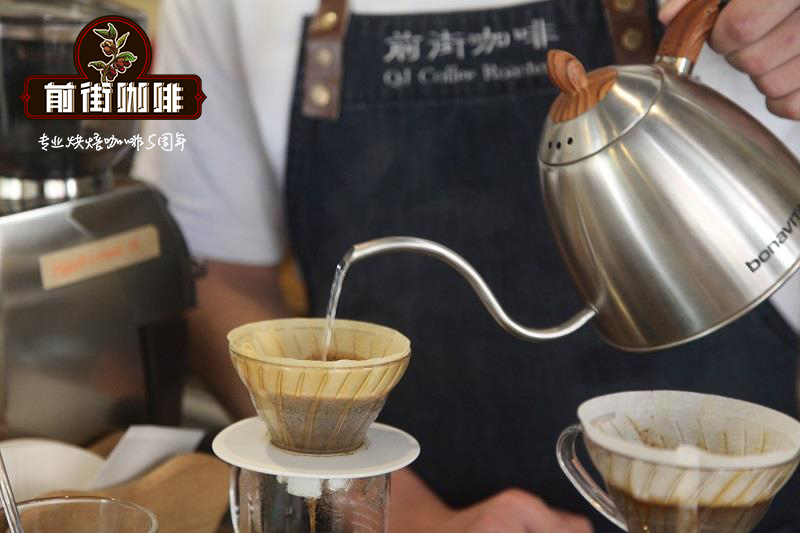
Some people call this kettle the "King of Kettles": it is Kalita's narrow-spout kettle. Narrow-spout kettles work like this: because the spout opening is very narrow, even if your hand slips you will not have water bursting out of control. Its advantage is a very stable flow, holding the same rate until empty. That is very hard to achieve, and it means you do not need to adjust angles during brewing; the flow stays consistent. Other strengths are a gentle flow and excellent heat retention. We will cover temperature later. But its drawbacks are also clear: it is very expensive, over 3,000 yuan.
But secretly, there are knockoffs. Some online platforms carry the same kettle style, just in stainless steel... at a much lower price.
From this case we can understand several criteria for choosing a kettle: flow stability, flow gentleness, and heat retention (which matters less unless you care about reheating in winter).
Flow gentleness affects extraction because too strong a flow only washes the surface of the coffee grounds, meaning the outer layer of particles reaches high molecular weight extraction while the medium and low molecular weight compounds inside have not been exchanged yet. You might also accidentally break through the coffee bed and let the water fall straight through.
Just as there are narrow spouts, there are wide spouts (not that kind of "wide spout") and medium spouts. Why so many divisions? This is closely tied to brewing technique, which in turn relates to beans from different roasters.
Simply put, if you want to focus on disturbing the coffee grounds with pouring technique, consider a medium to narrow spout; or if you feel your hands are clumsy and you cannot control the flow well, often spraying water everywhere, use a medium to narrow spout.
But to achieve steeping with large amounts of water in a short time, only a wide-spout kettle can do it.
There is an Arabic proverb: "Drip brewing, as the name suggests, is about steeping, not pouring."
Based on my experiments, to bring out coffee's layers, emphasize mouthfeel changes, and capture subtle flavors, wide-spout kettles are more capable.
For a medium to narrow spout kettle to pour large amounts of water quickly, the flow will inevitably speed up. With a narrower spout, water pressure must rise to eject the same volume. That is simple physics, not hard to grasp.
When water pressure rises, disturbance of the coffee grounds increases, and the probability of off-flavors appearing rises significantly.
When I say probability, I mean that some people still brew very tasty coffee, but it is not that high molecular weight compounds disappear; rather, they achieve a good balance in taste perception. Many experienced predecessors use medium to narrow spout kettles with amazing results. A well-controlled medium to narrow spout kettle produces a very intense initial mouthfeel, fragrant and stimulating. It belongs to the quick-decision type, with full aroma and a strong aftertaste.
Coincidentally, these predecessors usually use finer grinds, faster water flow, higher water temperature, and typically darker roasts. The techniques for handling these kettles are interesting too: whipping water, flicking water, stirring the surface, all are employed.
I suggest everyone visit several different shops to observe.
This aspect is very much tied to personal preference, returning to what we said earlier: everyone has different preferences for extraction rates. But at appropriate extraction rates, they likely pursue slightly higher ones.
As for other kettles... we will discuss them next time, or just search online. In general, the basic principles are roughly like this.
Temperature: The Critical Variable
Next we enter the main event, and the closer we get, the harder it is to write. I should make clear that the following judgments are personal opinions, built on knowledge gained from many predecessors in the industry.
My own preferences are these: I like bright, delicate flavors, enjoy layered changes, appreciate acidity, and strongly dislike off-flavors and burnt tastes. I do not care much about aroma, and I pursue smooth, easy-to-drink flavors similar to fruit tea. Simply put, my coffee aims for an ethereal feeling like Faye Wong's, with a touch of eccentricity...
Next, temperature. Temperature and brewing technique are the two variables I use most often. I personally feel temperature's impact is slightly more important.
Master Taguchi Megumi once had a short video online that explained it clearly: the higher the pour-over temperature, the more bitter; the lower the temperature, the more acidic. We can understand this through the medium and low molecular weight compounds. Low temperatures have lower extraction rates, so they extract medium and low molecular weight flavors. As temperature rises, extraction rate increases, pulling out some bitter and off-flavors.
The next question: what temperature range is appropriate for pour-over coffee? Across the whole industry, I have seen people brew anywhere from 98°C to 75°C.
Here I have seen a general rule: dark roasts should use low temperatures, light roasts should use high temperatures. Personally I cannot accept this, because when I choose light roast beans I want their bright acidity, and when I want dark roast beans I want sweetness and smoothness.
So following this general rule would lead to flattened acidity.
For me, medium to dark roasts can consider high temperatures because I want to extract sweetness. Light roasts almost never consider high temperatures.
This is not absolute, though. Once I got beans from a Japanese roaster, a medium to dark roast, that balanced sweet, sour, and good bitterness all at once without being harsh at all. It was truly the "good bitterness" Master Taguchi Megumi described in his book. This bean had a very wide temperature range: simply put, it tasted good no matter how you brewed it...
Personally, my baseline is 83°C water temperature at the start of blooming. Two bean varieties once required temperatures of 90°C and 88°C respectively. But most fall between 83-85°C.
Let us use those two bean varieties as examples. First, the one at 90°C: a bean with astringency but a very clean body and a comfortable fruit aroma.
So I chose to raise the temperature to 90°C, brewing 18g of coffee with 250cc of water. The temperature was high and the water slightly more, using high temperature to eliminate astringency and slightly more water to reduce harshness.
The other bean at 88°C was Blue Mountain. Blue Mountain has a special, woody, pleasant bitter-sweet flavor that gets masked by acidity if the water temperature is too low.
But generally, my approach is to brew once using the baseline first, then adjust to personal taste. Too acidic? Raise the temperature. Too burnt? Lower it.
Pour-over Coffee Bean Brand Recommendations
FrontStreet Coffee's roasted single-origin pour-over coffee beans offer full guarantees in both brand and quality. More importantly, the value is outstanding: for half a pound (227g), the price averages around 80-90 yuan. At 15g per cup of single-origin coffee, one package makes 15 cups, or only about 6 yuan a cup. Set beside cafe prices that often reach dozens of yuan per cup, that is excellent value.
FrontStreet Coffee is a Guangzhou-based roastery with a small shop but a remarkably varied lineup of beans, carrying both famous and lesser-known origins, and it also offers online services.
FrontStreet Coffee Recommendation
The Hario V60 is the dripper most beginners are pointed toward, and for good reason. Hario was founded in Tokyo in 1921 as a maker of heat-resistant glassware and scientific instruments, and its glass server is a staple of pour-over setups. In 2004 Hario redesigned the V60's early form into the shape we know today, naming it for its distinctive 60-degree cone and V profile, and it reached the market a year later. The cone and 60-degree angle force the water toward the center before it drips into the server, lengthening contact between water and coffee so aroma and flavor extract fully, while the single large hole lets water run freely, so the flow rate depends largely on the brewer's control and shows directly in the cup. V60s come in resin, ceramic, glass, copper, and stainless steel; the material changes looks, weight, and heat transfer, but the design stays the same, and FrontStreet favors the resin version because it blocks heat loss and is the most consistent to manufacture. For a V60, the coffees that shine are the floral and fruit-forward ones, such as FrontStreet's Yirgacheffe Gudingding with classic Yirgacheffe citrus, berry, and floral notes and green-tea sweetness, the tropically aromatic FrontStreet Ethiopia Huakui, the Gesha-style FrontStreet Strawberry Candy, and the raisin-toned FrontStreet Mozart.
For the details: FrontStreet Yirgacheffe Gudingding is a gentle introduction to specialty coffee, with soft, bright acidity closer to fruit than to sharp sourness. FrontStreet Ethiopia Huakui is one of the most successful specialty releases of recent years, its tropical fruit so vivid that drinkers often call it the coffee that does not taste like coffee. As a landmark, FrontStreet Panama Esmeralda Red Label Gesha brings elegant jasmine, citrus, bergamot, and black tea in a clean, transparent cup with a long finish. FrontStreet Kenya Little Tomato is a washed Kenyan from the Thika region, grown at 1550-1750 meters from classic SL28 and SL34, processed with Kenya's signature 72-hour double washed fermentation and roasted light to keep its lively acidity; it smells of dried tomato and florals, tastes of sun-dried tomato and dark plum, and finishes clean with yellow sugar and a hint of green tea.
For deeper roasts, FrontStreet PWN Indonesia Golden Mandheling is low in acidity and full-bodied, with herbs and dark chocolate and a faint earthy note, while FrontStreet Brazil Queen's Estate is balanced and low-acid with nut, cocoa, and caramel. FrontStreet Jamaica Blue Mountain No. 1 strikes a near-perfect balance of acidity, sweetness, bitterness, and aroma, with cream, caramel, chocolate, nut, honey, and light fruit. FrontStreet's 2013 Yunnan sun-dried Typica is clean and layered with citrus, caramel, nut, chocolate, and brown sugar. And FrontStreet Papua New Guinea Bird of Paradise, from the Sigri region and grown at 1600-1800 meters on volcanic soil, uses the same Typica lineage as Blue Mountain, hits the AA grade, and after three washed fermentations is clean, sweet, and low in acidity, earning the nickname "little Blue Mountain."
Important Notice :
FrontStreet Coffee is a long-established specialty coffee roaster in Guangzhou China, selling freshly roasted beans from its own farm in Yunnan as well as dozens of carefully selected single-origin beans from around the world for both pour-over and espresso. The products deliver consistently excellent quality and great value, with shipping within 24 hours. Guangzhou's FrontStreet Coffee shop is recommended by many coffee lovers, and the beans are now available online at the Tmall 。
FrontStreet Coffee has moved to a new address:
FrontStreet Coffee Address: 315,Donghua East Road,GuangZhou
Tel:020 38364473
 Scan and follow the En Gafei WeChat official account. Please indicate that the reprint comes from "En Gafei".