Common Pour-Over Coffee Mistakes_ Best Coffee Beans for Pour-Over Coffee_ Types of Pour-Over Coffee Beans
Many people wonder why their pour-over still fails to taste good even when they follow every step exactly. The answer is usually hiding in two places: the coffee beans and the water.
Common Pour-Over Mistakes
1. Coffee Beans
Mistake 1: Grind Size
A good grinder is what keeps particle size uniform. If the grounds are uneven and full of fines, the cup will taste muddy and impure.
So what is the ideal grind size for pour-over?
The answer is a medium grind, roughly the texture of granulated sugar. Grind too coarse and the hot water runs through too fast, making the aromatic compounds hard to extract. Grind too fine and the filter clogs, the coffee over-extracts, and you end up with bitterness and astringency.
Mistake 2: Freshness
Plenty of people buy pre-ground coffee for convenience, or grind a large batch at once and keep it in the fridge. In reality, "freshly ground" is the first requirement for a good cup, because it is what preserves flavor at its peak.
Once coffee is ground, oxidation speeds up and aroma starts escaping within 40 seconds. If the grounds lose most of their aroma, the coffee's natural flavors disappear along with it.
Mistake 3: Distribution
After the grounds go into the dripper, they should be shaken gently into a level bed. This step is often skipped, or done so hard that it does more harm than good. How even the bed is decides how evenly the bloom and the extraction proceed, and that directly shapes the final taste.
2. Water
Mistake 1: Water Quality
If you care about flavor, do not overlook the water you brew with. Pour-over coffee is 98% water, and the total dissolved solids (TDS) should ideally sit between 100-250ppm. We do not recommend pure water for coffee, since it tends to produce a flat cup with little complexity. At the same time, avoid unknown-brand mineral water or bulk water, because any off-flavor in the water will be magnified in the coffee.
Mistake 2: Water Temperature
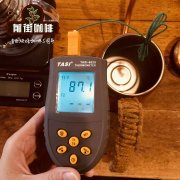
Water temperature is another decisive factor. Too hot and bitterness intensifies; too cool and acidity takes over. Our recommendation: dark roast beans suit 80-85°C, while medium-light beans extract best at around 90°C.
Mistake 3: Water Flow
The key to releasing a coffee's aroma and complexity lies in the pouring technique. The usual mistakes are:
A. Pouring too fast or at too steep an angle, which carves channels through the bed so the water runs straight down the filter paper and under-extracts.
B. Pouring from too high up, which disturbs the structure of the bed and traps air bubbles, leading to uneven extraction. It also exposes more of the water surface to the air and drops the temperature. Keep the stream as close to the coffee as you can.
C. Pouring inconsistently, alternating between a strong stream and a stop-start drip, which extracts different areas of the bed unevenly and muddles the overall taste.
Mistake 4: Water Amount
Since everyone has a different preference for strength, the ideal extraction concentration ranges from 1.15% to 1.35%, with a water-to-coffee ratio of roughly 1:13 to 1:15. Some people use very little water chasing intensity, but that usually produces a cup too harsh to drink. Others try to pull out more flavor with more water, not realizing that extraction grows weaker toward the end, so the cup ends up under-concentrated.
Have you spotted your own mistakes in any of these areas? A great cup demands precise control at every stage, and steady practice to match.
3. How to Control the Pour Rate
When brewing pour-over, you start with the bloom, which lasts about 15-30 seconds. This lets the grounds absorb water. Fully saturated grounds expand and release extra aroma. The longer the bloom, the more concentrated the flavor. As a rule, the bloom water should be twice the weight of the coffee. With 30g of grounds, for example, pour about 60cc of water to make sure everything is saturated.
After the bloom, the main pour begins. We suggest beginners use a gooseneck kettle with a narrow spout to control the flow and avoid failure. Coffee extracts easily at the start of the pour. With a regular kettle, begin with a gentle stream and increase it toward the end so you do not drag out excess bitterness. The ideal total pouring time is 1.5 to 2.5 minutes. If you like a richer cup, slow the pour down. Extract the flavor, but do not overdo it.
4. How to Master Pour Direction and Speed
Start pouring from the center and move in clockwise circles, taking care not to hit the filter paper.
There is also a technique called "interrupting the pour," which simply means pausing partway through. This keeps the cup from turning out too strong or too weak. If you are brewing 360cc of water, for example, you can pause at 180cc, wait for the water level in the bed to drop, then continue. This adjusts the flavor and makes the coffee more concentrated. Equally, when the stream runs too strong, pausing prevents a weak result. Through this interruption you can change the taste and control the extraction rhythm. One or two pauses is usually enough.
These steps sound simple and obvious, but there are countless ways to carry them out. Even pouring in circles can be done clockwise or counter-clockwise, in wide loops or tight ones, in cross patterns, or in "M" shapes. Whether you are drawing symbols or playing a game of Snake, the goal is the same: to draw flavor out of every particle of coffee. As an analogy, the grounds in the dripper are like tea bags in a bathtub. You pour water from the faucet and hope every bag releases its flavor evenly. To make that happen, you have to wet all the bags at the same time. That is the purpose of the first pour, the bloom.
Yet if you looked at the dripper under a microscope, you would find that the particles vary in size. Like tea bags in a bathtub, some are as large as dumplings and others as fine as ravioli. Even when extraction starts at the same point, by the time the large particles have given up enough flavor, the fine ones are already over-extracted. Besides a high-quality grinder, the only real solution is to use the water flow to push the larger particles to release their flavor quickly, before the fine ones tip into over-extraction.
That is why, from the second pour onward, the impact force of the water matters a great deal.
FrontStreet Coffee Recommendation
With a medium grind and a controlled pour, the bean you choose shapes everything else. FrontStreet Gotiti Cooperative is an excellent starting point for pour-over, especially for anyone exploring floral and fruity coffee for the first time. It comes from the Gotiti village in southeastern Yirgacheffe, is processed using the traditional washed method, and is roasted medium-light to bring out jasmine, bright citrus acidity, and a clean green tea and honey finish. Its clarity and balance make it very forgiving in the dripper.
If you prefer something louder and more fruit-driven, FrontStreet Ethiopia Huakui is one of the most successful star products of the specialty market in recent years. Its standout feature is an extremely prominent tropical fruit aroma, often showing strawberry, passion fruit, jackfruit, and even lychee. The sweetness is obvious and the bitterness is very low, so it goes down smooth and juicy. It is roasted medium-light to preserve that lively character.
For a different profile altogether, FrontStreet PWN Golden Mandheling brings a deep roast and a rich, herbal, dark chocolate character with a touch of earth. It is the choice for drinkers who like a heavy cup and little to no acidity, and it shows how far pour-over can travel from the floral end of the spectrum.
Important Notice :
FrontStreet Coffee is a long-established specialty coffee roaster in Guangzhou China, selling freshly roasted beans from its own farm in Yunnan as well as dozens of carefully selected single-origin beans from around the world for both pour-over and espresso. The products deliver consistently excellent quality and great value, with shipping within 24 hours. Guangzhou's FrontStreet Coffee shop is recommended by many coffee lovers, and the beans are now available online at the Tmall 。
FrontStreet Coffee has moved to a new address:
FrontStreet Coffee Address: 315,Donghua East Road,GuangZhou
Tel:020 38364473
 Scan and follow the En Gafei WeChat official account. Please indicate that the reprint comes from "En Gafei".