How to Brew Drip Bag Coffee and Comparison with Pour-Over Coffee: Drip-Style Coffee Brewing Process
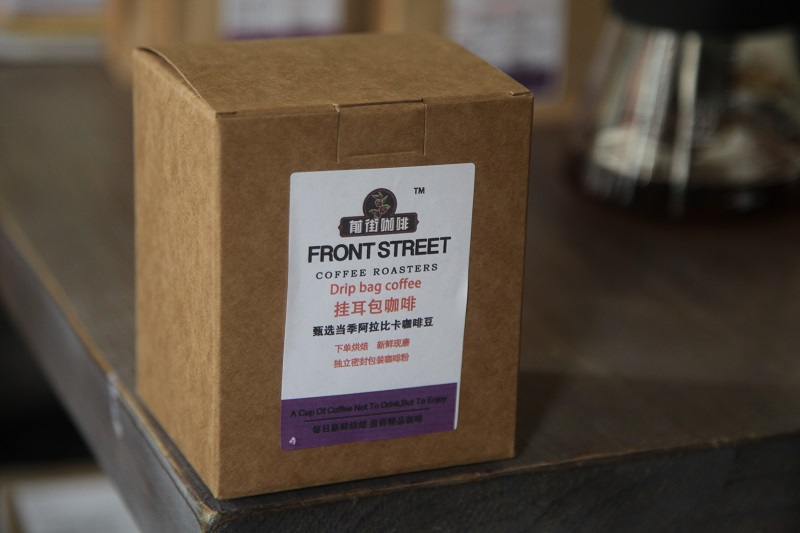
What Is Drip Bag Coffee?
Traditional pour-over asks for a fair amount of gear: a grinder, a gooseneck kettle, a dripper, filter papers, and a server. Enthusiasts enjoy learning what each tool does, but for a newcomer the list can be daunting — even figuring out the water-flow rate of a pour-over kettle spout can stump a beginner. Drip bag coffee removes most of those barriers in one stroke.
Drip bag coffee (sometimes called hanging-ear coffee) is, at heart, pour-over coffee: the filter bag itself takes the place of filter paper. The roaster grinds the beans, fills and seals the bags in advance, so you need no grinder — and during brewing you don't strictly need a gooseneck kettle either. Several steps simply disappear. How does it taste next to traditional pour-over? Honestly, a careful hand-brew still has the edge, because you can adjust technique to each specific bean. Drip bags fix the variables — but they still produce genuinely good coffee, which is why they're a smart way to sample a roaster's beans before committing to a full bag.
Where Did Drip Bag Coffee Come From?
In 1990, Japan's Yamanaka Industrial Co., Ltd. applied the tea-bag concept to coffee, invented the drip bag, and patented it. But because the hangers tended to lose their balance mid-brew, it was never mass-produced. Only 8 years later, after Taiki Shoji refined the original design, did the modern hanging-ear bag take the form we use today.
How Drip Bag Coffee Works — and How Long It Keeps
Each bag is ground coffee sealed inside filter paper, with the two "ears" on the sides designed to hook over the rim of a mug. With nothing more than a heatproof cup and hot water, even a complete beginner can brew a proper cup.
Freshness is the one honest limitation. Whole beans taste best within about a month of roasting, and once ground, aroma fades much faster — a drip bag keeps its peak flavor for roughly three weeks. Stored longer it's still drinkable, but most of the character will be gone, leaving only unpleasant woody notes.
One reassuring detail: roasted coffee keeps releasing carbon dioxide as it reacts with air, so a well-stored drip bag gradually turns puffy. That gentle puff is evidence the coffee was sealed fresh.
Brewing a drip bag looks simple, but the details decide the cup — the devil is in the details, and attention to them produces coffee that loses little to a hand-brew.
Drip Bag Brewing Steps
1. Remove the bag from its outer packaging, hold the top edge, and shake gently so the grounds settle to the bottom.
2. Tear along the dotted line, pull open both ears, and hang them on the rim of your cup.
3. First pour 30ml of hot water and wait 30 seconds for the coffee to bloom and release its aroma.
4. Continue pouring 120-150ml of hot water, then wait 1 minute 30 seconds.
5. When the liquid has finished dripping into the cup, the brew is done.
Details Worth Watching
▲ Water temperature should be around 90°C.
▲ One bag brews about 150-180ml of coffee — roughly half a standard mug.
▲ Pour in small amounts, several times, to avoid overflowing the bag and washing grounds into your cup.
▲ A longer brew doesn't mean stronger coffee. Over-steeping pulls out harsh flavors and impurities. Stop pouring once you reach your target volume and let the grounds finish draining for about 30 seconds.
And like pour-over, a drip bag is strictly single-use. Nearly everything extractable comes out in the first brew, so reusing one only yields thin, over-extracted coffee.
FrontStreet Coffee's drip bag tip: choose a shallow cup that lets the bag sit partially submerged, brew with 90°C water at a 1:15 coffee-to-water ratio, and give the whole brew about 1 minute 30 seconds.
FrontStreet Coffee Recommendation
Drip bags come in three broad flavor families, and FrontStreet Coffee's lineup covers all of them. For a clean floral cup, choose the FrontStreet washed Yirgacheffe Guodingding Cooperative drip bag: a G1 washed coffee with bright, upward citrus acidity, fresh jasmine florals, and a honeyed finish — ideal for newcomers. For tropical sweetness, the FrontStreet natural Huakui drip bag is a bestseller: grown above 2,300 meters in Guji, Ethiopia, where wide day-night temperature swings concentrate flavor, its gentle natural processing brings pronounced tropical fruit and a black-tea finish with high sweetness and barely any bitterness. And if you prefer zero sourness, the FrontStreet Indonesia Mandheling drip bag leans herbal, spicy, and woody — deep-roasted to bring out rich spice, nut, chocolate, and caramel flavors that are bold yet never astringent. All three brew exactly as described above: no grinder, no kettle technique, just a mug and hot water.
Important Notice :
FrontStreet Coffee is a long-established specialty coffee roaster in Guangzhou China, selling freshly roasted beans from its own farm in Yunnan as well as dozens of carefully selected single-origin beans from around the world for both pour-over and espresso. The products deliver consistently excellent quality and great value, with shipping within 24 hours. Guangzhou's FrontStreet Coffee shop is recommended by many coffee lovers, and the beans are now available online at the Tmall 。
FrontStreet Coffee has moved to a new address:
FrontStreet Coffee Address: 315,Donghua East Road,GuangZhou
Tel:020 38364473
 Scan and follow the En Gafei WeChat official account. Please indicate that the reprint comes from "En Gafei".