Caturra Coffee Bean Variety Introduction - Caturra Coffee Flavor Profile and Price

FrontStreet Coffee figures that anyone specifically hunting for an article on the Caturra variety already has a general grasp of coffee varieties. Most coffee drinkers will have met the medium-seed species (Robusta is a mutant of the medium-seed species) as well as the Arabica species we mention so often. Within Arabica, the two oldest varieties are Typica and Bourbon. From the Bourbon line came a variety with enormous advantages, and that is the Caturra variety FrontStreet Coffee introduces here.
History
As noted, Caturra is a variant of the Bourbon line, but how did Bourbon itself come about? In early times, Typica from Ethiopia was transplanted to Yemen, where, without any modern scientific intervention, a mutation occurred and the bean shape changed from slender and pointed to rounded. In 1715, France, then under the Bourbon dynasty, transplanted these rounded beans from Yemen Mocha to Bourbon Island off the east coast of Africa (renamed Reunion Island after the French Revolution) and named them Bourbon. Later, in 1860, Brazil brought Bourbon from Bourbon Island to replace the lower-yielding Typica. That was Bourbon's first arrival in Central and South America, and from there it spread across the region.
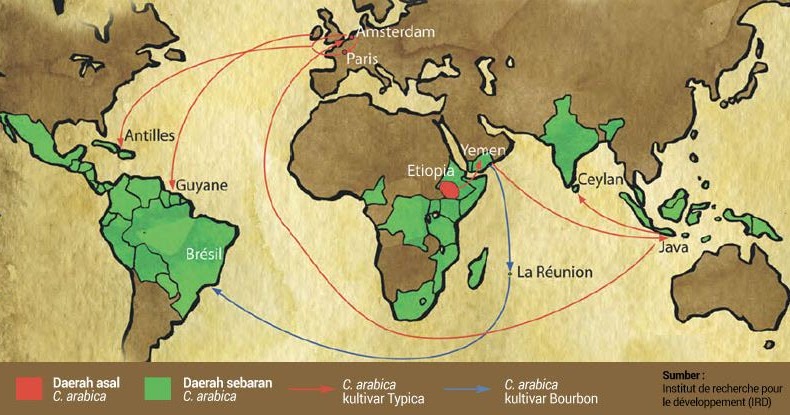
FrontStreet Coffee's research shows that between 1915 and 1918, on a plantation in Minas Gerais, Brazil, coffee growers happened upon the Caturra variety. It turned out that a group of genes in the plantation's Bourbon had mutated, making the coffee plants shorter. Locals named the new variety "Caturra" in the Guarani language, a nod to its most distinctive biological trait, its small size, meaning "little." It is sometimes called "Nanico" as well.
From 1937 onward, the Instituto Agronomico de Campinas (IAC) in Sao Paulo State, Brazil, began selecting Caturra and carrying out mass selection. One detail is especially interesting: Caturra was never officially released in Brazil, yet it had already spread throughout Central America.
In the 1940s, Caturra was introduced to Guatemala. It then moved from Guatemala to Costa Rica, Honduras, and Panama. Today Caturra has become one of Central America's most economically important coffees. Until 2008, when the Colombian government encouraged the country's farmers to plant the leaf-rust-resistant Castillo variety, Caturra was thought to account for almost half of Colombia's output.

Caturra Variety Characteristics
Caturra has a compact plant size, which allows denser planting. Its secondary branches are also closely spaced, so it can bear more fruit in the same space and greatly increase yield per unit area. Because the plant is compact, harvesting is easier too.

Caturra is also known as "sun coffee," because it needs no shade trees and thrives in direct sunlight. FrontStreet Coffee's research shows that Caturra suits cultivation between 700 and 1,700 meters in altitude. It adapts well to its environment: higher planting altitudes yield better flavor but relatively lower productivity. Like Bourbon, Caturra suffers from biennial production cycles, alternating high and low yields.
The Taste of Caturra
As noted, Caturra is widely cultivated across Central and South America, so it turns up in coffee from many producing regions. On FrontStreet Coffee's bean list, for example Panama's Mariposa and Esmeralda's Diamond Mountain, Colombia's Caturra, Rose Valley, and Passion Fruit, Costa Rica's Baha, Monster Estate, and Giant Rock Estate Blueberry, Honduras's Sherry and Lychee Orchid, and Guatemala's Flora all carry the word "Caturra" on the FrontStreet packaging.
So FrontStreet Coffee would like to introduce the Passion Fruit Yeast Anaerobic Washed Caturra from Colombia.
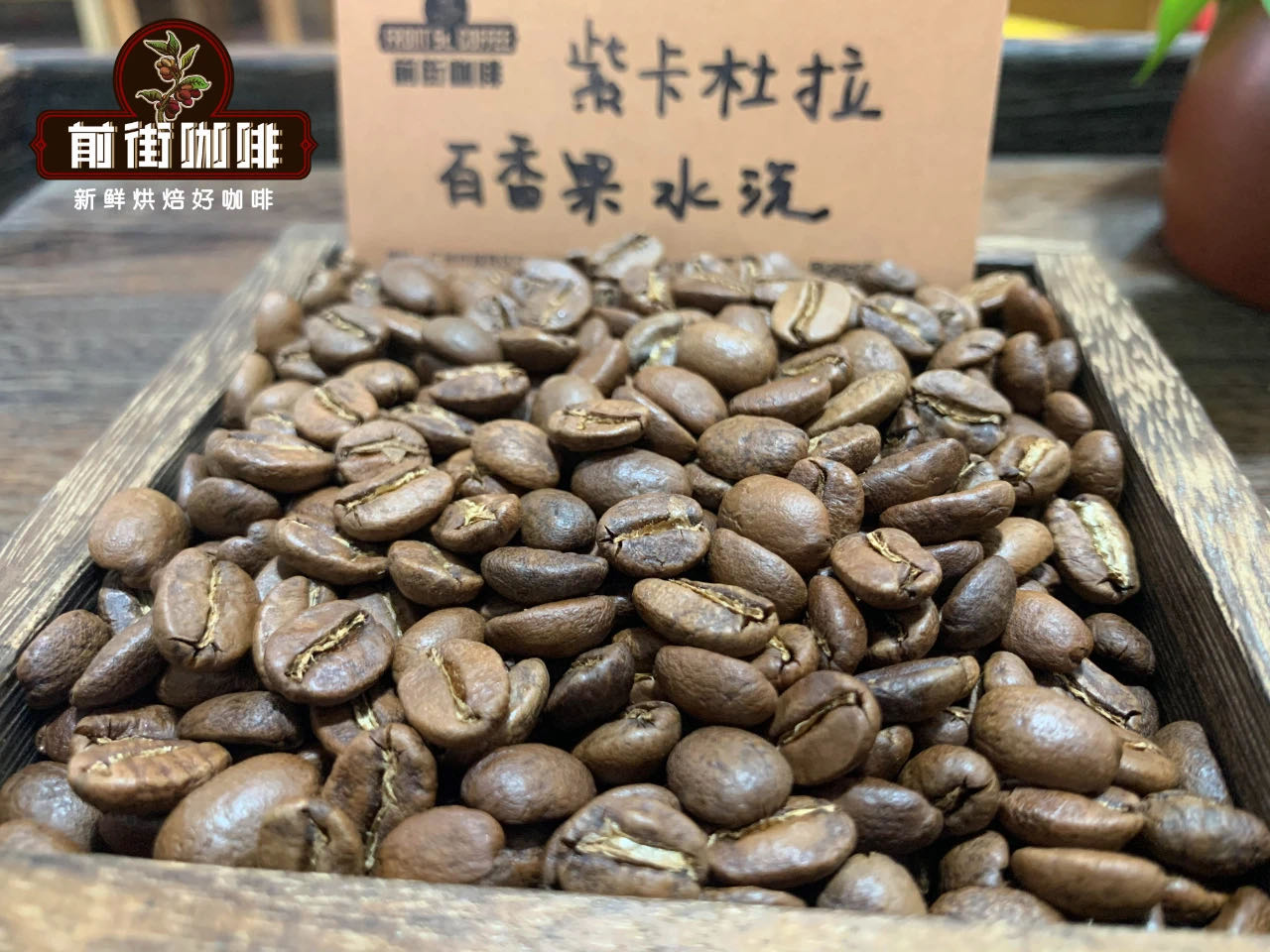
FrontStreet Coffee: Colombia - Passion Fruit Enzyme Washed Purple Caturra
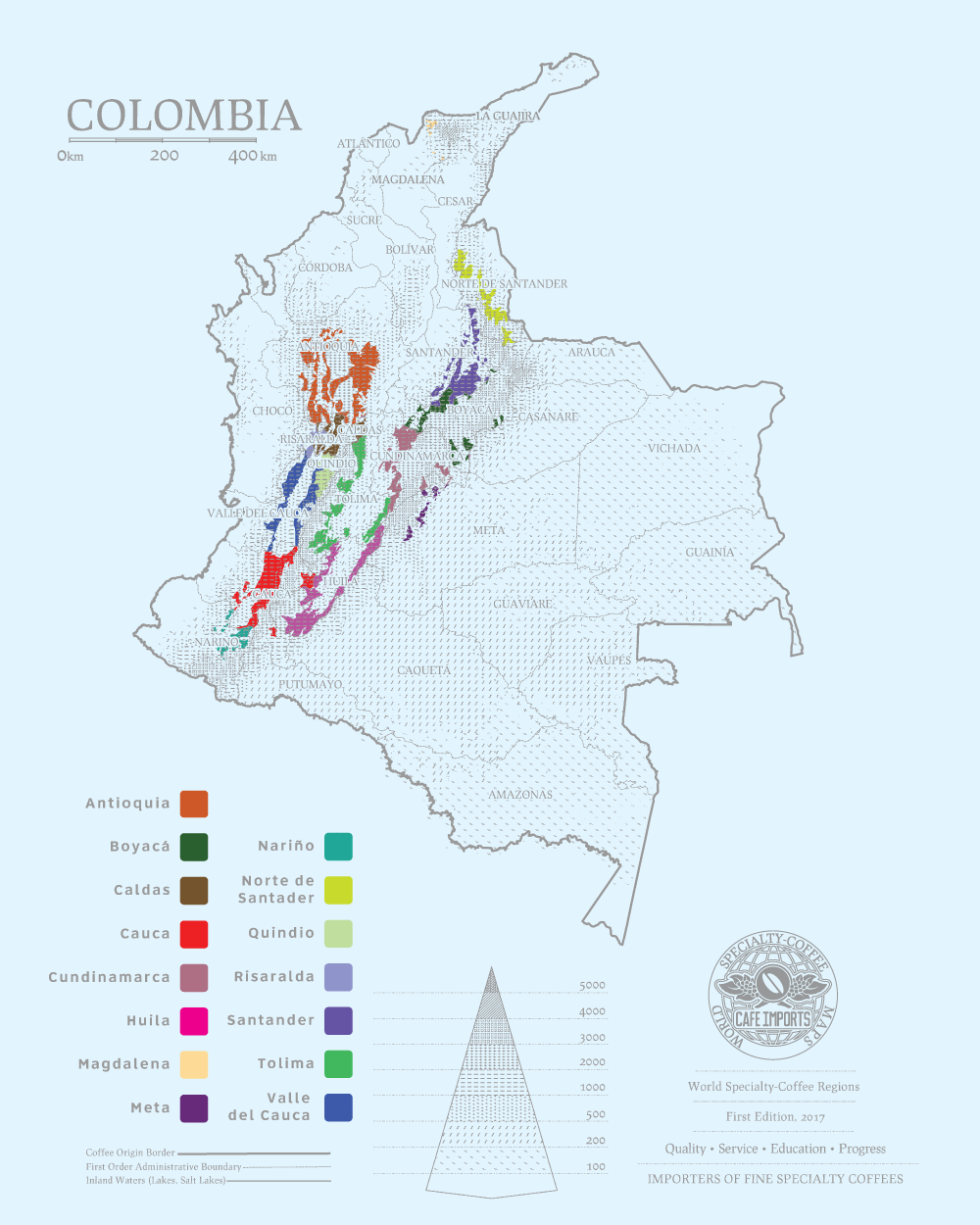
Region: Huila, Colombia
Estate: Montblanc Estate
Altitude: 1900m
Variety: Purple Caturra
Processing Method: Passion Fruit Enzyme Anaerobic Washed Processing
Huila Region
This passion fruit enzyme washed Purple Caturra comes from Colombia's Huila region. In recent years the Huila Provincial Coffee Committee has kept close communication with the Colombian National Federation of Coffee Growers, strengthening the cultivation levels and processing skills of Huila's coffee farmers. With the growth of anaerobic processing technology in particular, Colombian coffee has moved in new directions.
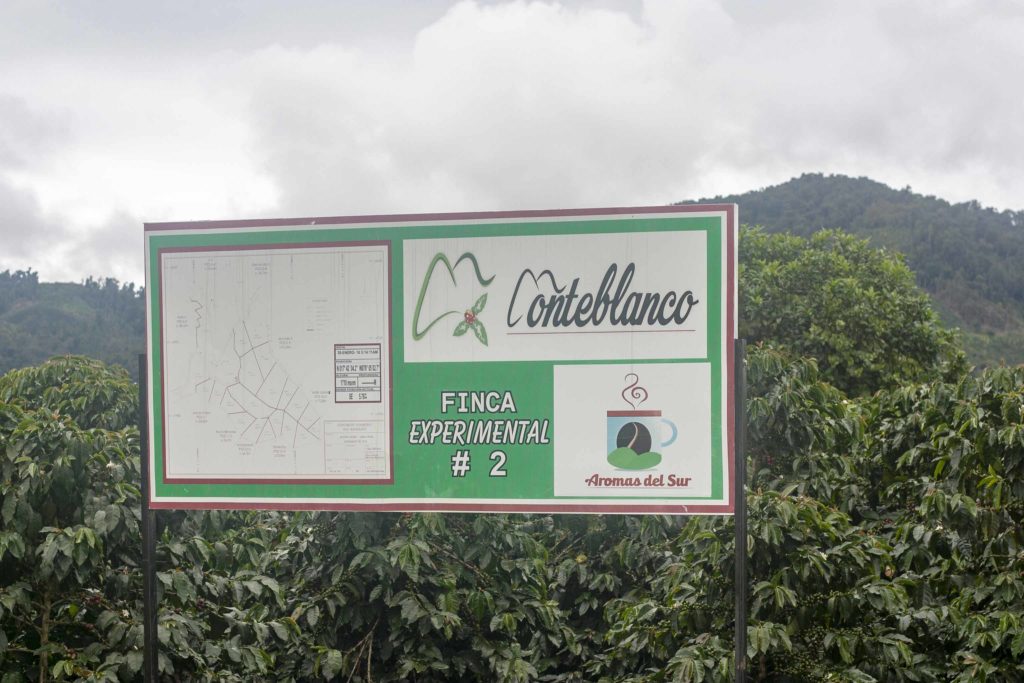
Montblanc Estate
The estate behind this passion fruit lot is Montblanc Estate, set along the winding mountain roads of Vereda La Tolosa in Pitalito municipality. It is run by owner Rodrigo Sanchez Valencia, whose family's coffee cultivation traces back to his grandfather. Montblanc Estate sits on a hilltop with about 18 hectares of land and is equipped with complete processing facilities, including wet mills and dryers.
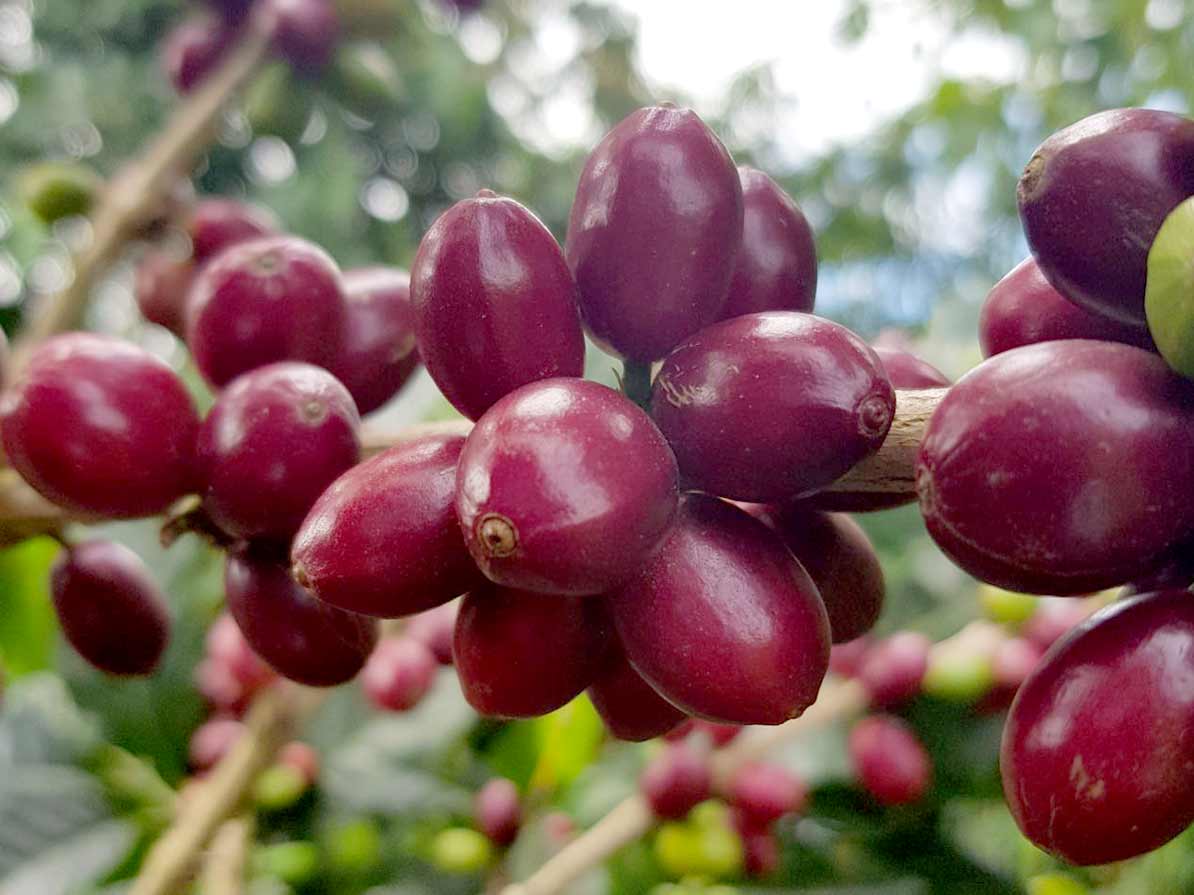
Purple Caturra
Purple Caturra is a variant of Caturra that occurs naturally, with low probability, from red Caturra. The tops of Purple Caturra plants grow bronze-purple young leaves, and the fruit turns deep purple when ripe. Montblanc Estate selected 26 plants with Purple Caturra characteristics out of more than 20,000 coffee plants on the estate. In 2012, leaf rust swept through Colombia, but Purple Caturra survived to this day. It has a unique flavor and strong leaf-rust resistance, and it also reaches high Brix degrees.
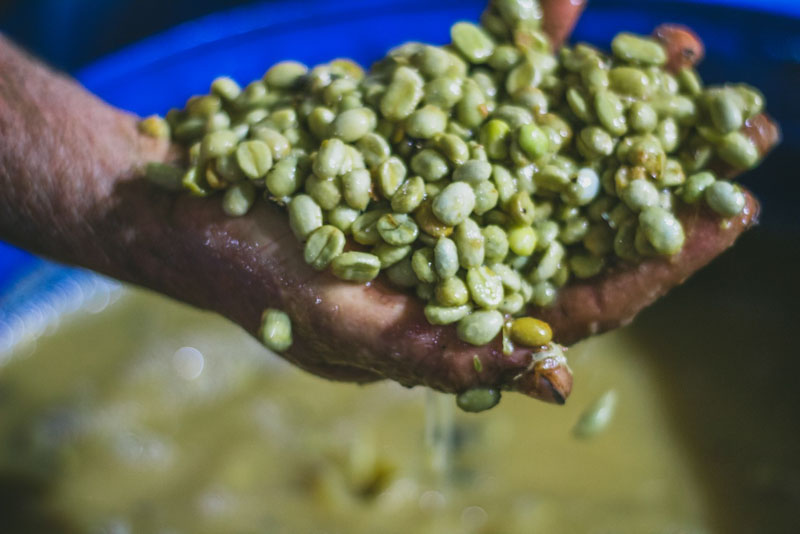
Passion Fruit Enzyme Anaerobic Washed Processing
After harvesting the cherries, Montblanc Estate measures their Brix degrees and chooses processing methods according to sugar content. Coffee with Brix degrees of 24-27 goes to washed processing. First the skin and pulp are removed, then the coffee is fermented with passion fruit. The high sugar content provides an excellent environment for bacterial growth, cultivating strains that are placed with the parchment beans in sealed containers for anaerobic fermentation. Fermentation time is controlled between 28 and 32 hours; the beans are then washed thoroughly with clean water, moved to solar dryers for several days, and finally transferred to cool raised beds to finish drying.
FrontStreet Coffee Brewing Suggestions
Dripper: V60#01
Water Temperature: 90-91°C
Dose: 15g
Ratio: 1:15
Grind Size: EK43s#10 (Chinese standard #20 sieve, 80% pass rate)
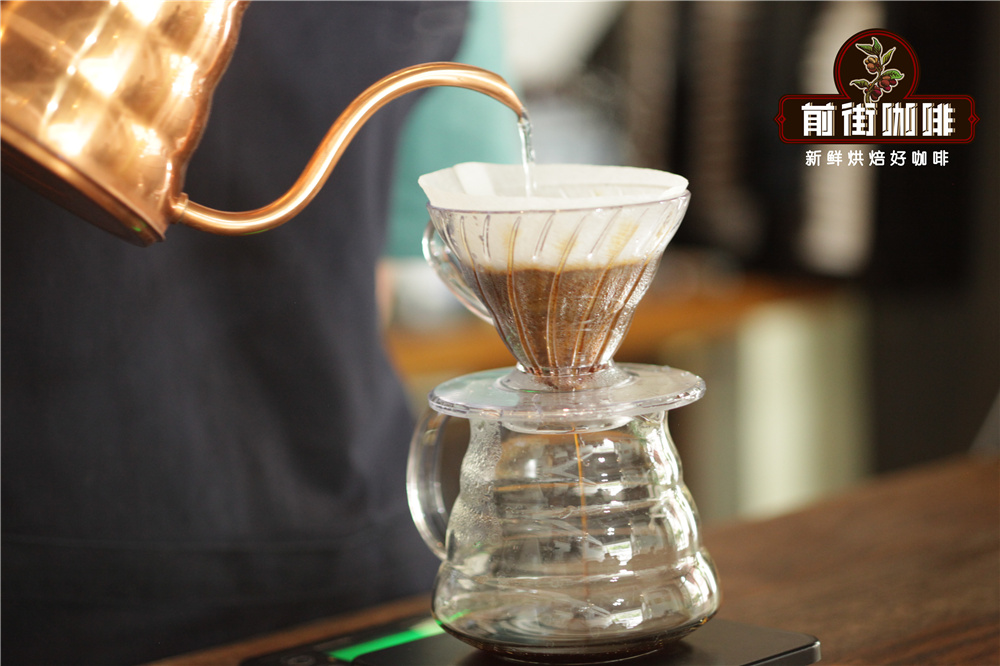
Brewing Method: Three-stage extraction. Use 30g of water for a 30-second bloom, then keep pouring in slow circles to 125g for the first stage. When the water level drops and is about to expose the coffee bed, pour on to 225g and stop. When the water level drops and is about to expose the bed again, remove the dripper. Extraction time is 2'00" (timing starts from the bloom).
Flavor Description: Raisin aroma when ground, with white floral notes during brewing. On tasting, a distinct passion fruit aroma and grape-like acidity, with a honey-like aftertaste.
For more information on coffee beans, read on.
For professional coffee knowledge exchange, keep exploring specialty coffee.
FrontStreet Coffee Recommendation
Brazil is the world's largest coffee producer, and its beans tend to show moderate acidity with a fine balance of sweetness, bitterness, and body, which makes them ideal for medium roasting. That roast level draws out a heady nut aroma and a mellow, rounded cup with a gentle acidity, and the beans work equally well as a single origin or in a blend.
If you just want a first taste of Brazil, FrontStreet's Cerrado Red Bourbon is a classic single origin. Cerrado is one of Brazil's best-known growing regions, prized for high-quality beans, and this lot is the red Bourbon common across South America. Roasted medium, it opens up creamy peanut, toasted bread, caramel, and hazelnut, with a round body, little acidity, and a light bitter edge, and it brews beautifully as pour-over while also suiting a moka pot, an espresso SOE, a siphon, or a French press.
FrontStreet's other Brazilian single origin, Queen's Estate, comes from Mogiana near South Minas, where fertile red volcanic soil feeds the fruit and builds a full aroma. Some farms there keep to traditional methods while others have adopted modern, standardized management, and quality has improved markedly. FrontStreet Queen's Estate is the rarer Yellow Bourbon, a natural mutation of Red Bourbon with a cleaner fruit character, and whether brewed as pour-over, in a moka pot, or on a home espresso machine it shows a sugarcane sweetness found in few other regions, along with fruit and chocolate notes.
Brazil's low-acid, balanced cup and friendly price also make it a go-to base for espresso blends. FrontStreet's classic blend, its nutty premium blend, its Black Cocoa blend, and its commercial blend for cafes all include Brazilian beans, which contribute chocolate and cream notes plus a gentle sweetness, acidity, and bitterness that keep extraction stable.
Important Notice :
FrontStreet Coffee is a long-established specialty coffee roaster in Guangzhou China, selling freshly roasted beans from its own farm in Yunnan as well as dozens of carefully selected single-origin beans from around the world for both pour-over and espresso. The products deliver consistently excellent quality and great value, with shipping within 24 hours. Guangzhou's FrontStreet Coffee shop is recommended by many coffee lovers, and the beans are now available online at the Tmall 。
FrontStreet Coffee has moved to a new address:
FrontStreet Coffee Address: 315,Donghua East Road,GuangZhou
Tel:020 38364473
 Scan and follow the En Gafei WeChat official account. Please indicate that the reprint comes from "En Gafei".