Guatemala Antigua Coffee Theme - Antigua Flora Goddess Coffee PPT - Antigua Coffee Beans Price List
Introduction to the Antigua Growing Region
Guatemala sits on the Central American isthmus, a landscape of high mountains and plateaus built by volcanoes. It produces high-grown, extremely hard Central American beans and ranks as the world's 9th largest coffee producer. Its main growing regions include Antigua, Huehuetenango, Atitlan, Coban, Fraijanes, and Acatenango. Every bean Guatemala produces is Arabica, grown in highland terrain under subtropical conditions, with abundant, stable rainfall and fertile volcanic-ash soil — superb natural conditions for coffee across the country.
Each region has its own flavor signature, with excellent acidity and fruity aromas that are smooth and mellow — world-class coffees well suited to drinking single origin. Antigua occupies the area dominated by the Madre plateau as it crosses mountainous Guatemala, and its natural conditions have made it the country's most famous coffee region.
Introducing the Flora De Dios Estate
Flora De Dios is a brand lot under La Minita, grown in Antigua, Guatemala — a highland ringed by active volcanoes at an altitude of 1850 meters, in the country's most decorated and best-known coffee region.
Antigua itself is a tough place to grow coffee: rainfall is light in summer, and winter cold can bring occasional frost. Fortunately the estate sits in an active volcanic zone, and the lightweight pumice thrown out by eruptions settles into the soil and cools there. Riddled with fine pores, this pumice is excellent at holding moisture. The estate also plants plenty of shade trees, shielding the coffee from winter cold. These mitigations, combined with big day-night temperature swings, create Antigua's unique microclimate — and give its beans a subtle smoky note and rich fruity aroma.
La Minita is renowned for its cultivation, processing technique, and extremely strict quality control. It commissions Las Pastores, the largest wet mill in Antigua, to process the green beans to those standards, and the resulting coffee is sold as Flora De Dios. Beyond the region's classic character, the dry aroma carries rich floral and tea notes; in the cup, lime acidity and berry flavors give way to a honeyed aftertaste. Excellent clarity and layered complexity are the hallmarks of this coffee.
Cultivation at La Minita
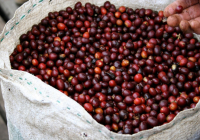
La Minita uses no pesticides: the estate's climate and altitude naturally keep pest populations low, and the few that remain do no real damage to the trees. As the rainy season ends, the cherries begin to ripen — slowly and unevenly, unlike the rapid, uniform flowering. Harvesting therefore demands care, picking only fully ripe, deep-red fruit; a single tree may need up to 5 separate passes. The estate tests its soil twice a year to guide fertilization, uses yield-boosting products sparingly, and fertilizes roughly 3 times a year. Applying trace elements such as zinc, boron, and copper gives the trees extra nutrition and helps prevent disease.
This scientific management is what creates Flora De Dios's excellent flavor and its years of consistent quality. Under La Minita's famous gatekeeping procedures, the coffee is strictly supervised from cultivation through packaging — all to ensure the Pastores mill delivers only the finest beans and the estate's standards are rigorously enforced. Antigua itself is the most famous of Guatemala's regions, and its high altitude, unique volcanic soil, and shade cultivation give its beans a distinctive regional character.
02 | Processing Method
1. Floating-bean separation: the cherries are poured into large water tanks. Underdeveloped, inferior beans float; mature, full fruits sink. The floaters are skimmed off, completing the step.
2. Pulping: a pulping machine removes the skin and outer flesh, leaving the mucilage, parchment, and silver skin.
3. Fermentation: the pulped coffee goes into fermentation tanks for 16–36 hours, where fermentation bacteria dissolve the mucilage.
4. Washing: once the mucilage is gone, fermentation residue and impurities remain, so the beans are washed again — a step that consumes large amounts of fresh water to guarantee thorough cleaning.
5. Drying and hulling: the coffee is dried until moisture falls to 10–14%, then a hulling machine removes the parchment and silver skin to complete processing.
03 | Green Bean Analysis
[Guatemala Flora De Dios – Washed]
The Flora De Dios varieties are primarily Bourbon, Caturra, and Catuai. Bourbon and Typica are both ancient, high-quality varieties; Bourbon's beans are smaller and rounder than Typica's.
Caturra shows lemon or citrus-like acidity. Its sweetness doesn't match Typica or Bourbon, because Caturra's sweetness depends on how often and how heavily the grower fertilizes. It is highly productive, but keeping that productivity up requires constant fertilizing and pruning, producing short, bushy trees. And although yields rise, the two-year wait before first harvest and the higher cost of care keep overall output somewhat limited.
04 | Roasting Analysis
These green beans are rounded and greenish-yellow, with good uniformity and medium moisture. The roasting goal is a medium roast: bright enough acidity to showcase the florals and fruit, while building richness and balance.
The first batch dropped from a relatively high charge temperature, with bean entry at 200°C and relatively high heat. The beans proved dense and high-grown. To preserve their acidic aromatics, we pushed temperature with an earlier first crack, then cut heat as the beans passed the yellowing point, finished drying, and approached first crack to avoid scorching the surface. We dropped the beans 1 minute 50 seconds after first crack ended, shortening the caramelization time to keep more of the floral, fruity aftertaste.
Yangjia 600g Semi-Direct-Fire Roaster
Preheat the roaster to 200°C, air damper at 3. After 30 s, reduce heat to 160°C, damper unchanged. Turning point at 1'36", then hold heat. At 4'50" the bean surface yellows, the grassy aroma disappears entirely, and the beans enter the drying phase: reduce heat to 140°C and open the damper to 4.
At 4'50" drying is complete and heat drops to 140°C. At 8'32" the bean surface shows rough wrinkles and dark mottling, and the toast aroma clearly turns to coffee aroma — the prelude to first crack. Listen carefully: at 8'37" first crack begins; reduce heat to 80°C and open the damper fully to 5 (adjust heat very carefully — never so low the crack fades out). Develop 1'50" after first crack and drop at 195.3°C.
In the cup this washed Guatemala Flora De Dios shows distinct citrus acidity with a juicy feel, rich floral aroma, pleasant sweetness, and medium body, with slight caramel and smoky notes in the finish. Overall it is clean and mild, with a smooth texture and balanced, lively, complex layers of flavor.
05 | Brewing Analysis
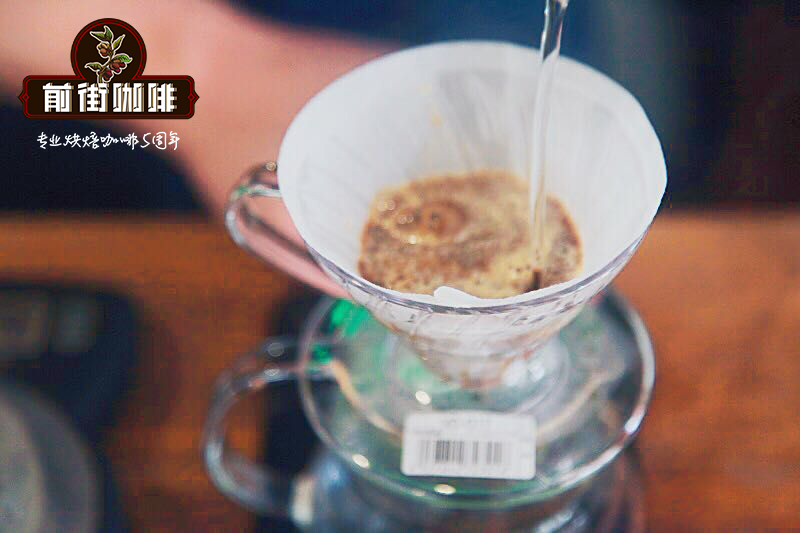
Recommended method: Pour-over
Grind size: (Fuji Royal R440) 3.5
V60 dripper, 15 g of coffee, water at 91°C
Water-to-coffee ratio 1:15
Pour in segments: a gentle flow to 125 g, pause, then pour slowly to 225 g
Total time: approximately 1 minute 50 seconds
| BG Grinding | 4R |
| Grinder | |
| Grind size | |
| Dose | 15g |
| Dripper | V60 |
| Water Temperature | 90°C |
| Bloom | 30g water for 30s |
| Second pour | 95g |
| Third pour | 100g |
| Total time | 1:58 |
Sweetness: ☆☆
Acidity: ☆☆☆
Bitterness: ☆
Other brew methods:
French press: grind 3.5–4, water at 91°C
AeroPress: grind 2.5, water at 90°C
FrontStreet Coffee Recommendation
FrontStreet Coffee's roasted Guatemala Antigua Flora De Dios comes with full assurance of brand and quality — and exceptional value: a half-pound (227 g) bag costs only about 85 yuan. At 15 g per pour-over, one bag brews 15 cups, just 5–6 yuan each, against café prices that often run to dozens of yuan a cup. If Antigua's Bourbon character draws you in, FrontStreet also carries other members of the family: the FrontStreet Brazil Cerrado red bourbon, medium roasted, with cream, nut, bread, and chocolate notes that love a splash of milk; the FrontStreet Brazil Queen Estate yellow bourbon from 1400-meter Mogiana, medium-dark roasted for cream, peanut candy, chocolate, sugarcane sweetness, and an almond finish — and beautiful crema through a moka pot or espresso machine; and the FrontStreet Rwanda red bourbon, grown at 1700–2000 meters on volcanic soil and roasted medium-light to keep its fresh acidity, full body, and floral, citrus character.
Important Notice :
FrontStreet Coffee is a long-established specialty coffee roaster in Guangzhou China, selling freshly roasted beans from its own farm in Yunnan as well as dozens of carefully selected single-origin beans from around the world for both pour-over and espresso. The products deliver consistently excellent quality and great value, with shipping within 24 hours. Guangzhou's FrontStreet Coffee shop is recommended by many coffee lovers, and the beans are now available online at the Tmall 。
FrontStreet Coffee has moved to a new address:
FrontStreet Coffee Address: 315,Donghua East Road,GuangZhou
Tel:020 38364473
 Scan and follow the En Gafei WeChat official account. Please indicate that the reprint comes from "En Gafei".