How to Drink Antigua Flor de Café Coffee Beans - Correct Antigua Coffee Brewing Methods & Price Guide
Introduction to the Antigua Coffee Growing Region
Guatemala is located on the Central American isthmus, with many high mountains and plateaus formed by volcanoes. It produces high-quality Central American high-altitude strictly hard beans and is the 9th largest coffee bean producer in the world. The main coffee growing regions in Guatemala include Antigua, Huehuetenango, Atitlan, Coban, Fraijanes, and Acatenango, among seven major regions. Across Guatemala's seven coffee-producing regions, all coffee beans produced are Arabica, grown on highland terrain under a subtropical climate, with abundant and stable rainfall and fertile volcanic ash soil, giving various parts of the country extremely suitable natural conditions for coffee cultivation.
This valley is surrounded by three volcanoes: Agua, Fuego, and Acatenango. The volcanic ash from eruptions makes the soil in the Antigua region rich in minerals. Volcanic pumice helps retain humidity, overcoming the drawback of low rainfall in the Antigua region, while dense shade trees prevent occasional frost damage.
Characteristics: Rich wet aroma, good balance, high sweetness, and a delicate body.
Each region has unique flavors, with excellent acidity and smooth fruit aromas, belonging to one of the world's top coffees and suitable for single-origin drinking. The Antigua region lies in the mountainous terrain that crosses Guatemala, mainly in the Madre plateau area. Because of this region's natural conditions, Antigua has become Guatemala's most famous growing region.
Introduction to Antigua Coffee Estates
Flor de Cafe is a brand bean under La Minita Company, with its growing region located in Antigua City, Guatemala, a highland surrounded by active volcanoes at an altitude of 1850 meters, making it the country's most awarded and famous region.
Antigua has little rainfall in summer and occasional frost in winter due to extreme cold, conditions that are actually not suitable for coffee tree growth. Fortunately, it lies in an active volcanic zone: volcanic pumice that falls into the soil after eruptions cools down, and because these pumice stones have many fine pores, they retain moisture very well. In addition, the large number of shade trees planted on the estate prevents the coffee trees from suffering cold damage in winter. These factors that overcome adverse conditions, combined with large day-night temperature differences, create a unique microclimate in Antigua, giving the coffee beans here a subtle smoky flavor and rich fruit aroma.
La Minita is famous for excellent cultivation, processing techniques, and extremely strict quality control. It commissions Las Pastores, the largest wet processing plant in Antigua, to process the green beans to these standards, and names the coffee beans Flor de Cafe. Besides preserving the original regional flavor, the dry aroma carries rich floral and tea notes. After tasting, lime acidity and berry flavors emerge, then transform into a honey aftertaste. Excellent cleanliness and rich layered complexity are the hallmarks of this Flor de Cafe.
La Minita Estate Coffee Cultivation
La Minita Estate does not use pesticides, and the climate and altitude advantages formed by the estate's geographic environment limit the number of pests. A small number of pests does not cause significant damage to the coffee trees. When the rainy season is about to end, the coffee fruits ripen. Green fruits begin to turn red, but coffee fruit ripening is very slow and uneven, unlike flowering, which is rapid and consistent. Harvesting therefore must be handled more carefully, picking only fully matured deep red fruits.
Fruits from one tree may be harvested up to 5 times depending on ripening conditions. The estate conducts soil testing twice a year to determine its fertilization approach. La Minita Estate is very careful when using products that can increase yield, fertilizing about 3 times a year.
In addition, applying trace elements such as zinc, boron, and copper provides more nutrients to the coffee trees and helps prevent disease. Such scientific cultivation management has produced the excellent flavor of Flor de Cafe and a reputation for consistent quality over the years. Following La Minita's famous gatekeeping procedures, Flor de Cafe is strictly supervised from cultivation to packaging. These complex procedures all ensure that the Pastores processing plant delivers the best quality and strictly follows the estate's standard operating procedures.
The Antigua region itself is the most famous among Guatemala's seven regions, with high altitude, unique volcanic soil, and shade cultivation, making coffee beans from the Antigua area uniquely distinctive in regional flavor.
Processing Method
Full Washed
1. Removing Floating Beans: Pour the coffee beans into a large water tank. Underdeveloped, inferior beans float to the surface, while mature, full fruits sink to the bottom. Scoop away the floating beans on the surface to complete this step.
2. Removing Skin and Pulp: Using a pulper, remove the outer skin and pulp of the coffee fruits, leaving the pectin, inner skin, and silver skin.
3. Fermentation: The purpose of this step is to use biological treatment to remove the pectin. Coffee fruits processed by the pulper are placed in fermentation tanks for 16-36 hours, and fermentation bacteria dissolve the pectin.
4. Washing: After fermentation and pectin removal, fermentation bacteria and impurities remain on the coffee beans, so the beans are washed again. To clean them thoroughly, this step consumes a large amount of clean water.
5. Drying and Removing the Inner and Silver Skin: Dry the coffee fruits until the moisture content drops to 10-14%. Then use a hulling machine to remove the remaining inner skin and silver skin to complete processing.
Green Bean Analysis
Guatemala Flor de Cafe - Washed Processing
The varieties of Guatemala Flor de Cafe are mainly Bourbon, Caturra, and Catuai. Bourbon and Typica are listed together as ancient, high-quality coffee varieties. The bean appearance is smaller and rounder compared with Typica.
Caturra has a taste with lemon or citrus acidity. In terms of sweetness, it doesn't match Typica and Bourbon, because Caturra's sweetness is determined by the frequency and dosage of fertilization by growers. It has high yield capacity, but to maintain that capacity it requires continuous fertilization and pruning, making the plants short with many branches. Although yield capacity increases, because the harvest period takes 2 years and care costs are high, production is still somewhat limited.
Roasting Analysis
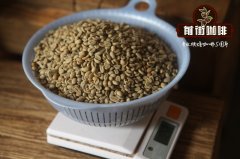
This green coffee bean is plump, green with yellow tones, relatively uniform, and of medium moisture content. The roasting goal is a medium roast, retaining bright acidity to showcase floral and fruit aromas while enhancing richness and balance.
In the first batch of roasting, the dropping temperature was relatively high, with a bean entry temperature of 200 degrees and relatively high heat. During roasting it was found that this bean has high altitude and hard bean quality. To retain more acidic aroma, a technique of raising the temperature and advancing first crack was adopted. Heat was adjusted finer at the yellowing point, after dehydration completion, and before first crack to avoid scorching the bean surface. The beans were dropped 1 minute 50 seconds after first crack completion, shortening the caramelization reaction to preserve more floral and fruit aftertaste.
Roaster: Yangjia 600g semi-direct flame
Heat the roaster to 200 degrees Celsius, set the damper to 3, and adjust heat to 160 degrees after 30 seconds; damper unchanged. The return-to-temperature point is at 1'36"; maintain heat. At 4'50" the bean surface turns yellow, the grassy smell disappears completely, and the coffee enters the dehydration stage; reduce heat to 140 degrees and adjust the damper to 4.
At 4'50" dehydration is complete and heat is reduced to 140 degrees; at 8'32" the bean surface shows ugly wrinkles and black spots, and the toast smell clearly turns to coffee aroma, which can be defined as the prelude to first crack. At this point, listen carefully for the sound of first crack. First crack begins at 8'37"; reduce heat to 80 degrees and open the damper fully to 5, adjusting heat very carefully so the crackling sound doesn't stop. After first crack, develop for 1'50" and drop at 195.3 degrees.
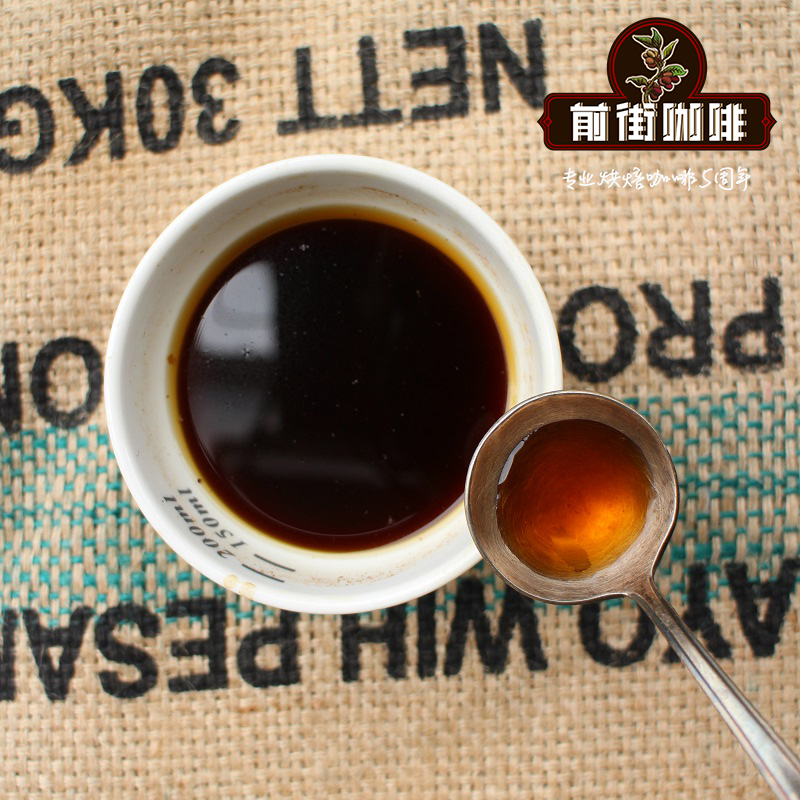
This Guatemala Flor de Cafe washed has relatively obvious citrus acidity, with a juicy acidity, rich floral aroma, and pleasant sweetness, a medium body, and slight caramel and smoky flavors in the aftertaste. Overall it is clean, mild, and smooth in texture, with a balanced and lively layered complexity.
Brewing Analysis
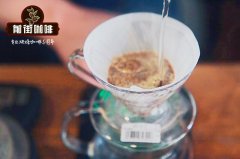
Recommended Brewing Method: Pour-over
Grind Size: (Japan Fuji R440) 3.5
V60 filter cup, 15 g grounds, water temperature 91 degrees
Water-to-coffee ratio 1:15
Segmentation: Inject with a small water flow to 125 g, then stop; slowly inject to 225 g
Total Time: Approximately 1 minute 50 seconds
BG grinding 4R
Sweetness: ☆☆☆
Acidity: ☆☆☆
Bitterness: ☆
Other drip extraction suggestions: French press, recommended grind size 3.5-4, water temperature 91°C
AeroPress, recommended grind size 2.5, water temperature 90°C
FrontStreet Coffee Recommendation
Antigua is the classic balanced, elegant Arabica cup, and if you like that profile, FrontStreet Coffee has several well-rounded beans worth trying. The FrontStreet Jamaica Blue Mountain No.1 is Typica grown in Jamaica and famed for its perfect balance of acidity, sweetness, and bitterness, with nuts, dark chocolate, cream, caramel, and a gentle sweetness. For a more aromatic, floral expression, the FrontStreet Panama Red Label Geisha comes from the Esmeralda estate and shows jasmine florals, citrus, peach, and a creamy body with an oolong-tea finish. If you prefer a softer, sweeter daily cup, the FrontStreet Brazil Queen's Estate Yellow Bourbon brings cream, peanut, toasted bread, and sugarcane in a smooth, mellow brew.
Important Notice :
FrontStreet Coffee is a long-established specialty coffee roaster in Guangzhou China, selling freshly roasted beans from its own farm in Yunnan as well as dozens of carefully selected single-origin beans from around the world for both pour-over and espresso. The products deliver consistently excellent quality and great value, with shipping within 24 hours. Guangzhou's FrontStreet Coffee shop is recommended by many coffee lovers, and the beans are now available online at the Tmall 。
FrontStreet Coffee has moved to a new address:
FrontStreet Coffee Address: 315,Donghua East Road,GuangZhou
Tel:020 38364473
 Scan and follow the En Gafei WeChat official account. Please indicate that the reprint comes from "En Gafei".