Flavor Differences Between SOE and Blend Coffee - Taste Profile and Quality of Yirgacheffe SOE Americano
Customers who come to FrontStreet Coffee often ask our baristas whether there are different espresso beans to choose from, or whether we can make single-origin coffee. At these times FrontStreet Coffee has to explain politely that we currently offer only one espresso blend: FrontStreet Coffee Sunflower Warm Sunshine Espresso Blend (a combination of FrontStreet Coffee Honduras Sherry and FrontStreet Coffee Natural Red Cherry). Because of the high proportion of Sherry beans, FrontStreet's iced Americanos carry a rich wine-like aroma that rushes into your nostrils the moment the grinder starts, tasting more like sipping an aged vintage wine. Whenever our baristas describe this distinctive espresso to customers, their eyes light up with interest.

Understanding Single Origin Espresso (SOE)
This brings us to today's topic: what exactly are customers referring to when they ask for single-origin coffee on their first visit?
FrontStreet Coffee explains: SOE became very popular abroad over a decade ago and is now a mature concept, but it has only gained popularity in China in recent years, so many people still do not quite understand what SOE is. SOE is the abbreviation for Single Origin Espresso, meaning espresso made from coffee beans of a single origin. Does that give you an "aha!" moment? It is not some mysterious, advanced coffee concept. It simply replaces the "blended coffee" typically used for espresso with "single-origin coffee," still extracted through an espresso machine under high pressure.
SOE vs. Blended Coffee: Which Tastes Better?
So does SOE really taste better than blended coffee? Many factors determine whether a cup of coffee is good, such as the beans, the roast, the machine, brewing technique, and personal taste preferences. SOE only refers to espresso made from single-origin beans, and those beans are not necessarily better than the beans in a blend. The other factors also greatly influence quality, so we cannot make sweeping generalizations about what makes "good" coffee.
Take FrontStreet Coffee's iced Americano, for example. The FrontStreet Coffee Sunflower Warm Sunshine Blend was not created to cut costs or mask the flavor of inferior beans, but to create new, distinctive flavors and to showcase how FrontStreet Coffee differs from other cafes through this carefully crafted formula.

Yirgacheffe Americano vs. Standard Americano
Returning to our title, what is the difference between a Yirgacheffe Americano and a standard Americano? From the description above, you will understand that a Yirgacheffe Americano is an SOE Americano. FrontStreet Coffee's Yirgacheffe beans inherently have delicate floral aromatics, with a smooth, round mouthfeel hiding notes of flowers, fruit, and high-mountain black tea. Used for espresso, they even develop dark chocolate flavors, combined with clean, bright acidity, weaving together soft, pleasant flavors and a lingering aftertaste. That is precisely what a good Yirgacheffe Americano should taste like.
FrontStreet Coffee's Philosophy on SOE
FrontStreet Coffee believes that using single-origin beans for espresso is simply a way to let espresso and milk-coffee lovers experience the inherent flavors of a single origin. So if a single-origin bean does not have enough distinctiveness to make the coffee showcase the flavors it should, it is better to drink a blended coffee with balanced flavors and a rich body. The difference between an Americano and a latte lies in their espresso base: Americanos are diluted with water while lattes use milk. When making SOE coffee, we must consider the latte's flavor even more, because milk can overpower the single-origin character.
On single-origin coffee, FrontStreet Coffee has another viewpoint: do not pursue consistency in SOE. Coffee is an agricultural product, and the quality of a single origin is affected by weather, cultivation, and many other factors, so it is perfectly normal for SOEs from the same region in different years to taste different.

Key Considerations for Making SOE
What should you pay attention to when making SOE? FrontStreet Coffee has found that many people think SOE simply means putting single-origin beans straight into an espresso machine. It is not until they bring home various floral and fruity beans and try them that they realize something is wrong. First they see the wild spraying shown below, then they are shocked by incredibly sour espresso that makes them not dare take a second sip, and then they begin to wonder whether their equipment is too poor or they made an operational mistake.

In fact, the reason you may not be able to make shop-quality SOE at home is likely not your equipment or technique, but that the roast level of those beans simply is not suitable for espresso. From FrontStreet Coffee's barista experience, choosing beans suitable for SOE extraction not only makes it easy to produce delicious espresso, but also makes creating Americanos or lattes by adding water or milk twice as effective. FrontStreet Coffee's bean list offers two single-origin beans in SOE versions: one is the strawberry-flavored FrontStreet Coffee Guji SOE, and the other is the classic Yirgacheffe-flavored FrontStreet Coffee Konga SOE. Simply select "espresso roast" when placing your order.

The Popularity of Yirgacheffe
Indeed, many people ask whether FrontStreet Coffee has a Yirgacheffe SOE. Why is everyone asking about Yirgacheffe? FrontStreet Coffee believes this relates to Yirgacheffe's reputation. Yirgacheffe was originally part of Ethiopia's Sidamo region, but because of its outstanding quality it was separated into an independent growing region. The area produces some natural-process coffees, but most are washed-processed today. The coffee aristocracy with its unique lemon-citrus aromas comes from Ethiopia's Yirgacheffe, where coffee is grown almost wild-style. Hand-harvested, the selected beans often amount to only 1/4 of the total harvest. With delicate floral aromas and balanced acidity, Yirgacheffe, full of noble character, is known as Ethiopia's finest coffee.
FrontStreet Coffee's Yirgacheffe Selection
FrontStreet Coffee shops currently offer four Yirgacheffe varieties: FrontStreet Coffee Natural Red Cherry (natural process), FrontStreet Coffee Konga Cooperative (natural process), FrontStreet Coffee Werka Cooperative (washed process), and FrontStreet Coffee Gudin Cooperative (washed process). Each bean has its own character, with an overall flavor direction of citrus and berry notes.
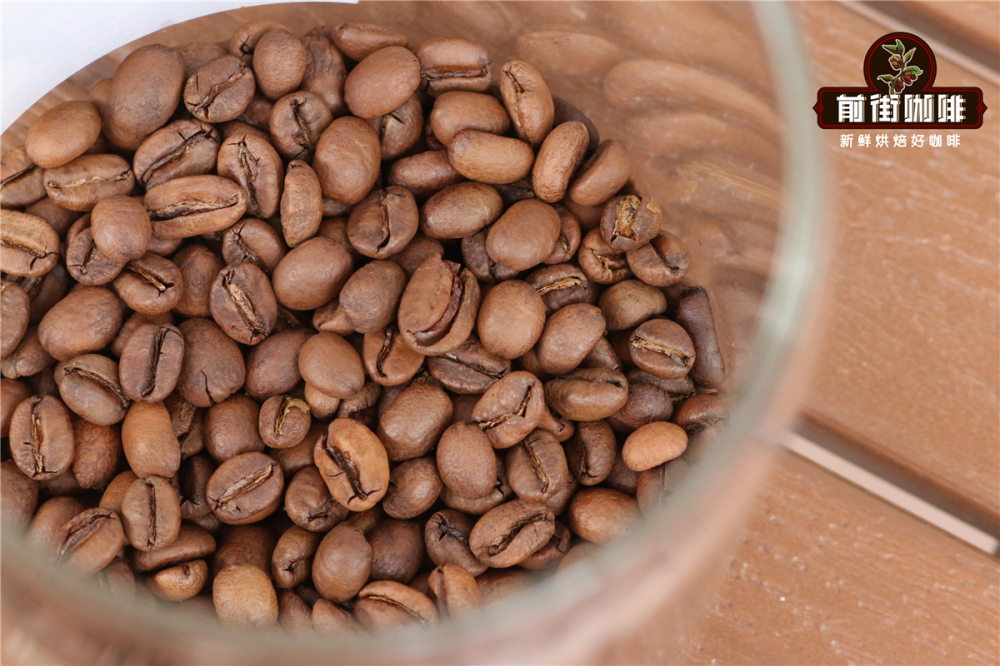
FrontStreet Coffee's Red Cherry green beans are sourced from Trabocca, the Netherlands' largest green coffee importer. In pursuit of higher green-bean quality, this importer launched the Red Cherry Project [ORC], which requires fully manual harvesting of fully red coffee cherries. The aim is to improve green coffee quality and thereby raise coffee prices, bringing higher profits to farmers while bringing surprises to roasters.
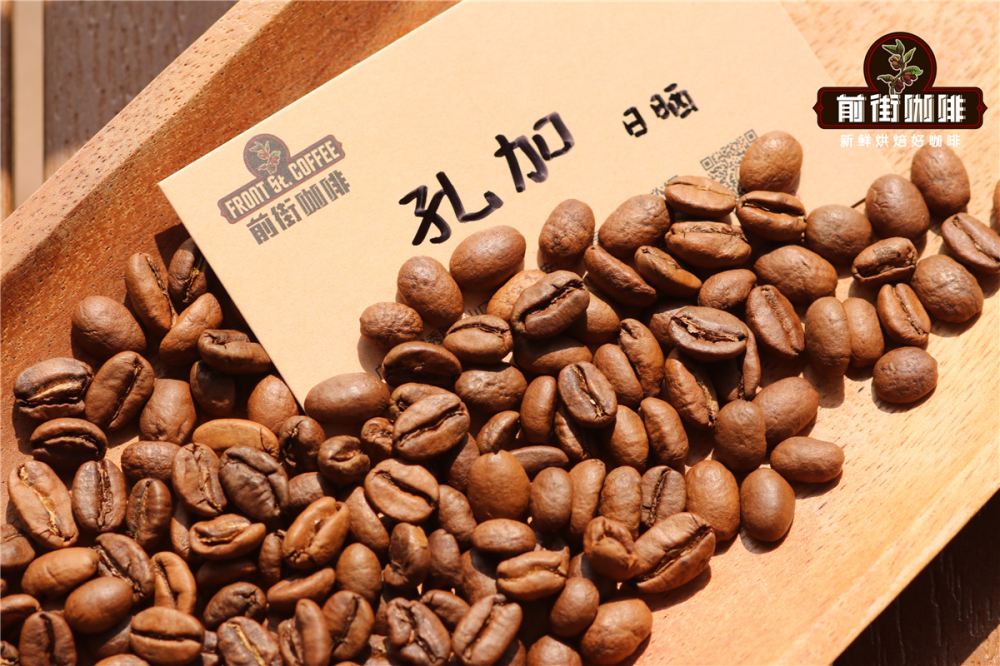
Konga Cooperative is one of 26 cooperatives under the Yirgacheffe Coffee Farmers Cooperative Union. Konga's special feature is its red soil. The red soil is rich in iron, a micronutrient that helps plants produce chlorophyll and is very helpful for photosynthesis, allowing the plants to absorb more energy and produce better fruit. The red soil is undoubtedly a key factor in Konga Cooperative's delicious beans. FrontStreet Coffee believes that FrontStreet's SOE Konga beans combine sweet-and-sour fruit notes, almond biscuit flavors, and delicate floral aromatics, making them very suitable for a balanced, rich latte.
FrontStreet Coffee shops use the commercial single-group "Lelit Bianca" espresso machine, which can adjust extraction by changing pressure, with a maximum pressure reaching 11 bar. Home machines need only reach 9 bar to satisfy extraction and milk-frothing functions, paired with an espresso grinder.

SOE Coffee Extraction Parameters
Coffee beans: FrontStreet Coffee Ethiopia Natural Konga SOE
Coffee dose: 20g
Espresso yield: 40g
Brew ratio: 1:2
Extraction time: 26~33 seconds
Grind setting: Galileo 2.0 settings
FrontStreet Coffee uses a double basket capacity, with doses around 18~20 grams. FrontStreet Coffee uses 20 grams of coffee for service.

Typically the coffee grounds to espresso liquid ratio ranges from 1:1.5 to 1:2.5. FrontStreet Coffee's extraction ratio is 1:2, meaning 20 grams of grounds extract 40 grams of espresso liquid. Time is related to the flow rate of the grounds. Generally, single extraction times are controlled between 20~35 seconds, because under 20 seconds coffee usually tastes thin, while over 35 seconds easily leads to over-extraction and bitterness. FrontStreet Coffee's espresso mostly falls within the 28~30 second range.

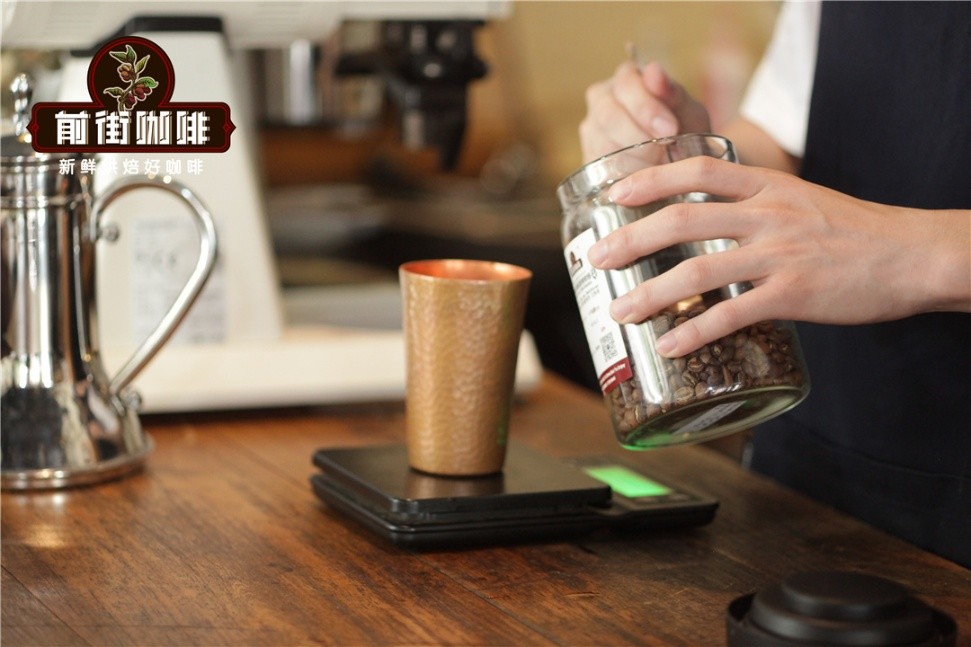
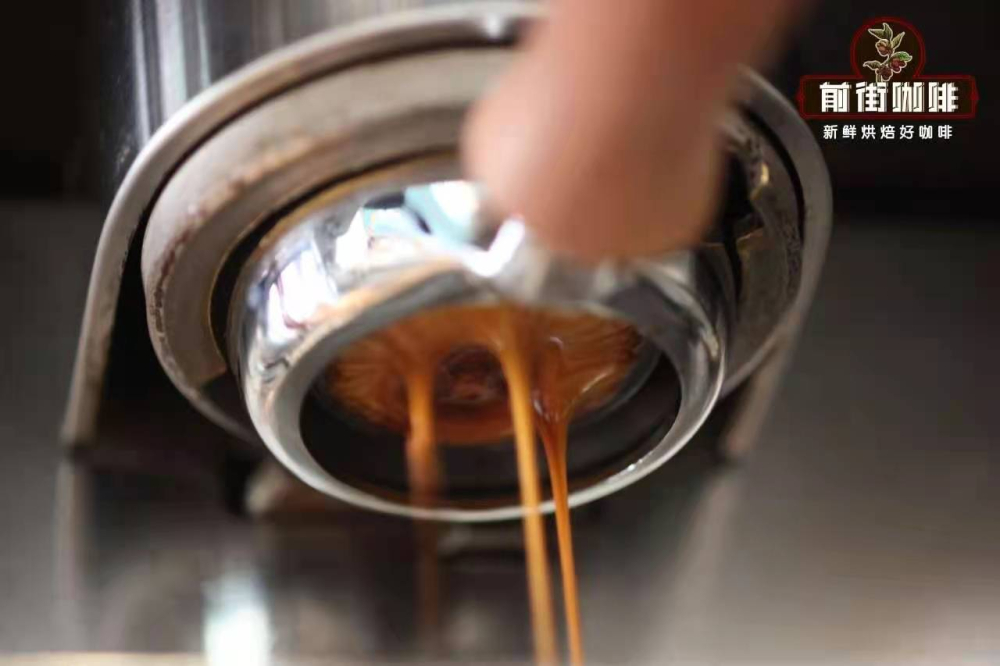
First, FrontStreet Coffee wipes the portafilter dry, turns on the grinder, grinds a double shot portion, and places it on an electronic scale to adjust to 20 grams. Tools are then used to distribute the coffee evenly, and the puck is tamped firmly to ensure more stable extraction. Next, the extraction switch is turned on to run water, moistening the group head while flushing away any stuck grounds, then the portafilter is gently locked onto the group head to begin extraction. When the scale shows 40 grams of espresso extracted, at approximately 28~33 seconds, the extraction switch is turned off and a SOE espresso is complete. We can add appropriate proportions of iced water or 80°C hot water according to personal preference to make a Yirgacheffe SOE Americano.

When making SOE hot lattes, FrontStreet Coffee uses a 1:6 ratio, adding 40 grams of espresso liquid to a pre-warmed cup, then using the machine's steam to froth 240g of milk. Milk temperature is best held between 50-65°C to form dense, appropriately thick foam, which is then combined evenly with the espresso. The result is a Yirgacheffe SOE latte that tastes like eating a lemon-flavored biscuit: rich, smooth, and aromatic, leaving you feeling warmly satisfied.

Connect With FrontStreet Coffee
FrontStreet Coffee welcomes professional baristas and coffee lovers for exchange and shares more specialty coffee information. For more specialty coffee beans, please look for FrontStreet Coffee's official online store.
FrontStreet Coffee Recommendation
If you want to explore Yirgacheffe at its most approachable, start with FrontStreet Coffee's washed Yirgacheffe, a classic daily drinker known for white jasmine, bright citrus and lemon acidity, and a tea-like finish. Its friendly price makes it the first specialty bean for many newcomers.
For a clean, refined cup with more depth, choose FrontStreet Coffee's Gudingding Cooperative, a washed lot from the Woka area at the southeastern edge of Yirgacheffe. Because the pulp is removed before drying, the coffee's inherent aromatics come through clearly, showing citrus and lemon tones with elegant white florals and a bright, delicate profile.
For fruit intensity, FrontStreet Coffee's Natural Red Cherry selects only fully ripe red cherries for whole-fruit drying, so the sugars and essence of the pulp seep fully into the bean. It keeps the signature Yirgacheffe character while adding natural tropical fruit: citrus-like acidity, a berry-juice quality, honeyed sweetness, and a creamy smoothness.
And for espresso, FrontStreet Coffee's Konga SOE in the espresso roast is a good choice: it blends sweet-and-sour fruit, almond biscuit, and delicate florals, making it ideal for a balanced, rich latte.
Important Notice :
FrontStreet Coffee is a long-established specialty coffee roaster in Guangzhou China, selling freshly roasted beans from its own farm in Yunnan as well as dozens of carefully selected single-origin beans from around the world for both pour-over and espresso. The products deliver consistently excellent quality and great value, with shipping within 24 hours. Guangzhou's FrontStreet Coffee shop is recommended by many coffee lovers, and the beans are now available online at the Tmall 。
FrontStreet Coffee has moved to a new address:
FrontStreet Coffee Address: 315,Donghua East Road,GuangZhou
Tel:020 38364473
 Scan and follow the En Gafei WeChat official account. Please indicate that the reprint comes from "En Gafei".