Differences Between Yirgacheffe G1 and G2 Grades - Yirgacheffe Coffee Bean Story, Characteristics & Price Guide
Yirgacheffe: The Jewel of Ethiopian Coffee
If all African coffee varieties were a bouquet of flowers, Yirgacheffe coffee beans would undoubtedly be one of the most beautiful blossoms among them.
Ethiopia is the birthplace of Arabica coffee beans. Generally, pure Arabica coffee beans grow at altitudes between 4,000 and 6,000 feet, while Yirgacheffe grows at 6,900 feet (2,300 meters, roughly the height of Alishan), in forested areas with sparse shade and few people. It was once reserved exclusively for Ethiopian royalty, and today coffee beans from the Yirgacheffe region generate 67% of Ethiopia's foreign exchange earnings.
The Origin and Meaning of Yirgacheffe
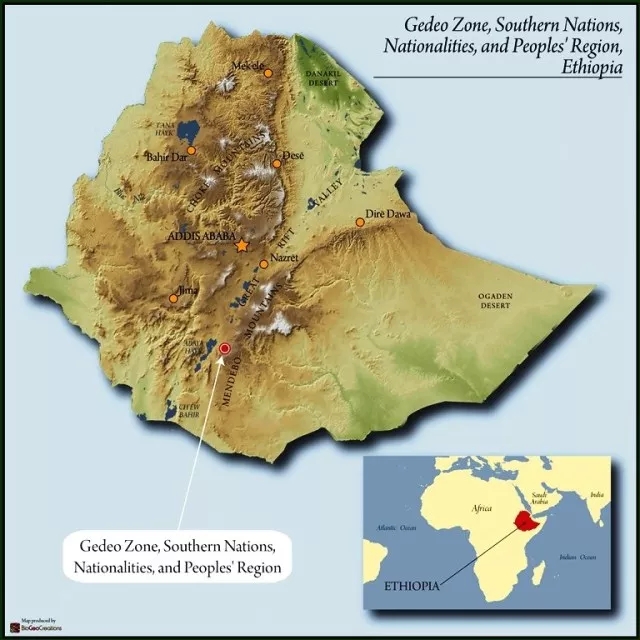
Yirgacheffe is a small town at an elevation of 1,700-2,100 meters that has become synonymous with premium Ethiopian coffee beans. The area was historically wetland, and in the ancient language "Yirga" means "to settle down" while "Cheffe" means "wetland." So "Yirgacheffe" translates to "let us settle and make a living in this wetland." Located in the northwestern part of Sidamo, surrounded by mountains and lakes, Yirgacheffe is one of Ethiopia's highest-altitude coffee-growing regions.
Cultivation and Processing Methods
Initially, Yirgacheffe coffee trees were cultivated by European monks, somewhat similar to Belgian monks growing grain for beer, and later transitioned to farmer or cooperative management. Yirgacheffe is actually composed of surrounding coffee communities or cooperatives, including Idido near Misty Valley, Harfusa, Hama, and Beloya, all primarily using washed processing, though some exceptional beans are intentionally natural processed to enhance their captivating fruit aromas and richness. These mountain villages are shrouded in mist, with spring-like conditions all year: gentle summer breezes, cool without being hot, rainy without being damp, and winters free from frost damage. This unique environment nurtures the distinctive citrus and floral regional flavor of FrontStreet Coffee's Yirgacheffe coffee beans. Coffee trees are mostly planted in farmers' backyards or intercropped with other crops, with small yields per household, typical of pastoral coffee cultivation. Award-winning Yirgacheffe beans almost exclusively come from these coffee villages and communities.
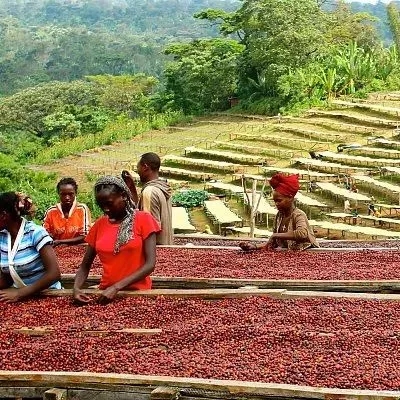
Ethiopia is the country where coffee was first discovered, and today many wild coffee varieties in the original forests are still harvested and used by farmers. Despite being an impoverished nation plagued by drought and civil conflict, Ethiopia remains one of the most important coffee-producing countries in terms of both quality and yield. Ethiopian coffee can be categorized into two main processing methods: 1. washed processing, and 2. natural sun-dried processing.
Today, in every Ethiopian region, cooperative, and even small coffee farm, both processing methods are produced. Whether in the well-known Yirgacheffe region or in Sidamo province, different regions not only create coffee diversity through processing methods but also adjust techniques within the same method to produce different aromas and flavors, often creating surprising variations. For instance, FrontStreet Coffee's Yirgacheffe natural processed beans and FrontStreet Coffee's Sidamo natural processed beans exhibit different aromatic profiles. In addition, washed processed coffee beans feature gentle, low-key aromas with a soft, understated lemon acidity and high consistency, relying on mouthfeel for their excellence. In contrast, natural processed coffee beans display intense, prominent aromas with less obvious lemon acidity, featuring complex and varied flavors with distinctive floral or fruity characteristics.
Ethiopian Coffee Excellence and Brand Building
In recent years, many emerging small regions or cooperatives in Ethiopia's Sidamo and Yirgacheffe areas have been marketing their coffee under their own cooperative or farm names on the international market. This shows confidence in their coffee production and aims to establish brand recognition and loyalty in the global coffee market. Coffee farmers insist on harvesting mature coffee beans and meticulously controlling every processing step. Whether using washed or natural sun-dried methods, both produce outstanding results with unexpectedly fragrant aromas and excellent taste profiles. I believe this is why Ethiopian coffee generates anticipation among coffee enthusiasts every year. For example, the Operation Cherry Red initiative assisted by the Dutch government saw the 2008 Kore and 2009 Kembata estate varieties both emitting an intense strawberry-cookie aroma that left a deep impression worldwide. In recent years, Ethiopian natural processed beans have further strengthened this characteristic.
ECX Grading and Scoring Standards
Bean bags marked as non-washed coffee indicate natural processed beans, usually graded as G3 and produced in the Yirgacheffe region.
The ECX (Ethiopia Commodity Exchange) grading and scoring standards are as follows:
A. Scoring Definition for Washed Processing Method
1. Physical characteristics account for 40%: defect count (20%), appearance size (10%), color (5%), aroma (5%)
2. Cupping quality accounts for 60%: cleanliness (15%), acidity (15%), mouthfeel (15%), flavor characteristics (15%)
B. Scoring Definition for Natural Processing Method
1. Physical characteristics account for 40%: defect count (30%), aroma (10%)
2. Cupping quality accounts for 60%: cleanliness (15%), acidity (15%), mouthfeel (15%), flavor characteristics (15%)
C. Overall Summary:
1. All coffees are first classified by processing method into natural and washed;
2. Each is then graded into 9 levels (G1-G9) based on physical characteristics and basic cupping quality;
3. G1-G3 coffees undergo additional cup testing according to SCAA standards for more detailed flavor attribute assessment, with G1 and G2 scoring no less than 85 points designated as Q1 grade;
4. G1, G2, and G3 scoring between 80-85 points are designated as Q2 grade, while all G1, G2, and G3 scoring below 80 points are designated as G3 grade;
5. Q1 and Q2 are classified as Specialty Grade for export. G4-G9 keep their original grading and are exported as Commercial Grade along with G3.
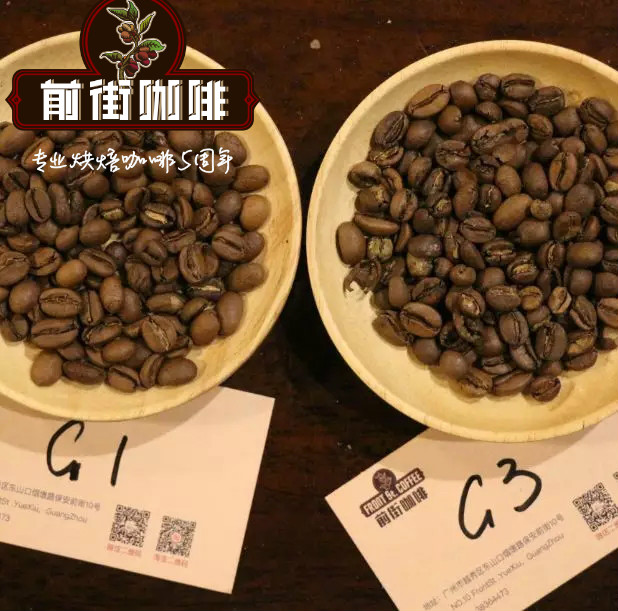
FrontStreet Coffee compares its Ethiopian Sidamo natural processed G1 and G3 beans:
From the beans, we can observe that FrontStreet Coffee's natural processed Sidamo G1 has a significantly better overall appearance than G3, looking more uniform with relatively fewer defective beans.

Through cupping comparisons, we found that both FrontStreet Coffee's natural processed Sidamo G1 and G3 perform well in sweetness and acidity, but G1 shows clearer and brighter flavors.
In fact, if not tasted side by side, the difference between the two would not be too significant. The main distinction between G1 and G3 lies in the defect rate, which is more apparent from the bean appearance, and G1 beans tend to have fewer defect-related flavor notes.
FrontStreet Coffee Recommendation
Grading matters most when it reflects a cleaner, sweeter cup, and Yirgacheffe is the perfect region to taste that difference. FrontStreet Coffee's washed Yirgacheffe showcases the region's signature white jasmine, bright citrus and lemon acidity, and tea-like body at an accessible price for everyday drinking. The FrontStreet Gedingding Cooperative takes washed processing further, a single-village lot from Woka with refined citrus and lemon acidity and jasmine florals that show how careful sorting lifts clarity. If you want to compare processing methods at the top grade, the FrontStreet Yirgacheffe Natural Red Cherry uses only fully ripe cherries dried whole, adding fermented berry, tropical fruit, honey, and a creamy smoothness on top of the classic Yirgacheffe character.
Important Notice :
FrontStreet Coffee is a long-established specialty coffee roaster in Guangzhou China, selling freshly roasted beans from its own farm in Yunnan as well as dozens of carefully selected single-origin beans from around the world for both pour-over and espresso. The products deliver consistently excellent quality and great value, with shipping within 24 hours. Guangzhou's FrontStreet Coffee shop is recommended by many coffee lovers, and the beans are now available online at the Tmall 。
FrontStreet Coffee has moved to a new address:
FrontStreet Coffee Address: 315,Donghua East Road,GuangZhou
Tel:020 38364473
 Scan and follow the En Gafei WeChat official account. Please indicate that the reprint comes from "En Gafei".