Which Websites Sell Yirgacheffe - How Much Does Yirgacheffe Kochere Hand-Selected Premium Coffee Beans Cost per Pack
The Kochere Coffee Region: A Rising Star in Ethiopian Coffee
Yirgacheffe is a small town of about 20,000 people, bordered by three smaller producing areas: Wenago, Kochere, and Gelena Abayas. The Kochere coffee region lies about 25 km southeast of Yirgacheffe. Because the area has relatively advanced green bean processing equipment and old coffee trees, its flavor profile differs noticeably from typical Yirgacheffe beans and performs at a higher level. It has gradually emerged as a notable rising star in the international market in recent years.
Complex Flavor Profile
Ethiopian Kochere beans show extremely rich aromatic characteristics with the regional specialties of Yirgacheffe. At first whiff they give off an elegant, captivating floral perfume, followed by the sweet-tart aromas of bergamot, berries, and honey. When brewing finishes, Kochere's most captivating quality appears: a distinct brown sugar sweetness. At high temperatures, jasmine, orange, caramel, grape, vanilla, honey, and floral notes bloom vividly in the mouth. As the cup cools, the citrus-like tartness is joined by the flavor of fully ripe apples.
Quality Recognition and Processing
Because of its advanced equipment, the region processes its green beans with the washed method. The high-quality, ultra-clean performance, combined with the unique citrus aroma of the Yirgacheffe region and quite full floral notes, earned it a high score of 93 points from Coffee Review in 2012. In 2013, Kochere refined its green bean selection for a better appearance and presented it as G1 grade. G1 is the highest grade for Ethiopian washed beans, and it received 94 points from that review, highlighting Kochere's importance in the Yirgacheffe green bean market.
Yirgacheffe: The Legend Behind the Name
Yirgacheffe is a small town in Ethiopia at an altitude of 1,700-2,100 meters and is synonymous with Ethiopian specialty coffee. The area has been wetland since ancient times. In the ancient language, "yirga" means "settle down" and "cheffe" means "wetland," so Yirgacheffe means "let us settle and thrive in this wetland."
Strictly speaking, Yirgacheffe is a sub-region within Ethiopia's Sidamo province, located in the northwest of Sidamo and surrounded by mountains and lakes, which makes it one of Ethiopia's highest-altitude coffee regions. The production methods and flavors here are so outstanding that Ethiopian farmers compete to be proud of their coffee having Yirgacheffe flavor characteristics. It therefore became independent from the Sidamo region, developed its own style, and became Africa's most renowned producing region.
Initially, Yirgacheffe's coffee trees were cultivated by European monks, much as Belgian monks once grew grain to brew beer, and were later managed by farmers or cooperatives. Yirgacheffe is in fact composed of surrounding coffee communities and cooperatives, including Idido near Misty Valley, Harfusa, Hama, and Biloya. All use washed processing, though small amounts of exceptional beans are intentionally processed naturally to enhance a captivating fruit aroma and richness. These mountain villages are shrouded in mist, spring-like year-round, with gentle summer breezes: cool but not hot, rainy but not damp, and without winter frost damage. That is what nurtures the region's unique citrus and floral flavors.
Coffee trees are mostly grown in farmers' backyards or mixed with other crops in the fields, with small yields per household, a typical pastoral model. Yirgacheffe's award-winning beans almost all come from the villages and communities mentioned above. The so-called "Yirgacheffe flavor" refers to rich jasmine fragrance, lemon or lime tartness, and peach, almond sweetness, or tea notes. The phrase "flowers bloom when coffee enters the mouth" fits best, like blossoms stimulating the taste buds and nasal receptors. Besides florals, the delicate body feels like silk massaging the mouth, a wonderful tactile experience. Many coffee chemists have now begun studying the microclimate, water, and soil around Yirgacheffe to summarize the cultivation equation for specialty coffee.
Classification and Processing Methods
Yirgacheffe is divided into two main categories based on green bean processing. Category A uses washed processing, with grading standards set by the Specialty Coffee Association of America (SCAA), divided into Gr-1 and Gr-2, where a smaller number indicates a higher grade. G1 washed Yirgacheffe has a distinctive style: the citrus and floral notes fused in the liquid are an irresistible delight. Category B uses natural processing, with grades divided into Gr-1, Gr-3, Gr-4, and Gr-5. Here too the highest grade, G1 natural Yirgacheffe, has rich fruit aromas. Opening a bag of freshly roasted G1 natural Yirgacheffe can overturn anyone's original understanding of coffee; only those who have tasted the highest-grade natural Yirgacheffe will believe that coffee is a fruit.
Kochere: Community and Excellence
The Kochere coffee region lies about 25 km southeast of Yirgacheffe in Ethiopia, a small producing area made prosperous by coffee and one of Yirgacheffe's three famous micro-regions. The local population is about 100,000, with coffee beans as the main source of income. The region's processing and equipment are very advanced. The renowned coffee review website Coffee Review gave Kochere washed beans a high rating of 94 points.
The production model mainly involves local smallholders sending their batches to cooperatives for unified processing. The local Chalalacktu village numbers about 100,000 people who rely on coffee for their livelihood, which has become their main economic source. Thanks to the income coffee brings, the local standard of living is much better than in many Ethiopian villages, with complete health facilities, higher education institutions, and other establishments. Advanced processing equipment has always allowed Kochere coffee to maintain high performance in washed processing, carrying a clean sweetness with complex notes of molasses and citrus.
Flavor Characteristics
Kochere's flavor is delicate yet bold, with floral and fruit-like aromas, high-quality acidity and sweetness, balanced by a sweet roasted sweet potato note, a full mouthfeel, and a strong aftertaste. It is a sweet, juicy, excellent coffee that lovers should not miss.
Brand Recommendations
FrontStreet Coffee's roasted washed Yirgacheffe Kochere beans are fully guaranteed in both brand and quality. More importantly, they offer extremely high value: a half-pound (227 grams) package costs only about 75 yuan. At 15 grams per cup of single-origin coffee, one package makes 15 cups, or only about 5 yuan per cup. Compared with cafe prices that often reach dozens of yuan per cup, this offers exceptional value.
FrontStreet Coffee Recommendation
Kochere is a finer, more focused expression of Yirgacheffe, so the best way to understand it is to taste it alongside the region's benchmark. FrontStreet Coffee's washed Yirgacheffe is the classic entry point, known for white jasmine, bright citrus and lemon acidity, and a tea-like body. It has become a first bean for many drinkers exploring specialty coffee and remains one of the most affordable single-origin options, which makes it an easy comparison point for the Kochere profile.
For a coffee closer to the cooperative style described above, FrontStreet's Gotiti Cooperative coffee follows the most traditional washed processing and is often called "the last pure land of Yirgacheffe." Clean and bright, it carries citrus and lemon acidity with jasmine fragrance, without the heavy bitterness of conventional black coffee. If you prefer the fruit-forward side of Yirgacheffe, FrontStreet's sun-dried Red Cherry uses only fully ripe cherries dried on raised beds for three to five weeks and turned every two to three hours in the first days. It keeps the classic Yirgacheffe character while adding a tropical fruit aroma: citrus-like acidity, a juicy berry quality, honey sweetness, and a creamy smoothness.
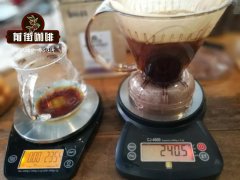
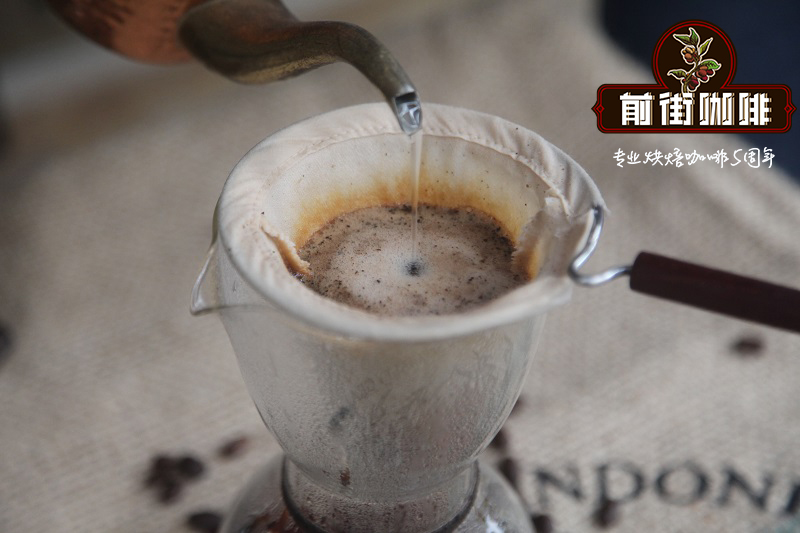
FrontStreet Coffee suggests brewing these beans as a pour-over with a V60 at 90-91 degrees C, 15g of coffee, a 1:15 ratio, and a grind about the size of fine sugar. Pour 30g to bloom for 30 seconds, pour to about 125g over roughly a minute, then add the remaining water to about 225g, finishing the drip between 2:00 and 2:10.
Important Notice :
FrontStreet Coffee is a long-established specialty coffee roaster in Guangzhou China, selling freshly roasted beans from its own farm in Yunnan as well as dozens of carefully selected single-origin beans from around the world for both pour-over and espresso. The products deliver consistently excellent quality and great value, with shipping within 24 hours. Guangzhou's FrontStreet Coffee shop is recommended by many coffee lovers, and the beans are now available online at the Tmall 。
FrontStreet Coffee has moved to a new address:
FrontStreet Coffee Address: 315,Donghua East Road,GuangZhou
Tel:020 38364473
 Scan and follow the En Gafei WeChat official account. Please indicate that the reprint comes from "En Gafei".