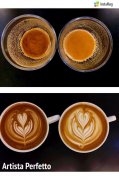
Different Coffee Cup Latte Art Techniques and Effects_Best Coffee Beans for Latte Art Recommendations
What Kind of Coffee Beans Suit Latte Art?
Different cups call for different techniques - and produce different latte art results.
Tall Cups
Tall cups and thick milk foam are a perfect match. A tall cup gives you enough time for proper integration, which makes the coffee taste better and strengthens pattern formation, yielding crisp, well-defined designs. The prerequisite, though, is enough milk foam. Some people pour only hot milk into the cup and save the foam for the final pattern-pouring stage. That's a mistake: the crema disperses, the foam and coffee never integrate properly, and the taste suffers.
Short Cups with Flat Bottoms
A flat-bottomed cup has a larger base area, which creates two phenomena:
1. The crema layer is relatively thin.
2. Turbulence kicks up easily when you pour the milk foam.
For that reason, people generally tilt the cup, lay the milk foam down first, then gradually level the cup as they pour the pattern (tilting serves another purpose too - keep reading and you sharp-eyed readers will spot it).
Short Cups with Round Bottoms
This type is relatively easy to master, and patterns appear more readily - but because the cup body is short, your latte art window is shorter than in a tall cup.
Cup Opening Diameter
Larger opening diameter = more time for latte art after the milk foam is laid down.
V = h * pi * r²
Of course, that's only approximate - the cup wall has a slight slope, so an exact volume would take calculus.
But you can see the point: a wider opening lets you inject more milk during the pour, which means more time to work the pattern. A large opening also gives you more room to draw, so these cups suit intricate designs. The trade-off: as the surface area grows, the foam layer gets thinner and the mouthfeel suffers slightly.
TIPS
1. Beginners should practice first in short, round-bottomed, large-diameter cups, then move on to other shapes once the technique is under control.
2. Cup material matters too. Choose cups with good heat retention - invaluable for preserving crema and keeping the finished drink hot.
3. Can't find a short, round-bottomed, large-diameter cup to practice with? Check your kitchen: doesn't your rice bowl fit the description? Just note that most rice bowls hold heat poorly, so treat them as practice tools only - serve in a proper coffee cup.
The Science Behind Latte Art
A quick word on how latte art forms - it makes everything that follows easier to grasp. Simply put, a beautiful latte art pour demands two things: high-quality espresso and dense milk foam. Neither is optional.
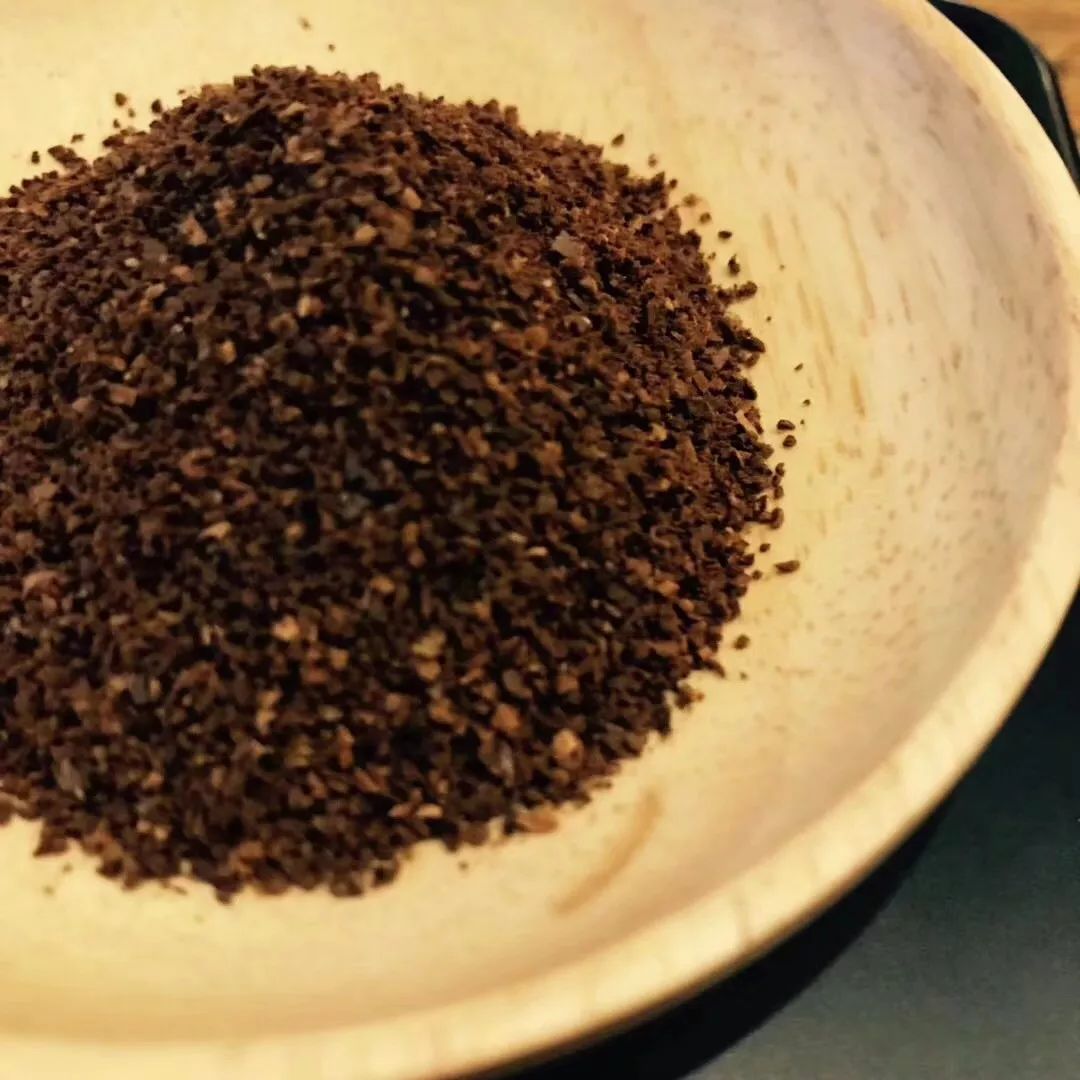
Under high temperature and pressure, the insoluble oils in the coffee are emulsified while a large amount of carbon dioxide dissolves into the liquid. To stabilize those tiny bubbles, the coffee relies on "melanoidins," which give the bubbles stability and elasticity - this is what we call crema. How do you get high-quality crema? First and foremost, fresh beans: freshly roasted coffee produces crema that is lasting, abundant, and rich. Second, the correct grind size - an incorrect grind makes the shot run too fast or too slow, and the crema never reaches its best.
The other key is milk foam. The difference between milk and milk foam is that steaming forces milk proteins, under surface tension, to form many dense, fine bubbles. Higher fat content makes the foam structure more stable and lasting - which is why skim milk is hard to froth.
Once you've pulled a shot and frothed your milk, the last question is what kind of cup will make coffee that looks good and tastes good.
Choosing the Right Cup for Latte Art
1. Cups with a large surface area favor latte art
At equal capacity, a wider opening makes patterns easier to form. Latte art arises from the interplay between crema and milk foam - it's the relative movement between the two that renders the design. Large openings let the pattern spread out fully. But bigger isn't automatically better: patterns need a crema layer of a certain thickness to support them, and an overly wide opening thins the crema out. An appropriately large opening is the key - around 11cm in diameter is a good choice.
2. Small capacity? Go large!
Beyond the surface area advantage, large-capacity cups integrate milk and coffee better during the pour, producing a milk coffee with a harmonious mouthfeel. They also let baristas set an easier rhythm and control the milk flow more skillfully. Small cups, by contrast, demand precise, fine flow control the whole way through - pour too fast and the pattern is lost. On sheer fault tolerance, large cups win.
3. Short cups form patterns more easily than tall cups
Many baristas have noticed this: the latte art comes out beautifully in the shop's ceramic cups, but in takeaway cups it suddenly gets harder. The taller the cup, the greater the gravitational potential of the milk pour, and the more easily it disperses the crema on the surface. Watch a barista closely and you'll see they hold the pitcher close to the liquid surface, minimizing the angle between pitcher and coffee to keep the foam flowing smoothly - something a tall takeaway cup makes very difficult.
4. Cups with curved bottoms form patterns more easily
You've probably seen the mug on the left in plenty of coffee shops - it always feels pleasantly "substantial." But latte art in one is genuinely hard, because its bottom is quite flat. When you tilt the cup, angle ∠ABC is smaller than angle ∠DEF, so the crema's surface area within ABC is smaller, while within ∠DEF it's larger. And when you inject milk at point E, toward F (the blue zone), the gentle slope means the milk doesn't rebound to the surface easily. Curved-bottom cups, in short, are friendlier to latte art.
5. Cup thickness is crucial
Some shops love to serve in delicate, beautiful cups. They may meet customers' expectations, but thin-walled cups are poor at heat retention and genuinely unsuited to latte art. Ordinary latte cups have walls about 3-5mm thick; these dainty cups often measure just 1-2mm. During the pour, the correct posture is to cradle the entire cup in your palm - and when the milk has been steamed to the ideal latte art temperature of about 60-65°C, that thin wall will quickly have your hand pleading for mercy.
Recommended Latte Art Coffee Beans
FrontStreet Coffee's roasted latte art beans - its commercial blend espresso - deliver on both brand and quality, and the value is outstanding. A half-pound (454g) bag costs only about 60 yuan. At 10g of ground coffee per shot, one bag brews 45 cups - roughly 1.5 yuan per cup. Against café prices of twenty or thirty yuan a cup, that's exceptional value.
FrontStreet Coffee Recommendation
For practicing latte art at home, FrontStreet Coffee's Classic Blend is the pick of the range. This medium-dark espresso formula blends beans from three origins, inspired by the old-school "Mamba" pairing of Mandheling and Brazil, with a touch of Robusta for extra aroma and crema. Expect pronounced butter, toasted bread, and caramel biscuit notes, a solid body, fine-textured crema, and rock-steady extraction - exactly what a beginner needs.
Important Notice :
FrontStreet Coffee is a long-established specialty coffee roaster in Guangzhou China, selling freshly roasted beans from its own farm in Yunnan as well as dozens of carefully selected single-origin beans from around the world for both pour-over and espresso. The products deliver consistently excellent quality and great value, with shipping within 24 hours. Guangzhou's FrontStreet Coffee shop is recommended by many coffee lovers, and the beans are now available online at the Tmall 。
FrontStreet Coffee has moved to a new address:
FrontStreet Coffee Address: 315,Donghua East Road,GuangZhou
Tel:020 38364473
 Scan and follow the En Gafei WeChat official account. Please indicate that the reprint comes from "En Gafei".