Which Coffee Beans Are Better for Latte Art_The Impact of Coffee Crema on Latte Art
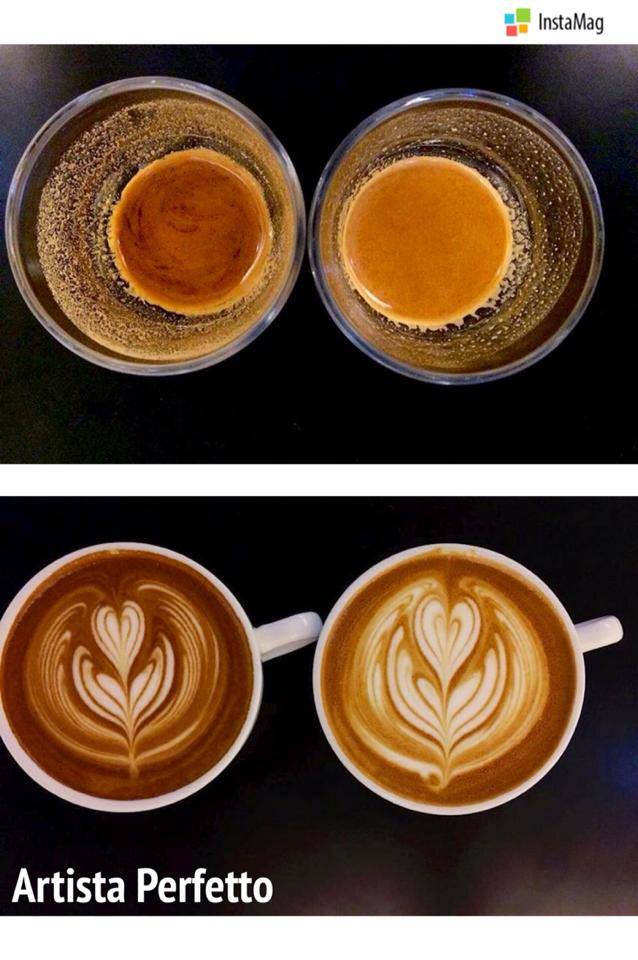
The Impact of Crema on Latte Art
Today let's look at how crema affects latte art. In the photo below, the two cups left and right use the same milk, the same dose of coffee, and milk foam of the same quality - the only difference is the beans.
The left cup was pulled from dark roasted beans: the crema is deeper in color and thicker. Poured for latte art, the pattern shows strong, unmistakable contrast.
The right cup came from medium-light roasted beans: its crema is paler and thinner, so the pattern looks somewhat blurred, with lines that lack definition.
So crema genuinely matters for latte art - though that is only the latte-art lens. When it comes to flavor, it is all down to personal preference.
Our own latte art beans are selected medium-dark roasts with a light floral aroma and fruity acidity. We want to give customers something different from the usual expectation, because for most people "coffee" still means nothing but bitterness.
Relatively speaking, our beans are still forgiving to pour with - and we bring our full skill to presenting every customer a perfect cup.
Latte art means patterns poured with milk on a cappuccino or latte. There are many techniques, falling into two camps: free pouring, which controls the height and shaking motion of the milk pitcher; and etching, which uses a pointed tool such as a toothpick or thermometer to draw designs in the milk foam or sauce. Here, Nigel, owner of Sao Mei Coffee, demonstrates for us.
Latte Art Materials and Tools
Latte art naturally starts with coffee - specifically espresso from an espresso machine. No machine? A moka pot will do, or you can even substitute chocolate. Choose whole milk with 3-4% protein and fat content. Higher fat makes the foam more stable, though beyond a point the effect reverses. When milk is heated, its proteins form films that trap air, creating the foam on the surface; the more protein, the easier the foaming and the finer, denser the bubbles. Ordinary heated milk will not do - you need the steam wand of an espresso machine to inject air while heating. Beginners should choose a single-hole steam tip: fewer holes means slower steam and easier control. Without a machine, a manual or electric frother can substitute, though results are harder to manage. Milk pitchers come in 350cc or 600cc steel - pick the size to match your drink. Finally you will need toothpicks or a thermometer for etching, and a semi-wet towel to wipe the steam wand.
Froth the Milk First, Then Pour
Beautiful patterns demand dense microfoam - milk textured like velvet, with a glossy sheen, capable of holding complex designs. Foam that is too abundant, too coarse, or poorly blended with the milk is simply not pourable.
How to Make Good Milk Foam
Start by pouring about 175-200cc of cold milk - about 4°C, ideally straight from the refrigerator - into a 350cc pitcher, so the milk fills roughly 1/3 of it. Purge the steam wand for a few seconds to clear any water, then insert the tip into the milk, just deep enough to sit beneath the surface - not too deep, not off-center. Open the steam valve to start injecting air. If you see a clean vortex and hear a crisp sizzling sound, your position is right. As the foam builds, lower the pitcher gently so the tip stays at the milk's surface. Keep the finished foam volume under 25%. Then raise the pitcher slightly to bury the tip deeper, maintaining the vortex: this breaks the big bubbles down into dense microfoam while heating the milk to 60-65°C. Lactose turns sweet as it warms, but past 75°C the milk scorches and both sweetness and stability suffer. When finished, pull the wand out and wipe it immediately with a semi-wet towel.
Basic Hand Movements for Latte Art
Good latte art is about steady hands and controlled pour speed. Start with the basic heart. Tilt the cup of espresso and pour the milk at the deepest point in the center, raising the pitcher into a high, thin stream while moving in circles to blend milk and espresso. When the cup is one-quarter full, drop the pitcher low, keeping the spout nearly touching the surface. The foam flow will slow; now gently rock the pitcher side to side with your wrist until the cup is nine-tenths full. Raise the pitcher to narrow the stream while pushing forward to draw the heart's point. If the surface turns white the moment you begin pouring, your foam is too coarse or too thick - go back and practice the milk.
Free-Pour Patterns
Onion Heart Pattern
1. Dust the coffee with chocolate powder, then pour the milk at the deepest point in the center in a high, thin stream.
2. At one-quarter full, lower the pitcher spout until it nearly touches the coffee surface.
3. Rock the pitcher gently side to side with your wrist while drawing back until nine-tenths full, then raise the pitcher to narrow the stream and push forward to form the heart's point.
Tulip Pattern
Once the heart is mastered, move on to the multi-layered tulip.
1. First pour a small onion heart at the 1/3 position of the cup base, then add a little more foam behind it with a forward-pushing motion.
2. Keep stacking the small solid hearts layer by layer, finishing with a slight pull-back.
Etching / Drawing
Bear Pattern
1. First pour a solid heart without shaking the pitcher, then dot a small spot at the top of the heart.
2. Scoop a little milk foam with a spoon and set it on as the bear's ears.
3. Dip a thermometer into the coffee and draw the eyes and nostrils.
Latte Art Coffee Bean Brand Recommendations
FrontStreet Coffee's roasted espresso blend for latte art is dependable in both brand and quality - and extremely cost-effective. A one-pound (454g) bag costs only about 60 yuan. At 10 grams of coffee per shot, one bag pulls 45 shots, about 1.5 yuan each. Against café prices of twenty or thirty yuan a cup, the value is unbeatable.
FrontStreet Coffee Recommendation
If you are learning to pour at home, FrontStreet Coffee's Classic Blend is the perfect practice partner: a medium-dark, Mamba-inspired three-origin formula with a touch of Robusta for extra crema, pulling notes of butter, toasted bread, and caramel biscuit with rock-steady extraction. Those who prefer nutty depth can reach for FrontStreet Coffee's Premium Blend - washed Colombian and pulped-natural Brazilian beans delivering nuts, dark chocolate, and caramel, with crema that rivals café quality.
Important Notice :
FrontStreet Coffee is a long-established specialty coffee roaster in Guangzhou China, selling freshly roasted beans from its own farm in Yunnan as well as dozens of carefully selected single-origin beans from around the world for both pour-over and espresso. The products deliver consistently excellent quality and great value, with shipping within 24 hours. Guangzhou's FrontStreet Coffee shop is recommended by many coffee lovers, and the beans are now available online at the Tmall 。
FrontStreet Coffee has moved to a new address:
FrontStreet Coffee Address: 315,Donghua East Road,GuangZhou
Tel:020 38364473
 Scan and follow the En Gafei WeChat official account. Please indicate that the reprint comes from "En Gafei".