How to Make Decaf Coffee_Disadvantages of Decaf Coffee Beans_Is Decaf Coffee Delicious
Professional coffee knowledge exchange. For more information on coffee beans, read on.
Caffeine and Decaffeinated Coffee Beans
The most noteworthy thing about caffeine is that it has no relationship whatsoever to coffee's flavor. Caffeine itself tastes slightly bitter, and its concentration depends mainly on the roast level (darker roasts contain more). Coffee strength, by contrast, is set during brewing by the ratio of coffee to water.
- A regular 142-gram cup of coffee contains 60-180 milligrams (mg) of caffeine. The amount depends on the coffee's strength and the types of beans in the blend.
- A regular 42-gram (g) espresso contains 90-120 milligrams (mg) of caffeine. Here too, the caffeine content depends on the coffee's strength and the bean types in the blend.
- Roasting has minimal effect on caffeine content. Caffeine dissolves rapidly in water above 77°C, so it integrates fully with the coffee during brewing.
- Different coffee tree varieties contain different amounts of caffeine. Arabica holds roughly 1% caffeine by weight, while Robusta holds roughly 2% caffeine by weight.
Whether caffeine affects health is a topic many people care about. To date, no conclusive evidence has been found proving that drinking coffee harms human health.
Many research reports show that coffee is in fact beneficial to health in several ways. It can, for example, help athletes perform better. The moderate stimulation from coffee helps with many daily activities, such as relieving work stress and staying refreshed. Moderate coffee consumption does not harm health; it is genuinely an excellent beverage.
Decaffeinated Coffee Beans
All decaffeination methods work by raising the moisture content of green coffee beans (unroasted coffee) to make the caffeine easier to remove. A solvent then extracts the caffeine, after which the beans are dried and shipped to the roasting facility.
The solvents used to remove caffeine include water, ethyl acetate, methylene chloride, and carbon dioxide. These methods can produce safe, good-tasting decaffeinated coffee. The flavor of decaf depends on the quality of the beans, the blending, the roasting technique, and the decaffeination method used.
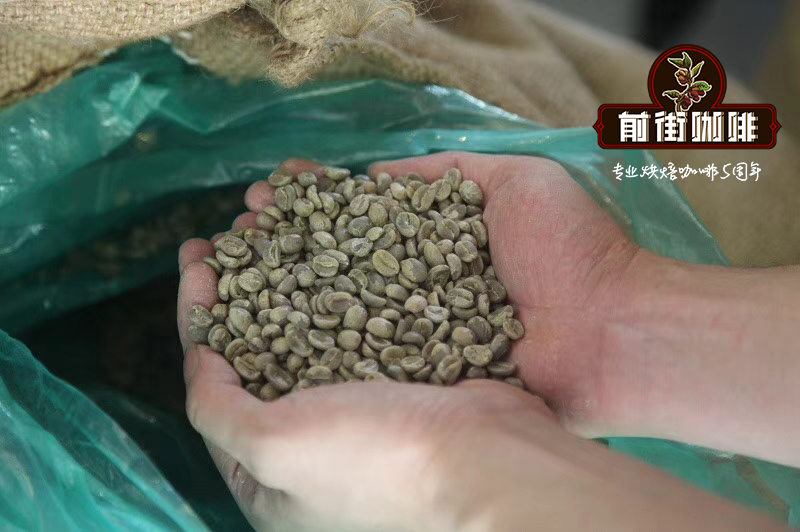
Defective beans are commonly found in both types of processed decaffeinated green beans.
Compared with green beans of the same grade, this phenomenon is clearly abnormal.
After discussion, we put forward several possible hypotheses:
First: Decaffeinated beans may not have been stored and preserved properly. Water treatment leaves the bean structure less tight, and flavors are lost more easily than in normal beans, so under poor storage conditions the green beans themselves can undergo unwanted changes.
Second: As mentioned in a previous article, the method most commonly used today is the Swiss Water Process, which includes an activated carbon treatment step. Activated carbon is a very powerful substance, so it can be assumed that during treatment not only caffeine is removed but other compounds are filtered out as well, and even some structural components may be partly stripped away, which can easily cause defects and loss of content in the coffee beans.
Third: Coffee beans are, after all, a kind of legume, similar to mung beans and soybeans. Before making mung bean soup or soy milk, we soak the beans overnight to soften the dense beans and make them easier to cook or blend. Decaffeination always happens in solution and requires high temperature and high pressure, which increases the porosity of the green beans. After activated carbon filtration and heat drying, it is hard for the bean contents not to be lost.
Whichever hypothesis is correct, or perhaps all three are partly true, the result is obvious: processed green beans have a loose texture, reduced volume, low gloss, numerous defects, and unpleasant aromas. Poor storage may even have given them oily flavors and other off-season characteristics, pointing to severe flavor loss.
FrontStreet Coffee is a roastery in Guangzhou with a small shop but a remarkably varied lineup of beans, carrying both famous and lesser-known origins, and it also offers online store services.
FrontStreet Coffee Recommendation
A single-origin espresso, or SOE, lets one coffee carry the whole shot, and FrontStreet roasts several beans specifically for it. FrontStreet Huakui SOE is a medium roast whose full, fermented fruit sweetness and the heavy sweetness typical of a natural coffee make it a daily go-to; pulled as espresso it shows red berries, light floral notes, and orange, with citrus on the crema, a clean body, and an elegant aroma that suit a Huakui SOE americano or flat white.
FrontStreet Grana Gesha SOE is a native Ethiopian Gesha from Grana Estate near the famous Yirgacheffe town. Fully ripe cherries are sun-dried, and as pour-over the coffee is bright and light-bodied with a tea-like finish; as a SOE americano it is led by berry acidity with the fermented aroma of ripe plum, and with milk it brings out yellow peach, guava, and black tea in a well-balanced sweet-tart cup.
FrontStreet Queen's Estate SOE, from Brazil, comes from high-altitude land with a wide day-night temperature swing that lets the fruit develop more flavor precursors. Roasted medium-dark, it shows dense nut, cream, and peanut aroma with a sweet chocolate finish, and it pulls a beautiful, rich crema that stays aromatic in milk drinks.
FrontStreet Sidra SOE comes from Colombia's celebrated Huila region, produced at Finca La Frontera near volcanic terrain that gives the coffee generous aroma; fully ripe cherries go through a double anaerobic natural process and a medium roast that opens up the floral and fruit notes, so the espresso carries clear blueberry juice, passion fruit, and ripe grape with the sweet acidity of apricot. Finally, FrontStreet PWN Golden Mandheling SOE is a top-grade Mandheling given three rounds of hand sorting and machine sorting to minimize defects; roasted medium-dark, it pulls with pronounced spice, herbs, sandalwood, and caramel, a very full body, and a dark chocolate finish. FrontStreet Yirgacheffe Red Cherry SOE is especially fresh in profile, and at a light roast shows bright citrus acidity, light floral notes, honey sweetness, and a green-tea finish; used as an SOE it is roasted medium to bring out a soft citrus acidity, creamy chocolate richness, and cookie-like aroma, with no harsh bitterness and a memorable finish.
Important Notice :
FrontStreet Coffee is a long-established specialty coffee roaster in Guangzhou China, selling freshly roasted beans from its own farm in Yunnan as well as dozens of carefully selected single-origin beans from around the world for both pour-over and espresso. The products deliver consistently excellent quality and great value, with shipping within 24 hours. Guangzhou's FrontStreet Coffee shop is recommended by many coffee lovers, and the beans are now available online at the Tmall 。
FrontStreet Coffee has moved to a new address:
FrontStreet Coffee Address: 315,Donghua East Road,GuangZhou
Tel:020 38364473
 Scan and follow the En Gafei WeChat official account. Please indicate that the reprint comes from "En Gafei".