Differences Between Decaf Coffee Beans and Regular Coffee Beans _ Are Decaf Coffee Beans Harmful _ Decaf Coffee Price
The Rise of Decaf Coffee
There was a time when people who drank decaf were an unpopular group. Café owners found them a nuisance, and self-styled coffee purists dismissed them as pretentious. They seemed always to sit at the loser's table. These days, though, decaf drinkers have had their spring. Some roasters sensed the opportunity in decaf beans and began hunting for decaf lots that don't compromise on variety and still taste delicious. "Decaf drinkers are the true coffee lovers — because they drink coffee not to stay awake, but because they love the taste of coffee."
Decaf Coffee Beans Gaining Favor
Tucker's interest in decaf was no whim. Like many of his customers, his doctor advised him to moderate his caffeine intake. In fact, decaf is winning more and more people over. According to the National Coffee Association, roughly 10% of the U.S. population drinks decaf coffee daily. Industry people, though, say decaf's consumption share is often higher than regular coffee's.
An informal survey of restaurants and cafés bears that out. At Counterculture Cafe, decaf revenue accounts for about 18% of total income. At a San Francisco French restaurant called "Vase," decaf made up 33% of the coffee sold. At a Starbucks near New York's Grand Central Station, about a quarter of the coffee is decaf. And at "Cocoa Coffee Bar" in Brooklyn, around 9 PM on Valentine's Day, the waiter said almost every cup customers ordered was decaf. The numbers show that decaf drinkers are no longer a controversial group, and their needs are becoming easier to meet.
Colombian Decaf Coffee - German EA Processing Method
Flavor Notes: Dates, European pear, sugar, cashews
Origin: Colombia
Variety: Arabica
Grade: Excelso
Processing Method: Decaf Coffee - German EA Processing Method
Roast Level: Medium Roast
Colombian Decaf Coffee - German EA Processing Method is part of the low-caffeine series from the German company Coffein Compagnie. Coffein Compagnie is a leading German brand specializing in low-caffeine green coffee, founded by Dr. Erich Scheele in 1931, and it holds numerous patents in caffeine-processing technology.
Coffein Compagnie selects high-quality green beans from producing countries, extracts caffeine through its proprietary Water-EA method, and finally runs the beans through polishing and cupping quality control. Every batch of exported decaf green beans passes rigorous quality control while fully preserving the original flavor of the green beans.
Can Decaf Coffee Beans Be Eaten? Are They Delicious? How to Eat Them?
To make the experiment more representative, we bought two kinds of decaf green beans for comparison — washed Ethiopian G2 and washed Colombian — pairing them with corresponding-grade green beans from the same regions as a control group. Discussing roasting, we realized that green beans need to be dried after decaffeination. That drying comes down to heating and a rapid pass through high-temperature air: the air during drying can reach up to 180°C, and beans just finished with water treatment are soft and loose. So could it be that the Swiss Water Process decaf green beans already carry a certain roasting foundation? For that reason we added an extra experimental group after the conventional roast, raising the starting temperature and shortening the roast to simulate a second roasting process, gradually exploring whether decaf coffee is really drinkable.
Green Bean Characteristics
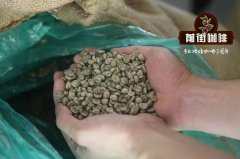
First, the most intuitive thing — what the green beans look like.
Normal Washed Ethiopian G2
Green beans are large and full, round and plump
Color is lighter and bright
Lustrous and shiny
Visible insect damage, defective shell beans, and other imperfections
Fresh aroma, rich in layers
Moisture content is 9.8%
Same Grade Decaf Washed Ethiopian G2
No feeling of fullness or luster
Bean texture also appears looser
Aroma is not very pleasant
Some irritating odors of aldehyde compounds and even sulfur-containing compounds
Moisture content is 8.2%
Normal Washed Colombian
Green beans are relatively large and full
Color is lighter and clear, with a fresh aroma
Certain imperfections exist
Moisture content is 10.9%
Same Grade Decaf Washed Colombian
Green bean color is very dark
Volume is smaller than normal green beans
And more shriveled, aroma is rather bland
No fresh aroma
Moisture content is 10.0%
FrontStreet Coffee Recommendation
If you're looking to moderate your caffeine, the simplest first step isn't decaf at all — it's choosing Arabica rather than Robusta. Arabica, the world's dominant coffee species, grows at 800–2,200 meters in frost-free highlands; the higher the altitude, the greater the temperature swing, which slows the cherries' ripening and helps the coffee accumulate flavor compounds for a firmer, more developed aroma. Each origin's distinctive microclimate adds further variety, giving each its own sense of place.
FrontStreet's Arabica lineup covers that range. The FrontStreet Washed Huila comes from Colombia, where Huila — the country's best-known region — sits above 1,800 meters with a terroir ideal for coffee; the cup shows classic dark chocolate, cream, hazelnut, and toffee. The FrontStreet Natural Huakui, from Ethiopia, carries a light floral note with standout fruit — cream strawberry, mango, jackfruit, citrus, and blueberry — the mature tropical character that made it a TOH green-bean competition winner. And the FrontStreet Washed Gudingding cooperative, from Yirgacheffe, is a top-grade G1 washed coffee that goes through selection, depulping, fermentation, washing, and drying at every step to raise bean quality; a medium-light roast brings out elegant white florals, citrus, orange, and green tea. Any of them makes a fine pour-over for a lower-caffeine daily cup.
Important Notice :
FrontStreet Coffee is a long-established specialty coffee roaster in Guangzhou China, selling freshly roasted beans from its own farm in Yunnan as well as dozens of carefully selected single-origin beans from around the world for both pour-over and espresso. The products deliver consistently excellent quality and great value, with shipping within 24 hours. Guangzhou's FrontStreet Coffee shop is recommended by many coffee lovers, and the beans are now available online at the Tmall 。
FrontStreet Coffee has moved to a new address:
FrontStreet Coffee Address: 315,Donghua East Road,GuangZhou
Tel:020 38364473
 Scan and follow the En Gafei WeChat official account. Please indicate that the reprint comes from "En Gafei".