How Does the Yunnan Small Bean Coffee Typica Variety Taste? How to Brew it Perfectly at Home with Pour-Over?
Yunnan Small Bean Typica: What It Tastes Like and How to Brew It at Home
Typica is one of the oldest native varieties from Ethiopia. Its young leaves emerge bronze, and its beans are oval or slender and pointed. The cup is elegant, but the plant itself is physically weak, prone to disease, and low-yielding.
Typica is one of the oldest known Arabica varieties, alongside Bourbon. Arabica originated in Ethiopia, where it still grows wild in the highland rainforests, and Typica was carried to Yemen in the 13th and 14th centuries. Around 1700 it was cultivated at the Hortus Botanicus in Amsterdam, and Typica seedlings were the first coffee plants taken from the Dutch royal gardens to Central and South America and the wider New World. It is a precious, genetically pure variety with oval fruit, bronze leaves, and a fruit character that keeps shifting from cup to cup.
Typica has also thrown off many related varieties. Its beans are slender, its trees tall, its fruit oval, and its branches slightly inclined; four slender branches spread at a 50-70 degree angle. Yield per tree is very low, but cupping scores run high.
The variety's original name was Arabica Typica. Scottish regiments carried it from Yemen to Kenya, where the leaves turned copper after cultivation. Hawaii's Typica arrived from Guatemala and was renamed Kona, its leaf tips showing bronze. Because of geography, Typica planted in different regions has diverged, evolving into variants better suited to local conditions and often treated as new varieties. Mexican and Hawaiian Typica, for instance, differ slightly and carry different names: Criollo (South America), Arabigo (America), Kona (Hawaii), Pluma Hidalgo (Mexico), Garundang (Sumatra), Blue Mountain (Jamaica and Papua New Guinea), Sao Bernardo and San Ramon (Brazil), and Kent and Chickumalgu (India).
Typica trees share one characteristic mark: copper-colored leaf tips, which earned the variety the nickname "red-topped coffee." The opposite leaves are long and oval with smooth surfaces. Terminal branches are long with few side branches, and the white flowers open at the base where the petioles meet the branches. Ripe cherries look like cherries, ripen bright red, hold sweet pulp, and carry a pair of seeds: the coffee beans.
Typica was the first coffee variety planted in the New World. The Typica grown in Java was a gift from the Dutch to France's King Louis XIV, survived in a Persian garden, and had its seeds carried by the French to the colony of Martinique in 1720.
Typica is the ancestor of many coffee derivatives. Like other Arabica varieties it has oval fruit and slightly inclined branches. Trees reach 3.5-4 meters, with branches inclined at 50-70 degrees, and yields are very low even as cup quality runs high.
Typica Cultivars
Java
Java has long fruit and bronze young leaves, and is believed to descend from coffee carried from Yemen to Java. It was first taken from Java to neighboring Timor, then to East Africa (Cameroon), and began wider cultivation in 1980. CIRAD (the International Center for Agricultural Research and Development) introduced it to Central America. In Cameroon the variety is known for moderate yields and good resistance to coffee berry disease.
Maragogype
Maragogype, also called Elephant Bean, is a Typica mutant first found in Brazil in 1870. The fruit is large, long, and slightly twisted, and the plants have long internodes and large leaves. Yields are relatively low.
Kent
A tall Typica variety from the Kent region of India, widely cultivated in India since 1930. A strain known as K7 is more common in Kenya and is one of the best rust-resistant coffee varieties.
The Typica Bean
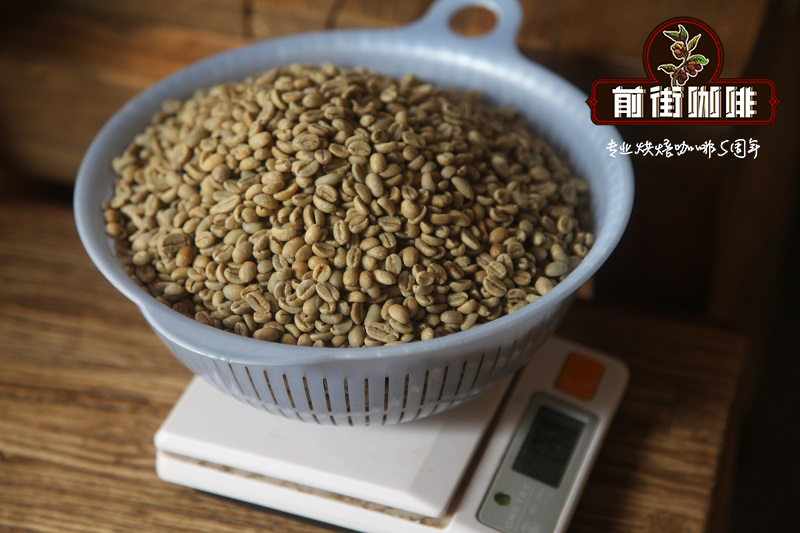
Typica is oval, appearing thin and flat from the side. Even across different altitudes, the side-thickness of the green bean does not vary much.
Yemeni traders first carried Typica from Ethiopia to Malabar, India, and the Dutch later brought it to Indonesia. From the West Indies it reached the French colony of Martinique.
It then spread to other growing areas and threw off many variants: Criollo (South America), Arabigo (Central America), Kona (Hawaii), Pluma Hidalgo (Mexico), Garundang (Sumatra), Blue Mountain (Jamaica and Papua New Guinea), San Bernardo and San Ramon (Brazil), and Kents and Chickumalgu (India). All of these belong to the Typica family.
Tasting Notes
FrontStreet Coffee, Jamaica Blue Mountain (Typica)
Roast level: medium-dark.
Dry aroma: roasted peanuts, hazelnut, melon, chocolate.
Wet aroma: oolong tea, caramel, honey, dark chocolate, almond skin, with a silky mouthfeel and brightness.
Taste: sweet and rich with a light bitterness, well balanced and mellow, and full of layers. The finish brings distinct dark chocolate, honey, and cane sugar, with a viscous texture. Once fully cooled, a strong oolong tea aroma appears, and the liquid feels almost like caramel syrup on the fingers.
Recommended brewing method: pour-over.
Grind size: 4 (Japanese Fuji R440).
Water temperature: 88°C.
Other drip extraction recommendations:
French press: grind size 3.5-4, water temperature 90°C.
AeroPress: grind size 2.5, water temperature 88°C.
Siphon: grind size 3.5.
FrontStreet Coffee, Yunnan Huaguoshan (Typica)
Roast level: medium.
Dry aroma: pear-like fruit, vanilla, honey, peach tea, ripe orange, and a hint of jasmine.
Wet aroma: nutty, milky chocolate, herbal and floral.
Taste: smooth on entry with an Asian herbal plant aroma and a lively, bright acidity that makes both cheeks water. The acidity is soft and well balanced, with good richness. The finish brings distinct dark chocolate, honey, and cane sugar. Once fully cooled, brown sugar emerges.
Recommended brewing methods: siphon, pour-over.
Grind size: 4 (Japanese Fuji R440).
Water temperature: 90°C.
Other drip extraction recommendations:
French press: grind size 3.5-4, water temperature 90°C.
AeroPress: grind size 2.5, water temperature 88°C.
Pour-over: grind size 3.5, water temperature 89°C.
FrontStreet Coffee, Papua New Guinea Bird of Paradise (Typica)
Roast level: medium-dark.
Dry aroma: nutty, woody, spicy.
Wet aroma: sugarcane sweetness, hazelnut, toast.
Taste: the sweetness of toasted bread and nuts, with a slight fruit acidity that creates a pleasant sweet-sour sensation and good layers. The spiced sweetness in the finish is especially distinctive.
Recommended brewing method: pour-over.
Grind size: 4 (Japanese Fuji R440).
Water temperature: 89°C.
Other drip extraction recommendations:
French press: grind size 3.5-4, water temperature 90°C.
AeroPress: grind size 3, water temperature 85°C.
Siphon: grind size 4.5, water temperature 91°C.
FrontStreet Coffee Recommendation
The Typica lineage above explains why Yunnan's oldest coffee trees matter, and it is where FrontStreet Coffee's Yunnan work began. In 1904, the French missionary Tian Deneng brought coffee seed, Typica among it, from Vietnam into Yunnan and planted the province's first coffee tree at Zhugula village in Binchuan county; the mild plateau climate made the crop a success. FrontStreet Coffee's Yunnan Small Bean comes from the Baoshan region, washed and roasted medium, and delivers soft nut and chocolate sweetness with a light plum acidity at a price that suits daily drinking.
For a step further into the region, FrontStreet Coffee's 2013 Yunnan Typica comes from an estate the company established in 2013, planted with Typica precisely because it is one of the oldest and most genetically pure Arabica varieties and because it was also the first variety planted in Yunnan. Only fully ripe red cherries are used, processed naturally, then roasted medium to sharpen the balance of sweetness and acidity. The cup shows dark berry notes with caramel sweetness, chocolate, and a touch of dried apricot, finishing with the lingering character of black tea.
If you would rather drink Yunnan as espresso, FrontStreet Coffee's Black Cocoa Blend pairs Yunnan Small Bean with Brazil Cerrado. The Brazil contributes mixed-nut aroma and a balanced body, while the Yunnan adds chocolate and citrus; pulled as an Americano it balances sweet, sour, and bitter with nut and brown sugar sweetness, and as a latte it turns smooth and creamy with an almond edge, which makes it a forgiving choice for beginners.
Important Notice :
FrontStreet Coffee is a long-established specialty coffee roaster in Guangzhou China, selling freshly roasted beans from its own farm in Yunnan as well as dozens of carefully selected single-origin beans from around the world for both pour-over and espresso. The products deliver consistently excellent quality and great value, with shipping within 24 hours. Guangzhou's FrontStreet Coffee shop is recommended by many coffee lovers, and the beans are now available online at the Tmall 。
FrontStreet Coffee has moved to a new address:
FrontStreet Coffee Address: 315,Donghua East Road,GuangZhou
Tel:020 38364473
 Scan and follow the En Gafei WeChat official account. Please indicate that the reprint comes from "En Gafei".