What is Decaf Coffee: Colombian Decaf Coffee Bean Origin, Flavor Characteristics, and Processing Methods

Many coffee lovers often find themselves in a dilemma because of caffeine intolerance. FrontStreet Coffee recently launched a Colombian decaf coffee, bringing good news to those who want to enjoy the delicious taste of coffee without consuming too much caffeine.
What is Decaf Coffee?
Typically, the caffeine content of coffee beans is measured by weight ratio. Arabica coffee beans contain 0.9%-1.4% caffeine (averaging 1.2%), while Robusta contains 1.8%-4% (averaging 2.2%). Decaf coffee is divided into naturally low-caffeine coffee and artificially processed decaffeinated (low-caffeine) coffee.

The most common naturally low-caffeine coffee is Laurina Bourbon (Coffea Laurina), which has half the caffeine content of regular Arabica (0.6%). Unlike other artificially processed decaf coffees, Laurina Bourbon has genetically degenerated, resulting in lower caffeine content than typical Arabica trees, with superior flavor.
For artificially processed decaf coffee, the EU standard requires that the processed caffeine content not exceed 0.1% of green beans, while the US FDA standard requires reduction to less than 3% of the original caffeine content.
What are the Common Decaf Coffee Processing Methods?
There are many methods for removing caffeine, broadly divided into direct/indirect solvent processing, supercritical carbon dioxide processing, Swiss water processing, and mountain spring water processing.
Direct Solvent Processing
Direct solvent processing uses chemical solutions such as dichloromethane and ethyl acetate to dissolve caffeine. First, steam opens the pores of the green coffee beans, and dichloromethane solvent is added directly to the beans. After the solvent and caffeine combine, the caffeine-filled solvent is washed away, and the beans are steamed again to remove all residual solvent.
Since dichloromethane is suspected of increasing cancer risk with long-term exposure, there are concerns about its use as a solvent. However, the FDA limits the dichloromethane content in decaffeinated coffee to 0.001%, and in practice it is even lower, with minimal side effects. The process using ethyl acetate as a solvent works the same way; ethyl acetate typically comes from sugarcane, so when it is used, the direct solvent method is sometimes called the sugarcane decaffeination method. Colombian decaffeination usually uses this method. However, ethyl acetate is highly flammable, making it more dangerous.
Supercritical Carbon Dioxide Processing
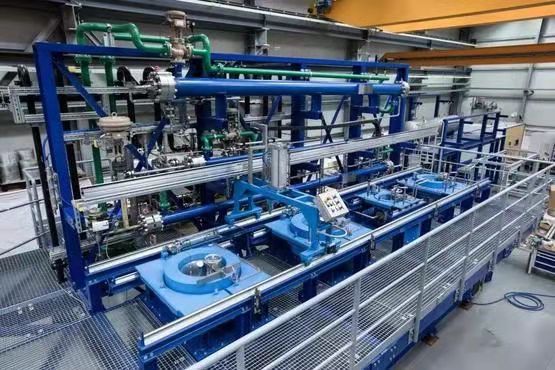
This method first lets the coffee beans absorb water and expand, so the caffeine molecules sit loosely within the beans. Liquefied carbon dioxide is added and creates pressure greater than 100 atmospheres in water. Carbon dioxide is highly selective, dissolving caffeine without "damaging" the carbohydrates and proteins in the beans, which ensures the coffee's flavor is not destroyed. The liquid carbon dioxide that has carried away the caffeine can also be recycled after the caffeine is removed.
Coffee decaffeinated with carbon dioxide places less burden on the human body, and according to research this method extracts more caffeine than the direct solvent method, although its cost is much higher.
Swiss Water Processing
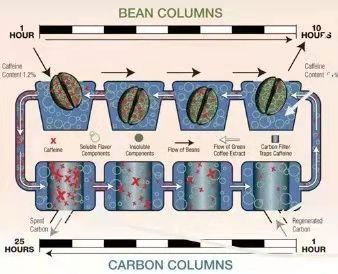
Swiss Water Processing was developed by the Swiss company Coffex in the late 1970s, and SWISS WATER is currently a registered patent. This method soaks green coffee beans in hot water. During the soaking stage, caffeine is partially removed. The soaked solution is then filtered with activated carbon, and finally the solution is poured back over the beans. This series of steps removes caffeine more effectively. Besides not requiring chemical solvents, the soaked solution can also be reused across different batch processes, though the coffee still loses some flavor during filtration.
The caffeine removal rate of this method can reach 99.9%, making it the method with the highest removal rate.
Mountain Spring Water Processing
Very similar to Swiss Water processing, this uses another special water, taken from glacial water, to extract caffeine. The company Descamex states that it uses a special filtration device to remove caffeine. After processing, a water-based solution without caffeine is obtained, which also dissolves the solid substances of coffee and can be reused in the decaffeination process.
FrontStreet Coffee offers Colombian Swiss Water processed decaf coffee. FrontStreet Coffee believes that Swiss Water processing does not apply unnecessary additives and can maximize caffeine removal while preserving coffee flavor compounds.
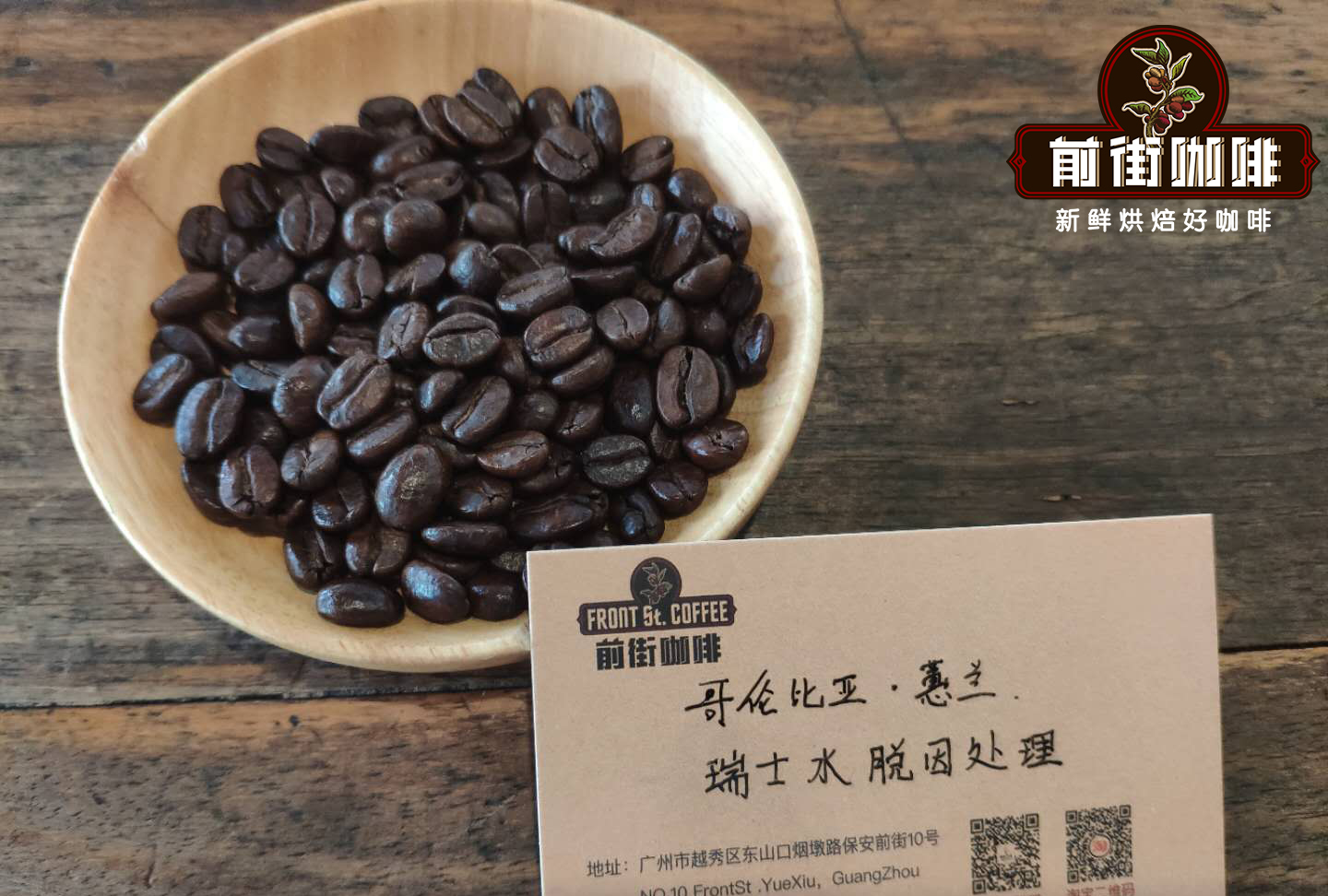
FrontStreet Coffee Colombian Swiss Water Decaf Coffee
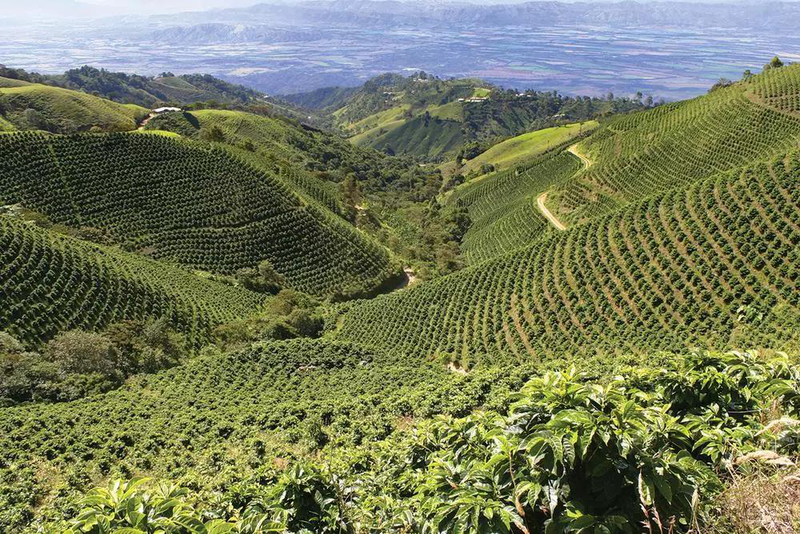
Region: Colombian Huila Region
Altitude: 1750 meters
Variety: Typica
Processing Method: Swiss Water Processing
Flavor: Berry, Citrus, Cocoa, Nut
Coffee Decaffeination Technology
Swiss Water decaffeination technology uses a commercially developed high-efficiency processing method with two main steps. The first step involves pouring green coffee beans into hot water, at which point the hot water removes all the flavor factors from the beans, including caffeine, and this initial batch of green coffee beans is discarded.
Then, the hot water loaded with all the flavor factors is filtered through activated carbon to remove the caffeine, leaving behind hot water full of pure flavor factors. In the Swiss Water method this water is called "Flavor-Charged Water." It contains saturated flavor factors from green coffee beans but lacks caffeine, making it the most important medium in the decaffeination process.
A new batch of green coffee beans soaked in flavor-factor-rich, caffeine-free Flavor-Charged Water will release its caffeine but not its flavor factors. This way, the original flavor of the green beans is not significantly diminished. Obviously, the flavor factors in the Flavor-Charged Water are already close to saturation, so they cannot dissolve more flavor factors, but there is still plenty of room to dissolve caffeine. This series of steps effectively removes 99.9% of the caffeine. Besides not requiring chemical solvents, the soaked solution can be reused across different batch processes.
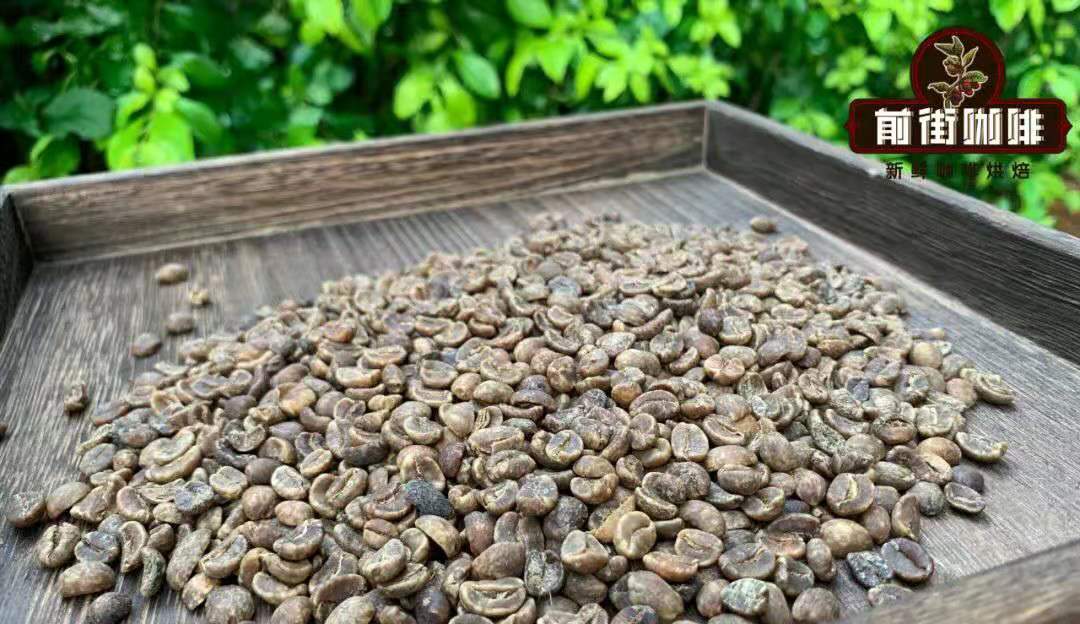
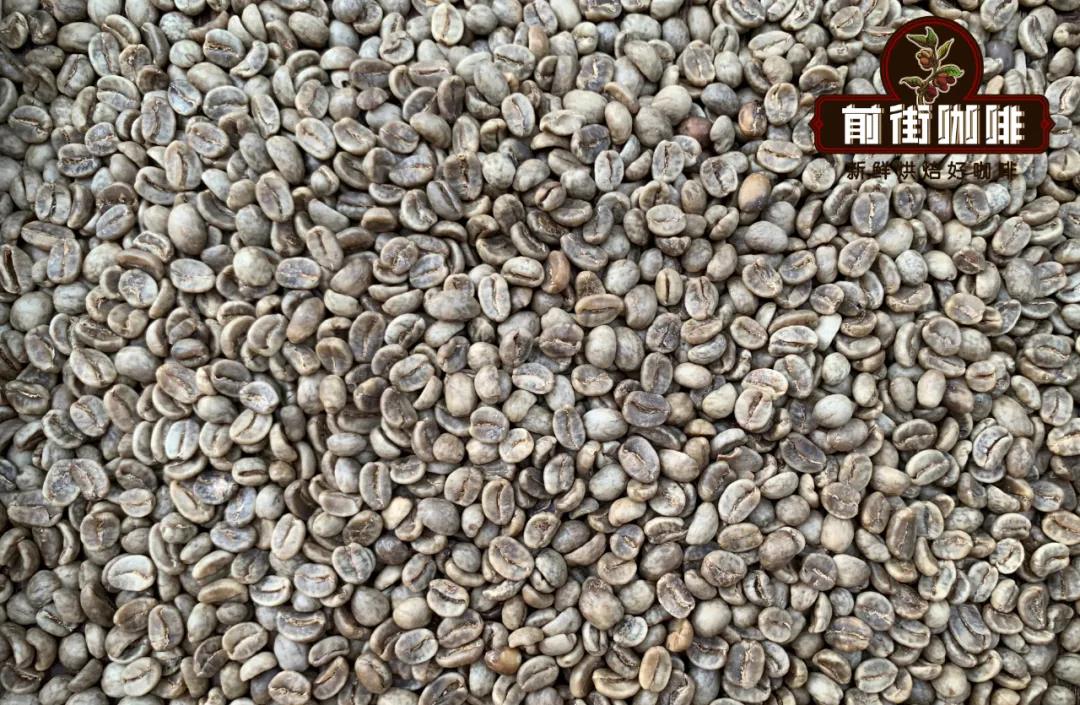
After decaffeination processing, the green coffee beans appear dark green in color.
FrontStreet Coffee Roasting Analysis
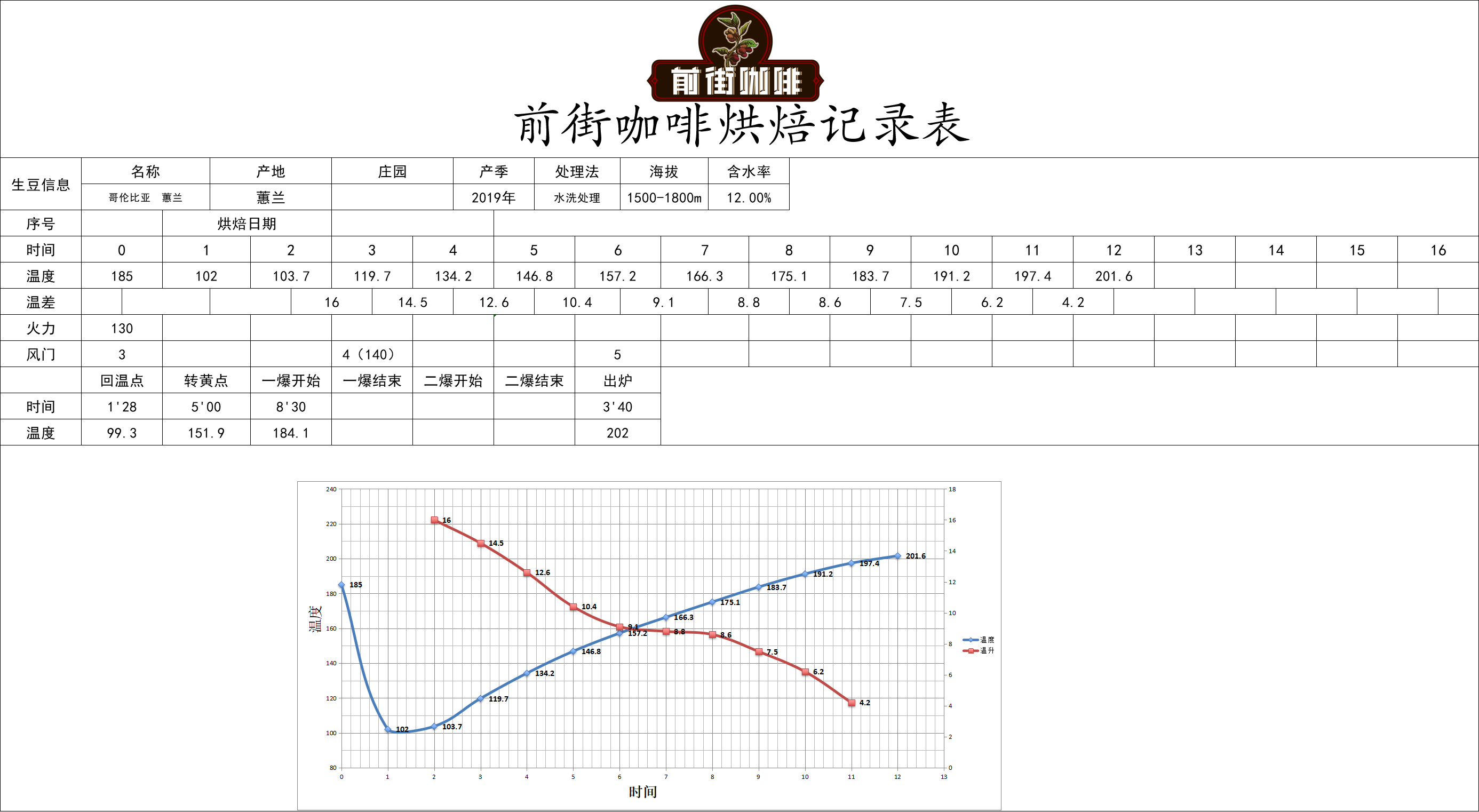
FrontStreet Coffee uses a medium roast for these coffee beans. Here we share a roasting curve of Huila washed beans for comparison:
It can be seen that the development time for Swiss Water processing is 2'30 at 196°C, while the development time for Huila washed is 3'40 at 202°C. The roast degree of the Swiss Water processing is slightly lighter than the washed processing. Comparing the two beans, we can see that the Swiss Water processed decaf beans are dark brown and oily, which is particularly evident compared to the washed Huila on the right.
The reason may be that during decaffeination, the beans need to be soaked in hot water to release caffeine and then dried. During this process, the fiber structure of the coffee may change, causing oils to be released more easily once roasting reaches medium-dark, making the beans appear oily and shiny.
FrontStreet Coffee Brewing Analysis
Because this bean has a different fiber structure, brewing parameters need to be adjusted, as shown in the table below:
Dose: 15g
Ratio: 1:15
Water Temperature: 88°C
Grind Size: Coarse grind (62% pass rate through #20 standard sieve)
Dripper: Kono dripper

1. Pour in the coffee grounds, inject 2 times the water amount (30ml) and let it bloom for 30 seconds.
2. Then perform the second water injection, gently pouring 150ml of hot water in a circular motion to push up the coffee bed and create a golden foam surface.
3. Wait for the water level in the coffee bed to drop slightly, then inject the final 45ml. Remove the dripper after all the coffee liquid has flowed into the lower pot to end extraction. The extraction time is 2 minutes and 10 seconds.
FrontStreet Coffee Recommendation
If decaf has become part of your routine and you'd like a regular, full-caffeine counterpart from the same corner of the world, FrontStreet Coffee's Colombia Huila is the natural pick. Huila, along the southern stretch of Colombia's central range, is the country's most famous specialty coffee region—surrounded by hills, planted above 1500 meters, and fed by the confluence of Colombia's most important rivers. This washed single origin captures the region's characteristic balance, and because we roast it medium-dark, the cup emphasizes the clean dark chocolate and nutty sweetness the origin is known for, with moderate oil and a full, velvety body.
It shares with our Colombian decaf the berry-citrus-and-cocoa profile noted above, but carries the extra intensity that regular beans deliver. Brew it as a pour-over with 15g of coffee at a 1:15 ratio, water around 88-90°C, and a medium grind; you'll get roasted almonds and cocoa up front, honeyed sweetness in the middle, and a balanced, lingering finish. It's also excellent in a French press, moka pot, or espresso machine—so whether you're cutting caffeine or not, you can keep the same clean, sweet, chocolatey Colombian character in your cup.
Important Notice :
FrontStreet Coffee is a long-established specialty coffee roaster in Guangzhou China, selling freshly roasted beans from its own farm in Yunnan as well as dozens of carefully selected single-origin beans from around the world for both pour-over and espresso. The products deliver consistently excellent quality and great value, with shipping within 24 hours. Guangzhou's FrontStreet Coffee shop is recommended by many coffee lovers, and the beans are now available online at the Tmall 。
FrontStreet Coffee has moved to a new address:
FrontStreet Coffee Address: 315,Donghua East Road,GuangZhou
Tel:020 38364473
 Scan and follow the En Gafei WeChat official account. Please indicate that the reprint comes from "En Gafei".