The Story of Guji Coffee Region_Guji and Gurji Coffee Bean Characteristics_How Much Does Guji Coffee Cost
Guji Coffee: Ethiopia's Rising Star
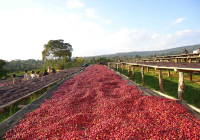
Guji is arguably the most talked-about coffee region of recent years. Its inhabitants are the Guji Oromo people, and coffee is the core crop of this highland ethnic group. For decades, anything produced in Guji was classified simply as Sidamo. Yet by geography, cultivation practices, and flavor, southern Guji is clearly distinct from both Sidamo and Yirgacheffe. After years of persistent petitioning, Guji finally won recognition as its own designated zone, no longer lumped in with Sidamo.
Geographical and Administrative Challenges
Reliable information out of Asia is scarcer than what circulates in Europe and the Americas. Worse, Ethiopia has redrawn its administrative map twice in the past two decades. After 2008, the founding of the Ethiopia Commodity Exchange (ECX) prompted a reclassification of coffee regions based on their growing importance and production. Sometimes a region's reputation far outstrips its administrative status, which makes all of this especially confusing for outsiders. I ran into these difficulties firsthand while researching Yirgacheffe.
Online information about Guji tends to be vague or self-contradictory. For instance, the following passages from two different websites give inconsistent accounts of Guji's location — meaning at least one is unreliable, or possibly both:
This coffee is grown in the Guji area of southern Ethiopia's Sidama (previously Sidamo) province.
This is a coffee from a remote area of the Sidamo district, quite far from where most Sidamo coffees originate. In fact, it is mostly known for the large gold mine in the area, and sadly the local tensions between mine workers and farmers becomes open conflict.
The more trustworthy account I found comes from an Australian coffee merchant's website, which notes that in 2015 Guji "spread its wings" and became independent, no longer a subordinate region under Sidamo:
Sidamo is a province in the southern part of Ethiopia, with its capital city at Irgalem, and after 1978 at Awasa. ... The coffee growing region of Guji once was included in the Sidama designation, but in the year 2015 was recognized and separated as a distinct zone by the ECX. The merit for this new classification lies in the unique high quality of coffees from Guji, which include the woreda of Oddo Shakiso, Addola Redi, Uraga, Kercha, and Bule Hora. Larger private farms are becoming more commonplace in Shakiso, which also happens to be a hotbed of mining for precious metals.
Quality and Environmental Advantages
According to one Taiwanese coffee merchant, Guji's average altitude sits above 1,800 meters (some cite 1,800–2,200 meters), with fertile soil and wide day-night temperature swings — superb terroir for specialty coffee. In my own tasting experience it shows classic citrus notes with excellent fruit acidity, and among the coffees I've tried, its cost-performance ratio is easily top three.
Challenges and Ethical Considerations
Unfortunately, southern Guji — particularly the most famous coffee area, Shakiso — is also a renowned gold mining district. Between miners, land disputes, and ethnic tensions, the region repeatedly sees open conflict and repression. That instability makes tending and harvesting coffee more labor-intensive and more expensive. When I first read about these conflicts, two phrases immediately came to mind: blood diamonds and fair trade. When we drink specialty coffee from Africa, can what we pay and what Africans actually receive ever be measured on the same scale?
Guji Coffee Bean Brand Recommendations
FrontStreet Coffee's roasted Guji beans — the Hambela Flower Queen 2.0 — offer full confidence in brand and quality, and outstanding value: each 227-gram bag costs only about 98 yuan. At 15 grams of coffee per cup, one bag makes 15 cups — about 6 yuan a cup — a conscientious alternative to café cups that routinely sell for tens of yuan.
FrontStreet Coffee Recommendation
Newcomers to Ethiopian coffee should start with FrontStreet Coffee's washed Yirgacheffe everyday lot, beloved for its white jasmine florals, bright citrus and lemon acidity, and tea-like body — at an approachable price, it's the classic first specialty bean. Yirgacheffe itself is a small town in southern Ethiopia's Sidama zone at roughly 1,700–2,100 meters, with coffee planted above 1,800 meters, among the highest growing elevations in the world; in 2010 its fame was such that the Ethiopia Commodity Exchange formally separated it from Sidamo.
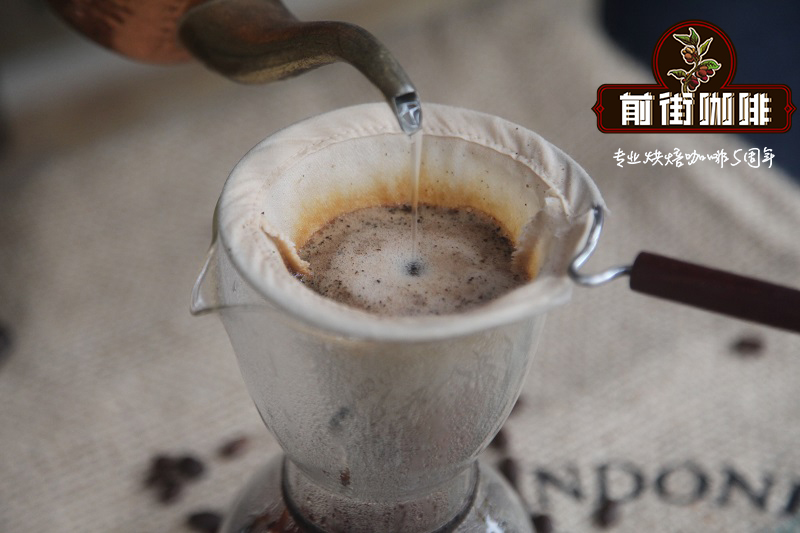
For the natural-process route, FrontStreet Coffee's Red Cherry lot uses only fully ripe, defect-free cherries, dried whole on raised beds for three to five weeks and turned every 2–3 hours early on to prevent uneven fermentation. The result keeps Yirgacheffe's signature citrus acidity while adding tropical fruit: berry-like juiciness, honeyed sweetness, and a creamy smoothness. Brewing suggestion: V60 dripper, 15 g of coffee, a 1:15 ratio, water at 90–91°C, and a medium-fine grind (fine-granulated-sugar texture, 80% passing a #20 sieve).
Important Notice :
FrontStreet Coffee is a long-established specialty coffee roaster in Guangzhou China, selling freshly roasted beans from its own farm in Yunnan as well as dozens of carefully selected single-origin beans from around the world for both pour-over and espresso. The products deliver consistently excellent quality and great value, with shipping within 24 hours. Guangzhou's FrontStreet Coffee shop is recommended by many coffee lovers, and the beans are now available online at the Tmall 。
FrontStreet Coffee has moved to a new address:
FrontStreet Coffee Address: 315,Donghua East Road,GuangZhou
Tel:020 38364473
 Scan and follow the En Gafei WeChat official account. Please indicate that the reprint comes from "En Gafei".