Which Arabica Coffee Bean Varieties Are Particularly Expensive_Which Coffee Brand Has the Best Arabica
Professional Coffee Knowledge Exchange
For more coffee bean information, explore our other guides to origins and brewing.
Understanding Arabica Coffee Bean Pricing
If you buy coffee beans often, you may have noticed the striking price differences between growing regions. Yet since they are all Arabica varieties, why can the price gap reach thousands of yuan or more?
Factors Affecting Arabica Coffee Bean Prices
The factors that affect Arabica prices fall into two main variables:
Production Volume
Rarity determines value. Beans with scarce production naturally command higher prices — Kopi Luwak, for instance.
Taste Quality
Whether coffee tastes good, and whether its flavor has layers, brings in more complex factors.
The Specialty Coffee Association's definition of specialty coffee runs: "Carefully select the most suitable varieties, cultivated in the altitude, climate, and soil that best support flavor development. Carefully select washed and natural processing methods, then choose the highest-grade, defect-free green beans — zero defects through transport — and deliver them to customers. Through the superb craftsmanship of roasters, bring out the richest regional flavors, then brew delicious coffee using recognized extraction standards." Put simply, variety, growing environment, post-harvest processing, roasting technique, and brewing method all shape the flavor of "a cup of coffee."
A Good Start Is Half the Battle… Genetics Determine 70%
The beans circulating in the market come from two main species: Arabica and Robusta.
Arabica has an elegant flavor and is the mainstay of specialty coffee — and the focus of this article. Robusta, also known as robusta beans, has a rougher flavor and more than twice Arabica's caffeine content, and doesn't belong to the specialty varieties. Robusta isn't our focus here, so we'll only touch on it!
Ancient native Arabica can be divided into two major types: Typica from Ethiopia and Bourbon from Yemen.
Typica
The oldest native species from Ethiopia; all Arabica varieties descend from it, directly or indirectly. Elegant in flavor but weak in constitution, susceptible to leaf rust, and low-yielding, so not economically viable. The beans are thin and pointed. Simply the frail beauty of the coffee world!
Bourbon
Ranked alongside Typica as an ancient, excellent variety. It divides into "round Bourbon" and "pointed Bourbon." Round Bourbon has vigorous vitality — unlike the sickly Typica, it resists leaf rust better, and its flavor is no worse. The drawback is that the trees need to rest for a year after fruiting. (Conserving energy is essential, after all.)
In fact, Arabica subdivides into many subspecies, much as humans have different ethnic groups — yellow, white, black, and brown. Differences exist between subspecies: white people are on average taller than yellow people, while black people have greater explosive athletic power. In the same way, different Arabica subspecies have different traits — some high-yielding, some disease-resistant, some with larger beans. Here are three examples:
Geisha
Originating from Gesha Mountain in Ethiopia and belonging to the Typica family. It has won multiple international coffee cupping championships. At the 2017 Best of Panama (BOP) auction, the washed Geisha champion "Sophia" was bought by the Japanese company SAZA Coffee at an astonishing $254.8 per pound (roughly 3,964 yuan/kg).
Caturra
A genetic variant of Bourbon, with better production capacity and disease resistance than Bourbon. Most importantly, it is super adaptable and needs no shade trees — commonly known as Sun Coffee.
Maragogype
Maragogype is a variant of Typica whose beans are at least three times larger than ordinary Arabica beans, making them the world's largest — hence the name.
Supplement 1: In plant taxonomy, coffee belongs to the Coffea genus of the Rubiaceae family. Hundreds of coffee varieties are known today, with Arabica and Robusta the most famous.
Supplement 2: Coffee beans are actually the seeds inside the coffee tree's fruit (the coffee cherry). Those seeds are what we call coffee beans.
Why Did Mencius's Mother Move Three Times? Environment Cannot Be Underestimated
The coffee chemist Dr. Illy once offered a profound insight: "The characteristics and flavor potential of coffee beans are 70% determined by genetics, while the remaining 30% depends on the ecosystem of the growing region. Different genetics nurture coffee with different characteristics — this is the main reason Arabica and Robusta taste so obviously different. If the genetic characteristics are the same, then the overall ecosystem — latitude, altitude, soil, sunlight, rainfall, and temperature — governs the direction and quality of the flavor." This also explains why every coffee estate has its own ecosystem, soil, and microclimate — the main reason for coffee's "regional flavor."
Without Enduring Bone-Chilling Cold, How Can One Savor Fruit Acidity on Tongue and Throat
At the same latitude, beans grown at higher altitudes contain more aromatic compounds and sucrose, making the coffee more aromatic and mellow. Higher altitudes mean lower temperatures and large day-night swings, which slow the coffee's growth and let it accumulate more nutrients.
Others Use One White to Hide Three Flaws; We Use One White to Bring Out Three Flavors
Shade trees keep coffee trees from growing in high-temperature conditions, preventing metabolism from speeding up and allowing ample time to develop aromatic compounds and increase sweetness, fruity acidity, and body.
To Do Good Work, One Must First Sharpen One's Tools
Only with sufficient nutrient supply can high-quality coffee with good body and fruity acidity be cultivated. Coffee grown in volcanic soil has the most balanced, diverse flavors of acidity, aroma, sweetness, body, and bitterness. Research has found that volcanic rock contains high concentrations of sulfur and sulfides — precisely the components needed to synthesize aromatic compounds — so coffee grown near volcanoes usually has a richer aroma.
Besides volcanic rock, studies have found that coffee from high-humidity regions tends to develop strong fruity characteristics, because high humidity is thought to raise the malic acid concentration in the pulp, which the beans then absorb.
Supplement 3: Arabica generally needs an average temperature of about 20°C and annual rainfall of 1,000–2,000 mm, with little temperature variation through the year. Globally, the regions that provide such a climate form a ring centered on the equator, stretching from 25 degrees north latitude to 25 degrees south latitude — what we call the "coffee belt."
From Harvest to Processing
Once you have good beans and a good site with favorable conditions, you plant them. Days pass, and fruiting begins.
The initially green fruits gradually turn yellow, then red. The best flavor comes from vermilion to mahogany-colored "coffee cherries" — the moment of ripeness. That color marks the peak of ripening; if possible, harvest only this kind of fruit.
The freshly picked, vibrant red fruits go to the processing plant quickly, because coffee cherries don't keep well — the sweet pulp starts to ferment. If beans are contaminated with fermentation flavors (a common occurrence), they become worthless.
So once the fruit is ripe, there is no time to waste between harvest and processing.
Generally, red fruits go in and green beans come out — that's roughly how it works.
Four Processing Methods: Dry, Wet, Semi-Dry, Semi-Wet
Seed-extraction methods divide into four processing types: natural, washed, semi-natural, and semi-washed. Each has pros and cons. Whichever method is used, the key is to prevent green beans from being infected with mold, absorbing off-flavors, and spoiling into inferior quality.
To understand the various methods, you first need to know the structure of the coffee fruit.
From outside in, the coffee fruit divides into skin, pulp, mucilage (a sticky substance), parchment layer (also called pergamino), silver skin (also called test), and seed. In principle, the first three layers — skin, pulp, and mucilage — are removed. The parchment is taken off when the beans are ready for export. As for the silver skin, it flies off during roasting when the beans expand.
Natural Method — Dependent on Weather
Beans are spread on drying patios for natural drying. Timing depends on climate, roughly two to four weeks to bring the moisture inside the fruit down to 12% and harden the beans, after which hulling machines remove the dry pulp and parchment to extract the coffee. Naturally processed beans have a yellowish color and are prone to chipped edges, but that damage is unavoidable.
Advantages: Natural-processed beans absorb the fruit's sugar essence during drying, giving a strong fruity aroma, heavy sweetness, and better body than washed beans. Processing is cheap, so water-scarce countries prefer it.
Disadvantages: Dependent on weather. Rain or humidity encourages mold that contaminates the beans. Naturally processed beans have slightly lower acidity.
Conclusion: Natural-processed quality is either very good or very bad; the inconsistency affects perception.
Washed Method — The Specialty Favorite
The washed method is currently the most popular processing method and the most technically sophisticated of all. Multiple screening steps secure quality, and the beans show a beautiful blue-green color — which is why they're called green beans.
Here's a simplified three-step process:
Step 1: Remove the skin and pulp. Done mechanically.
Step 2: Remove the sticky mucilage layer. Through microbial fermentation, mucilage breaks down into water-soluble pectic acid and is removed by stirring and rubbing. During fermentation, organic acids are produced (including malic, citric, acetic, lactic, and propionic acid), and some penetrate the beans, increasing their fruity acidity. (This step is crucial.)
Step 3: Washing and drying. Water stops the fermentation reaction, then the beans are preserved by sun drying or machine drying.
Advantages: Washed beans have better fruity acidity and brightness, with a clean flavor and no off-notes. Good bean appearance, stable quality. The increased acidity can even elevate robusta into an elegant, valuable cup.
Disadvantages: Sweetness is not as good as natural-processed beans, and water use is high — 200 g of beans need at least 2 liters of water — so the cost is relatively high.
Conclusion: The process is complex, but quality is stable, making it the most relied-upon method for specialty beans.
Semi-Natural Method — Taking the Best of Both
The semi-natural method is somewhat like a combination of the natural and washed methods. Brazil pioneered it: wash off the skin, pulp, and part of the mucilage, then sun-dry to dry the sticky mucilage (about a day, until the mucilage on the parchment hardens, supplemented by machine drying). During drying, sugar from the mucilage penetrates the beans. When the coffee is ready for export, removing the parchment also removes the upper mucilage layer.
Advantages: Semi-natural beans keep the sweetness and body of natural beans while lowering the risk of mold.
Disadvantages: Because mucilage is sticky, it clumps and dries unevenly, so large amounts of labor must turn the beans during drying. Fruity acidity is lower than washed beans.
Conclusion: Best thought of as an improved version of the natural method!
Supplement: When as much mucilage as possible is kept on the parchment and the beans are dried in sun and air for about one to two weeks — turned every hour for even drying — then placed in wooden containers to mature, the very labor-intensive result tastes sweet as honey. This is called honey processing. (If you like heavy sweetness, try honey-processed coffee!)
Semi-Washed Method — With Machines, Everything Is Easy
First a pulper removes the skin and pulp, then a mucilage remover (using only a little water) strips the sticky mucilage layer, after which the beans go outdoors for sun drying.
Advantages: You only need to invest in a pulper and a mucilage remover.
Disadvantages: Fruity acidity is slightly lower than washed beans, and sweetness is lower than semi-natural beans; the flavor falls between semi-natural and washed.
Conclusion: A very convenient method — so don't be too particular about the flavor.
References
- "Coffee Science" by Huaizong Han
- "The Joy of Coffee" by Corby Kummer, translated by Shouhuai Liu
- "Coffee Prince Takes You to Café Addiction" by Zhonglun Zhang and Yuxin Tan
Arabica Coffee Bean Brand Recommendations
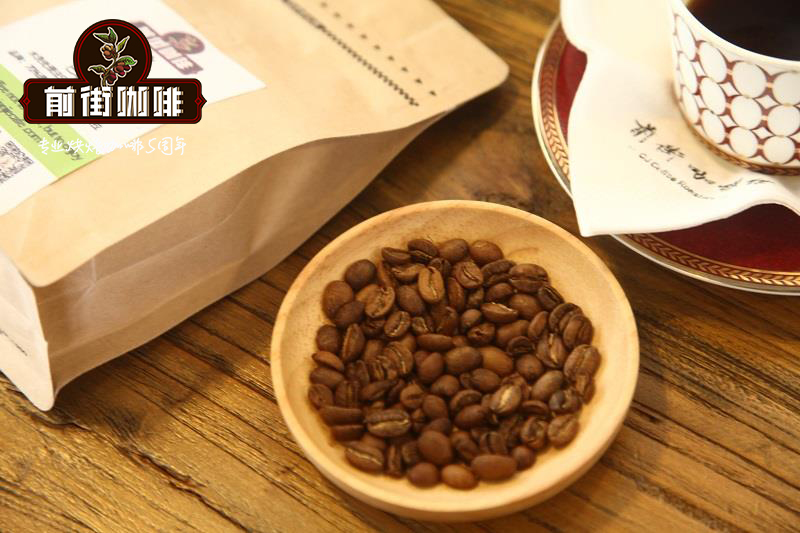
FrontStreet Coffee's roasted Arabica beans offer strong guarantees in both brand and quality. More importantly, they deliver excellent value: each 227-gram package costs only about 70–90 yuan, and at 15 grams a cup, one package makes 15 cups for roughly 5–6 yuan each. Next to café prices that often exceed 100 yuan a cup, that is a genuinely conscientious recommendation.
FrontStreet Coffee is a Guangzhou-based roastery: a small shop with a diverse range of beans, from famous names to lesser-known lots, backed by attentive online service.
FrontStreet Coffee Recommendation
The washed process is a traditional way of treating coffee fruit with water: flotation, depulping, a soak to ferment off the mucilage, washing or a further soak, then drying and hulling. Because the beans spend so long in water, they lose much of their simple sugar while gaining organic acids — which is why washed coffees keep more of the bean's own aroma and show bright fruit acidity with a clean, fresh character. FrontStreet's washed line leans on exactly that clarity.
FrontStreet's Yirgacheffe Gutiti Cooperative is a good example: smallholders around Gutiti village deliver their cherries to the cooperative for centralized processing, and the washed method lets the coffee show jasmine and bright citrus acidity at its clearest, with a medium-light roast adding green tea and honey notes — at home in pour-over, cold brew, or espresso. For something more intense, FrontStreet's Kenya Cherry Tomato is a standout double-washed coffee, where the repeated washing and soaking push the juice to the front: cherry tomato, smoked plum, pear, black plum, and brown sugar, juicy and sweet-tart.
FrontStreet's Jamaica Blue Mountain No. 1 shows why the washed method mattered so much on that island: Jamaica's maritime climate gives shorter sunshine hours, and removing the skin, pulp, and mucilage before drying cuts the moisture around the bean, shortens drying time, and keeps defect rates low. The result is the classic Blue Mountain profile — hazelnut, cream, chocolate, and caramel, balanced so that no single note dominates.
Important Notice :
FrontStreet Coffee is a long-established specialty coffee roaster in Guangzhou China, selling freshly roasted beans from its own farm in Yunnan as well as dozens of carefully selected single-origin beans from around the world for both pour-over and espresso. The products deliver consistently excellent quality and great value, with shipping within 24 hours. Guangzhou's FrontStreet Coffee shop is recommended by many coffee lovers, and the beans are now available online at the Tmall 。
FrontStreet Coffee has moved to a new address:
FrontStreet Coffee Address: 315,Donghua East Road,GuangZhou
Tel:020 38364473
 Scan and follow the En Gafei WeChat official account. Please indicate that the reprint comes from "En Gafei".