Introduction to El Salvador Pacamara Coffee Bean Variety | El Salvador Coffee Bean Price
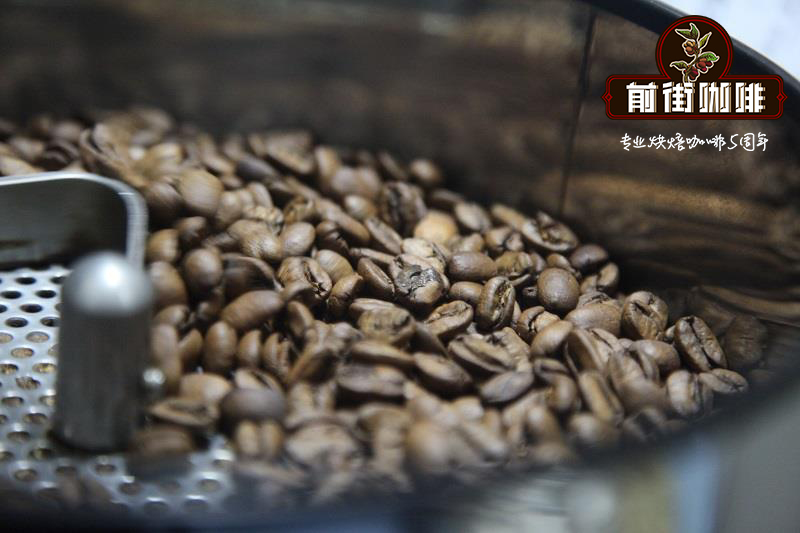
The Famous Pacamara Variety of El Salvador
Among all the coffee varieties grown in El Salvador, none is more celebrated than Pacamara. Here is the story behind it and the flavors it delivers.
Pacamara is a hybrid variety first identified in El Salvador in the 1950s, bred from a cross between Pacas (a natural mutation of Bourbon) and Maragogype, the so-called Elephant Bean.
Salvadoran researchers first cultivated it in 1958, and the variety that emerged from their careful artificial selection is a rare case of the offspring outshining both parents. It carries the best of each: the refined flavor profile of Pacas and the imposing bean size of Maragogype. The beans reach at least 70-80% of elephant bean size, with 100% of the crop scoring above 17 screen size and 90% above 18 screen size. An average bean measures 1.03 cm in length, against 0.8-0.85 cm for a typical bean; an average width of 0.71 cm versus the usual 0.6-0.65 cm; and a thickness of 0.37 cm. The beans are plump and round. What sets the variety apart above all is its lively, intricate acidity, by turns showing biscuit aromatics and fruity notes, always with excellent body and mouthfeel. El Salvador and Guatemala produce the finest examples.
Finca Ataisi Estate
Finca Ataisi sits in the volcanic Izalco region of Sonsonate Province, El Salvador. Volcanic activity has left the estate's soil rich in organic matter. Average altitude is roughly 1,800 meters across steep terrain, and the estate is run today by its owner, Rene Martin, whose guiding philosophy is to preserve El Salvador's original traditional methods. Beyond essential pruning and irrigation, the farm maintains an extensive natural agroforestry system, and more than 90% of its area is planted with Pacamara.
Alongside careful cultivation, Finca Ataisi runs its own washing and processing facilities. That not only spares the farm the price exploitation of outside processors but, more importantly, allows meticulous handling of hand-selected cherries. Rene Martin is exacting about the washing process: he logs daily temperature and humidity and keeps a close watch on the green coffee as it moves through the fermentation tanks.
El Salvador Finca Ataisi Washed Pacamara
- Country: El Salvador
- Certification: Rainforest Alliance Certified
- Region: Izalco region, Sonsonate Province
- Grade: SHG (Strictly High Grown)
- Processing: Washed fermentation, sun-dried
- Altitude: 1,800 meters
- Variety: Pacamara
About El Salvador
Many coffee lovers are still unfamiliar with El Salvador. A Central American country, it borders Guatemala and Honduras to the north, while the Pacific coastline forms its western and southern edges. By area it is the smallest nation in Central America, and also the most densely populated. The terrain is largely mountainous and plateau-like, dotted with volcanoes. The active Santa Ana volcano, at 2,385 meters, is the country's highest peak. The northern region is dominated by the Lempa River valley; the south tapers into a narrow coastal plain.
Small as it is, El Salvador holds dozens of volcanoes and has the highest volcanic density of any country in the world, which earned it the nickname "Land of Volcanoes." Its high average altitude creates ideal conditions for coffee, and the western region near the Guatemalan border is the main producing area.
Climate
El Salvador has a tropical savanna climate. The plains are tropical rainforest; the mountains are subtropical forest. Average annual temperature runs 25-28°C. Mountain areas receive over 1,800 mm of rain a year, while the coast gets about 1,000 mm. The rainy season stretches from May to October.
The Coffee Industry in El Salvador
El Salvador's coffee output should not be underestimated. At its peak, the country was the world's fourth-largest coffee producer. Decades of civil war then nearly destroyed the industry, but with the fighting over in recent years it has revived. The war had one unintended benefit: as farmers abandoned their fields, the country missed the Catimor sun-cultivation boom of the past two decades. Ancient Bourbon and Typica plantings survived, and El Salvador still relies on traditional shade-grown methods.
That has paid off in the cup. In 2005, El Salvador's hybrid Pacamara made a spectacular showing at the Cup of Excellence, leaving international cuppers scrambling to score it. No one had expected a hybrid to break existing boundaries of coffee richness and aroma, still less to raise the profile of Salvadoran coffee so dramatically.
The country's specialty coffee is concentrated in the western Santa Ana region and the northwestern Chalatenango volcanic rock region. In recent years nearly all top-ten finishers in cupping competitions have come from these two areas. At altitudes of roughly 900-1,500 meters, Bourbon dominates at 68%, followed by Pacas at 29%, while hybrids such as Pacamara, Durai and Caturra account for only 3%.
The harvest runs from November through March of the following year, and every cherry is picked by hand. Most coffee here is grown by smallholders working in traditional ways, with nearly 100% shade cultivation.
The Flavor Profile of Salvadoran Coffee
Overall, Salvadoran coffee inherits the mild character of Central American coffee: gentle, lightly acidic and pleasantly sweet. It also has a personality of its own, aromatic and faintly tart but very smooth, pure and free of off-flavors, with excellent balance. The most memorable quality is a creamy, chocolate-like smoothness and a dense mouthfeel that gives the coffee depth and a long finish.
Cupping Notes
- Dry Aroma: Spices, passion fruit, hazelnut-like nuts, berries
- Wet Aroma: Nutty chocolate, sweet-and-sour passion fruit, creamy chocolate, strawberry aftertaste, nuts
Tasting Experience
The entry is exceptionally delicate and silky, with a clear, gentle fruit acidity sliding across the tongue. As with all Pacamara, it is quiet and soft. Mid-palate brings the fresh acidity of wild berries and the nutty aroma of hazelnut. The finish shows distinct caramel sweetness and a delicate, smooth aftertaste that lingers with a long, throaty echo, perfect for savoring slowly on a quiet night.
FrontStreet Coffee Recommendation
If the Pacamara's bright, intricate fruit acidity is what appeals to you, FrontStreet Coffee roasts several light, floral lots that explore similar territory.
FrontStreet Yirgacheffe Gedingding — for many drinkers, the first stop on the specialty coffee journey. Yirgacheffe is prized for its vivid citrus, berry and floral notes, backed by a green tea-like sweetness on the return. Unlike the sharp "sour coffee" people often imagine, a good Yirgacheffe is soft and bright, closer to the natural sweet-sour balance of fruit. It is a welcoming choice for anyone new to pour-over.
FrontStreet Ethiopia Hua Kui — one of the most successful star lots of the specialty market in recent years. Its defining trait is an extraordinarily prominent tropical fruit aroma, often showing strawberry, passion fruit, jackfruit and even lychee. Sweetness is obvious and bitterness is very low, giving a smooth, juice-like entry that many drinkers describe as "the coffee that doesn't taste like coffee." For anyone who dislikes the bitterness of traditional coffee, it tends to rewrite the stereotype entirely.
FrontStreet Kenya Cherry Tomato — a Kenyan specialty washed bean built around vivid cherry tomato and smoked plum acidity with a mouth-filling, juicy texture. It comes from Kenya's Thika region, grown at 1,550-1,750 meters from the classic local SL28 and SL34 varieties, with plump, rounded beans. Processing follows Kenya's signature 72-hour double washed fermentation, which coaxes out the fruit while keeping the cup clean and pure, and FrontStreet roasts it light to preserve that lively acidity and layered fruit. Dry aroma already shows concentrated dried cherry tomato and florals; the sip opens with clear cherry tomato and smoked plum, bright and solid, as full as freshly squeezed juice. Mid-palate sweetness stands out, threaded with pear and black plum, and the finish is clean and long, with yellow sugar sweetness and a hint of green tea.
Important Notice :
FrontStreet Coffee is a long-established specialty coffee roaster in Guangzhou China, selling freshly roasted beans from its own farm in Yunnan as well as dozens of carefully selected single-origin beans from around the world for both pour-over and espresso. The products deliver consistently excellent quality and great value, with shipping within 24 hours. Guangzhou's FrontStreet Coffee shop is recommended by many coffee lovers, and the beans are now available online at the Tmall 。
FrontStreet Coffee has moved to a new address:
FrontStreet Coffee Address: 315,Donghua East Road,GuangZhou
Tel:020 38364473
 Scan and follow the En Gafei WeChat official account. Please indicate that the reprint comes from "En Gafei".