Is the Yunnan Small Bean Coffee Variety Catimor CIFC7963? Characteristics and Flavor Profile Introduction
Exploring Yunnan Coffee Varieties: From Catimor to Typica

For more premium coffee knowledge, follow FrontStreet Coffee
FrontStreet Coffee often notes that the flavor of a cup of coffee depends on many factors, including but not limited to variety, growing terroir, management, harvesting, post-processing methods, roasting and brewing. Among these, coffee variety is one of the most important. In this article FrontStreet Coffee will discuss the Yunnan coffee variety: Catimor.
The "small-grain coffee" grown in Yunnan belongs to the Arabica species. Currently the most widely distributed variety in Yunnan is Catimor, accounting for 90% of total production, with other varieties making up only a small portion. The Yunnan daily coffee bean launched by FrontStreet Coffee is produced from the Catimor variety in Baoshan. Let's first understand what Catimor is.

Catimor CIFC7963 is a hybrid variety developed by the Portuguese Coffee Rust Research Center (CIFC) specifically to combat coffee leaf rust. In appearance it features a compact tree form, dwarf growth, multiple branches and short fruit nodes. It grows vigorously with extremely strong vitality, and its most notable characteristics are remarkable rust resistance and high yield capacity.
Although Catimor is classified as an Arabica variety, genetically it is a hybrid between the Timor variety (which belongs to the Robusta species) and Caturra (a Bourbon variety mutant), so Catimor carries 25% Robusta genes. Robusta naturally contains higher levels of chlorogenic acid, is less susceptible to pests and climate impacts, is typically grown in low-altitude environments and has high yields with rapid fruit maturation. Robusta coffee has a strong flavor and heavy bitterness, and can easily develop astringency and stimulating musty flavors when improperly processed.

By contrast, the "picky" Arabica variety has weaker disease resistance and relatively low yields per plant. High-altitude environments create significant day-night temperature differences that slow the maturation of coffee cherries, allowing them to absorb more nutrients and develop richer aromas. Coffee-growing regions with their own microclimates give Arabica diverse growing conditions and, in turn, unique flavor profiles.
Catimor inherits characteristics from both Robusta and Arabica, offering strong disease resistance and high yield. Tasted after roasting, the beans show both fruit acidity and sweetness. Its Robusta heritage also brings flavor defects, however, with dominant notes of nuts and brown sugar and a lack of richer, higher-end flavors such as citrus, florals or tropical fruit. Because green bean processing methods in Yunnan were relatively rough in the past, its coffee was often described as having a "devil's finish" and struggled to compete with pure Arabica varieties like Caturra in competitions. Catimor's rust resistance also gradually diminishes after 20-30 years. For the Yunnan coffee industry to improve quality and develop long-term, it must gradually replace its varieties.

In recent years many new varieties have appeared in Yunnan, such as the world-famous Gesha. It is likely that in a few years we will see more high-quality coffee varieties produced from Yunnan. In 2013, FrontStreet Coffee selected and cultivated coffee trees in Lincang, Yunnan — the "old variety" Typica.
The History and Characteristics of Typica
The first coffee variety introduced to Yunnan was Typica, brought in 1904 by the French missionary Tian Deneng to Zhugula Village in Binchuan, Yunnan. Typica offers rich, diverse flavors with various fruit acids and delicate textures, and is recognized as a high-quality variety. The world-renowned Blue Mountain coffee is a Typica variety. In appearance, Typica trees are tall with good cold resistance, but individual plant yields are low, disease resistance is poor and they are highly susceptible to leaf rust, coffee berry disease and nematodes, so they need more human management. Since the variety has no significant price advantage in the market, many Yunnan coffee farmers have chosen to replace Typica with higher-yielding Catimor in recent years.
FrontStreet Coffee's Yunnan Coffee Cultivation Journey
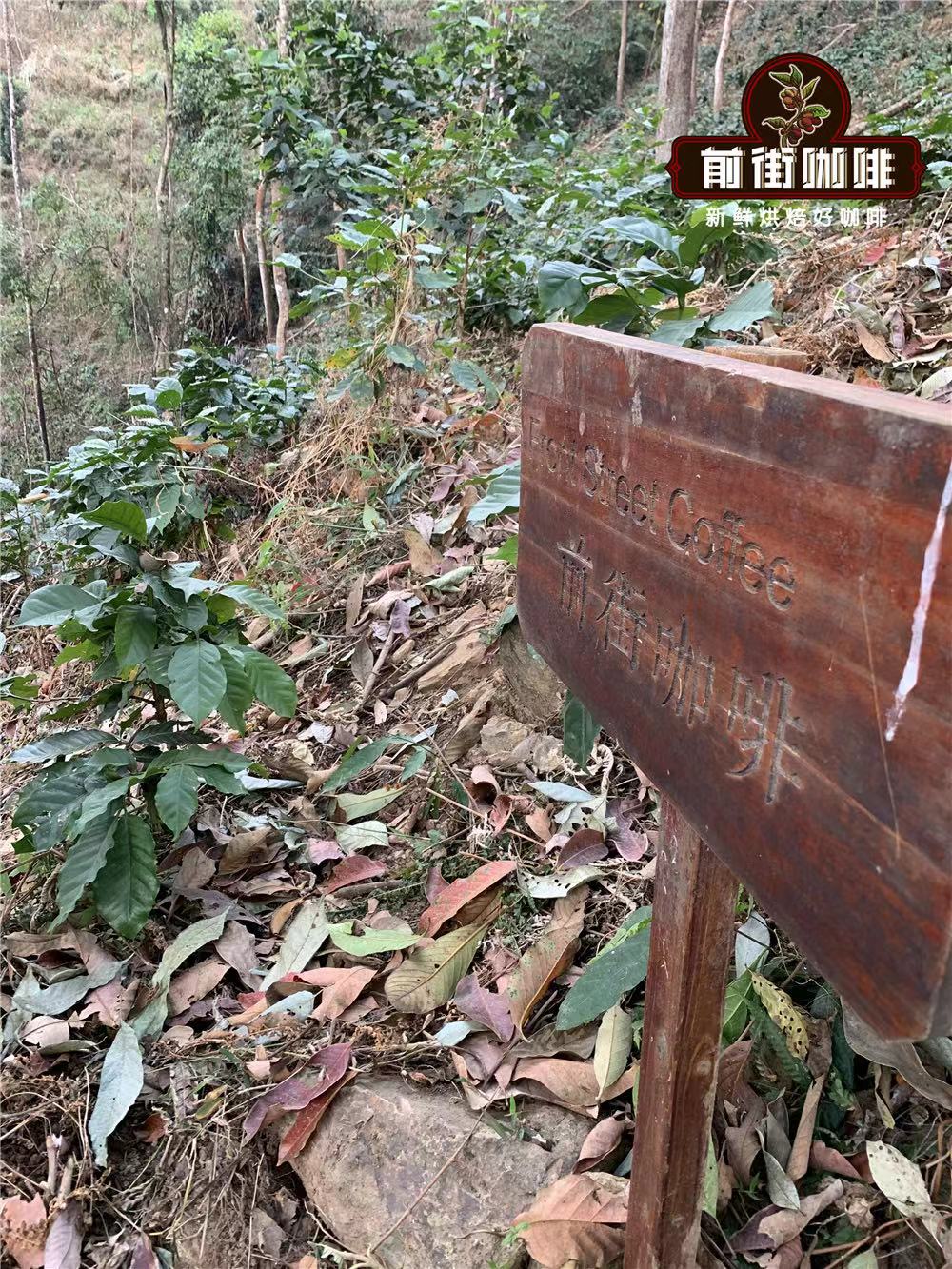
In 2013, FrontStreet Coffee began its coffee cultivation journey in Lincang, Yunnan. From site selection, variety selection, seedling cultivation, planting, harvesting and processing to roasting, every aspect was handled by FrontStreet Coffee's team, from which we gained considerable experience and knowledge regarding varieties, altitude and processing methods.

Lincang, Yunnan is influenced by Indian Ocean warm-humid air currents and southwest monsoons. The distinction between seasons is not obvious, but the dry and rainy seasons are clearly defined. There is abundant rainfall, long sunshine hours, short frost periods and some frost-free areas year-round. The three-dimensional climate is pronounced, making it well suited to Arabica coffee cultivation. FrontStreet Coffee specifically chose the most original Typica variety. Typica has elegant, pure flavors but is also known for low yields and poor resistance, so FrontStreet Coffee invested significant effort in cultivation management. After 5-6 years of cultivation, FrontStreet Coffee finally harvested its first batch in 2020, processed it using natural sun-drying and named it "FrontStreet Coffee 2013."

Whenever November arrives, the coffee cherries planted by FrontStreet Coffee mature one after another. FrontStreet Coffee arranges for workers to hand-pick each red cherry individually, then spreads the fresh cherries evenly under the sun for natural drying. They are turned periodically to ensure even dehydration and avoid over-fermentation flavors. Once the beans have dehydrated to a purplish-red color and reached the target moisture content, they are sent for hulling and roasting. Sun-dried Typica shows fuller fermentation flavors and prominent sweetness, with aromas of caramel, berries and black tea.

Roasting and Brewing Philosophy
FrontStreet Coffee believes the flavor of coffee from Yunnan terroir belongs to a neutral, balanced profile — meaning it has acidity, sweetness and bitterness all at once. FrontStreet Coffee's Yunnan coffees therefore all use medium roasting to highlight the roasted aromas of chocolate and nuts while preserving some acidity. In cupping, FrontStreet Coffee's Yunnan small-grain daily beans display nutty, herbal and brown sugar aromas, melon-like sweetness and plum acidity with a balanced mouthfeel. The natural processed Typica shows fuller tropical fruit fermentation with a lasting sweet aftertaste.
FrontStreet Coffee uses corresponding parameters for brewing different coffees. For darker roasted beans such as Mandheling and Brazilian coffee, FrontStreet Coffee uses water temperatures of 87-88°C with a medium-coarse grind. For lighter roasted beans such as Ethiopian Yirgacheffe and Panama Gesha, FrontStreet Coffee uses higher temperatures of 91-93°C with a medium-fine grind to stimulate the aroma of high-altitude hard beans. Returning to today's Yunnan small-grain coffee, FrontStreet Coffee uses medium water temperature and grind to highlight the neutral balance of Yunnan coffee.

Brewing Parameters:
Filter: Hario V60
Dose: 15g
Water Temperature: 90°C
Grind Size: 75% pass-through rate through a No. 20 sieve
Water-to-coffee ratio: 1:15
Three-stage pouring: use twice the weight of the coffee grounds in water to moisten the bed, forming a dome, and let it bloom for 30 seconds. Then use a small water stream to pour in circles from inside to outside until reaching 125g, and segment. Wait for the coffee bed to drop to half the height of the filter cup, then continue with the same fine stream to pour the third stage to 225g. Once all the coffee liquid has filtered through, remove the filter cup — roughly 2 minutes in total. Gently shake the coffee liquid in the server, pour into a cup and slowly taste the different layers of flavor starting from high temperature.
FrontStreet Coffee Recommendation
Yunnan's most widely planted variety is Catimor, but FrontStreet Coffee's entry point for anyone curious about Chinese coffee is the Yunnan Small Bean, grown in Baoshan and processed as a washed, medium roast. It highlights a certain caramel sweetness while keeping some acidity, so it expresses the terroir of the region well — the washed process removes the mucilage through fermentation and rinsing before drying, letting the coffee show the flavor signature specific to the area, and it drinks with soft nut and chocolate notes and a light plum acidity. Baoshan's coffee history goes back to the mid-1950s, when the overseas Chinese patriot Liang Jinshan introduced the crop, and the warm, frost-free climate suits small-grain coffee particularly well — especially around Lujiangba, where the dry-hot river-valley climate keeps annual temperature variation small while day-night differences stay large, creating the region's characteristic sweetness in the finish, and where the reasonably low rainfall gives the fruit a further advantage.
If you want a clearer expression of Yunnan, FrontStreet Coffee's 2013 Yunnan Natural Typica is the step up. Typica is one of the oldest and purest Arabica varieties, and FrontStreet Coffee's estate coffee uses the most traditional post-harvest method — natural processing. Only fully ripe red cherries are used, and after sun-drying the beans are given a medium roast so the cup becomes more balanced and the sweet-sour character stands out: dark berry notes with caramel sweetness, chocolate and a hint of dried apricot, and a black tea aftertaste on the swallow. The geography supports it. Coffee likes warmth and tolerates heat but not cold, and grows best between 16 and 21°C, which puts the band around the equator up to 25° north at the heart of the coffee belt — and Yunnan sits right on it, with most of the province above 1,000 meters, fertile slope soils, ample sunshine, plentiful rain and large day-night temperature swings, all of which favor the trees. Today Yunnan's coffee is grown mainly across the province's southwest, in the four producing areas of Baoshan, Dehong, Pu'er and Lincang, and FrontStreet Coffee's two Yunnan specialty lots come from Baoshan and Lincang.
To taste Yunnan as espresso, FrontStreet Coffee's Black Cocoa Blend is the barista-favorite option, built from Yunnan Small Bean and Brazil Cerrado. The Brazilian coffee provides mixed nut aroma and a balanced mouthfeel while the Yunnan small bean carries the chocolate and citrus notes, so the Americano comes out balanced across acidity, sweetness and bitterness with a nutty brown sugar sweetness, and the latte takes on the smooth, creamy character of almond and butter — an easy starting point for beginners.
Important Notice :
FrontStreet Coffee is a long-established specialty coffee roaster in Guangzhou China, selling freshly roasted beans from its own farm in Yunnan as well as dozens of carefully selected single-origin beans from around the world for both pour-over and espresso. The products deliver consistently excellent quality and great value, with shipping within 24 hours. Guangzhou's FrontStreet Coffee shop is recommended by many coffee lovers, and the beans are now available online at the Tmall 。
FrontStreet Coffee has moved to a new address:
FrontStreet Coffee Address: 315,Donghua East Road,GuangZhou
Tel:020 38364473
 Scan and follow the En Gafei WeChat official account. Please indicate that the reprint comes from "En Gafei".