A Guide to Bourbon Coffee Characteristics: How Many Colors of Bourbon Coffee Beans Exist and Bourbon Bean Prices
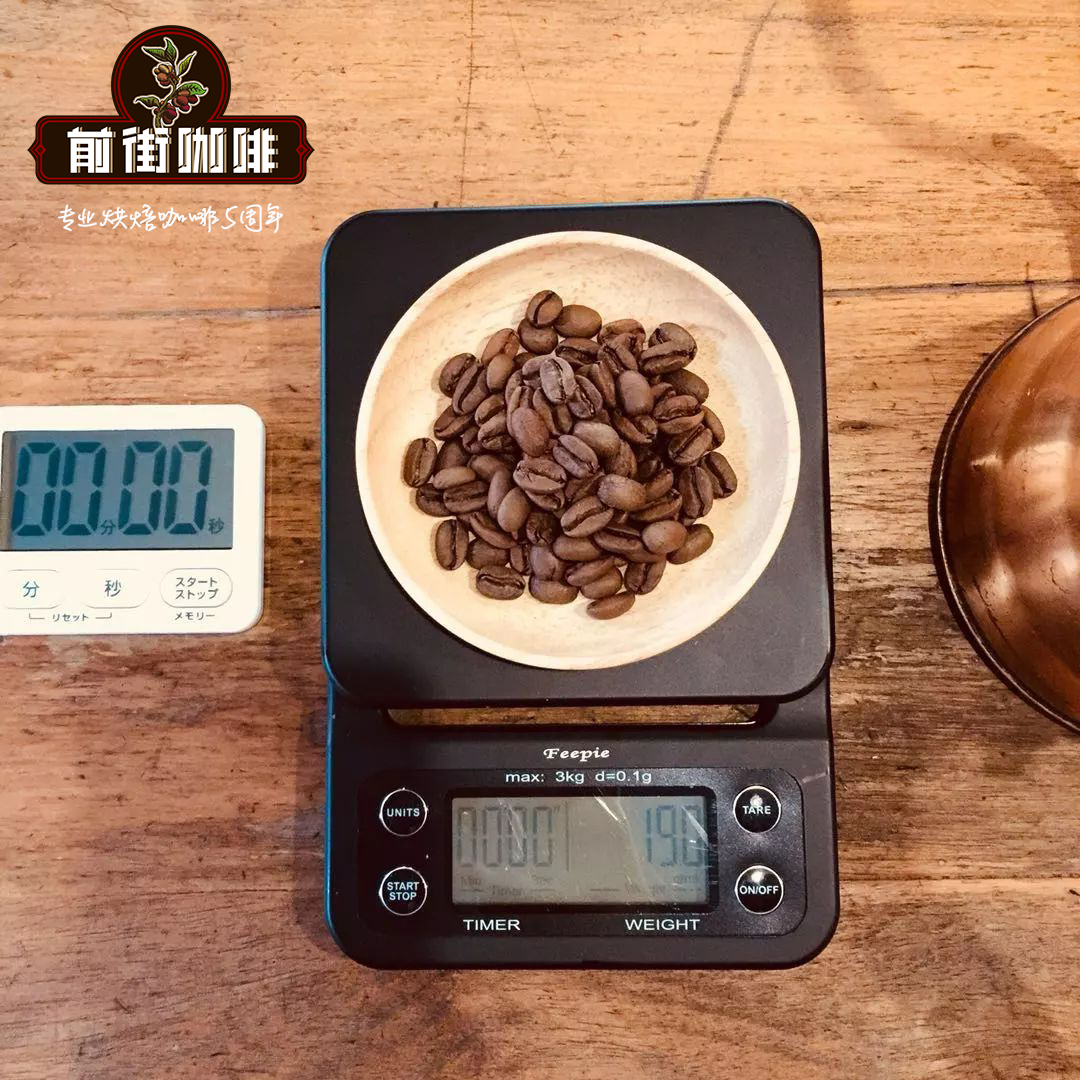
Red Bourbon, Yellow Bourbon, Orange Bourbon, Pink Bourbon, Blue Bourbon... How Many Colors Have You Seen?
First, the basics: bourbon coffee was originally cultivated on Reunion Island—known as Bourbon Island before 1789. The bourbon variety is a subspecies that mutated from Typica, and together the two are the oldest coffee varieties still in cultivation. When the green cherries ripen, they turn bright red. In FrontStreet Coffee's daily bean lineup, the Brazilian semi-washed (pulped natural) lot is a classic bourbon expression with a sweet finish and nutty notes. Remarkably, you can find a similar flavor foundation in Rwanda, a small African origin thousands of miles away—same variety, same flavor base. That is why FrontStreet Coffee ranks the factors shaping specialty coffee as: variety first, then altitude, then processing method.
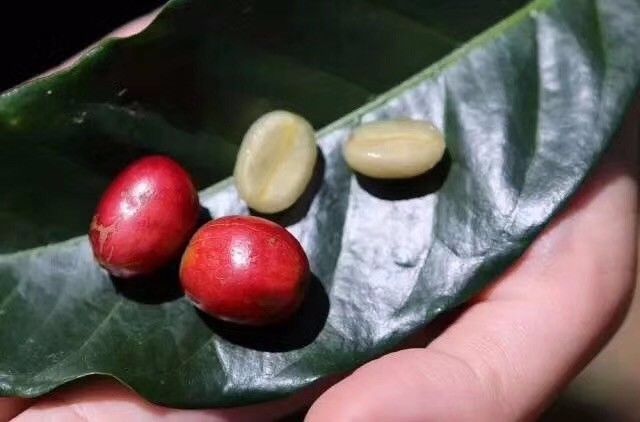
Red Bourbon
After coffee trees flower and set fruit, the cherries normally progress from green to light yellow, then light orange, then mature red, and finally a deeper ripe red—hence "Red Bourbon," which is really just bourbon as we usually know it. Bourbon grown at high altitude typically shows better aroma, brighter acidity, and sometimes even wine-like flavors in the cup.
In short, bourbon is a branch of the Arabica species that generally bears red fruit—hence red bourbon. There are also yellow bourbon and orange bourbon, with yellow bourbon yielding less but cupping better.
The Bourbon Story — Spread Route
Because the Typica introduced to Brazil in 1727 yielded poorly and fell sick easily, the bourbon variety was brought to Brazil around 1860 via Campinas in the south and quickly spread north through South and Central America. Today bourbon has largely been replaced across Latin America by its own descendants (especially Caturra, Catuai, and Mundo Novo), but it is still grown in El Salvador, Guatemala, Costa Rica, and Peru.
In Africa, French missionaries of the Spiritan congregation (the Holy Ghost Fathers) did much of the spreading. A church was established on Reunion in 1841, with a branch in Zanzibar in 1859. From Zanzibar came branches in Bagamoyo (on the Tanganyika coast, now Tanzania) and St. Augustine (Kikuyu, Kenya) in 1862, and another in Bura (Taita Hills, Kenya) in 1893—each new mission accompanied by coffee seed from Reunion.
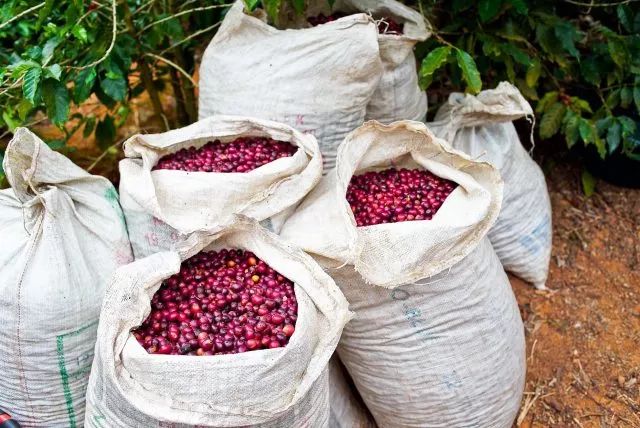
In 1899, seedlings raised at Bura were taken to another French mission at Santa Cruz, near Nairobi. In 1900 they reached the Kilimanjaro region of Tanzania, where seed was distributed to any local farmer willing to plant. Thus was born "Missionary Bourbon." The Kent variety followed in 1920, and Tanzanian coffee remains dominated by bourbon and Kent to this day.
- —1860: Pointed bourbon to New Caledonia and Yemen
- —1732: Round bourbon to British territory St. Helena Island
- —1860: Round bourbon to Brazil
- —1900: Round bourbon to Rwanda, Kenya, Tanzania
- —After 2000: Pointed bourbon to Colombia
Bourbon Variants
Through natural mutation, crossing within the species, and deliberate breeding, bourbon has produced many descendants: Caturra, Catuai, Pacas, Yellow Bourbon, Pointed Bourbon, SL28, SL34, and more.
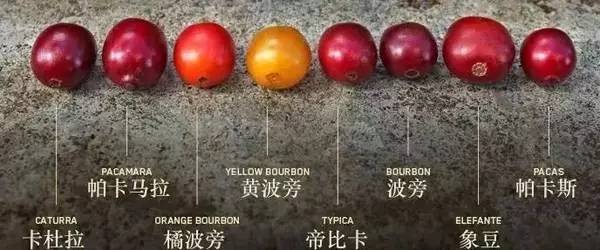
Genetic Mutants — Bourbon Variants
Yellow Bourbon
Yellow bourbon is a bourbon hybrid. Its low yield and poor resistance to wind and rain kept it from wide planting, but grown at high altitude it performs beautifully in the cup, and it has become far more common in recent years. Also simply called Yellow Bourbon for its yellow ripe fruit, it was first discovered in Brazil, where it is still mainly grown. It is generally believed to be a mutation from a cross between red-fruited bourbon and a yellow-fruited Typica variant called "Amerelo de Botocatu."
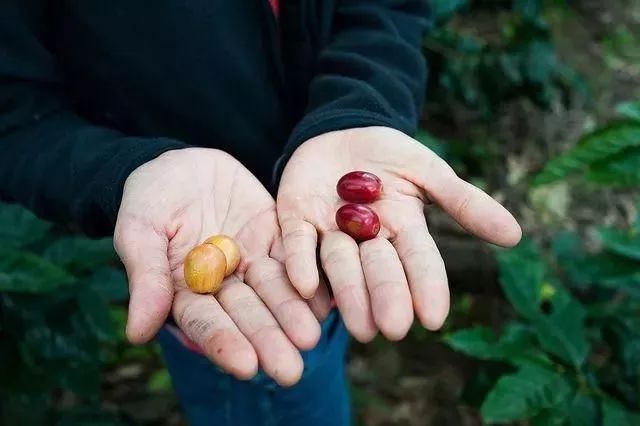
FrontStreet Coffee has cupped its own Queen Estate Yellow Bourbon at a medium-dark roast: clean, balanced walnut flavor, a creamy, delicate texture, sweet orange sweetness, and a long mocha-chocolate finish.
FrontStreet Coffee's Yellow Bourbon profile: smooth fruit sweetness, distinct nuttiness, gentle balanced acidity, clean subtle bitterness, and rich chocolate and nut aromas with a bright, refreshing finish.
Pink Bourbon
Pink Bourbon ripens into romantic pink cherries. It is a very rare new variety bred by crossing red bourbon with yellow bourbon. What makes it so rare is how hard the pink color is to hold onto: the final cherry color is determined by recessive genes carried in the pollen, and the selected pollen carries both yellow-leaning genes from yellow bourbon and red-leaning genes from red bourbon—recessive genes that easily interfere with each other, so orange-fruit trees often get harvested instead.
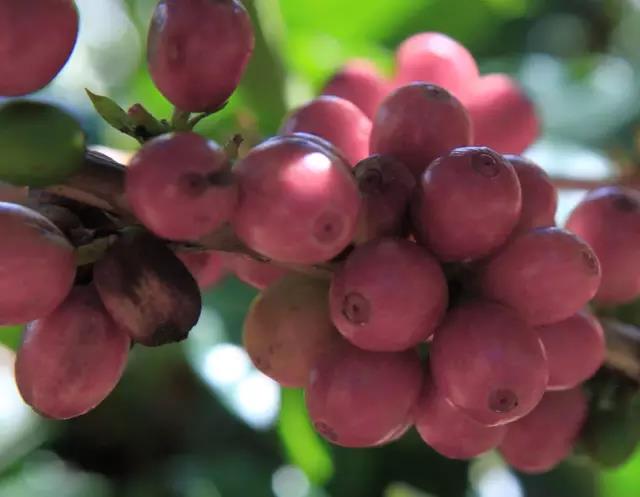
Pink Bourbon can currently be found in Colombia and Guatemala. Taking FrontStreet Coffee's own batch as an example: about 1,800 trees yielding roughly 1.8kg of fresh cherries each per harvest, which reduces to about 0.36kg of coffee per tree after pulping. Across a normal season the total output is under 650kg.
FrontStreet Coffee's Pink Bourbon profile: sweet orange, sugarcane sweetness, pleasant juiciness, cherry tomato.
Pointed Bourbon
Pointed Bourbon (Bourbon Pointu): discovered on Bourbon Island in 1810, with the bean shape shifted from round to pointed and only half the caffeine of regular bourbon. Yields are low and the plants frail, making it extremely precious—much of it is cultivated in laboratories.
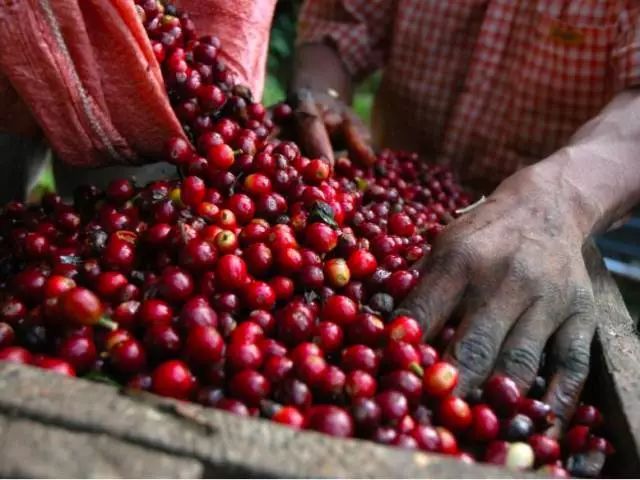
Pointed Bourbon also goes by two other names, Laurina and Leroy, though neither is as famous. It is called "pointed" because the beans are long and narrow with tapered ends, while native bourbon (sometimes called round bourbon) has shorter beans with slightly oval outlines.
Thanks to its fine flavor and low caffeine (less interference with sleep), Pointed Bourbon was beloved as early as the 18th century—French King Louis XV and the novelist Balzac counted among its admirers. From the 18th into the 19th centuries it was widely grown on Bourbon Island, peaking at 4,000 metric tons of annual production in 1800. Then came the disasters: hurricanes, fire ants, leaf rust. Cultivation shrank steadily, and by 1942 the last shipment back to France totaled a mere 200 kilograms. After that, Pointed Bourbon vanished—official documents stopped mentioning it, Reunion turned to other crops such as sugarcane after the 1950s, and the coffee world declared it "extinct."
The bean stayed lost for half a century until it reappeared 8 years ago. Today, Pointed Bourbon from its original home on Reunion Island sells for over 500 yuan per 100 grams on the international market. Colombia later took up cultivation, and only Camilo Merizalde—source of beans for multiple WBC champions—dared to attempt the transplant. With global annual production of just a few tons, the price stays high.
Flavor description from the archives: bright acidity, blueberry and vanilla notes, velvety smoothness.
Pacas
Pacas is a natural bourbon mutation, in the same family as Brazil's Caturra and Costa Rica's Villa Sarchi. Like other widely planted bourbon mutations, Pacas arose from a single-gene mutation, and that gives it one crucial advantage: the plants can be spaced more densely, raising yields per unit area.
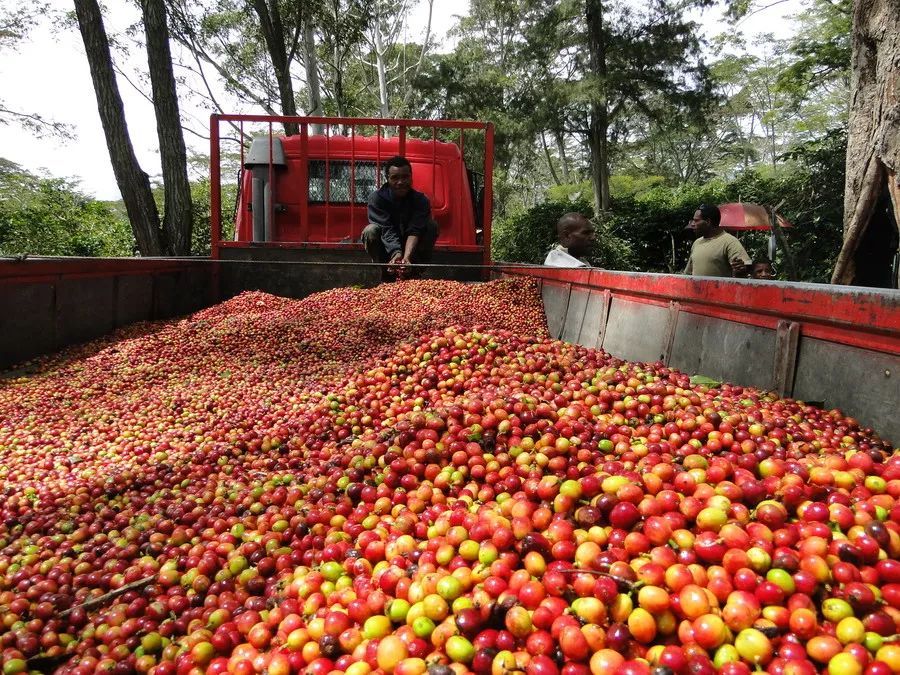
Pacas was first noticed in 1949 by the Pacas family of the Santa Ana region in El Salvador. Fernando Alberto Pacas Figueroa spotted plants with unusual morphology on the family's Finca San Rafael, began collecting seed, and ran selection breeding that produced about 3/4 hectare of Pacas "pioneer nursery."
The discoverer of Pacas: Fernando Alberto Pacas Figueroa
By 1956, Francisco de Sola and Fernando's son Fernando Alberto Pacas Trujillo were studying the variety with help from the Florida professor William Cogwill. They compared San Ramon bourbon against this "unknown" variety, which showed entirely different characteristics—shorter internodal spacing and larger fruiting zones—and named it "Pacas."
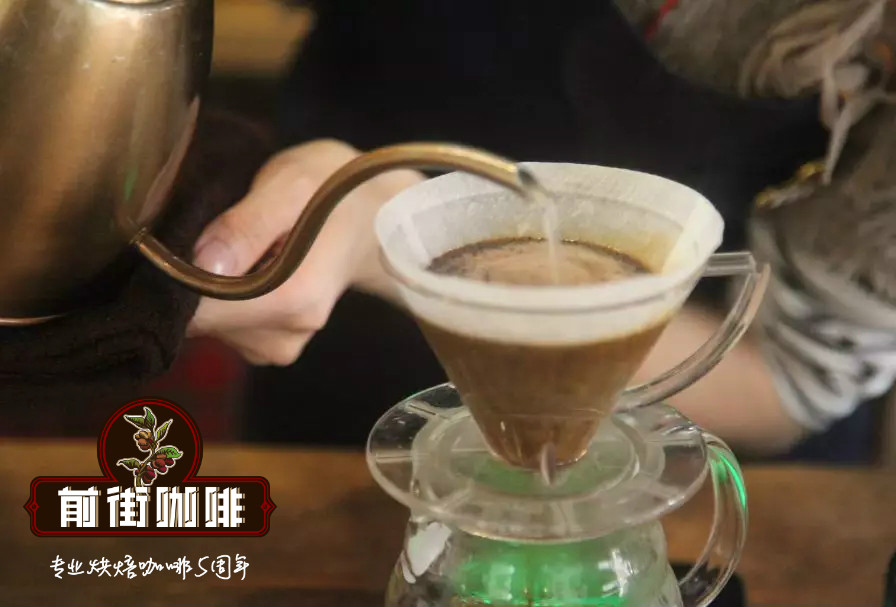
FrontStreet Coffee's recommended brewing parameters: BG-6M/86-88°C/KONO or V60 dripper/1:15/15g of coffee/30-second bloom, poured to 225g, total extraction time 2 minutes.
FrontStreet Coffee brewed its Brazilian Queen Estate Yellow Bourbon through both a V60 and a KONO dripper and compared: the V60 gave a slightly thinner body with soft fruit acidity—overall more refreshing—while the KONO delivered a richer body and stronger sweetness.
FrontStreet Coffee Recommendation
To taste bourbon's color spectrum in the cup, start with FrontStreet Coffee's Brazil Cerrado Red Bourbon—a classic pulped-natural (semi-washed) lot roasted medium, showing cream, peanut, toasted bread, caramel, and hazelnut over a round, low-acid body with a light bitter edge. It suits pour-over, moka pot, siphon, French press, and even espresso SOE.
Then try the Yellow Bourbon from the same country: Queen Estate sits in Mogiana, near South Minas, where fertile red volcanic soil feeds the fruit. Yellow Bourbon—a mutation of Red Bourbon—keeps its fruit character exceptionally clean, and FrontStreet's medium roast brings out a sugarcane sweetness with fruit and chocolate notes that few other origins can match.
Important Notice :
FrontStreet Coffee is a long-established specialty coffee roaster in Guangzhou China, selling freshly roasted beans from its own farm in Yunnan as well as dozens of carefully selected single-origin beans from around the world for both pour-over and espresso. The products deliver consistently excellent quality and great value, with shipping within 24 hours. Guangzhou's FrontStreet Coffee shop is recommended by many coffee lovers, and the beans are now available online at the Tmall 。
FrontStreet Coffee has moved to a new address:
FrontStreet Coffee Address: 315,Donghua East Road,GuangZhou
Tel:020 38364473
 Scan and follow the En Gafei WeChat official account. Please indicate that the reprint comes from "En Gafei".
What Are the Flavor Characteristics of Bourbon Coffee from Different Growing Regions_How Much Does a Bag of Bourbon Coffee Beans Cost