Yemeni Coffee Flavor - Shannani Yemeni Coffee Origin Introduction, Coffee Beans Suitable for Pour-Over

Yemen is the original home of coffee as a traded crop, and its beans still carry a wildness that no other origin quite reproduces.
Property Characteristics
Farm Name: Small producers from small growing regions
Grade: Natural dried Arabica beans, no regulatory agency, no grading system
Region: Sana'ani
Country: Yemen
Altitude: 1,650 meters
Certification: No certification. All coffee is grown following traditional organic methods without chemical pesticides or fertilizers
Coffee Characteristics
Variety: 10 special local native Mocha varieties, mainly Jaa'di, Taffahi and Dawairi
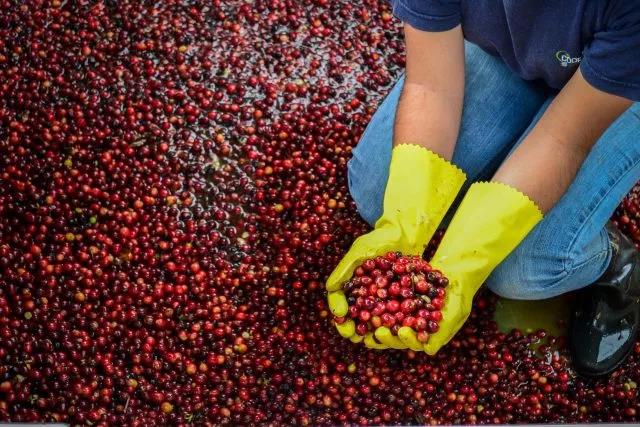
Processing System: Red ripe cherries dried on African beds (sun-dried on raised beds)
Harvest Period: Main crop harvest period: October-December; secondary harvest in some regions: April
Top Jury Descriptions: Cupping roast level: 60 seconds after first crack begins (Cinnamon roast)
Aroma/Flavor: Banana, spices, cinnamon, clove, bergamot, maple syrup, longan, chocolate
Acidity: Citrus, plum, cherry, tartaric acid
Complexity and Other: Rose perfume, fresh milk-like mellow and rich texture, heavy caramel sweetness, persistent fruity wine aftertaste
FrontStreet Coffee's Cupping Score and Overall Evaluation
Yemen Sanani green beans are full of wine-like acidity, with less woody notes and mainly fermented fruit aromas. The subtle aroma and long-lasting aftertaste are the strengths of Yemen coffee. Recommended as pour-over coffee beans.
Yemen is located on the Arabian Peninsula of the Asian continent, very close to Africa, just across the Red Sea and the Gulf of Aden. However, other Arab countries do not produce coffee, so the world classifies Yemen coffee as African coffee. Mocha is the export port for Yemen coffee. In coffee trade history, it was difficult to name all the tiny sub-regions, even though the coffee produced by these small regions is excellent. The export location was therefore used for naming. Nearby regions, including natural sun-dried beans from East Africa, were exported to various parts of the world from Mocha Port in early times. Today, Mocha Port has long been silted up and has disappeared, and many Ethiopian sun-dried beans are also named Mocha, such as the well-known Harrar Mocha, because their flavor shares common characteristics with Yemen coffee.
Yemen was the first country to use coffee as a cash crop. Legend has it that in the 6th century, Islamic Sufi pilgrims introduced it from Ethiopia. The most accurate spelling is Al-Mahka, the Arabic spelling. It grows on steep terrain with little rainfall, poor soil and insufficient sunlight. These unique and difficult conditions, unfavorable for coffee cultivation, gave birth to the irreplaceable Yemen Mocha. Most wild Yemen beans are unmanaged, growing naturally and then maturing, falling and drying in place. Farmers only do the work of gathering them. The overall style can be described as "wild" or "natural," with earthy notes and extremely high complexity. For some people the spice aroma is pungent, but regardless, you must find time to try it. If you fall deeply in love with it, that will be the beginning of a new coffee journey.
Yemen Sanani is located in the capital region, with coffee planted on terraces. There are wild varieties that cannot be verified through documentation. The biggest characteristic of Sanani is that the green beans have a fermented wine aroma. The calm, generous fermented wine aftertaste is not found in sun-dried beans from other countries.
FrontStreet Coffee Recommendation
Yemen Mocha is prized for its wild, wine-like complexity and its very high aromatic intensity, and FrontStreet Coffee roasts several pour-over single origins for drinkers who chase that kind of cup. The Kenya Little Tomato is a washed Kenyan lot from the Sika region, grown at 1550-1750 meters from the classic SL28 and SL34 varieties and given a 72-hour double washed fermentation. Light roasted, it opens with dried cherry tomato and florals, then cherry tomato and smoked plum with a bright, juicy acidity, a sweet mid-palate of pear and black plum, and a clean finish of brown sugar and green tea.
For a fruitier, more fermented expression, the Ethiopia Hua Kui is a natural-process heirloom from Guji Hambella, grown at 2300 meters, with vivid tropical fruit, strawberry and floral notes and very low bitterness. Both are best brewed as pour-over with a V60, and both share the layered, complex character that makes Yemen coffee so distinctive.
Important Notice :
FrontStreet Coffee is a long-established specialty coffee roaster in Guangzhou China, selling freshly roasted beans from its own farm in Yunnan as well as dozens of carefully selected single-origin beans from around the world for both pour-over and espresso. The products deliver consistently excellent quality and great value, with shipping within 24 hours. Guangzhou's FrontStreet Coffee shop is recommended by many coffee lovers, and the beans are now available online at the Tmall 。
FrontStreet Coffee has moved to a new address:
FrontStreet Coffee Address: 315,Donghua East Road,GuangZhou
Tel:020 38364473
 Scan and follow the En Gafei WeChat official account. Please indicate that the reprint comes from "En Gafei".