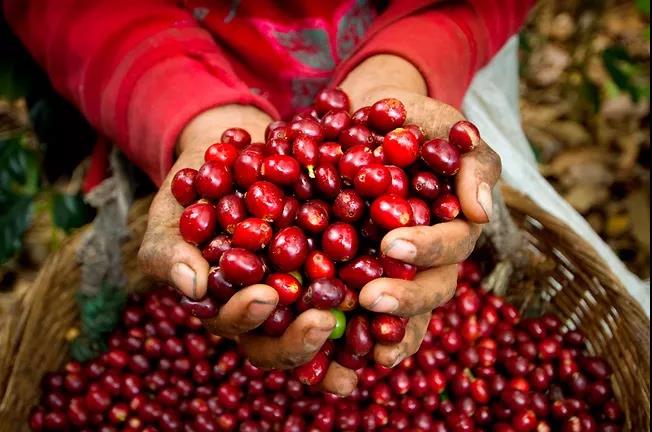
Yemen Coffee Esmaeli Haraazi Yemen Coffee Flavor Characteristics Coffee Beans Suitable for Pour-Over
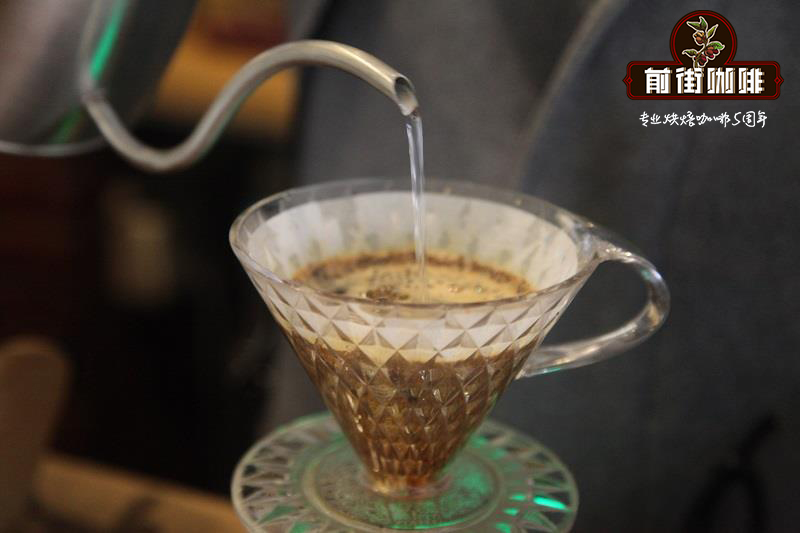
Introduction to Ismaili Coffee
Some say Ismaili is the oldest coffee variety, while others consider it a growing region. In the local Haraazi market of Yemen, vendors selling spices, tea, Qat and coffee claim their coffee beans are special because they are always mixed together, creating a particularly distinctive flavor. Ismaili grows in incredibly vertical, steep rocky areas, where coffee is cultivated on etched terraces alongside Qat. It has always had an intense, spicy character with a surprising red wine aroma.
Property Characteristics
Farmer: Small Holders (various small farmers)
Region: Haraazi
Country: Yemen
Farm Size: 2.8 Hectares
Altitude: 1,840 - 2,125 meters
Certification: None
Coffee Characteristics
Variety: Mainly Jaa'di, also Tuffahi, Dawairi and Ismaili
Processing System: Traditional Natural (Yemeni traditional rooftop sun-drying)
Appearance: 15-16 screen
Top Jury Descriptions: Cupping roast level begins 60 seconds after first crack (Cinnamon roast)
Aroma/Flavor: Strawberry, pineapple, cinnamon, clove, red wine aroma, maple syrup, caramel
Acidity: Tannic acid, tartaric acid
Complexity and Other Notes: Exuberant fruity wine aroma, velvety mouthfeel, chocolate aftertaste, prominent spicy notes; recommended as a single-origin pour-over coffee bean
FrontStreet Coffee Review: Yemeni coffee is my favorite. Ismaili is not easy to obtain, and its red wine aroma becomes even better with time.
Yemen Mocha Coffee
Yemen lies on the Arabian Peninsula of the Asian continent but sits very close to Africa, just across the Red Sea and the Gulf of Aden. Since other Arab countries do not produce coffee, the world categorizes Yemeni coffee as part of the North African coffee family. So what is Yemen Mocha? Mocha is the export port for Yemeni coffee. In coffee trade history it was difficult to name all the small sub-regions, even though the coffee from these insignificant small regions was truly exceptional, so the export location was used as the name. Early natural-processed beans from nearby East Africa were all exported to the world through Mocha port. Today Mocha port has long been silted up and gone. Many Ethiopian natural-processed beans also call themselves Mocha, such as the well-known Harar Mocha, which I believe is because their flavor shares some characteristics with Yemeni coffee.
The most correct spelling for Mocha coffee should be "Al-Mahka," the Arabic spelling. Ultimately, though, the spelling seen on burlap bags -- "Mocca" or "Mocha" -- is considered correct. Regardless of naming and spelling, Yemeni coffee is one of the most unique and expensive coffees in the world. Overall its style can be described as wild or natural, with earthy notes and extremely high complexity. For some people the spicy aroma may be overwhelming, but in any case you must take the time to try it. Among the several premium Yemeni coffees available from direct coffee suppliers, you will surely discover that you really like this unique coffee. If you fall deeply in love with it, that marks the beginning of a brand new coffee journey.
Yemen is very likely the first country in the world to use coffee as a cash crop. Legend holds that coffee was introduced from Ethiopia in the 6th century by Islamic Sufi pilgrims. Yemen's coffee culture differs from other regions: exporters do not buy directly from farms but from large intermediate distributors. The coffee the local large distributors receive contains cherry pods and whole sun-dried coffee cherries, usually stored in cellars. The special flavor people love in Yemeni coffee may very well come from these ancient trading methods.
Yemeni coffee farmers have not suffered from this distribution model, mainly because local coffee-growing land is limited. Combined with high latitude and limited water resources, production is extremely scarce, while demand for Yemeni coffee is very high, keeping its price elevated.
Coffee Cultivation Challenges
Growing and harvesting Yemeni coffee is not easy. Most farmland is planted with Qat, a plant whose leaves are said to have mild stimulating effects. This plant absorbs water from underground, damaging the aquifer. Coffee cultivation is different, and some hope to make changes so farmers stop growing Qat. However, the profit from Qat is dozens of times that of coffee. Coffee beans can only rely on government persuasion to maintain small-scale cultivation alongside Qat. Perhaps this is why Yemeni beans leave so much room for imagination.
Yemen Coffee Industry Statistics
Total coffee farms: Approximately 330,000
Harvest time: Main crop October-December, secondary harvest April
People engaged in coffee-related work: 1,530,000
Processing method: Natural dried Arabica beans
Grading: No management institution, no grading system
Shade cultivation method: Wild growth, with shade but no documented records. Coffee is planted on terraces
Organic certification: None certified. All coffee follows traditional organic farming methods without chemical pesticides or other agents
Main coffee growing regions: Mattari, Hirazi, Haimi, Saihi, Ismaili, Sharasi, Dhamari, Rimy
Production ranking: 10th in Asia, 46th in the world
Coffee varieties: More than 10 special local native Mocha varieties, introduced from Ethiopia
Coffee introduction: Introduced in the 6th century or earlier from Harar, the origin of Arabica in Ethiopia. Yemen was the first country to start growing coffee after Ethiopia.
FrontStreet Coffee Recommendation
Yemeni coffee is a natural-processed, single-origin bean, and the best way to honor its complexity is a careful pour-over. For a similarly wild, fruit-driven cup, try FrontStreet Coffee's Kenya Little Tomato. From the Sika region at 1,550-1,750 meters, it uses SL28 and SL34 with a 72-hour double washed fermentation and a light roast, delivering clear cherry tomato and smoked plum with bright, full acidity like fresh juice, snow pear and black plum mid-palate, and a clean yellow sugar and green tea finish.
If you prefer a cleaner, more floral partner bean, choose FrontStreet Coffee's Ethiopia Yirgacheffe Gudingding. An Ethiopian G1 washed coffee, it shows elegant white florals, citrus, orange and green tea with no traditional bitterness -- a gentle, brightly acidic pour-over that contrasts nicely with Yemen's intensity.
Important Notice :
FrontStreet Coffee is a long-established specialty coffee roaster in Guangzhou China, selling freshly roasted beans from its own farm in Yunnan as well as dozens of carefully selected single-origin beans from around the world for both pour-over and espresso. The products deliver consistently excellent quality and great value, with shipping within 24 hours. Guangzhou's FrontStreet Coffee shop is recommended by many coffee lovers, and the beans are now available online at the Tmall 。
FrontStreet Coffee has moved to a new address:
FrontStreet Coffee Address: 315,Donghua East Road,GuangZhou
Tel:020 38364473
 Scan and follow the En Gafei WeChat official account. Please indicate that the reprint comes from "En Gafei".