How to Drink Hawaii Kona Coffee? What Flavors Can You Expect When Brewing Kona? Kona Coffee Guide
Professional coffee knowledge exchange. For more coffee bean information, follow FrontStreet Coffee.
How to Drink Hawaiian Kona Coffee? What Flavors Does Brewed Kona Have? An Introduction to Kona Coffee Cultivation
Hawaii is a beautiful island chain that began cultivating coffee in the 18th century. Most of its coffee grows on Kauai and Hawaii Island (the Big Island), where climate and soil are ideal. Processing is exceptionally meticulous, and the beans have a remarkably uniform, perfect appearance. Limited planting area and expensive American labor are what make Kona beans costly — but their perfectly clean cup, filled with unique tropical fruit aromas, is impossible to replace with other coffees.
Coffee professionals often compare Hawaiian Kona with Jamaica Blue Mountain. Both offer mild, well-balanced acidity and delicate fruit sweetness, but Kona's rigorous quality control has earned it a reputation for consistency at the highest level, with virtually no negative reviews — whereas Blue Mountain occasionally receives mixed evaluations.
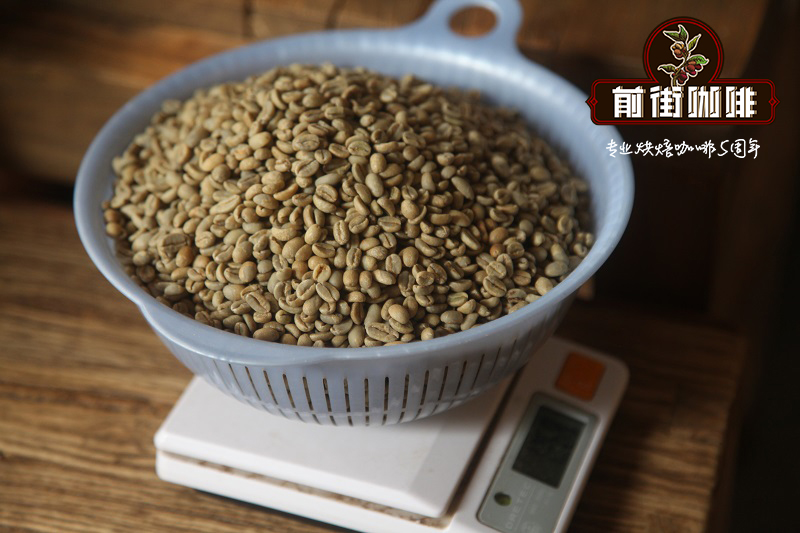
Compared with Golden Mandheling, there is no significant difference in bean size; Kona beans lean olive green, while Golden Mandheling leans yellowish-brown.
Every batch of Kona is labeled with the farm address, farm name, batch number, weight, and a notation identifying it as a US-grown agricultural product.
This particular batch is 100% selected Kona coffee, batch number 50 from the Kona Coffee Cooperative, sourced from a farm on the Big Island. It shows all the hallmarks of genuine Kona: fresh grassy aroma, very few defects, complete and uniformly sized particles, and beans that are clean, fresh, dense, and satisfyingly heavy in the hand. Kona should not be roasted too dark; a medium-light roast (City to Full City) is recommended.
The new-crop Kona beans are again 100% Hawaiian Kona, batch number 50 from the Kona Coffee Cooperative.
Light-roast (City) Kona, once ground, gives off a faint plum aroma. After brewing it shows the mature, tea-like character of Tieguanyin oolong. The taste is clean, fresh, smooth, and free of impurities; a slight citrus acidity quickly turns into banana and pineapple sweetness, with brown sugar sweetness lingering and swirling through the mouth and nose.
Medium-roast Kona aims for balanced, gentle nectar sweetness and an elegant mouthfeel that is substantial but never heavy. The brew gives off a melon-like fruit aroma that feels like pure sweetness, and the aftertaste is a smooth malt sweetness that slides down the throat and surges back up as you exhale — a back-and-forth that keeps the sweetness present throughout.
Grades
Authentic Kona coffee is a genuine world treasure and not easy to find. Under the grading standards of the Hawaii Department of Agriculture, beans are classified by size, weight, and defect ratios into four grades, in descending order: Extra Fancy, Fancy, Prime, and Gr. No.1 (100% KONA). Each bag must be accompanied by complete agricultural committee certification, with the grade printed on the burlap sack. Because production is extremely limited and costs are high, demand from the specialty coffee market has pushed Kona prices to the level of Jamaican Blue Mountain, making top-grade Kona increasingly hard to buy.
Growing Environment
The world's love affair with Kona coffee is nurtured by Hawaii's special climate. The Kona district sits at an elevation of about 600 meters, but thanks to its maritime climate its growing conditions resemble those of Central American regions at 1,200 meters. The mountains are rainy and much cooler than the plains. Although Hawaii occasionally faces severe storms, the climate is highly suitable for coffee: abundant rainfall and sunshine with no frost risk. Gentle morning sunlight filters through moisture-filled air; by afternoon the mountains turn humid and foggy, with drifting white clouds acting as natural umbrellas for the trees; and nights turn clear and cool. These conditions make Kona remarkably productive — averaging 2,240 kilograms per hectare — and combined with fertile land and meticulous farming, they make Kona a premium product.
Bean Characteristics
Hawaiian Kona beans are among the most beautiful coffee beans in the world. The fruit is exceptionally full and carries cinnamon-spice notes with balanced, moderate acidity. The beans are glossy, uniform, and neat. In the cup, Kona is rich and aromatic — not bitter, not astringent, with no scorched or burnt flavor — offering pronounced acidity and sweetness and a rich, smooth, mellow mouthfeel. Growing on volcanic slopes in Hawaii's unique microclimate gives Kona its singular aroma, and intensive cultivation makes each bean a pampered aristocrat: elegant, plump, with an almost baby-smooth surface.
Aroma Characteristics
Kona coffee's aroma is sweet and generous, and its clarity sets it apart. It tastes fresh, fragrant, and quite smooth, with excellent body and acidity and intense aromatics, leaving a long aftertaste. Most remarkable is Kona's blended perfume of fruit, wine, and spice. Long celebrated in Japan, Kona is defined by a fresh, sweet aroma of grass and trees, citrus-like acidity, and richness — many virtues in a single bean with absolutely no murky, muddy texture. It is genuinely excellent.
FrontStreet Coffee recommends brewing methods: siphon and pour-over.
Grind size: 3.5 on the Japanese-made Fuji Royal R440.
Using a V60 dripper with 15g of coffee, water temperature 88°C, grind 4, and a coffee-to-water ratio close to 1:15:
Bloom with 30g of water for 30 seconds.
Then pour in segments: pour to 120ml, pause, then pour slowly to 225ml.
In short: 30-120-225g.
FrontStreet Coffee Recommendation
If the story of Indonesian coffee fascinates you, FrontStreet Coffee's Golden Mandheling is the perfect companion read-and-drink. Coffee left Ethiopia only in the late fifteenth century and swept through Europe in the seventeenth; to monopolize the market, European colonizers transplanted seedlings to their colonies, and at the end of the seventeenth century the Dutch brought coffee to Java, Indonesia. Java's industry flourished — so much so that "JAVA" became a synonym for coffee itself — until a coffee leaf-rust epidemic devastated the island in the early twentieth century, pushing Indonesian cultivation north to Sumatra, which today grows over 60% of Indonesia's Arabica and Robusta. Sumatran Arabica is what the world calls Mandheling, from two high-altitude provinces: Aceh, around the Gayo mountains near Lake Tawar, whose Mandheling is known for delicate aroma and a bright cup; and North Sumatra around Lake Toba, where the traditional Lintong region, aided by local fermentation, produces the classic intense aroma, heavy body, and strong flavor of classic Mandheling.
Sumatra's rainy season overlaps with harvest, making sun-drying nearly impossible — hence the uniquely Sumatran wet-hulled (giling basah) process, in use since the 1970s. Growers strip the skin and pulp, wash briefly, and begin drying; while the cherry is still half-dry and half-wet, machines hull off the parchment, exposing the green bean to air and accelerating drying — which also invites airborne molds that create Mandheling's one-of-a-kind wild, earthy, herbaceous character. With humidity between 70-90% year-round, typhoons, and annual rainfall exceeding 2,000mm, there is simply no room for the 2-3 weeks of sun-drying African naturals enjoy.
Among all Mandhelings, Golden Mandheling is the connoisseur's choice. FrontStreet Coffee's Golden Mandheling comes from Indonesia's PWN company, which applies uncompromising standards: only beans above screen size 18 are used, each 300g green sample must contain fewer than 3 defective beans to meet the top G1 grade, and three rounds of hand-sorting remove every defect — dramatically raising cleanliness and sweetness. Genuine PWN Golden Mandheling is scarce, as most output is earmarked for the Japanese and US markets, so PWN certificates and PWN-stamped bags are what distinguish the real thing. Roasted medium-dark, it offers rich roasty aroma, a clean cup, and full body — perfect for anyone who dislikes sour coffee. For espresso, FrontStreet Coffee's classic house blend adds medium-dark Mandheling to Brazilian coffee's creamy nuttiness, with standout butter, roasted chestnut, and caramel notes, plus a touch of Robusta for extra crema — ideal for lattes and Dirty drinks alike.
To brew PWN Golden Mandheling as a pour-over, FrontStreet Coffee suggests 15g of coffee, a 1:15 ratio, water at 87-88°C, a coarse-granulated-sugar grind, and a three-stage pour: bloom with 30ml to wet the grounds and degas; pour 100ml to lift the bed and bring out the golden crema; finish with a gentle center pour of 95ml to boost sweetness. The result is a thick, full-bodied cup with caramel sweetness and chocolate and nut flavors.
Important Notice :
FrontStreet Coffee is a long-established specialty coffee roaster in Guangzhou China, selling freshly roasted beans from its own farm in Yunnan as well as dozens of carefully selected single-origin beans from around the world for both pour-over and espresso. The products deliver consistently excellent quality and great value, with shipping within 24 hours. Guangzhou's FrontStreet Coffee shop is recommended by many coffee lovers, and the beans are now available online at the Tmall 。
FrontStreet Coffee has moved to a new address:
FrontStreet Coffee Address: 315,Donghua East Road,GuangZhou
Tel:020 38364473
 Scan and follow the En Gafei WeChat official account. Please indicate that the reprint comes from "En Gafei".