Is Cuban Crystal Mountain Coffee Expensive? What Are the Characteristics of Crystal Mountain Coffee Beans? What Flavor Profile Can You Expect When Brewing Crystal Mountain?
Cuba Crystal Mountain is one of the rarest island coffees in the world, and its clean, delicate character has kept it in demand for well over a century.
Is Cuba Crystal Mountain Coffee Expensive? What are the Characteristics of Crystal Mountain Coffee Beans? What Flavor Profile Does Brewing Crystal Mountain Offer?
The reason Crystal Mountain Coffee is world-famous can be attributed to its combination of rarity, a near-perfectly balanced cup, and a growing region that also happens to produce precious minerals.
Cuba is both familiar and distant: familiar because Cuban baseball teams often win world championships at various levels, distant because Cuba lies on the other side of the globe in the scenic Caribbean Sea. Like other Cuban industries, coffee is under state production management. The best coffee production area in Cuba is the central mountain region (Escambray). In addition to coffee, the central mountain region also produces precious minerals such as quartz and crystals, which is why the central mountain region (Escambray) is also called Crystal Mountain. Cuba Crystal Mountain Coffee production is very limited, almost monopolized by Japan's Meiwa and France's Cafe Legal coffee companies. Cuban Crystal Mountain Coffee is a typical island bean with a clean, delicate mouthfeel, a slight acidity that isn't strong but persists, and a sweet melon and fruit aroma in the aftertaste. Fertile soil, combined with a mild climate and frequent heavy rains, gives this classic coffee bean elegant aromas, refined sweetness and a perfectly balanced mouthfeel.
Cuba, which began growing coffee in 1820, is famous for producing high-quality coffee and has a considerable history. At that time, coffee beans were the country's number one export, even more important than the essential "sugar." In the late 19th century, due to government policies and chaotic international political situations, local coffee prices plummeted, causing farmers to switch to other crops. In Cuba, most coffee plantations are state-owned. In 1990, however, the government released some land for original coffee farmers to cultivate, but current coffee production still doesn't match earlier years, making high-quality Cuban coffee rare. Cuban coffee growing areas are divided into three main regions, cultivated on mountain slopes and in canyons at altitudes of 1000-2000 meters. The eastern region of Santiago de Cuba and Granma accounts for up to 70% of the national total, followed by the central region of Villa Clara and Sancti Spiritus at 20%, while the western region of Pinar del Rio has 10%. These regions provide quite comfortable growing conditions for coffee beans, with average winter temperatures of 21°C, summer temperatures of 25°C, moderate rainfall, evenly distributed humidity throughout the year, and deep, fertile soil. All are Arabica varieties. The Cuban Coffee Association classifies coffee beans into nine grades according to size and flavor: Crystal Mountain, Extra Turquino, Turquino, Altura, Montana, Cumbre, Serrano Superior, Serrano Corriente and Caracolillo. Cuban coffee is mainly sold to Japan and France, with Japan almost monopolizing the highest quality Crystal Mountain.
The Republic of Cuba is located in the West Indies, featuring a transcendent and pristine natural environment, the scenic Caribbean Sea, and the world-renowned Crystal Mountain coffee.
In 1748, coffee was introduced to Cuba from the Dominican Republic, and Cuba has been growing coffee ever since. Cuba's land is fertile, the climate is mild and humid, and rainfall is abundant, making it a natural treasure for coffee cultivation. Suitable natural conditions provide a favorable environment for coffee tree growth, and coffee has been well cultivated and developed here. In Cuba, coffee cultivation is managed by the state, and the best coffee growing area is located in the central mountain region. Because this area produces precious minerals such as quartz and crystals in addition to coffee, it is also known as Crystal Mountain. Currently, Crystal Mountain Coffee is synonymous with top-quality Cuban coffee. A significant characteristic of Crystal Mountain Coffee is its large beans, and the coffee beans have a bright green color.
In Cuba, coffee bean harvesting is mostly done by hand. During the maturation period, harvesting takes place approximately every half month. During or after the harvest, people sort the coffee beans, removing unripe and defective beans to ensure coffee quality. Cubans typically use two methods to process coffee beans, the natural method and the washed method. The natural method is the simplest, cheapest and most traditional coffee processing method, which involves drying coffee fruits in the sun without fermentation. The general drying time is about four weeks. The washed method allows more fruit aroma to enter the coffee beans, thus adding a coarse fruit fragrance to the coffee.
Currently, Crystal Mountain Coffee is very precious. This is mainly due to two reasons. The first is the US economic embargo against Cuba, which prohibits importing Cuban goods. The second is that most Cuban coffee beans are acquired by the French and Japanese markets, especially Japan, making it difficult to purchase coffee beans directly from Cuba today. Despite this, Cuban coffee's standing in the hearts of global coffee enthusiasts can still be compared to Jamaican Blue Mountain coffee.
Crystal Mountain Coffee beans are typical island beans with a clean, delicate mouthfeel, a slight acidity that isn't strong but persists, and a sweet melon and fruit aroma. The coffee made from it has a rare and perfect taste: aromatic bitterness, a rich, smooth mouthfeel, slightly wine-like bitterness with a hint of sweetness, and even a faint smoky flavor, delicate and smooth, refreshing and elegant. Numerous flavors blend together in a near-perfect combination.
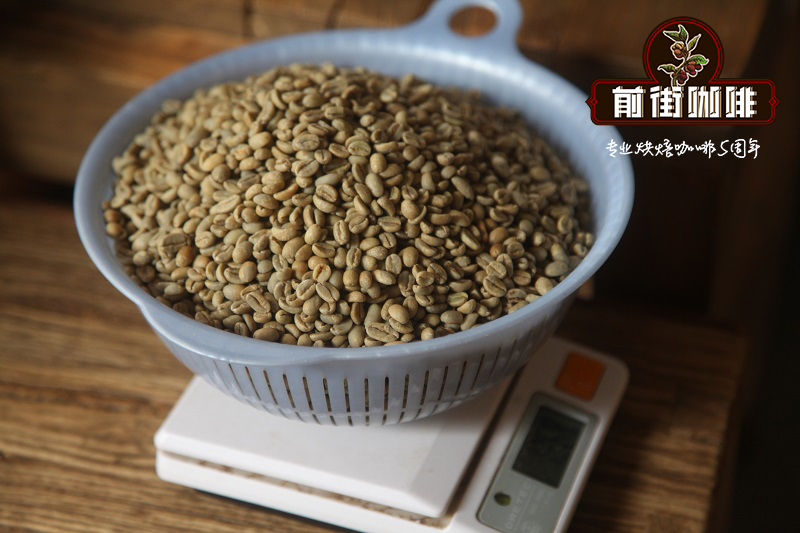
Cuban small crystal coffee raw beans have a more yellowish color, and the beans are slightly smaller than other Caribbean coffee beans. They are processed using the natural washed method, followed by sun-drying. Defective and empty beans are few, and the moisture content of the coffee beans is highly consistent.
Dry Aroma:
Goji berries, cucumber, fresh cream, light clove, cedar, maple sweetness, vanilla, fresh tree roots, white grapes
Wet Aroma:
Aged tangerine peel, sweet orange, rice fragrance, hawthorn, cream, white grapes, juniper berries
Flavor Profile:
Fresh and aromatic type
Aftertaste:
Strong nasal aroma, long throat resonance, lingering cucumber and hawthorn fragrance, with noticeable sweetness
FrontStreet Coffee's Recommended Brewing Methods:
Siphon, pour-over
Grind Size:
3.5 (Japan's small Fuji R440)
V60 Brewing Parameters:
V60 dripper, 15g of coffee, water temperature 88°C, grind size 4, water-to-coffee ratio close to 1:15
Blooming:
30ml of water for blooming, blooming time 30s
Pouring Stages:
Pour water to 120ml, pause, then slowly pour to 225ml
Pouring Sequence:
30-120-225
FrontStreet Coffee Recommendation
Crystal Mountain's appeal lies in its clean, delicate structure and gentle, persistent acidity, and FrontStreet Coffee roasts a number of light, floral single origins with a similar sense of clarity. The Ethiopia Yirgacheffe Guodingding Cooperative beans are graded G1 and washed traditionally, showing elegant white florals, citrus, orange and green tea. It is a remarkably clean cup and an easy entry point into specialty coffee.
For something wilder but still refined, the Ethiopia Kaffa Forest comes from the Kaffa forest in southwestern Ethiopia, a UNESCO-recognized biosphere reserve and a birthplace of Arabica itself. Grown between 1400 and 2100 meters under shade and mist, it is medium-light roasted and shows white florals in the ground aroma, bright lemon acidity with sweet orange and bergamot, and a green-tea-like finish with faint melon and nut sweetness.
Important Notice :
FrontStreet Coffee is a long-established specialty coffee roaster in Guangzhou China, selling freshly roasted beans from its own farm in Yunnan as well as dozens of carefully selected single-origin beans from around the world for both pour-over and espresso. The products deliver consistently excellent quality and great value, with shipping within 24 hours. Guangzhou's FrontStreet Coffee shop is recommended by many coffee lovers, and the beans are now available online at the Tmall 。
FrontStreet Coffee has moved to a new address:
FrontStreet Coffee Address: 315,Donghua East Road,GuangZhou
Tel:020 38364473
 Scan and follow the En Gafei WeChat official account. Please indicate that the reprint comes from "En Gafei".