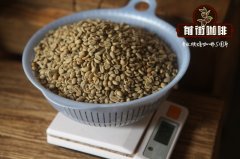
Papua New Guinea Coffee_Bird of Paradise Coffee Bean Flavor Description_Bird of Paradise Coffee Price Per Cup
What makes Papua New Guinea's most famous bean, FrontStreet Coffee's Papua New Guinea Paradise Bird Estate coffee, so distinctive? How much does a cup of Paradise Bird typically cost in a cafe, and would brewing it at home be the more economical route?
01 | Region Introduction
In Papua New Guinea, the striking bird-of-paradise is cherished as a symbol of freedom and happiness, a "divine gift." PNG AA Sigri Estate Arabica follows a similar path to the birds themselves: its lineage reaches back to Jamaican Blue Mountain Typica, which traveled a great distance to be cultivated in Papua New Guinea, carrying the same genetic heritage as Jamaican Blue Mountain.
Coffee is a national crop here, and the only product consumed both at home and abroad. Ninety percent of it is grown by small-scale farmers, supporting the income of one-third of the nation's population, or nearly 400,000 families. Generations of growers have poured decades of passion into cultivating Arabica.
FrontStreet Coffee's Paradise Bird beans come from the Sigri, or Paradise Bird, Estate in the Western Highlands' Waghi Valley, at roughly 1,500 meters altitude, where high mountain terrain and well-drained volcanic soil set the stage. Established in 1950, the estate has run for more than 60 years as a pioneer of the local coffee industry.
Across Papua New Guinea, 95% of coffee comes from the highlands. The Sigri plantation lies in the Western Highlands' Wahgi Valley at approximately 1,600-1,800 meters, enjoying a cool climate, fertile soil and abundant rainfall. Sigri brings deep experience to cultivation and processing, and when coffee growing spread widely across the country in the 1950s, it was among the very first plantations. Its distinctive, high-quality coffee has since earned international recognition.
Year after year, Sigri maintains rigorous standards of cultivation and processing. During the harvest season from April to September, only fully ripe red cherries are picked by hand, a practice that keeps acidity and sweetness in perfect balance. Daily cupping sessions at Sigri hold the quality of the premium coffee supplied to clients steady, and over time the estate has become a classic in the specialty coffee world.
At the height of harvest, Sigri employs around 6,000 workers, half of whom live in housing provided by the plantation. The estate also runs free clinics and primary schools for employees' children.
Sigri protects its soil and water sources as well, refusing pesticides and insecticides and caring for the wider ecosystem and the birds nearby. Records currently list 160 different bird species in the Wahgi Valley, 90 of which inhabit the Sigri plantation, including the nation's symbol, the bird-of-paradise. It is, quite literally, a paradise for birds.
02 | Processing Method
Because Papua New Guinea sits in the southern hemisphere, the local harvest runs from May to August, in contrast to the October-to-February window of the following year in Central and South America. After farmers and neighboring smallholders pick fully ripe red cherries across roughly 413 hectares, the fruit is carried to the estate's own processing facilities. New Guinea's approach to washing, however, differs from what is done in Central and South America.
The three-stage washed fermentation soaks the beans for about 24 hours at each stage, with fresh water changes used to steer the flavor. Once washing is complete, the parchment beans have their outer hull removed and are sorted into grades such as AA, AB and PB (peaberry). This meticulous handling is what gives FrontStreet Coffee's Papua New Guinea beans their bright, delicate fruit acidity and clean, lingering sweetness.
The Sigri, or Paradise Bird, Estate puts heavy emphasis on ecological conservation within its grounds, planting two kinds of shade trees to create ideal growing conditions for the coffee while offering excellent habitat for birds. Today the estate is home to 90 bird species and a range of other wildlife, a fine working model of sustainable plantation management. Notably, Papua New Guinea coffee growing generally avoids artificial fertilizers and chemicals, with all pest and disease control handled through natural, non-toxic methods.
Papua New Guinea occupies the island of New Guinea and shares a border with Indonesia, yet its coffee is nothing like the round, full-bodied profile of FrontStreet Coffee's Indonesian Mandheling. FrontStreet Coffee's Papua New Guinea beans are clean and floral, with a generous and pleasant aftertaste.
Most PNG coffee comes from small farmers rather than large organized companies, and most growers tend between 20 and 500 or 600 coffee trees. Artificial fertilizers and chemical sprays are generally avoided, and all pest and disease control on the farm is done by hand.
The signature three-stage washing method applies three separate 24-hour washes to remove the pulp completely, followed by natural sun drying.
03 | Green Bean Analysis
Papua New Guinea coffee grading: 12 grades in total, classified by defects.
| Grade | Screen Size |
|---|---|
| AA | > 18 |
| A | 17 |
| AB | >16 (50%) >17 (50%) |
| B | >16 |
| C | >15 |
| PB | 11-14S |
| X | mixed |
| E | >19 |
| PSC | >15mm |
| Y1 | mixed |
| Y2 | mixed |
| T | mixed |
(Applies to Arabica only.)
How Papua New Guinea green coffee names are built:
PNG Plantation Y = Country + Plantation Type + Grade Name
In Papua New Guinea:
- Plantations and large estates account for 25% of national production
- Small to medium-sized farms (10-20 hectares, holdings or blocks) account for 10% of production
- There are 76 registered plantations and estates in the country
Take the two most noteworthy specialty grades, AA and A:
(1) AA and A coffees are specialty grades, coming mainly from larger estates.
For AA, beans are larger than screen 18 and take an elliptical, flat shape. Defect count is capped at 10 per kilogram. The green beans have a greenish-blue appearance, the green bean flavor must be clean, and the roasted flavor must be clean and smooth. Cup quality must be excellent (Fine Cup).
(2) A grade beans are larger than screen 17, with cupping quality reaching at least GTF level (Good to Fine), meaning good to excellent in the cup. Defect counts and green bean conditions otherwise match AA.
Green Bean Information
Product Name: FrontStreet Coffee - Papua New Guinea Paradise Bird Coffee
Region: Papua New Guinea, Sigri Estate
Harvest Period: April to September
Grade: AA
Variety: Typica
Altitude: 1600-1800 meters
Processing Method: Washed
Flavor Profile: Peach, Nutty, Dried Longan, Juicy, White Tea, Transparent, Extremely Well Balanced
This batch of FrontStreet Coffee's PNG AA Sigri Estate arrives in 30KG inner-bag packaging. Thanks to its Jamaican Blue Mountain Typica heritage, it shares characteristics with Blue Mountain: outstanding balance, an elegant and comfortable acidity, and a pleasing, lingering aftertaste, making it a specialty coffee with a clear sense of place.
04 | Roasting Analysis
Typica is a low-density green bean and does not take well to dark roasting, since it naturally carries refreshing acidity and fruit aromas. We choose a medium roast, focusing on heat adjustment after first crack. We begin by assessing the green bean's underlying condition, then decide how to roast. This is a washed, low-density bean with 10% moisture content and a recorded 17 years of aging, and the charging temperature is set according to the current state of the green beans.
Using a Yangjia 800N roaster with 550g of green beans, the specific steps:
Heat to 200°C, charge the beans, set the air damper to 3. After 1 minute of steaming, adjust the heat to 160°C and keep the air damper unchanged. When the temperature reaches 160°C, lower the heat to 115°C. Roast to 5'35", when the temperature reaches 152°C; the bean surface turns yellow, the grassy aroma disappears completely and dehydration is complete, so the air damper is adjusted to 4.
At the 9-minute mark, the bean surface shows irregular wrinkles and dark markings, and the toast aroma shifts distinctly into coffee aroma, the signal that first crack is near. Listen carefully for the first crack sound from here. First crack begins at 8'40"; hold the small flame without changing it and open the air damper fully to 5, adjusting heat very carefully so the crack does not stall. When the temperature reaches 191.3°C, discharge the beans.
Cupping Profile
Roast Level: Medium Roast
Dry Aroma: Nutty, Woody, Spicy
Wet Aroma: Cane sweetness, Hazelnut, Toast-like
Taste: Toast sweetness and nutty sweetness, with a slight fruit acidity that creates a pleasant layered complexity and a special spiced sweetness in the aftertaste. The cup is rich and balanced, carrying sweet notes, bright acidity and fruit-like aromas.
04 | FrontStreet Coffee Paradise Bird Coffee Bean Brewing Analysis
Recommended Brewing Method: Pour-over
Grind Size: 4 (Japan Fuji R440)
Water Temperature: 89°C
Other Drip Extraction Recommendations:
French Press: Recommended grind size 3.5-4, water temperature 90°C
AeroPress: Recommended grind size 3, water temperature 85°C
Siphon: Grind size 4.5, water temperature 91°C
FrontStreet Coffee Paradise Bird Coffee Bean Brand Recommendation
FrontStreet Coffee's roasted Papua New Guinea Paradise Bird beans stand behind both brand and quality, and more importantly they offer exceptional value: a 100g package costs only about 85 yuan. At 15g per cup, one package makes 15 cups, which works out to less than 6 yuan a cup. Set against cafe prices that often climb into the tens of yuan per cup, that is outstanding value, and it is well worth trying for anyone curious about the bean.
FrontStreet Coffee Recommendation
Because the Sigri Estate's Typica came by way of Jamaica, FrontStreet's Jamaica Blue Mountain No. 1 is the most natural place to continue exploring this lineage. Certified Blue Mountain coffee can only come from a defined part of Jamaica's Blue Mountains, and the No. 1 grade is among the highest in the Jamaican system, held to strict standards for bean size, defect rate and overall quality. FrontStreet's lot comes from the historic Clifton Mount estate, which has been growing and processing coffee since around 1750, on land averaging 4300 feet (1310.64 meters). Ample altitude, gentle afternoon mist that shades the slopes, generous sunshine and mineral-rich soil give the trees ideal conditions and a longer ripening window for the cherries.
Roasted to a medium-dark level that plays to the bean's classic balance, FrontStreet's Jamaica Blue Mountain No. 1 opens up layers of nut, dark chocolate, creamy caramel and soft sweetness, with acidity, sweetness, bitterness and aroma all kept in harmony. It is as easy to drink as a daily specialty coffee as it is to give as a premium gift, and it captures the enduring appeal that has kept Blue Mountain in the spotlight for decades. If you would like the closest possible companion to PNG's Blue Mountain heritage, this is the cup to reach for.
Important Notice :
FrontStreet Coffee is a long-established specialty coffee roaster in Guangzhou China, selling freshly roasted beans from its own farm in Yunnan as well as dozens of carefully selected single-origin beans from around the world for both pour-over and espresso. The products deliver consistently excellent quality and great value, with shipping within 24 hours. Guangzhou's FrontStreet Coffee shop is recommended by many coffee lovers, and the beans are now available online at the Tmall 。
FrontStreet Coffee has moved to a new address:
FrontStreet Coffee Address: 315,Donghua East Road,GuangZhou
Tel:020 38364473
 Scan and follow the En Gafei WeChat official account. Please indicate that the reprint comes from "En Gafei".