What are the coffee regions in Cuba? What does Cuban Cristal Mountain coffee taste like? How to brew Cuban coffee
Cuba's Coffee Regions and Crystal Mountain Coffee
What are Cuba's coffee regions? What does Cuban Crystal Mountain coffee taste like? How should Cuban coffee be brewed?
Cuba, an island nation in the Caribbean with its capital in Havana, is known for white beaches and cigar tobacco, but it also produces excellent coffee. Coffee cultivation has a long history here: Jose Antonio Gelabert introduced the first coffee plantation to Cuba in 1748. In 1791, during the Haitian Revolution, French colonists fled to Cuba and brought better production methods with them. Before the Castro era, Cuba's coffee industry flourished, and coffee beans once ranked first among national exports, ahead of even the essential commodity sugar. In the mid-1950s, Cuba exported over 20,000 metric tons (22,046 short tons) of coffee beans a year, all at high prices, with most of it going to Europe, particularly the Netherlands and Germany. In the late 19th century, government policy and international political turmoil sent local coffee prices plunging, and farmers switched to other crops.
Where is Crystal Mountain?
"Crystal Mountain" is not actually a coffee region in Cuba; it is the highest grade in the Cuban Official Coffee Association's classification system. The association grades coffee beans into nine levels based on bean size and flavor, the top being Crystal Mountain, followed by Extra Turquino, Turquino, Altura, Montana, Cumbre, Serrano Superior, Serrano Corriente, and Caracolillo.
Most coffee plantations in Cuba are currently state-owned. In 1990 the government released some land for original coffee farmers to cultivate, but production still lags behind earlier years. Crystal Mountain output is extremely scarce, and coastal areas are frequently hit by hurricanes, causing supply shortages. Cuban coffee is sold mainly to Japan and France, and Japan has almost monopolized the highest quality Crystal Mountain, which makes high-quality Cuban coffee hard to obtain.
Cuba's coffee growing areas fall into three main regions, all cultivated on mountain slopes and in canyons at elevations of 1,000-2,000 meters. The eastern region, including Santiago de Cuba and Granma, accounts for 70% of national production; the central region, including Villa Clara and Sancti Spiritus, makes up 20%; and the western region of Pinar del Rio accounts for 10%. These areas give coffee an ideal growing environment, with average temperatures of 21°C in winter and 25°C in summer, moderate rainfall, evenly distributed humidity through the year, and deep, fertile soil. All the planted varieties are Arabica, primarily Typica. In 2000, UNESCO designated the Santiago and Guantanamo coffee regions as World Heritage Sites.
Cuban Crystal Mountain Coffee Profile
Cuban Crystal Mountain is a typical island bean with a clean mouthfeel and a delicate flavor. It has a subtle acidity that is never harsh, bringing out a special sweetness that is very charming.
Cuba is at once familiar and distant, familiar because Cuban baseball teams often win world championships at various levels, and distant because Cuba lies on the far side of the Earth in the scenic Caribbean Sea. Like other Cuban industries, coffee is under state production management. Cuba's best coffee region is the Central Mountain Range (Escambray), which besides coffee also yields valuable minerals such as quartz and crystal, hence the name Crystal Mountain. Cuban Crystal Mountain production is very limited and almost monopolized by Japan's Meiwa and France's Cafe Legal coffee companies. The coffee is a typical island bean with a clean, delicate mouthfeel, a subtle but persistent acidity, and a finish of sweet melon and fruit aromas.
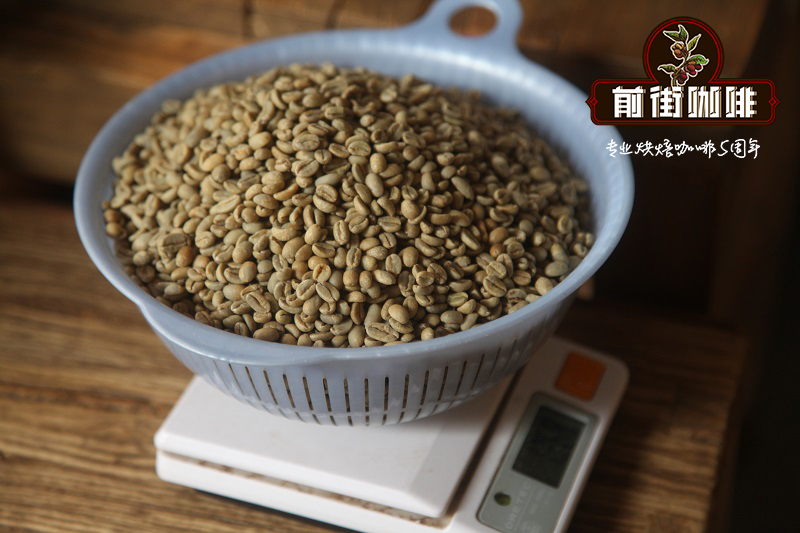
Cuban "Little Crystal" coffee beans have a more yellowish color and are slightly smaller than other Caribbean beans. They are naturally washed and then sun-dried, resulting in few defective or hollow beans and consistent moisture content.
Roasting Profiles
Light Roast - City (Aromatic)
In the cup, the grounds and hot water produce a strong honey-like sweetness. The mouthfeel is smooth with a hint of minty freshness, and the wheat aroma does not bring the uncomfortable astringent sensation some coffees have when sipped. The aftertaste leaves a refreshing feeling at the center of the tongue, like mint gum passing through. This is a good coffee with acidity that lacks sharpness.
Medium-Dark Roast
Because the moisture content is slightly lower (between Brazilian and East African beans), the beans are softer, producing a very smooth and gentle lactone flavor in darker roasts.
Dark Roast (General C)
The pure sweetness of wheat, with the sweet, fruity acidity of blueberry jam discovered in subtle notes, though it may be masked by the strong brown sugar water-like aroma. The aftertaste is a very persistent melon and fruit sweetness that spreads through the mouth.
Brewing Recommendations
Recommended Brewing Methods: Syphon, Pour-over
Grind Size: 4 (Japan's small Fuji R440)
V60 dripper, 15 g of coffee, water temperature 88-90°C, grind size 4, water-to-coffee ratio close to 1:14-15
30 ml water for bloom, bloom time 30s
Stages: pour water to 120 ml, pause, then slowly pour to 225 ml
That is: 30-120-225 g
FrontStreet Coffee Recommendation
Cuban Crystal Mountain belongs to the clean, understated island style: a delicate body, restrained acidity, and a soft sweetness of melon and fruit. FrontStreet Coffee stocks single origins in that vein. FrontStreet Panama Boquete Gesha is a washed coffee from Panama's most representative specialty region, with pure genetics, so its orange-blossom honey, fine fruit acidity, and layered sweetness stay clear and clean rather than heavy, and its high value makes it an easy way to experience Boquete through several brew methods.
For a more grounded, everyday expression of the same balance, FrontStreet Yunnan Xiaoli comes from Baoshan and is washed and medium roasted. In the cup it shows soft nut and chocolate sweetness with a light plum acidity, a gentle and even profile that made it the first Yunnan coffee many drinkers ever tried.
Island-style beans like these suit the syphon and the pour-over, the same methods the Crystal Mountain profile calls for. Keep the water at 88-90°C and a medium grind, bloom with roughly 30 ml for 30 seconds, then pour to 120 ml, pause, and finish at 225 ml for a balanced, clean extraction.
Important Notice :
FrontStreet Coffee is a long-established specialty coffee roaster in Guangzhou China, selling freshly roasted beans from its own farm in Yunnan as well as dozens of carefully selected single-origin beans from around the world for both pour-over and espresso. The products deliver consistently excellent quality and great value, with shipping within 24 hours. Guangzhou's FrontStreet Coffee shop is recommended by many coffee lovers, and the beans are now available online at the Tmall 。
FrontStreet Coffee has moved to a new address:
FrontStreet Coffee Address: 315,Donghua East Road,GuangZhou
Tel:020 38364473
 Scan and follow the En Gafei WeChat official account. Please indicate that the reprint comes from "En Gafei".