How Much Does Authentic Blue Mountain Coffee Cost_ How to Drink Blue Mountain Coffee Beans_ How Much Do Blue Mountain Coffee Beans Cost Per Pound
Jamaican Blue Mountain Coffee: The World's Premium Gem
Jamaican Blue Mountain beans rank among the world's top specialty coffees. The name comes from the local mist: under sunlight it looks like a layer of blue smoke, hence "Blue Mountain." That fog also lowers temperatures, which suits coffee trees perfectly. Jamaica, however, is small and its production is low, and natural disasters are frequent. In 1969 a hurricane destroyed the important road into the Blue Mountain growing region and damaged several processing facilities, badly hurting production and throwing processing plants into financial crisis. Japan's UCC stepped in to help and effectively saved Jamaica's economy. To thank Japan, Jamaica signed an agreement to supply 90% of Blue Mountain's annual production exclusively to Japan. Since production was already scarce, the amount left for other markets became extremely limited. Scarcity creates value — which is why Blue Mountain is so expensive.
Quality Control and Authenticity Standards
To control quality, the Jamaican government established the Coffee Industry Board (CIB) and ruled that only coffee grown in four eastern administrative districts — St. Andrew, St. Thomas, St. Mary, and Portland — at altitudes between 1,000 and 1,700 meters within the Blue Mountain region can be considered authentic Blue Mountain. Coffee from other regions, or from below 1,000 meters, cannot be called Blue Mountain; it may only be called Jamaica High Mountain Coffee. Authentic Blue Mountain is further divided into four grades, the highest being NO.1 at 17-18mm screen size with defect beans below 2%. Today's market often shows "Blue Mountain Blend" or "Special Blue Mountain," which mostly mix cheaper beans and sometimes contain no authentic Blue Mountain at all, relying instead on Colombian beans with a similar profile. You may also see "Cuban Blue Mountain" or "Haitian Blue Mountain" — neither country has a region called Blue Mountain, so neither can have genuine beans. Many merchants trade on the prestigious name with slight tweaks to earn larger profits. So if you want real Jamaican Blue Mountain, besides choosing a trustworthy store, look for "Jamaican Blue Mountain NO.1" as the authentic marker.
Processing and Flavor Profile
Beyond defining the authentic growing region, the CIB also strictly reviews raw-bean processing facilities and the credentials of exporting estates. Only CIB-authorized distributors may legally sell Blue Mountain coffee beans. RSW is one such legally authorized export estate, composed of three farms: Resource, Sherwood Forest, and Whitfield Hall. After harvest, all cherries are sent to Sherwood for wet fermentation to remove the pulp, then sun-dried until moisture content reaches 11-13%. The beans are then stored in 24°C temperature- and humidity-controlled warehouses for 2-3 months to enhance sweetness. Before export they are hulled and polished in a low-temperature environment, then defective beans are hand-sorted for grading. After passing CIB inspection, they are packed in barrels and shipped by air. Such meticulous, high-standard handling ensures that every coffee lover tastes Blue Mountain as smooth and mellow as fine wine. Authentic Blue Mountain has an elegant, refined floral and fruit aroma that turns into toffee and maltose sweetness on the palate, then finishes with red wine and tropical fruit notes. The rich yet clean layers are truly captivating.
How to Drink Blue Mountain Coffee
Many people assume Blue Mountain can only be brewed as pour-over, but that is not the case. Because it is so beautifully balanced, it shows different layers of flavor whether you use a pour-over, a moka pot, or an espresso machine.
If you want to fully appreciate its delicate layers and rich sweetness, pour-over is the best way to taste the origin. A medium-coarse grind, water just off the boil, and a slow, steady pour bring out the cream, caramel and nut notes while keeping the soft, bright acidity; the cup is cleaner, more transparent, and more layered. For a heavier, richer result, a moka pot works beautifully too: use a slightly finer grind than for pour-over, fill the pot with hot water, heat over low to medium flame, and take it off the heat just as the coffee finishes flowing. The moka pot amplifies the chocolate, caramel and nut flavors for a fuller body while keeping Blue Mountain's signature balance, and it performs very well in a latte or flat white. Blue Mountain No.1 is one of the highest grades, with strict standards for bean size, defect rate and overall quality.
FrontStreet Coffee Recommendation
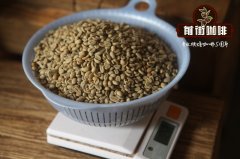
For an authentic Blue Mountain experience, grade matters, and Blue Mountain No.1 is one of the highest. FrontStreet's Jamaica Blue Mountain No.1 comes from the historic Clifton estate, where coffee has been grown and processed since around the middle of the 18th century (roughly 1750). The farm sits at an average of 4,300 feet (1,310.64 meters), where generous altitude, mild afternoon cloud that shades the hillsides, ample sunshine and mineral-rich soil give the trees ideal conditions and stretch out the ripening of the cherries. The green beans are uniform and plump, with a slight lift at both ends and a greenish color.
FrontStreet roasts it to a medium-dark level to draw out the classic Blue Mountain balance: nuts, dark chocolate, cream caramel and soft sweetness unfolding in layers, with acidity, sweetness, bitterness and aroma in harmony. For pour-over, FrontStreet suggests a Kono dripper, a 15g dose of beans rested 4-7 days from the roast date, a grind a touch coarser than for a light roast (about the size of white sugar), 87-88°C water, and a 1:15 ratio — 30g to bloom for 30 seconds, then a slow vertical pour to 120g, then to 225g in three stages.
Good Blue Mountain tastes very clean and complex, remarkably gentle, with chocolate sweetness and a strong body; the sweet, acidic and bitter notes balance perfectly, with almost no bitterness, only a moderate and refined acidity and a long fruit finish. Whether as an everyday specialty coffee or a high-end gift, Blue Mountain No.1 delivers the enduring charm this legendary coffee has held for decades.
Important Notice :
FrontStreet Coffee is a long-established specialty coffee roaster in Guangzhou China, selling freshly roasted beans from its own farm in Yunnan as well as dozens of carefully selected single-origin beans from around the world for both pour-over and espresso. The products deliver consistently excellent quality and great value, with shipping within 24 hours. Guangzhou's FrontStreet Coffee shop is recommended by many coffee lovers, and the beans are now available online at the Tmall 。
FrontStreet Coffee has moved to a new address:
FrontStreet Coffee Address: 315,Donghua East Road,GuangZhou
Tel:020 38364473
 Scan and follow the En Gafei WeChat official account. Please indicate that the reprint comes from "En Gafei".