What is the Taste and Flavor of Bolivia's Linda Washed Long Beans? How to Brew Bolivia Coffee
Professional coffee knowledge exchange. For more coffee bean information, follow FrontStreet Coffee.
What are the flavors of Bolivia's Linda washed Longberry coffee beans? How should you hand-brew Bolivian washed coffee for the best taste?
Bolivia is one of the most challenging coffee origins in the world, with transportation and climate the biggest obstacles. This year, through special estate relationships, we renewed our partnership and can wholeheartedly recommend this high-altitude organic coffee to anyone who loves mountain-grown coffee. It features rich layers of cherry fruitiness, cream, chocolate, and caramel. This year's lots were sourced directly from Bolivian exporters, who dried the coffee with exceptional care on African-style raised beds. After cupping, the flavors proved remarkably balanced with high sweetness — a cup that will fully satisfy any Bolivia enthusiast.
Specialty coffee in Bolivia grows at roughly 1,200 to 2,000 meters, with the growing areas concentrated around Caranavi, about a 3-hour drive from the capital, La Paz.
Commercial-grade coffee is produced in the Santa Cruz region below 1,000 meters. Bolivian specialty coffee is mostly grown in micro-lots on family-run farms averaging 3 to 5 hectares.
Because of the rugged terrain and difficult transportation, Bolivian coffee was nearly invisible on the international market at first. Only after the Cup of Excellence competition was held there in 2004 did the wider coffee world begin to recognize the country.
The micro-lot model also makes it hard for smallholders to sell directly to importers, which is why cooperatives and producer alliances emerged to handle exports on their behalf.
The Federation of Coffee Exporting Producers of Bolivia (FECAFEB) was established in May 1991 and currently comprises 30 cooperative organizations across Caranavi, North Yungas, South Yungas, Larecaja, and Franz Tamayo in La Paz province, representing about 8,500 coffee-growing families. Its 5-member board rotates through democratic elections every two years. The federation defends farmers' rights, advises on quality maintenance and organic cultivation, helps farmers market their coffee internationally, builds processing facilities, sets production plans, and even provides credit and financial services.
Nearly all FECAFEB coffee is grown organically, and the federation currently exports about 19,600 kilograms of green coffee annually.
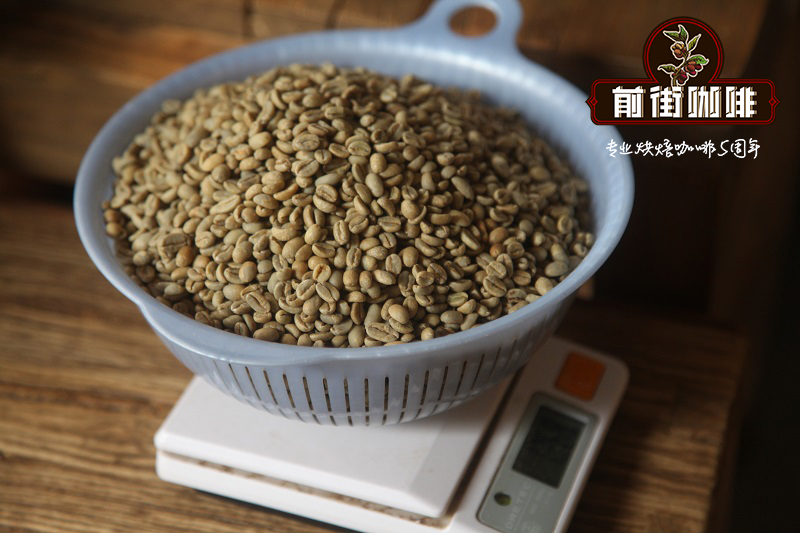
Bolivia Linda Longberry Washed
Region: Bolinda, Caranavi Province
Farm: La Linda Farm
Washing Mill: Buena Vista Mill
Mill Owner/Farm Owner: Daniella and Pedro Rodriguez
Altitude: 1,680 meters
Variety: Longberry
Processing: Washed
Harvest Time: July-September 2016
Flavor Notes: Pu-erh tea woody sweetness, corn, salty toffee, chocolate, raisins
La Linda is the flagship farm of Pedro Rodriguez's Sol de Manana program — the first demonstration farm, dedicated to trialing rare varieties. The Longberry from La Linda traces the same journey as Geisha: it originated in Ethiopia, traveled through Indonesia, reached Cameroon, and then Nicaragua in Central America before finally arriving in Bolivia. Longberry is a delicious variety that can stand shoulder to shoulder with Geisha — and like Geisha, it needs high altitude to show its best. Bolivia's landlocked highlands may be its ideal home.
The flavor range of Bolivian coffee is thrilling: high sweetness and delicious chocolate tones combine into a very special cup. To showcase what Bolivia can do, the Rodriguez family also planted two special varieties of their own — Geisha and Java.
The family owns the Buena Vista Mill, which processes cherry from farmers across Caranavi and Sud Yungas before packing for export. For thirty years they have kept buying from smallholders, but as national production kept falling, their export business faced a crisis. If even the Rodriguez family could not survive, Bolivian coffee itself risked disappearing.
To meet that challenge, the family decided five years ago to start growing their own coffee.
In 2012 the Rodriguez family began buying farmland in Caranavi Province, 150 kilometers north of La Paz — an area with particularly fertile soil and high altitude, long regarded as the heart of Bolivian specialty coffee. Their goal was to create demonstration farms that model sustainable practices, educate other farmers, and thereby increase their mill's intake. They also built a development model for growers around sustainable economics, social understanding, and environmental awareness, calling it "Sol de Manana" (Morning Sun). Within five years the family owned 12 farms, with a goal of expanding cultivation to 200 hectares.
La Linda was the first farm established under the program, in 2012, making it the program's standard-bearer. The farm covers just 10 hectares, 8 of them planted with coffee, and its first harvest came in 2015. Alongside Caturra and Typica, they planted rare varieties including San Bernardo, SL-28, and the Ethiopian-origin Longberry.
Locally the variety is called Longberry for its long, Geisha-like bean shape; its formal name is Java — another variety that can genuinely compete with Geisha in the cup.
Java's story is fascinating. Despite the name, which points straight to Indonesia, the variety actually originated in Ethiopia's original forests. It was collected by local peoples, transmitted through Yemen to Indonesia, and there named Java. Long assumed to be a Typica branch, genetic comparison later revealed it belongs to the Ethiopian Abyssinia lineage.
From Indonesia, Java spread to the nearby Timor island group and then to Cameroon in East Africa, where it was first released to farmers in 1980. Under breeding expert Benoit Bertrand, CIRAD (the Centre de Cooperation Internationale en Recherche Agronomique pour le Developpement) introduced it to Costa Rica in 1991. Panama became the first Central American country to officially recognize Java, in 2016, and Bolivia received it by way of Nicaragua.
True to its name, Longberry bears long fruit and seeds, with bronze-tinted young shoots. The plants are tall but low-yielding. With a flavor that does not yield an inch to Geisha plus stronger resistance to leaf rust and coffee berry disease, it is well suited to small farmers.
FrontStreet Coffee Recommended Brewing Methods
Siphon, Pour-over
Grind Size: 3.5-4 (Japan Mini Fuji R440)
KONO dripper, 15g coffee, water temperature 88°C, grind 4, water-to-coffee ratio close to 1:14-15
30g water for bloom, bloom time 30s
Stages: Pour to 120ml, pause, then slowly pour to 225ml
In short: 30-120-225
FrontStreet Coffee Recommendation
Washed processing is the traditional water-based way of handling coffee cherry, and it matters for this cup. The steps run from floatation and pulping through fermentation soaking to remove mucilage, washing or further soaking, drying, and hulling. Long soaking triggers chemical changes inside the bean that consume simple sugars (fructose and glucose), lowering sugar content while raising organic acids. That is why washed coffee tends to preserve the bean's own character while showing bright fruit acidity, cleanliness, and freshness.
FrontStreet Coffee's washed Yirgacheffe Guoding (Gedeo Zone) cooperative lot shows the style at its purest. Because local smallholders harvest tiny volumes, cherry goes to cooperatives for processing, and the Guoding cooperative has built a reputation for exceptionally refined, clean coffee. The washed process lets it show jasmine florals and bright citrus acidity to the fullest; after a medium-light roast it also reveals green tea and honey tones, and it suits pour-over, cold brew, and even espresso.
Another washed benchmark is FrontStreet Coffee's Kenya lot, since Kenya is famous for double fermentation washing: after pulping, the beans are soaked, washed to strip surface mucilage, soaked again, dried, and hulled. The repeated washing and soaking pushes fruit-juice character to the extreme — cherry tomato, dark plum, snow pear, black plum, and yellow sugar aromas in a sweet-and-sour, juicy cup beloved by coffee tinkerers.
And for the classic expression of washed balance, Jamaica Blue Mountain No. 1 shows why the method was born on that island at all: Jamaica's maritime climate means shorter sunshine hours, so farmers needed to remove skin, pulp, and mucilage before drying to cut spoilage risk and shorten drying time. The result is translucent, low-defect beans with rich aroma — hazelnut, cream, chocolate, and caramel notes in a perfectly balanced cup where no single element dominates or falls short.
Important Notice :
FrontStreet Coffee is a long-established specialty coffee roaster in Guangzhou China, selling freshly roasted beans from its own farm in Yunnan as well as dozens of carefully selected single-origin beans from around the world for both pour-over and espresso. The products deliver consistently excellent quality and great value, with shipping within 24 hours. Guangzhou's FrontStreet Coffee shop is recommended by many coffee lovers, and the beans are now available online at the Tmall 。
FrontStreet Coffee has moved to a new address:
FrontStreet Coffee Address: 315,Donghua East Road,GuangZhou
Tel:020 38364473
 Scan and follow the En Gafei WeChat official account. Please indicate that the reprint comes from "En Gafei".