The Pure Flavor of Blue Mountain Coffee_Why Jamaican Blue Mountain Coffee Commands a Premium Price Due to Its Exceptional Taste
The coffee in the cup tastes exceptionally clean, and it ranks among the sweetest coffees in the world. Writing in Peet's Coffee and Tea, Jim Reynolds put it this way: "The finest example of Jamaica's Blue Mountain coffee has an aromatic, smooth richness that gives me a gem-like quality feeling. It's as precious as a gemstone. It's complex yet very gentle, sweet, and has a very strong body. You must taste it to know what I'm talking about." Unique growing conditions and meticulous attention at every stage of production have made Jamaica Blue Mountain coffee famous.
Blue Mountain coffee comes from Jamaica and takes its name from the Blue Mountains that rise above the Caribbean Sea. With acidity, sweetness and bitterness in perfect balance, along with excellent flavor and aroma, it suits single-origin brewing and is at its best with a medium roast.
The Blue Mountain Range lies in eastern Jamaica. The mountains earned their name because on clear days, direct sunlight on the azure Caribbean creates a brilliant blue reflection across the peaks. The highest summit reaches 2,256 meters, making it the tallest peak in the Caribbean and a well-known tourist destination. The area sits within the coffee belt, with fertile volcanic soil, fresh unpolluted air, and a humid climate of year-round fog and rain, averaging 1,980mm of precipitation and a temperature of around 27°C. These conditions produced the world-renowned Jamaica Blue Mountain coffee, and with it the world's highest-priced coffee. The cup carries every hallmark of a fine coffee: a rich, mellow body, and such a perfect balance of sweetness, acidity and bitterness that it shows no bitterness at all, only a moderate, well-judged acidity. It is normally drunk as a single-origin, but because production is so limited and the price so high, the market generally turns to coffees with similar flavors as substitutes.
The "Secret" Behind the Pure Flavor of Jamaica Blue Mountain Coffee
True Blue Mountain coffee is grown under some of the most favorable conditions anywhere in the world. Jamaica's weather, geology and topography together provide an exceptionally ideal setting. Certified Jamaica Blue Mountain coffee can only be grown in the Blue Mountain area, northeast of Kingston in the eastern part of the island. The terrain is highly uneven, which makes harvesting extremely difficult, and picking is done almost entirely by women. The trees are mainly of the Arabica "Geisha High Bred" type. On these rugged high-altitude slopes, cultivation and harvesting are carried out with great care, and all Jamaica Blue Mountain coffee is processed, tasted and distributed by the Jamaica Coffee Industry Board.
All of the trees grow on steep mountain slopes, which makes picking a demanding job that only skilled local women workers can handle well. Judging ripeness at harvest is crucial, since underripe or overripe cherries will drag down quality. Picked beans must be hulled the same day, then fermented for 12-18 hours. After that they are washed and sorted. Drying comes next, and it must be done on concrete floors or thick blankets until the beans' moisture content falls to 12%-14%. They are then stored in special warehouses, and when needed they are taken out to be roasted and ground. Every one of these steps has to be tightly controlled, or quality suffers.
In 1950, the Jamaican government established the Jamaica Coffee Industry Board, which sets quality standards for Jamaican coffee and oversees their enforcement to protect that quality. The board issues special official seals for Jamaican raw and roasted coffee exports, and it stands among the world's highest-level national coffee institutions. Six trademarks currently signify Blue Mountain origin: M.B.C.E. (Mavis Bank Central Factory), M.H.C.C.T. (Blue Mountain Coffee Cooperative), P.X.X.S.H. (Portland Blue Mountain Coffee Cooperative), Coffee Industry Board (Wallenford), Coffee Industry Board (St. John's Peak), and J.A.S. (Jenr).
By 1969 the situation had improved, as Japanese loans were used to raise production quality and secure the market. Today the coffee enjoys a status close to fanatical devotion.
By 1981 Jamaica had opened about 1,500 hectares of land to coffee cultivation, followed by investment in another 6,000 hectares. In fact, today's Blue Mountain area is a small place with only 6,000 hectares of planting area, so not every coffee labeled "Blue Mountain" can truly come from there. A further 12,000 hectares are used to grow two other types: High Mountain Supreme Coffee and Jamaica Prime Coffee. Because of Japan's continued investment in Jamaica's coffee industry, most Blue Mountain coffee is now controlled by Japanese buyers, who also hold priority purchasing rights. In 1992, Jamaica sold 688 tons of Blue Mountain coffee to Japan, 75 tons to the United States and 59 tons to the United Kingdom. Today, 90% of Blue Mountain coffee is bought by the Japanese. With the rest of the world able to obtain only 10%, Blue Mountain coffee stays in short supply at any price.
Jamaica Blue Mountain Coffee Bean Classification
Jamaica is one of the smaller coffee producers in the world, with an annual harvest of about 40,000 bags of 60 kg each. Jamaica Blue Mountain coffee is in fact shipped in 70kg wooden barrels, the last country still using this traditional packaging, though production is measured in 60kg bags because that is the international standard for coffee measurement.
Coffee from the Jamaica Blue Mountain area falls into three grades: Blue Mountain Coffee, High Mountain Coffee (Jamaica High Mountain Supreme Coffee Beans), and Jamaica Coffee (Jamaica Prime Coffee Beans). Blue Mountain Coffee and High Mountain Coffee are each split into two grades. Ranked from highest to lowest quality: Blue Mountain No. 1, Blue Mountain No. 2, High Mountain No. 1, High Mountain No. 2, Jamaica Coffee. Generally, only coffee grown at altitudes up to 1,600 meters can be called Blue Mountain Coffee. Coffee grown between 274 and 457 meters is usually called Jamaica Prime Coffee Beans, and Blue Mountain Coffee costs several times more than High Mountain Coffee. It is spread mainly across five peaks: John Crow, St. John's Peak, Mossman's Peak, High Peak, and Blue Mountain Peak.
Identifying Authentic vs. Fake Blue Mountain Coffee
1. Appearance: Raw Blue Mountain coffee beans are blue-green in color, very uniform in appearance, medium to small in size, with slightly raised ends. After roasting, they expand significantly in volume and become very full.
2. Grinding: True Blue Mountain beans grow at high altitude, giving them a looser cellular structure. Ground by hand, they feel crisp, smooth and continuous, without any sense of resistance.
3. Aroma: The aroma is very rich and dense; so-called "blended" Blue Mountain coffee does not have it.
4. Taste: True Blue Mountain coffee tastes balanced and rich, with no single flavor dominating or missing. This is something no other bean achieves, and it is the most critical point of identification. Blue Mountain Peaberry has a subtler aroma and a relatively stronger taste.
5. Feeling: As the world's finest coffee with classic balanced characteristics, Blue Mountain inevitably brings a subconscious, hard-to-describe sense of satisfaction when tasted.
Recommended Jamaica Blue Mountain Coffee Bean Brands
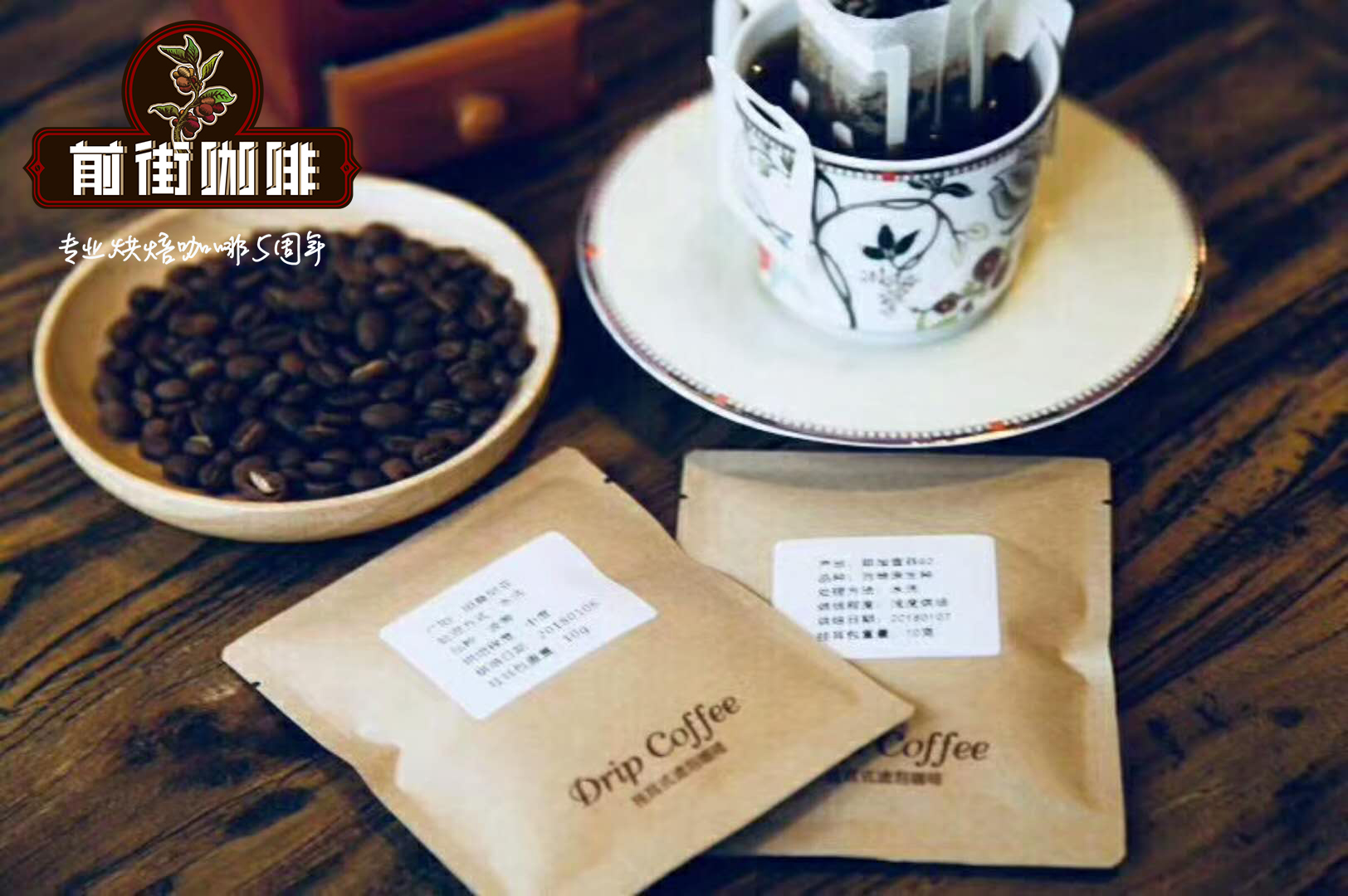
FrontStreet Coffee's roasted Jamaica Blue Mountain beans offer strong guarantees on both brand and quality. More than that, they deliver exceptional value: roughly 158 RMB for a half-pound (100g) package. At 15g per cup, one package makes 6 cups of coffee, working out to only about 25 RMB per cup, a fair price compared with cafes that often charge over 100 RMB per cup.
FrontStreet Coffee Recommendation
For anyone who wants to experience authentic Blue Mountain flavor, grade matters, and Blue Mountain No. 1 is among the highest in the Jamaican system, held to strict standards for bean size, defect rate and overall quality. FrontStreet's Jamaica Blue Mountain No. 1 is a good reference point: the beans come from the long-established Clifton Mount estate, which began growing and processing coffee around the middle of the 18th century, roughly 1750, on land averaging 4300 feet (1310.64 meters). The altitude, the mild afternoon cloud that drapes the wooded slopes, the plentiful sunshine and the mineral-rich soil all favor the trees and lengthen the ripening of the cherries. FrontStreet keeps the beans within 5 days of roasting, so they arrive still at their flavorful peak and can be brewed right away, and it roasts to a medium-dark level that foregrounds the coffee's mellow body and its classic, sweet-then-gentle character.
Because Blue Mountain is balanced enough to shine in almost any brewer, FrontStreet suggests a simple pour-over routine: a Kono dripper, 15g of coffee per serving, and letting the beans rest 4-7 days from the roast date for the best cup. Grind a little coarser than you would for a light roast, roughly the texture of granulated sugar, and use water at 87-88°C, since water that is too hot is the usual cause of a scorched, bitter cup. A 1:15 coffee-to-water ratio brings out the coffee's full flavor; the only caveat is that a tighter ratio such as 1:13 drinks richer but can muddy the finish. Pour in three stages: first 30g of water to bloom for 30s, then pour to 120g and pause, keeping the stream vertical and circling slowly with a small flow, then pour to 225g with a slightly faster stream and circle to avoid clogging the filter and over-extracting.
The result is a very clean, complex and gentle cup with chocolate sweetness and a strong body, rich and fragrant, where the sweet, acidic and bitter notes come together perfectly. There is no real bitterness, only a moderate, well-judged acidity, and a long-lasting fruit note on the finish.
Important Notice :
FrontStreet Coffee is a long-established specialty coffee roaster in Guangzhou China, selling freshly roasted beans from its own farm in Yunnan as well as dozens of carefully selected single-origin beans from around the world for both pour-over and espresso. The products deliver consistently excellent quality and great value, with shipping within 24 hours. Guangzhou's FrontStreet Coffee shop is recommended by many coffee lovers, and the beans are now available online at the Tmall 。
FrontStreet Coffee has moved to a new address:
FrontStreet Coffee Address: 315,Donghua East Road,GuangZhou
Tel:020 38364473
 Scan and follow the En Gafei WeChat official account. Please indicate that the reprint comes from "En Gafei".