The Difference Between Jamaica Blue Mountain and Blue Mountain Flavored Coffee | How Much Does a Cup of Jamaica Blue Mountain Coffee Cost
When the subject of coffee comes up, many friends say immediately, "Give me a cup of Blue Mountain." Jamaican Blue Mountain coffee has a towering reputation, tiny production, and a long history. Even people who have never touched specialty coffee have heard of it. On the market you constantly see "Blue Mountain Coffee," "Blue Mountain Flavor Coffee," and "Blue Mountain Blend," which can be dazzling. Not every coffee with "Blue Mountain" on the label is the real thing. Be careless and you may end up drinking a counterfeit. So how do we tell which Blue Mountain coffees are genuine? First, let's understand what Blue Mountain coffee actually is.
History of Jamaican Blue Mountain Coffee Beans
The history of Jamaican coffee goes back to the 18th century. In 1717, King Louis XV of France ordered coffee to be planted in Jamaica. In the mid-1720s, Jamaican Governor Sir Nicholas Lawes imported Arabica seeds from Martinique and began promoting cultivation in the St. Andrew area. Coffee trees were introduced to Jamaica and planted in the Blue Mountain range, which was later divided into high-altitude Jamaican Blue Mountain Coffee, High Mountain Coffee, and Jamaican Coffee. Different grades determine different prices.
Planting Altitude
The Blue Mountain range lies in the eastern part of Jamaica. On a clear day the sun shines directly on the azure Caribbean Sea and the peaks reflect the brilliant blue of the water, which is how the range got its name. The highest peak reaches 2,256 meters, making it the tallest in the Caribbean and a famous tourist destination. The area sits within the coffee belt, with fertile volcanic soil, fresh unpolluted air, a humid climate, and year-round fog and rain (average precipitation is 1,980 mm, with temperatures around 27°C). These conditions created the world-renowned Jamaican Blue Mountain Coffee — and the world's highest-priced coffee.
Genuine Blue Mountain is among the coffees with the most superior growing conditions anywhere. Jamaica's weather, geology, and terrain combine to provide an ideal natural environment. Certified Jamaican Blue Mountain Coffee can only be grown in the Blue Mountain area north of Kingston in the eastern part of the island. The ridge that runs across Jamaica extends to the eastern end of the island, with the Blue Mountain range rising above 2,100 meters. The cool, foggy weather and frequent rainfall keep this fertile land well watered. Here, people use mixed cropping, planting coffee trees alongside banana and avocado trees on terraced fields.
Moreover, the mountains are very uneven, which makes harvesting extremely difficult (the pickers are almost entirely women). The coffee trees grow on rugged slopes, and picking is hard work that only skilled local women can handle. Selecting appropriately ripe cherries during harvest is critical; underripe or overripe beans will damage quality.
Washed Processing: Blue Mountain Uses Washed Only
Washed processing and fermentation are used to remove the fruit pulp and mucilage. Farms using the washed method must build washing tanks and have access to a continuous supply of fresh water. During processing, the pulp is removed first, then the beans ferment for 12-18 hours. After fermentation, the beans are placed in the tank and moved back and forth, using friction between the beans and the power of flowing water to wash them until they are smooth and clean. After washing, the beans are still enclosed in parchment with a moisture content of 50%, and must be sun-dried down to 12-14%. Otherwise they continue to ferment and turn moldy and spoiled. The beans are then sorted and stored in special warehouses. All of these steps must be strictly controlled, or quality suffers.
Three Major Growing Regions of Blue Mountain Coffee
The Blue Mountain area is small, with only 6,000 hectares of planting. It is impossible for every coffee labeled "Blue Mountain" to come from there. Another 12,000 hectares are used to grow two other coffees (not Blue Mountain Coffee): High Mountain Supreme Coffee and Jamaican Coffee.
Today's St. Andrew growing region remains one of the three major Blue Mountain coffee regions. The other two are the Portland region and the St. Thomas region. Some smaller estates also grow Blue Mountain Coffee, among them Wallenford Estate, Silver Hill Estate, and J. Martinez's Atlanta Estate. Even the largest estate owners in the region would be considered small-scale by international standards. Many are smallholders whose families have worked the land for two centuries.
Symbols that can identify the origin of Blue Mountain Coffee include six marks: M.B.C.E (Mavis Bank Central Factory), M.H.C.C.T. (Blue Mountain Coffee Cooperative), P.X.X.S.H. (Portland Blue Mountain Coffee Cooperative), Coffee Industry Board (Wallenford), Coffee Industry Board (St. John's Peak), and J.A.S (Jamaica Agricultural Society). Some estate-level coffees are also marked on wooden barrels.
Varieties
Typica has bronze-colored young leaves and oval or slender-pointed beans. The tree is tall, with branches inclined at angles of 50-70 degrees. Its flavor is elegant, but the plant is weak with poor disease resistance, and each tree yields very little fruit.
Typica trees have a characteristic feature: reddish-brown leaf tips, which is why they are called red-topped coffee. The opposite leaves are long ovals with smooth surfaces, and the long terminal branches carry few side branches. White flowers bloom at the base where the leaf stems meet the branches. Ripe coffee cherries look like cherries and are bright red.
Why Did Japan Once Have Priority Purchasing Rights?
In 1950, the Jamaican government established the Jamaican Coffee Industry Board, which sets quality standards for Jamaican coffee and oversees their enforcement. The Board grants special official seals to exported raw and roasted Jamaican coffee. Because Japanese loans were used to improve production quality, the market was guaranteed.
By 1981, Jamaica had developed about 1,500 hectares for coffee cultivation, followed by investment in another 6,000 hectares. In fact, today's Blue Mountain area is small, with only 6,000 hectares of planting, so it is impossible for every coffee labeled "Blue Mountain" to come from there. Another 12,000 hectares are used for two other coffees: High Mountain Supreme Coffee and Jamaican Coffee.
According to 2013 export statistics from the Jamaican Coffee Board, of the limited Blue Mountain quota, 85% goes to Japan, 5% to the United States, 5% to Europe, and 5% to other countries. Yet in the global consumption distribution of genuine Jamaican Blue Mountain, International Coffee Association statistics put China at 15% of consumption. This is because some Japanese, Australian, and European shares are exported to Taiwan through directly operated branch companies.
Jamaica is the only country in the world with a government coffee management agency — the Jamaican Coffee Industry Board (CIB), under the Jamaican Ministry of Agriculture and Fisheries. The CIB handles planting technical guidance, processing training, fair trade, quality supervision, and other matters related to the quality and brand of Jamaican Blue Mountain. Its board members are all estate owners with a certain scale of planting in Jamaica (due to industrial shifts, newly certified Jamaican Blue Mountain estates now require more than 50 hectares). The CIB stipulates that only Blue Mountain Coffee beans produced above 2,200 feet in the Jamaican Blue Mountains may be called Jamaican Blue Mountain. Grades are divided by bean size into NO.1, NO.2, NO.3, and hand-selected PB (Peaberry). The basic standards for NO.1 raw beans include beans larger than 17 mesh, a defect rate below 3%, and moisture content around 13%. To this day, Blue Mountain raw beans use washed processing only, with no sun-drying or other methods.
Another company worth noting is Coffee Trades, with the estate name CLYDESDALE. Its coffee factory sits in the backyard of the CIB office building, and the estate lies on the Blue Mountain side at about 1,200 meters. The other two most famous Blue Mountain companies in Jamaica are Wallenford and Mavis Bank, both originally state-owned enterprises. Wallenford's production exceeds 60% of all Jamaican Blue Mountain output, and Mavis Bank's exceeds 20%. Mavis Bank is also one of the few Jamaican Blue Mountain enterprises with three grades: Jamaican Blue Mountain, Jamaican High Mountain, and Jamaican Select Coffee.
Classification and Grading of Blue Mountain
The history of Jamaican coffee goes back to the 18th century, when the British introduced coffee trees to Jamaica and planted them in the Blue Mountain range. This was later divided into high-altitude Jamaican Blue Mountain Coffee, Jamaican High Mountain Coffee, and Jamaican Coffee, with different grades determining different prices.
(1) Jamaican Blue Mountain Coffee
Both Blue Mountain Coffee and High Mountain Coffee are each divided into four grades. In quality terms, from top to bottom, they are NO.1, NO.2, NO.3, and PB, where PB is peaberry. According to CIB standards, only coffee grown above 666 meters altitude may be called Jamaican Blue Mountain Coffee. The best of the best — coffee produced in the Blue Mountain area at roughly 2,000-2,256 meters — is grown on dangerous mountainsides and therefore low in production, with large beans, excellent quality, and harmonious flavor. It possesses appropriate acidity, bitterness, aroma, body, and sweetness all at once, and is recognized worldwide as a top-grade coffee, which is why national treasure Blue Mountain No.1 commands the highest price of all Blue Mountain coffees.
(2) Jamaican High Mountain Coffee
Coffee produced below 666 meters in the Jamaican Blue Mountain area is called High Mountain Coffee. It is second only to Blue Mountain Coffee in quality and is called the brother variety by industry insiders. Because Jamaican Blue Mountain Coffee is so scarce, if you want to taste Jamaican-style coffee, Jamaican High Mountain Coffee is your best choice.
(3) Jamaican Coffee
Coffee grown outside the Blue Mountain range is called Jamaican Coffee. Originally, Chinese coffee practitioners widely held the misconception that only coffee grown above 1,800 meters in the Blue Mountain area could be called Blue Mountain Coffee. In fact, above 1,800 meters in the Blue Mountain range there is only one estate, Amber. Its owner is of Chinese descent with the surname Lyn (Lin), whose ancestral home is Guangdong, China. That estate has only 30 hectares and very low production. Blue Mountain Coffee is mainly distributed across five mountain areas of the range: John Crow, St. John's Peak, Mossman's Peak, High Peak, and Blue Mountain Peak.
Authentic Jamaican Blue Mountain Coffee Has Certificate Authentication
The Jamaican government used to insist that all Blue Mountain Coffee be roasted in Jamaica to ensure consistent quality. In reality, roasting is a delicate art requiring experience, training, and expensive equipment. From a consumer's perspective, beans should be obtained and consumed immediately after roasting, which coffee roasted in Jamaica cannot satisfy. Now, Jamaican raw beans can be exported.
Currently, the Jamaican Coffee Board can issue certificates for all exported Blue Mountain Coffee on the market.
Certificates come in three types:
(1) Quality certification issued by the Jamaican Coffee Board.
(2) Authorized sales certificate issued by Blue Mountain Coffee manufacturers.
(Blue Mountain Coffee is distributed by 4 Jamaican government-licensed processing producers and exported by 16 licensed exporters.)
(3) Certificate of origin for Jamaican Blue Mountain Coffee.
Quality certification certificates indicate time and quantity. The Jamaican Coffee Board randomly selects a package from the submitted Blue Mountain Coffee for inspection; if it meets the conditions for Blue Mountain Coffee, a certificate is issued.
Blue Mountain Coffee Flavor
The taste is very clean, and it is one of the sweetest coffees in the world. Jim Reynolds described this flavor in Peet's Coffee and Tea: "The best example of Jamaica's Blue Mountain Coffee is that it has aroma, smoothness, and richness. It gives me the feeling of gem-like quality. It's as precious as a gem. It's complex but very mild. It's sweet, and it has very strong body. You have to taste it to know what I'm talking about." Unique growing conditions and great care throughout production make Jamaican Blue Mountain Coffee very famous. The flavor is rich and mellow, with a perfect balance of sweetness, acidity, and bitterness. It has no bitterness at all — only moderate, perfect acidity with a persistent fruity taste.
How to Tell Real Jamaican Blue Mountain Coffee from Fake
1. Appearance: Raw Blue Mountain beans are greenish-blue and very uniform, medium to small in size, with slightly raised ends. They expand significantly after roasting and become very full.
2. Grinding: Authentic Blue Mountain beans grow at high altitude, and their cellular structure is relatively loose. Ground by hand, they feel very crisp, smooth, and continuous, without resistance.
3. Aroma: The aroma is very rich and dense; so-called blended Blue Mountain coffee does not have this aroma.
4. Taste: Authentic Blue Mountain Coffee has a balanced, rich taste with no flavor too prominent or lacking. This is something no other coffee bean achieves, and it is the most critical point of identification. Blue Mountain Peaberry's aroma is more subtle, while the taste is relatively stronger.
Daily Brewing: Filter Cup Selection
V60, Kalita Wave, and KONO are all suitable.
Parameters: 15g powder, water temperature 90°C, grind size 3.5, water-to-powder ratio close to 1:15, total time around 2:00.
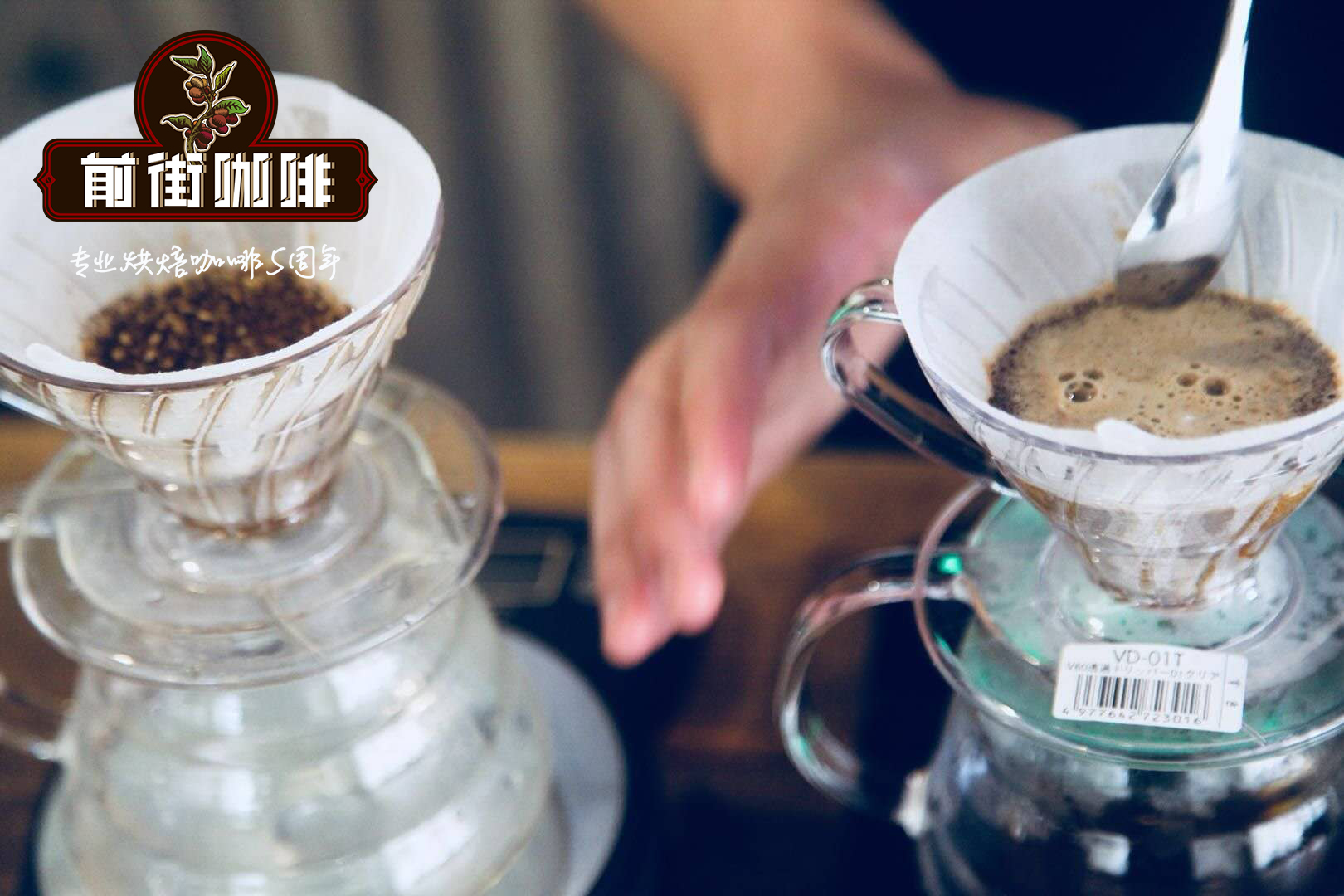
Technique: 25-30g of water for blooming, blooming time 30s; first pour to 120g then stop; vertical water flow, small flow with slow circular motion; second pour to 225g, with the flow and circular motion slightly faster to reduce fine particles clogging the filter and causing over-extraction.
Other Extraction Recommendations
French Press: Grind size 3.5-4, water temperature 90°C
Siphon: Grind size 4, water temperature 89°C
AeroPress: Grind size 2.5, water temperature 88°C
So What Is Blue Mountain Flavor Coffee?
The so-called "Blue Mountain Blend" actually has nothing to do with Blue Mountain. The situation exists because early Blue Mountain Coffee was rare and expensive. Operators used mixed beans with dark roasting to create a coffee with a taste close to Blue Mountain. Conscientious merchants in domestic and international markets will therefore tell customers plainly that this is blended Blue Mountain, Blue Mountain blend, Blue Mountain flavor, or Blue Mountain-style coffee beans — not real Blue Mountain Coffee.
True Blue Mountain and Blue Mountain flavor are two different concepts. Generally, other bean varieties are roasted to imitate the taste of Blue Mountain Coffee. "Blue Mountain Blend" beans are mixed, with relatively large differences in shape, making them easier to identify. And don't believe in "premium Blue Mountain" that costs tens of dollars per pound, or "Blue Mountain Coffee" that costs only a dozen or so yuan per cup.
Not all coffees labeled "Blue Mountain" are real Blue Mountain. Hopefully this helps you tell them apart.
Recommended Brands of Jamaican Blue Mountain Coffee Beans
FrontStreet Coffee's roasted Jamaican Blue Mountain Coffee beans offer full assurance on both brand and quality. More importantly, the cost-performance ratio is extremely high: a 100g package costs only about 158 yuan. At 15g of powder per cup, one package makes 6 cups, putting each cup at only about 25 yuan. Compared with cafe prices that often exceed 100 yuan per cup, this is a conscientious recommendation.
FrontStreet Coffee Recommendation
For anyone who wants the real thing, FrontStreet Jamaica Blue Mountain No. 1 is the highest grade, sourced from the historic Clifton Estate. The estate's growing and processing area sits at an average of 4,300 feet (1,310.64 meters), where sufficient altitude, mild afternoon cloud cover, ample sunlight, and mineral-rich soil give the trees excellent growing conditions and lengthen cherry maturation. FrontStreet roasts it medium-dark to bring out the full body and the classic bittersweet depth, and ships within 5 days of roasting.
FrontStreet suggests brewing it with a Kono dripper to enhance the full body. Use 15g for one serving and let the beans rest 4-7 days from the roast date before brewing. Grind a little coarser than you would for a light roast — roughly white-sugar consistency — and use water at 87-88°C, since water that is too hot is a common cause of scorched, bitter cups, while water that is too cool leaves coffee flat and lifeless. A 1:15 ratio showcases the coffee's overall balance best.
For the pour, use a three-stage method: bloom with 30g of water for 30 seconds, pour to 120g and stop with a vertical stream and a slow small circle, then pour to 225g with a slightly faster flow and circle to keep fine particles from clogging the dripper and over-extracting. The result is a very clean, complex, and gentle cup: chocolate sweetness, strong body, and a perfect balance of sweet, sour, and bitter, with a lingering fruity finish.
Important Notice :
FrontStreet Coffee is a long-established specialty coffee roaster in Guangzhou China, selling freshly roasted beans from its own farm in Yunnan as well as dozens of carefully selected single-origin beans from around the world for both pour-over and espresso. The products deliver consistently excellent quality and great value, with shipping within 24 hours. Guangzhou's FrontStreet Coffee shop is recommended by many coffee lovers, and the beans are now available online at the Tmall 。
FrontStreet Coffee has moved to a new address:
FrontStreet Coffee Address: 315,Donghua East Road,GuangZhou
Tel:020 38364473
 Scan and follow the En Gafei WeChat official account. Please indicate that the reprint comes from "En Gafei".