How to Brew Pure Latin American Coffee - Latin American Coffee Bean Brand Recommendations
Characteristics of Latin American Coffee Beans: Balanced, Moderately Acidic and Mellow
Central and South America form the world's largest coffee-producing region, home to countless specialty coffees. Consider Colombia, Guatemala, or Brazil alone, the excellent coffees are dazzling. What resource advantages make Central and South America so exceptional?
In 1721, the French naval officer Gabriel Mathieu de Clieu overcame countless hardships to bring the first coffee seedling from Africa to Martinique in Latin America, the origin of coffee cultivation in the region. Because France was then ruled by the Bourbon dynasty, the Arabica coffee cultivated in Latin America acquired another name that remains famous in the coffee industry today: "Bourbon." Bourbon has since become an important branch of Arabica.
The overall flavor of Latin American coffee is defined by balance, virtually every coffee flavor can be found somewhere in the region. The widespread use of wet processing for green beans is another regional hallmark, and the careful processing produces beans that are larger and more uniform than African coffee, with lower defect rates.
Understanding Coffee Bean Flavors Before You Buy
Coffee beans carry distinct regional character, and before purchasing you can usually tell a lot from the information on the label.
Coffee labels work much like wine labels. Common items include:
(1) Coffee variety;
(2) Coffee name;
(3) Grade;
(4) Growing region;
(5) Estate or processing mill name;
(6) Country name;
(7) Roasting date;
(8) Flavor descriptions, and so on.
The Most Popular Latin American Coffee Bean Flavors
Panama
A key reason for Panama coffee's unique quality is its microclimate. Panama borders Costa Rica and Colombia, and the east-to-west terrain channels cold air currents through the central mountain range, converging above 6500 feet to create a very unusual microclimate in the Boquete and Volcán regions, Panama's main producing area. The surrounding land is rich in nutrients, and these fertile soils provide perfect growing conditions, shaping numerous unique, high-quality coffees.
Panama is world-renowned for Geisha, inseparable from the country's exceptional natural conditions: moderate body, smooth texture, delicate aroma, balanced flavor, plus hints of caramel, chocolate, citrus, and jasmine.
[Panama]: Panama is a country in Central America
[Boquete]: Boquete is a famous coffee-producing region, a town in Chiriqui province
[Washed]: Wet processing, removing the skin, pulp, and mucilage, then drying; the beans are guided into clean water tanks and soaked for fermentation. Characteristics: noticeable acidity, good cleanliness, medium body, high stability.
[Variety]: Because of the estate's history, in pursuit of yield, early Geisha lots were mixed-planted with Caturra and Catuai. To simplify harvesting, farmers did not separate the varieties but processed all three together. Geisha, Caturra, and Catuai are all coffee varieties.
[SHB]: Strictly Hard Bean (SHB), grown at 1600-1700 meters. At high altitude, bean hardness is higher: coffee beans carry more nutrients, the fruit growth cycle is longer, density is greater, and the beans can withstand high-temperature roasting.
Guatemala
Guatemala's central region produces world-renowned, exceptionally flavorful coffee. Beans from this area often carry smoky notes and cocoa aroma, with slightly stronger acidity.
This is the coffee most familiar to the Japanese. The first producing area is San Marcos, in the mountains adjacent to Mexico; the second is Caféal in Quezaltenango; other famous areas include Cobán and Antigua. Slightly acidic, mellow, and smooth, it is superb blending material. Grades are divided into seven classes by altitude, high-altitude origins are more mellow, while low-altitude beans are of lower quality.
- Flavor characteristics: Bitter and aromatic, excellent texture.
[Guatemala]: Guatemala is a country in Latin America
[El Injerto]: Injerto Estate, one of the world's top coffee estates, located in Guatemala's Huehuetenango plateau region and cultivating coffee since 1900 under the Aguirre family. The name "Injerto" comes from a local fruit (the estate is also translated as "Graft Estate").
[Pandora Fatima]: In the auction for Injerto Estate, the estate specially launched the "BEST Injerto" series; this Pandora lot won the COE championship.
[Pacamara]: A coffee variety discovered in El Salvador in the 1950s, a hybrid of Pacas (a natural Bourbon mutation) and Maragogype (Elephant Bean).
[Washed]: Wet processing, removing the skin, pulp, and mucilage, then drying; guided into clean water tanks and soaked for fermentation. Characteristics: noticeable acidity, good cleanliness, medium body, high stability.
Brazil (South America)
The largest coffee-producing region supplies grades and types of coffee that account for one-third of global consumption and holds a significant position in the world coffee trading market. Although Brazil suffers natural disasters several times more often than other regions, its plantable area more than compensates.
The varieties here are numerous, but the industry's focus on quantity and low cost means extremely premium coffees are not abundant, though Brazil remains an excellent choice for blending with other origins.
Most famous of all is Santos coffee, with its mellow, neutral flavor: it can be brewed directly, or mixed with other beans to create blends, also an excellent choice.
Other Brazilian types such as Rio and Paraná can be produced in large quantities without excessive care; the flavor is somewhat rough, but they remain cost-effective coffees. Because distribution spans the whole country, quality varies, and Brazil maintains its own standards (classified by impurity content NO.2-NO.8, by bean size NO.13-NO.19, and by flavor into six grades). Almost all Arabica varieties here show good quality and stable prices. The most famous, "Brazil Santos," has been an essential blending ingredient since early on and is familiar to the public; recently, "Tolmancup" has also earned high ratings.
- Flavor characteristics: Mild, moderate acidity and bitterness, gentle aroma.
[Brazil]: Brazil's coffee production ranks first in the world. Brazil has 21 states, of which 17 produce coffee.
[Mogiana]: Mogiana sits very close to southern Minas. Coffee is cultivated among shrubs, grasslands, and other vegetation; many farming families work this area, some operating traditional large farms.
[Fazenda Rainha]: Rainha Estate won the championship at Brazil's COE competition in 2011. Owned by the Carvalho Dias coffee family, whose four major estates have won awards every year since the first Brazil COE in 1999, more than 12 awards in 7 years, including sweeping first, ninth, and eleventh places in 2004.
[COE]: Cup of Excellence.
[Natural]: The oldest, most original processing method. Harvested cherries are laid on patios, some even sun-dried directly at roadsides, receiving direct sun exposure for approximately 27-30 days, reducing moisture from 60% to about 12%. Natural-process characteristics: lowest acidity, noticeable sweetness, high body, slightly lower cleanliness.
[Yellow Bourbon]: A hybrid mutation between red-fruited Bourbon and a yellow-fruited Typica variant called "Amerelo de Botocatu." Sweet, smooth fruit sweetness, noticeable nuttiness, balanced gentle acidity, and cleanliness.
Costa Rica
Coffee from Costa Rica's high-altitude regions is world-renowned, rich and mild in flavor yet vividly acidic. Beans here are processed with great care, which is why the quality runs so high.
Famous coffee comes from the Central Plateau, where the soil consists of several thick layers of volcanic ash and volcanic dust.
Superior aroma with acidity earns high praise. Production areas fall roughly into three regions, Pacific coast, Atlantic coast, and intermediate zones, each graded by altitude. The beans are all quite large; those from the Pacific coastal highlands, acidic and aromatic, are premium beans. A new brand, "Cerro Claro," has also emerged. Atlantic coastal lowland beans are acidic but not mellow, with nothing special about them.
- Flavor characteristics: Chocolate aroma and nutty flavors, moderately acidic and mellow.
[Costa Rica]: Costa Rica
[Tarrazú]: Located on the low-latitude volcanic belt of Central America at the region's highest average elevation, with excellent climate and soil. The Central Plateau and mountain areas sit at roughly 800-2000 meters, ideal for coffee, making Tarrazú the most famous and generally recognized best coffee-producing region in Costa Rica.
[Canet]: Canet Estate, in the highest coffee-producing area of Costa Rica's Tarrazú region, also the country's most densely concentrated fruit-growing area. The estate owner primarily grows passion fruit; coffee quantities are small, cultivated only in a special area.
[Raisin Honey Process]: First the cherries are dried to a raisin-like state, then depulped for honey-process fermentation. Fermentation aromas are richer and mucilage preservation higher than in other honey processes, billed as 100% mucilage honey processing with genuine raisin flavor. It is a very sweet processing method, with white-wine texture and balanced acidity, somewhat like a "noble rot" sweet wine, showing honey, dried apricot, raisin, and peach flavors.
[Yellow Catuai]: From a cross between Mundo Novo and Caturra, first cultivated at Brazil's Campinas Agronomic Institute in 1949. Yellow Catuai, like Red Catuai, has high disease resistance and suits high-altitude cultivation. Both Catuai varieties show delicate, clean acidity.
Honduras (Central America)
Washed beans from the mountainous regions earn higher praise; lowland production is slightly inferior. Famous producing areas include Santa Bárbara, Gracias, Comayagua in the east, and Choluteca near Nicaragua. Beans range from medium to large, with a mild flavor; premium products are divided into three grades by altitude.
- Flavor characteristics: Acidic with slight sweetness.
[Honduras]: Honduras, one of the important coffee-producing countries of Central America.
[San Juancito]: A small village in central Honduras, 40 kilometers northeast of the capital Tegucigalpa. Coffee grows on mountains at 1450-1550 meters, shaded by banana, avocado, and papaya trees. Farmers hand-pick ripe fruit in harvest season, process it washed, and dry it in the sun; the fermentation water containing skins and pulp is collected and used as fertilizer for the coffee trees.
[Lot]: Batch
[Washed]: The washed method. Beans are first soaked, during which defective fruits float and are drained off. Good fruits then go to a depulper, which removes the skin by machine rotation, and are machine-screened to select quality fruit, usually the larger the fruit, the better the maturity. Honduras coffee is sun-dried, so its flavor always carries a faint fruity aroma.
[Bourbon]: Bourbon coffee (French: Café Bourbon) comes from Arabica trees of the Bourbon cultivar. Bourbon was originally cultivated on Réunion, called Bourbon Island (Île Bourbon) before 1789, and carries rich chocolate and nutty flavors.
Colombia (South America)
The world's second-largest coffee producer, behind only Brazil, and a leader of the Colombian Mild group (Colombia, Tanzania, Kenya). (Note: Colombian Mild is one of the New York Exchange's classifications by origin, alongside Other Milds, Unwashed Arabica, and Robusta.) More famous producing areas include "Medellín," "Manizales," "Bogotá," and "Armenia." The beans cultivated here are all Arabica, with quite intense flavor and stable quality and price; roasted beans appear larger and more beautiful.
Colombia can produce everything from low-grade to high-grade products, including some rare excellences with irresistible mellow flavors.
- Flavor characteristics: Heavy, intense acidity, bitterness, and sweetness, with a color like fine wine.
[Colombia]: Colombia, an important producer of commercial Arabica coffee
[Cauca]: Cauca Department, harvest season from March to June. Named after the Cauca River. Located in southwestern Colombia, it forms, together with Nariño and Huila departments, one of Colombia's key specialty coffee regions.
[Micro lot]: Micro batch
[FNC]: The Colombian Coffee Growers Federation, established in 1927, comprehensively handles all coffee-related matters, including cultivation research, sales, marketing, quality standards, and farmer education and training.
[Caturra]: Caturra, a natural variety of Arabica Bourbon.
Latin American Coffee Bean Brand Recommendations
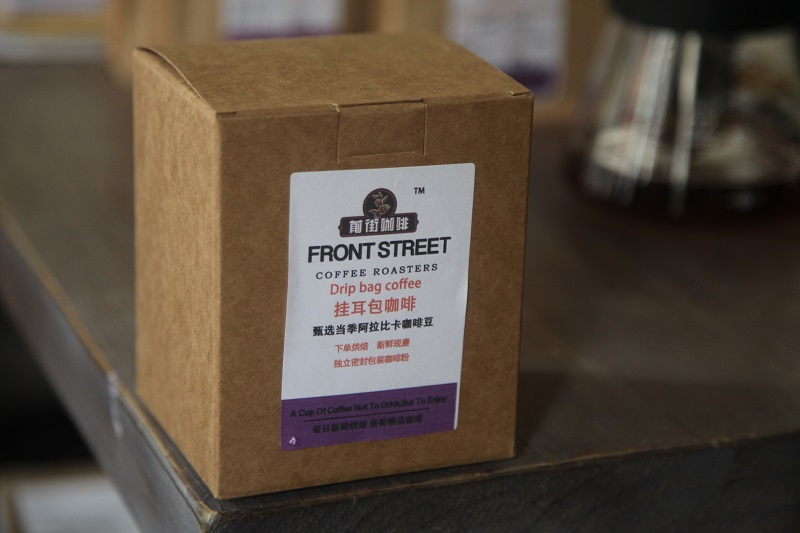
FrontStreet Coffee roasts a range of Latin American coffee beans, dependable in both brand and quality, and outstanding value: a half-pound (227g) package costs only about 80-100 yuan. At 15g of grounds per cup, one package brews 15 cups, so each cup costs only 5-6 yuan. Compared with cafes selling cups for over 100 yuan, that is a genuinely conscientious recommendation.
FrontStreet Coffee Recommendation
If you want a first taste of Latin America's balanced style, start with Brazil, FrontStreet Coffee's Cerrado Red Bourbon is a classic pulped-natural single origin from Brazil's most respected quality region: at a medium roast it shows cream peanut, toast, caramel, and hazelnut, round and nearly acid-free, and suits pour-over, moka pot, siphon, French press, and espresso alike. For something rarer, the Queen Estate (Fazenda Rainha) Yellow Bourbon from Mogiana, the very estate that took the 2011 Brazil COE championship, offers a natural Yellow Bourbon mutation's clean fruit character with sugarcane sweetness, fruit, and chocolate, brewed by pour-over, moka pot, or home espresso machine. And if the honey-process side of the region intrigues you, look for a Costa Rican lot: honey process leaves the mucilage on through drying, concentrating sweetness, the raisin honey process described above, with its white-wine texture and honey, dried apricot, raisin, and peach flavors, is the style at its most luscious.
Important Notice :
FrontStreet Coffee is a long-established specialty coffee roaster in Guangzhou China, selling freshly roasted beans from its own farm in Yunnan as well as dozens of carefully selected single-origin beans from around the world for both pour-over and espresso. The products deliver consistently excellent quality and great value, with shipping within 24 hours. Guangzhou's FrontStreet Coffee shop is recommended by many coffee lovers, and the beans are now available online at the Tmall 。
FrontStreet Coffee has moved to a new address:
FrontStreet Coffee Address: 315,Donghua East Road,GuangZhou
Tel:020 38364473
 Scan and follow the En Gafei WeChat official account. Please indicate that the reprint comes from "En Gafei".