How to Taste a Latin American Black Coffee? How Much Does a Cup of Latin American Coffee Cost
A Practical Guide to Coffee Tasting
The notes below are drawn from years of teaching and cupping, and they are meant to be used at the table rather than read once and forgotten.
Why Begin with Black Coffee?
Students who learn from me always ask the same thing: why should beginners start with black coffee, and why make single-origin cupping the foundation? Some assume that learning black coffee is unimportant. Here is the reasoning. Coffee learning ultimately comes down to flavor, and single-origin coffee expresses the character of its origin - each origin has its own aroma and flavor. That is also the basis for learning espresso, since espresso beans are a blend of two or more single origins. To build a house blend, the shop owner needs a firm grasp of how each bean behaves at a given roast level, and then of how the blend tastes at a particular ratio. So if you want to sharpen your coffee skills, the place to start is simple: taste, taste, and taste again.
The Perfect Cup: Tasting Coffee
Like wine, coffee comes in many types. Tasting every one of them is a seductive prospect. But to enjoy coffee more fully, it helps to build a reasonably complete, systematic, and easy-to-follow evaluation framework.
How to Taste Coffee
Start with smell - the aroma. First breathe in the aroma of freshly ground coffee, then the aroma released after brewing, and compare the two. Beyond the obvious difference in intensity, try to notice what the aroma reminds you of: a plant you have smelled before? A flower? Trees? Soil? Let your imagination wander.
Then taste. The method and the points to watch break down as follows.
First: What the Tongue Registers
In short, the coffee's acidity, sweetness, and bitterness.
Second: Mouthfeel
Mouthfeel comes down to body - that is, how obvious the coffee's weight and texture are in the mouth.
Third: Richness
Richness generally refers to the taste associations the coffee calls up, because coffee flavors readily evoke citrus, lemon, fruit puree, fermentation, dried fruit, soil, grass, florals, and honey.
Fourth: Flavor
To experience flavor more completely, taste with a loud slurp. That way the liquid spreads quickly across the whole tongue and meets the taste buds fast and evenly. Flavor is the clearest point of difference between coffees from different origins.
Finally: Aftertaste
Aftertaste is the finish that lingers in the mouth and throat.
A Simple Way to Experience Flavor
Here is a small trick. Pinch your nose, take the coffee into your mouth, taste it, then release your nose the moment you swallow. The flavor characteristics arrive the instant you let go. Broadly, this shows that coffee flavor makes its impression where the back of the nasal cavity meets the throat, and is closely tied to nasal breathing. So when you are working on flavor, I suggest using this method. Another vivid comparison: when you have a cold and eat the same meal, you will find that food which smelled wonderful before the cold now tastes flat. That dining aroma works much like the experience of coffee flavor.
Tasting Side by Side
If you can, taste several coffees at once. Comparison sharpens your perception of the different flavors and trains your palate. Treat every sample the same way so the results stay comparable, settle in, and enjoy the process. The more you taste, the more sensitive you become.
Coffee Origins and Their Characteristics
In my teaching, tasting begins with coffees from the three major producing regions. Every celebrated coffee has its own flavor signature, but coffees from the same region also share certain family traits. Knowing the general taste of each region makes them easier to remember:
Latin American Coffees
Latin American beans are known for a clean mouthfeel, a lightly sweet flavor, and lively acidity. Some show a bright, sparking acidity that outruns every other characteristic; others carry a subtler but still crisp accent.
Africa & Arabia Coffees
Coffees from Africa and Arabia tend to taste sweet - the aroma of a bowl of fresh fruit. Some are beautifully balanced, while others show intense, tart acidity. The range is wide, from mellow to winey, from zesty to citrusy.
Pacific Coffees
Coffees from the Pacific are best known for a rich, full body and nutty, earthy flavors. Most can be described as smooth in acidity with a slightly dry finish.
Latin American Coffee Brand Recommendations
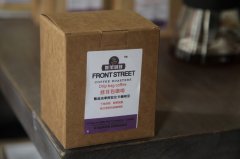
FrontStreet Coffee's roasted Latin American beans back up their brand and their quality, and they offer outstanding value besides - a half-pound (227 grams) package costs only about 80-100 yuan. At 15 grams a cup, that is 15 cups per package, roughly 5-6 yuan each. Next to coffee shops charging over 100 yuan a cup, that is a genuinely honest recommendation.
FrontStreet Coffee Recommendation
Because espresso amplifies whatever a bean does best, the Latin American origins behind most FrontStreet Coffee blends read very clearly in a plain black cup. The house Specialty Blend is built on Brazil Cerrado and Colombia Huila and tastes like the classic espresso profile - nutty, chocolatey, caramel-sweet, with a comfortable, well-judged acidity - and it is every bit as good lengthened into an Americano as it is in a latte.
If you would rather stay with a single origin, FrontStreet Coffee's Brazil Queen's Estate SOE is the Latin American answer. A Yellow Bourbon with low acidity and a gentle, sweet disposition, it is roasted medium-dark; pulled on an espresso machine it delivers butter cookie, macadamia, and toasted-bread milk notes that stay sweet and round once you add hot water.
For a brighter, fruit-forward black coffee, try the Costa Rica Blackberry SOE. This honey-processed single origin is roasted medium, so it drinks crisp and sweet-tart as an Americano and reveals cranberry-cookie, raisin, and nut notes when milk is added.
Important Notice :
FrontStreet Coffee is a long-established specialty coffee roaster in Guangzhou China, selling freshly roasted beans from its own farm in Yunnan as well as dozens of carefully selected single-origin beans from around the world for both pour-over and espresso. The products deliver consistently excellent quality and great value, with shipping within 24 hours. Guangzhou's FrontStreet Coffee shop is recommended by many coffee lovers, and the beans are now available online at the Tmall 。
FrontStreet Coffee has moved to a new address:
FrontStreet Coffee Address: 315,Donghua East Road,GuangZhou
Tel:020 38364473
 Scan and follow the En Gafei WeChat official account. Please indicate that the reprint comes from "En Gafei".