What Are 90+ Coffee Beans? Are 90+ Coffee Beans Always Expensive? How Much Do 90+ Coffee Beans Typically Cost?
What Exactly Are 90+ Coffee Beans?
Where ordinary beans are commodities, 90+ coffee beans are the closest thing the coffee world has to fine art. The name does not simply mean "any coffee that cupped above 90 points." It refers to a premium coffee series built around 13 distinct flavor profiles, sourced from different estates, each with its own character. During processing, the coffees are separated by variety, microclimate, and harvest timing, and every lot is tasted individually. Each one is treated like a work in progress toward a specific flavor goal, refined until it can be presented in its most complete form.
That pursuit of extreme flavor is admirable, but so is the company's model: its sustainable development practices and environmental stewardship have become a benchmark that many producers study. Since its founding in 2006, this young company has made itself known to coffee professionals worldwide in just a few years. The first series it unveiled in 2007 was immediately recognized by industry experts as a precious selection.
Exceptional Quality
Ninety Plus was founded in 2006 by Joseph Brodsky. He recognized early on that the world's finest green coffee traces back to Ethiopia, whose thousands of native varieties rival the diversity of grape varieties behind the world's fine wines. Inspired by the sensation created when Geisha appeared in Panama in 2003 and 2004, Joseph set out on his own journey. When Panama did not deliver the results he expected, he formed a different hypothesis: among Ethiopia's more than 10,000 coffee varieties, undiscovered gems might still be waiting.
To guarantee quality, 90+ works through a cooperative model with local estates and keeps complete control over every stage—planting, sampling, harvesting, processing, and cupping. Its exclusive Profile Processing ensures that every lot has a unique yet stable flavor direction and quality, and the coffees are marketed much like fine wines, which helped them stand out quickly. Notably, even the Geisha grown on Panamanian estates originally descends from Ethiopian heirloom varieties, so all of 90+'s green beans trace back to original Ethiopian stock.
Today many cafes chase Ninety Plus coffees, yet few people know exactly what they are buying or how to taste and talk about them. The sections below are a brief guide to choosing and enjoying 90+ coffee.
Naming and Processing Methods
90+ names its beans completely differently from regular specialty lots. Conventional beans are labeled by region and estate; each 90+ bean is named after its flavor profile. The famous Nekisse, for example, takes its name from the nectar of Shakisso. The naming usually starts with a flavor concept, and only then are the region and partner farms selected—the reverse of how most specialty beans are built, which gives the brand its boutique character.
With regular beans, you will often see the letters N, H, or W on the label. Ethiopian Yirgacheffe G3 N, for instance, is the "Natural Yirgacheffe G3" commonly seen on the market: N stands for Natural (sun-dried), H for Honey, and W for Washed. 90+ takes a different view. Rather than distinguishing beans by processing method, it distinguishes them by flavor direction. Each processing method does tend toward a representative flavor—
Natural: exuberant fruit aromas
Honey Processed: more prominent sweetness
Washed: cleaner flavor profile
—but 90+ points out that different methods can sometimes land on similar flavors; a honey-processed lot may finish tasting like what most people expect from a washed bean. So it introduced three flavor indicators, N2, H2, and W2, graded by the intensity of fruit character and mouthfeel:
W2 (Low): lower fruit notes, emphasizing brightness, acidity, and florals
H2 (Moderate): moderate fruit notes, emphasizing sweetness, fruit texture (rather than aroma), and tea-like qualities
N2 (High): strong fruit notes, emphasizing exuberant flavor expression, sweet-tart balance, jammy flavors, and dried fruit
In 2011, to improve the stability of Panamanian lots during drying, Joseph—inspired by wood-drying rooms—developed a solar drying system together with the University of Wisconsin and named the method Solkiln™ (SK). Beans processed this way are extraordinarily valuable, and production is extremely limited.
Grading System
Finally, 90+ runs its own 100-point scale. Every bean it produces must score above 90 points in cupping, and the lots are then classified by three factors: flavor, cost, and production volume:
Level 7: special, delicate flavors that leave a deep impression
Level 12: equally impressive, with conversational value as well
Level 21: a limited-production Level 7, usually outperforming it in the cup
Level 39: a limited-production Level 12, with flavor above Level 12
Level 95: currently the highest grade—tremendous changes from dry fragrance to first sip, an extremely deep impression, and very limited production.
A Word of Advice
The discovery and development of great coffee is something everyone hopes to see. But whenever specialty becomes industrialized, quality decline often follows. Choose rationally rather than chasing brands blindly: pick coffee that suits your palate, and judge it by quality above all.
FrontStreet Coffee Recommendation
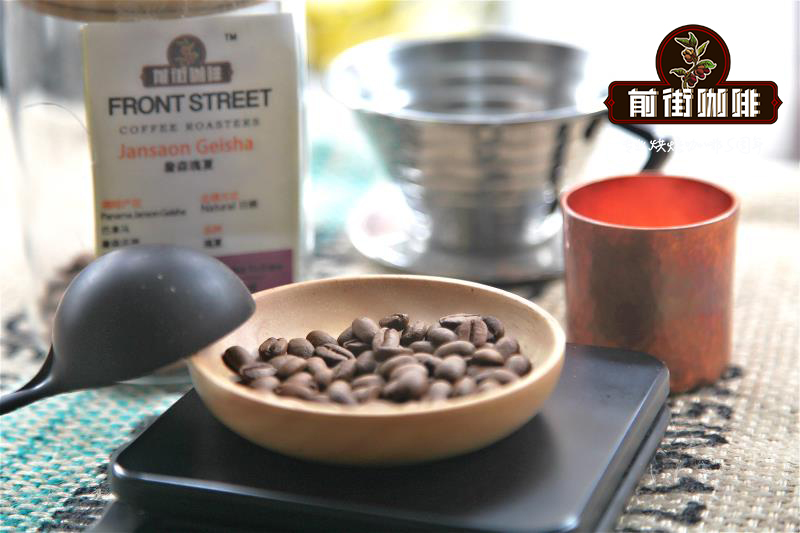
FrontStreet Coffee's roasted 90+ bean "Zhu Mang" carries full guarantees in both brand and quality, and above all it offers outstanding value for money: a half-pound (227g) bag costs only about 90 yuan. At 15g of coffee per cup, one bag brews roughly 15 cups, which works out to about 6 yuan per cup—hard to beat against café prices that often run past a hundred yuan. If you want to explore more of what Ethiopian coffee, the birthplace of beans like these, can offer, start with the entry-level FrontStreet washed Yirgacheffe, with its clear jasmine floral notes and bright citrus acidity, or the FrontStreet Red Cherry Project sun-dried Yirgacheffe, whose flavor profile reads peach, cocoa, honey, and lemon.
Important Notice :
FrontStreet Coffee is a long-established specialty coffee roaster in Guangzhou China, selling freshly roasted beans from its own farm in Yunnan as well as dozens of carefully selected single-origin beans from around the world for both pour-over and espresso. The products deliver consistently excellent quality and great value, with shipping within 24 hours. Guangzhou's FrontStreet Coffee shop is recommended by many coffee lovers, and the beans are now available online at the Tmall 。
FrontStreet Coffee has moved to a new address:
FrontStreet Coffee Address: 315,Donghua East Road,GuangZhou
Tel:020 38364473
 Scan and follow the En Gafei WeChat official account. Please indicate that the reprint comes from "En Gafei".